5 Big Signals as India Joins Donald Trump’s Board of Peace Meeting as Observer Nation
India attends Donald Trump’s Board of Peace meeting as an observer nation, marking a significant geopolitical moment
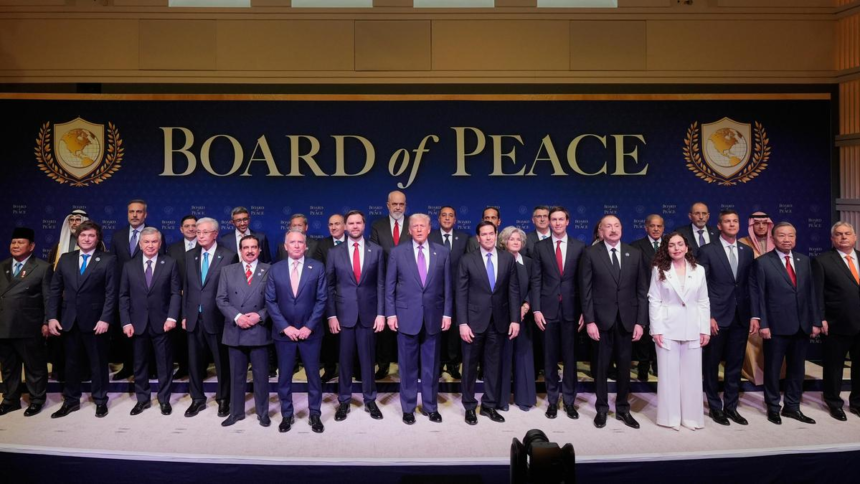
In a significant geopolitical development, India’s participation as an observer nation at Donald Trump’s Board of Peace meeting has drawn global attention. The move signals a subtle yet strategic shift in diplomatic positioning, reflecting evolving alliances and the increasing importance of multilateral engagement in a rapidly changing world order. While the meeting itself focused on peace frameworks and global stability, India’s presence—though in an observer capacity—carried substantial symbolic and strategic weight.
India’s decision to attend the meeting organized under the initiative of former U.S. President Donald Trump underscores the country’s growing willingness to engage across ideological and political lines. Traditionally known for its policy of strategic autonomy, India has maintained a delicate balance between major global powers. By attending the Board of Peace meeting, India demonstrated its readiness to remain involved in evolving global dialogues, regardless of political shifts in the West.
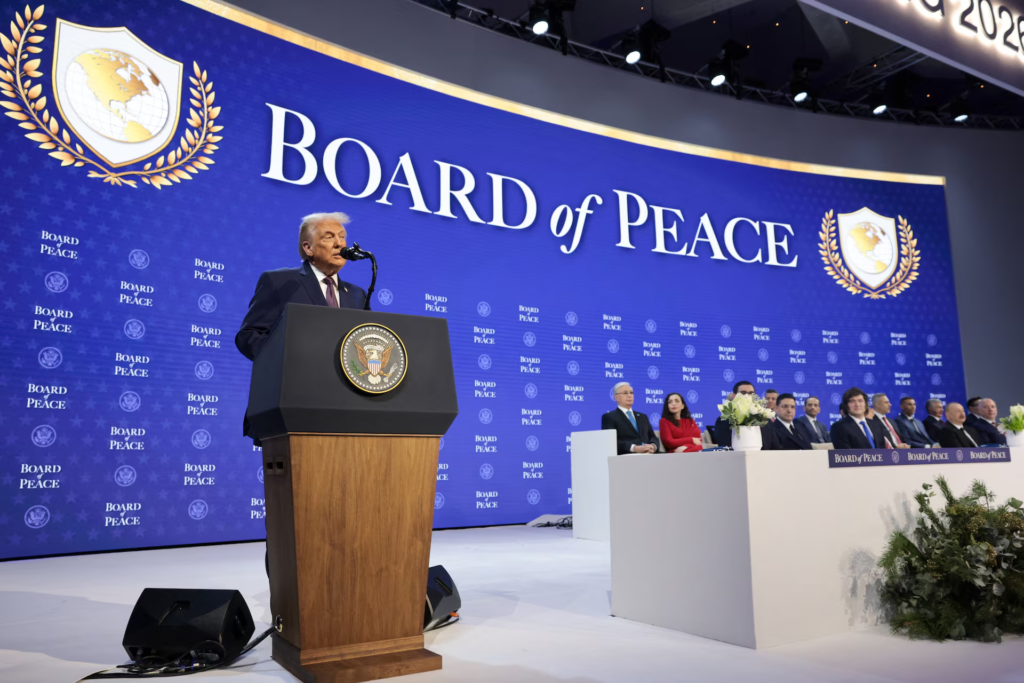
The observer status allowed India to engage without formal commitments, offering flexibility while still gaining access to high-level discussions. This aligns with India’s long-standing diplomatic style—engaging actively but cautiously in international initiatives that shape the global agenda.
Though still a relatively new platform, the Board of Peace has been projected as a forum aimed at fostering dialogue on conflict resolution, global security, and international cooperation. Trump’s involvement has made it both influential and controversial, attracting attention from political allies and critics alike.
The platform reportedly focuses on de-escalation strategies, diplomatic engagement, and collaborative approaches to global conflicts. Participants include political leaders, policy advisors, and international observers. India’s inclusion, even as an observer, suggests the forum’s widening global footprint and its ambition to shape future diplomatic narratives.
India’s attendance is being interpreted as a reflection of its expanding global influence. Over the past decade, India has steadily strengthened its diplomatic outreach, engaging with both Western alliances and emerging coalitions. Being present at such a forum reinforces the perception of India as a bridge between diverse geopolitical blocs.
By participating as an observer, India avoided signaling alignment with any specific political agenda. Instead, it reinforced its image as an independent global player willing to engage in peace-oriented initiatives without compromising its strategic autonomy.
This nuanced positioning also allows India to maintain strong ties with multiple stakeholders—from the United States and Europe to the Global South—while continuing to project itself as a stabilizing force in international affairs.
The timing of India’s participation is particularly noteworthy. Global geopolitics is currently marked by shifting alliances, regional conflicts, and economic uncertainties. In such an environment, platforms focused on peace and dialogue are gaining renewed importance.
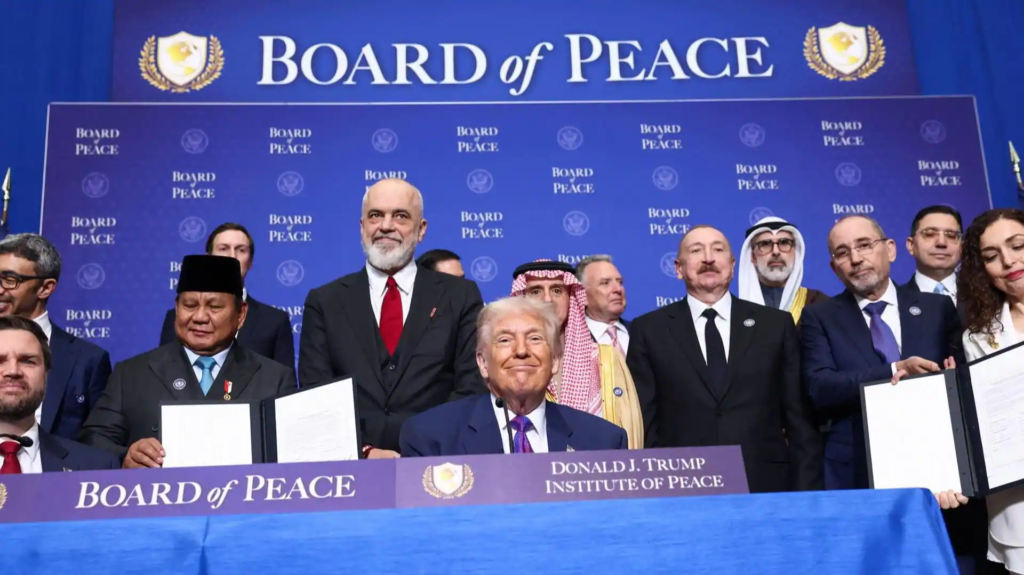
India has been vocal about the need for diplomacy-led solutions to global tensions, emphasizing dialogue over confrontation. Its presence at the Board of Peace meeting reinforces this consistent messaging and aligns with its broader diplomatic philosophy of promoting stability through engagement.
Additionally, India’s growing stature in global forums—from G20 leadership roles to climate negotiations—has amplified expectations for it to play a more proactive role in shaping international outcomes. Attending the meeting, even as an observer, reflects this evolving responsibility.
India’s decision also carries domestic implications. Participation in international forums associated with polarizing figures can invite scrutiny at home. However, by choosing observer status rather than full membership, India appears to have struck a careful balance—remaining engaged globally while minimizing potential political fallout domestically.
Analysts suggest this approach allows India to gather insights and influence discussions informally without making binding commitments. It also enables policymakers to assess the forum’s long-term relevance before deciding on deeper engagement.
Global reactions to India’s presence have been mixed but largely attentive. Some observers view the move as a sign of India’s pragmatic diplomacy, highlighting its ability to navigate complex political landscapes. Others interpret it as a strategic hedge, ensuring that India remains connected to emerging diplomatic platforms regardless of their origins.
Western analysts have noted that India’s attendance reflects its desire to maintain strong ties with influential American political figures beyond official government channels. Meanwhile, commentators from developing nations see the move as consistent with India’s broader effort to represent diverse global interests in emerging forums.
Although the meeting was not an official government-to-government engagement, India’s participation carries implications for bilateral ties with the United States. It signals that India is willing to maintain communication channels across the American political spectrum.
This approach has historically benefited India, allowing it to maintain continuity in strategic partnerships despite changes in political leadership abroad. By engaging in forums linked to influential figures like Trump, India ensures that its diplomatic outreach remains resilient and adaptable.
India’s observer role also reinforces its long-standing commitment to strategic autonomy. Rather than aligning exclusively with any bloc, India continues to engage with multiple global initiatives, carefully calibrating its involvement based on national interests.
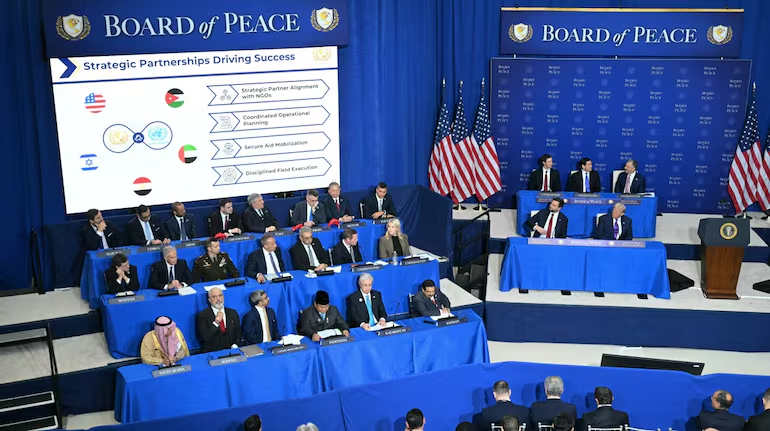
This multi-vector diplomacy has become a hallmark of India’s foreign policy. It enables the country to maximize opportunities while minimizing risks, ensuring that it remains an independent voice in international decision-making processes.
The Board of Peace meeting provided another platform for India to demonstrate this approach—engaging without overcommitting and observing without isolating itself from key global conversations.
Beyond hard geopolitics, India’s presence at the meeting also contributes to its soft power projection. As a nation often associated with principles of non-violence and dialogue, India’s participation in peace-oriented forums aligns with its historical identity.
By associating itself with discussions on peacebuilding and conflict resolution, India reinforces its image as a responsible global stakeholder. This perception can enhance its influence in other diplomatic arenas, including humanitarian initiatives and multilateral negotiations.
Despite the potential benefits, the move is not without risks. Engagement in politically charged forums can sometimes be misinterpreted, leading to diplomatic sensitivities. India will need to carefully manage perceptions to ensure that its participation is seen as constructive rather than partisan.
Additionally, the long-term credibility of the Board of Peace itself remains uncertain. As a relatively new initiative, its influence and sustainability will depend on future developments and the level of global participation it attracts.
India’s cautious observer role appears designed to mitigate these uncertainties while still allowing it to remain involved in early-stage discussions.
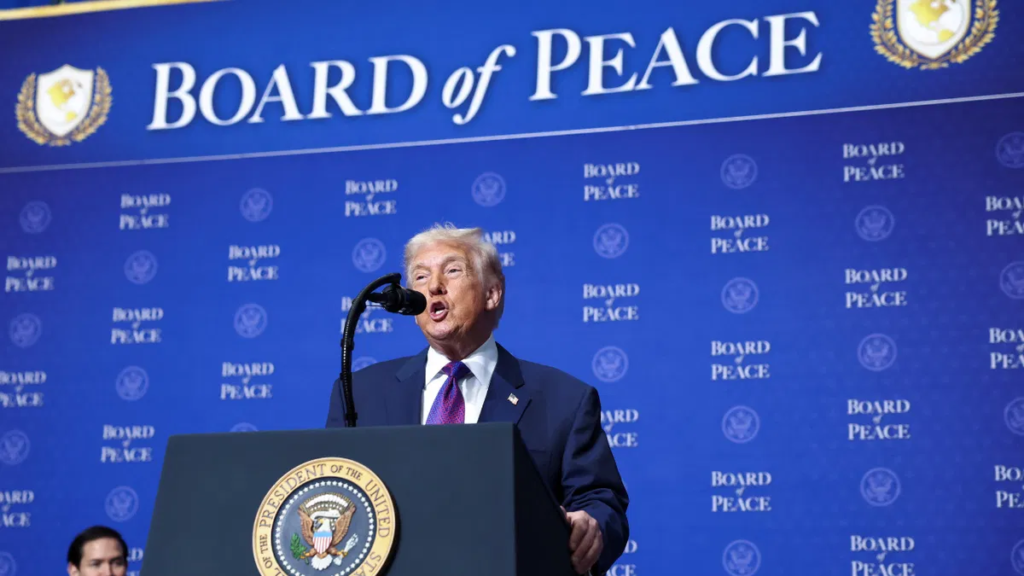
India’s participation in Trump’s Board of Peace meeting as an observer nation highlights the evolving nature of modern diplomacy. In an era defined by fluid alliances and complex global challenges, engagement across diverse platforms has become essential.
Whether this involvement leads to deeper engagement in the future remains to be seen. Much will depend on how the Board of Peace evolves and whether it gains broader international legitimacy. For now, India’s presence signals openness, adaptability, and a willingness to remain engaged in shaping conversations around global peace.