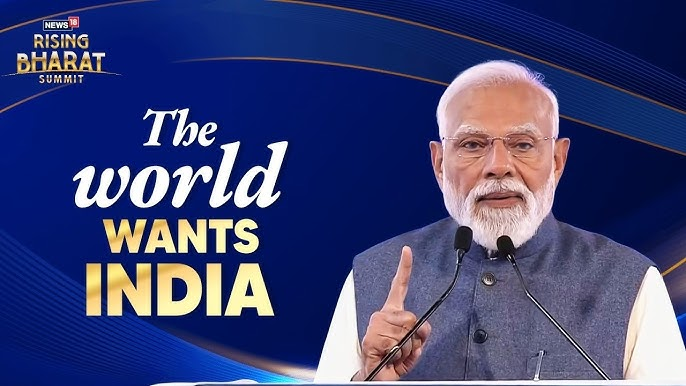
5 Big Takeaways from Rising Bharat Summit: Narendra Modi Says Developed Nations Rushing to Seal Trade Deals with India
At the Rising Bharat Summit, Narendra Modi said developed nations are eager to strike major trade deals with India
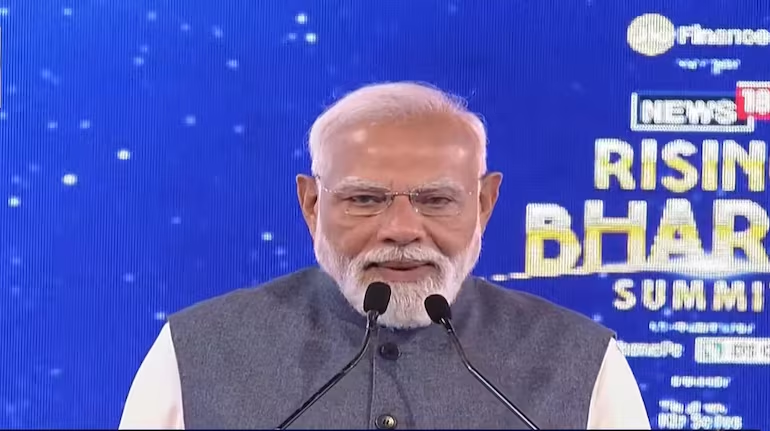
At the high-profile Rising Bharat Summit, Prime Minister Narendra Modi delivered a strong message about India’s growing global economic influence, stating that developed nations are increasingly eager to strike trade deals with the country. His remarks underscored India’s transformation into a major economic powerhouse and highlighted its expanding role in shaping global trade dynamics.
Addressing policymakers, industry leaders, and international delegates, Narendra Modi emphasized that the world now views India not merely as a market, but as a strategic partner. According to him, developed economies are actively pursuing trade agreements with India, recognizing its stable growth trajectory, demographic advantage, and expanding manufacturing capacity.
Over the past decade, India has steadily climbed the ranks of global economic power. It is currently among the world’s fastest-growing major economies, and its GDP expansion, infrastructure push, and digital revolution have attracted worldwide attention. The Prime Minister noted that India’s economic reforms, policy stability, and focus on ease of doing business have significantly enhanced investor confidence.
He highlighted that India’s domestic market, with over 1.4 billion consumers, offers unmatched scale and opportunity. This massive demand base, combined with rising purchasing power, makes India an attractive destination for trade and investment partnerships.
During his speech, Modi pointed out that developed nations are now approaching India with renewed interest in bilateral and multilateral trade agreements. He suggested that global supply chain realignments, geopolitical shifts, and the need for reliable economic partners have elevated India’s strategic importance.
Trade negotiations with several advanced economies have gained momentum in recent years. These include discussions on tariff reductions, technology exchange, market access, and investment facilitation. Modi described this growing interest as a testament to India’s credibility and economic resilience.
He stated that India is no longer seen as a passive participant in global trade but as a rule-shaper contributing to the evolution of international economic frameworks.
A central theme of Modi’s address was India’s manufacturing transformation. The Prime Minister reiterated the success of initiatives such as “Make in India” and production-linked incentive (PLI) schemes. These programs have encouraged global companies to set up manufacturing bases in India, reducing dependence on single-country supply chains.
He stressed that India aims to become a global manufacturing hub across sectors including electronics, semiconductors, renewable energy equipment, pharmaceuticals, and defense production. According to Modi, developed nations are keen to collaborate in these areas due to India’s skilled workforce and competitive production costs.
Another highlight of the summit speech was India’s digital transformation. Modi spoke about the country’s rapid adoption of digital payment systems, startup ecosystem growth, and advancements in fintech and artificial intelligence.
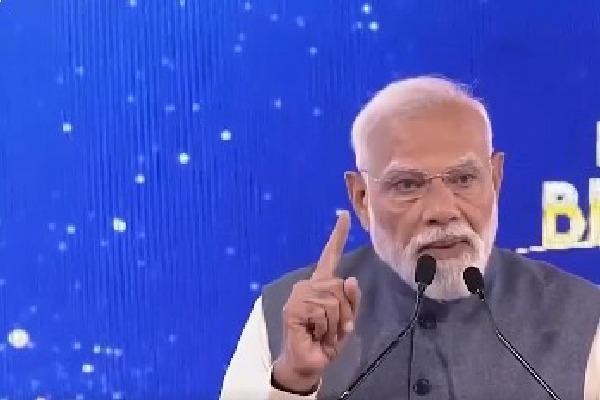
India’s digital public infrastructure has become a global case study, drawing interest from both developing and developed economies. The Prime Minister suggested that digital cooperation could be a key pillar of future trade agreements.
He noted that India’s innovation ecosystem, with thousands of startups and unicorns, presents enormous collaboration opportunities for global investors and technology firms.
The Prime Minister’s remarks also come against the backdrop of shifting global geopolitics. As supply chains diversify and countries seek alternatives to traditional manufacturing hubs, India’s strategic positioning has gained prominence.
Modi argued that India offers political stability, a transparent regulatory framework, and a commitment to democratic values—factors that enhance its appeal as a trade partner.
He emphasized that India believes in fair trade practices and mutually beneficial agreements. Rather than protectionism, the government advocates balanced deals that protect domestic interests while expanding international market access.
India’s aggressive infrastructure development was another key point in the speech. The Prime Minister cited major investments in highways, railways, airports, ports, and logistics networks. Improved connectivity reduces operational costs and enhances supply chain efficiency, making India more competitive in global trade.
He highlighted flagship projects that have improved transportation networks and accelerated industrial corridor development. According to him, infrastructure modernization strengthens India’s ability to meet global demand.
Modi described India’s young population as one of its greatest strengths. With a median age significantly lower than many developed nations, India offers a large, skilled, and adaptable workforce.
He noted that global companies are increasingly drawn to India not only for its consumer base but also for its talent pool. Collaboration in education, research, and skill development could further enhance trade relationships.
Sustainability was another pillar of the Prime Minister’s address. He reiterated India’s commitment to renewable energy expansion and climate action. As developed nations intensify efforts to meet climate targets, India’s leadership in solar and green energy sectors positions it as a crucial partner.
Modi suggested that trade agreements could increasingly incorporate green technology transfer, clean energy collaboration, and sustainable supply chains.
The Prime Minister credited structural reforms for India’s rising global stature. These include tax reforms, bankruptcy code implementation, digitized governance, and streamlined regulatory processes.
He asserted that policy predictability has reassured global investors, making long-term trade partnerships more viable.
According to Modi, India’s economic diplomacy has shifted from transactional engagements to strategic alliances that foster shared prosperity.
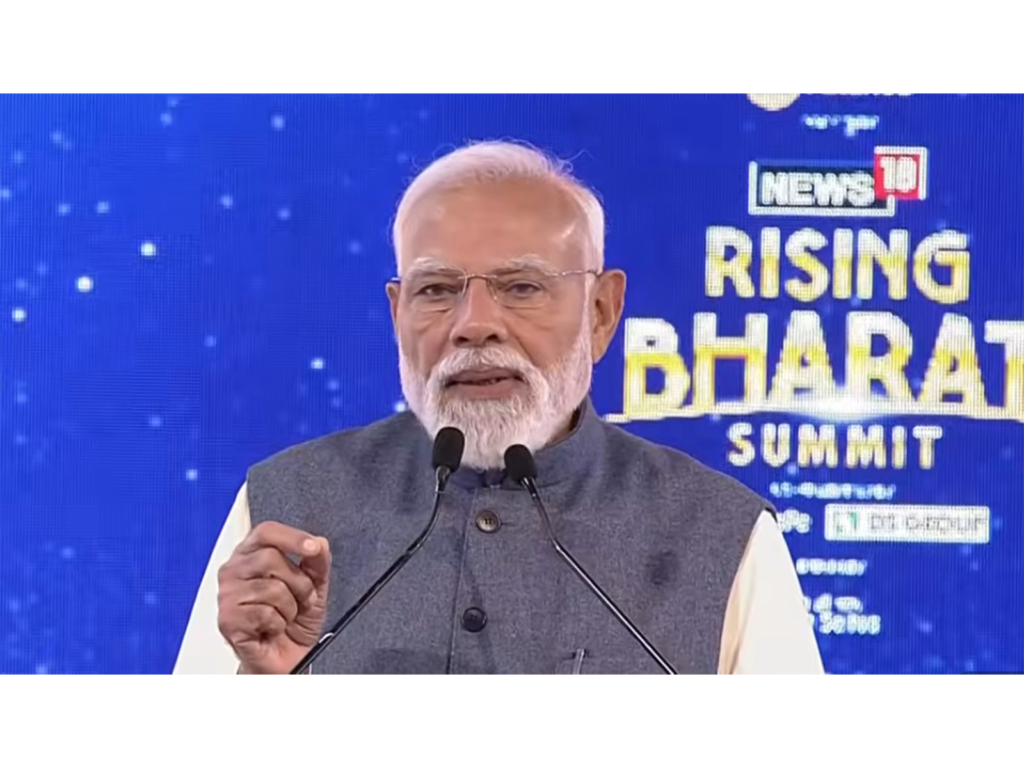
Business leaders present at the summit reportedly welcomed the Prime Minister’s remarks. Many see India as a critical growth engine in an otherwise uncertain global economy.
Foreign investors have increasingly diversified portfolios toward India, citing its strong macroeconomic fundamentals and expanding middle class. Trade agreements with developed nations could further accelerate this trend.
While optimism surrounds India’s trade prospects, challenges remain. Negotiating trade deals with developed nations often involves complex issues such as agricultural protection, intellectual property rights, and labor standards.
However, Modi expressed confidence that India’s negotiation strategy prioritizes national interest while maintaining openness to collaboration.
He emphasized that India is committed to building resilient global partnerships that ensure shared growth and stability.
The Prime Minister’s statement at the Rising Bharat Summit reflects India’s broader ambition to position itself as a central pillar of the global economy. As geopolitical uncertainties reshape trade routes and supply chains, India’s strategic importance continues to grow.
By attracting interest from developed nations, India strengthens its leverage in global negotiations and enhances its capacity to influence international economic policies.
The message delivered at the Rising Bharat Summit was clear: India’s time on the global economic stage has arrived. Prime Minister Narendra Modi’s assertion that developed nations are eager to strike trade deals with India signals a shift in global economic dynamics.
From manufacturing expansion and digital innovation to infrastructure development and sustainability, India presents a comprehensive growth story that appeals to global partners.
As trade negotiations advance, the coming years could witness landmark agreements that further integrate India into the world economy. For policymakers, investors, and citizens alike, the summit highlighted not just current achievements but also the vast potential ahead.
India’s rise as a trade powerhouse reflects years of structural reforms, strategic diplomacy, and economic resilience. If current trends continue, the country may well redefine global trade relationships in the decade to come—cementing its position as one of the world’s most influential economic players.