60-Year-Old Herbal Healer Marries 26-Year-Old Woman in Rawalpindi — 7 Shocking Details From the Viral Pakistan Wedding Story
A 60-year-old herbal practitioner marries a 26-year-old woman in Rawalpindi, sparking viral reactions across Pakistan
A 60-year-old herbal practitioner marrying a 26-year-old woman in Rawalpindi has sparked intense debate, viral social media reactions, and widespread public curiosity across Pakistan. The unusual age gap between the couple has become the focal point of online discussions, with many questioning the dynamics of such a relationship while others defend it as a personal choice between consenting adults.
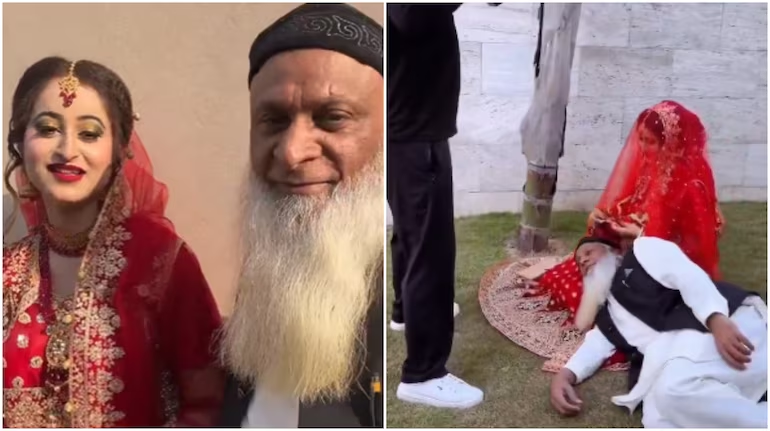
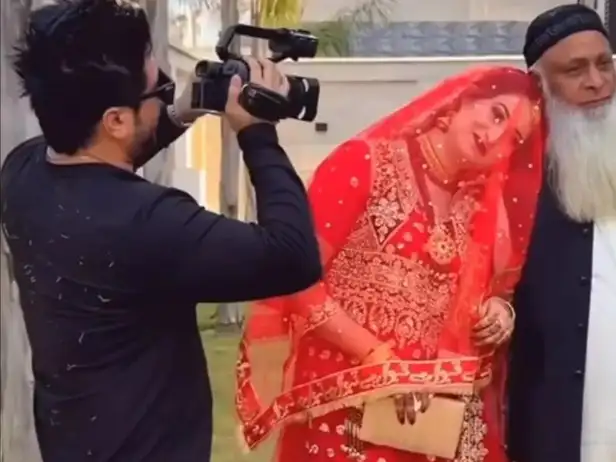
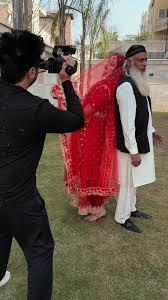
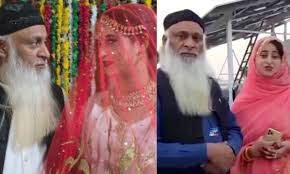
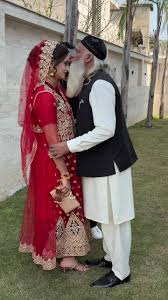
The wedding, which reportedly took place in Rawalpindi, quickly gained traction after photos and short video clips began circulating online. Within hours, the story had become one of the most talked-about topics across social media platforms in Pakistan. While some netizens expressed shock at the 34-year age difference, others emphasized the importance of respecting individual decisions and cultural norms.
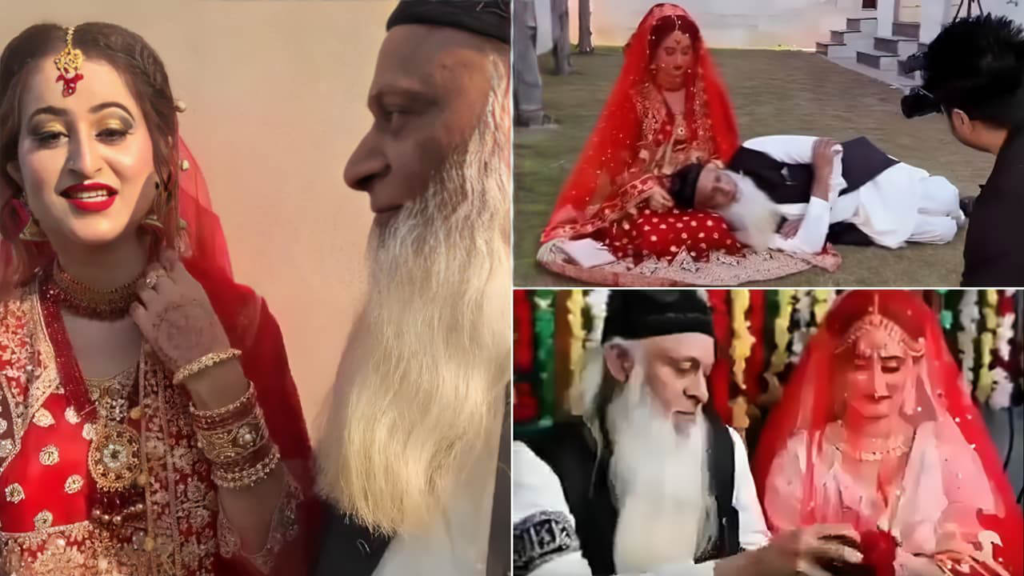
According to reports, the groom is a well-known herbal practitioner in his local community, with decades of experience in traditional remedies and alternative medicine. His reputation as a healer has reportedly earned him significant respect among patients and followers. The bride, 26, is said to be from the same region, though details about her professional background remain limited.
Sources claim that the couple became acquainted through community interactions and eventually decided to formalize their relationship. While there has been no official statement outlining how long they knew each other before marriage, close associates suggest the relationship developed over time rather than being a sudden decision.
As soon as images of the wedding surfaced, reactions poured in from across the country. Hashtags related to the couple began trending, and comment sections were flooded with a mix of admiration, humor, skepticism, and criticism.
Some users questioned the significant age difference, raising concerns about generational compatibility. Others defended the marriage, pointing out that both individuals are adults and legally capable of making their own decisions. A number of social commentators highlighted that age-gap marriages, while less common today, are not unheard of in South Asian societies.
The viral nature of the story reflects how quickly personal events can become public spectacles in the digital era. Within a short span, what may have been intended as a private ceremony transformed into a nationwide talking point.
In many parts of South Asia, marriages with notable age differences have historically occurred, often influenced by social, economic, or familial factors. However, in modern urban settings, such gaps tend to draw heightened scrutiny, particularly when amplified by social media.
Sociologists note that generational differences can affect lifestyle preferences, long-term compatibility, and social perceptions. However, they also emphasize that successful marriages depend on mutual understanding, shared values, and communication rather than age alone.
The Rawalpindi case has reignited conversations about evolving societal norms in Pakistan. Younger generations increasingly advocate for personal autonomy in marriage decisions, while older generations often prioritize stability and traditional values.
From a legal standpoint, there is no issue with the marriage as long as both parties meet the legal age requirement and consent to the union. In Pakistan, the legal minimum age for marriage is 18 for men and varies for women depending on provincial legislation, though reforms have been underway in several regions to standardize the minimum age.
There have been no reports suggesting any violation of legal requirements in this case. Authorities have not indicated any irregularities, and the marriage appears to have been conducted in accordance with local customs and regulations.
Whenever an age-gap marriage becomes public, speculation often follows. Online discussions frequently revolve around motivations—financial stability, emotional compatibility, social status, or genuine affection. In this case, there is no verified evidence supporting any specific narrative beyond what has been publicly shared.
Friends of the couple have reportedly dismissed negative assumptions, stating that the marriage is based on mutual respect and understanding. However, as with many viral stories, speculation continues to circulate online.
The rapid spread of the story raises questions about privacy in the age of digital virality. While the couple did not initially appear to seek media attention, the widespread sharing of wedding visuals placed them under intense public scrutiny.
Media experts argue that viral stories often become amplified through sensational headlines and exaggerated framing. The focus on the numerical age difference—60 and 26—has dominated coverage, sometimes overshadowing other aspects of the couple’s lives and personalities.
Balancing public interest with respect for personal privacy remains a challenge in modern journalism. While unusual events naturally draw attention, responsible reporting should avoid unfounded speculation.
Experts in relationship psychology suggest that age-gap relationships can succeed if partners share aligned life goals and expectations. However, they may face unique challenges, including differences in energy levels, career stages, and social circles.
In the Rawalpindi case, much of the public debate centers on perceived generational divides. Critics argue that differing life stages could create imbalance, while supporters counter that maturity and life experience can also foster stability.
Ultimately, relationship success depends on factors beyond age—trust, communication, emotional intelligence, and shared commitment are key elements regardless of generational differences.
Some observers speculate that financial security could be a motivating factor in age-gap marriages, especially when one partner is significantly older and financially established. However, without direct statements from the couple, such claims remain speculative.
The groom’s established career as a herbal practitioner may contribute to perceptions of stability. In many traditional communities, financial security is often viewed as a cornerstone of marital success.
The Rawalpindi wedding has sparked a broader conversation about personal choice, societal judgment, and evolving norms in Pakistan. As digital platforms continue to amplify personal stories, public reactions often reflect generational divides in values and expectations.
Younger audiences may view the marriage through the lens of autonomy and individual rights, while others may emphasize tradition and community standards. This dynamic illustrates how social media has become a battleground for cultural debates.
Despite intense online chatter, it is important to remember that marriage is a deeply personal decision. When two consenting adults choose to enter a union, their motivations and compatibility are ultimately private matters.
Public fascination with unusual age differences is not new, but the speed and scale of modern digital reactions are unprecedented. What once might have been a local curiosity can now become a national headline within hours.
The marriage of a 60-year-old herbal practitioner to a 26-year-old woman in Rawalpindi has undeniably captured national attention. With a 34-year age gap, the story has triggered discussions ranging from cultural norms to personal freedom.
While social media continues to buzz with opinions, the couple remains at the center of a narrative shaped largely by public perception. Whether viewed as unconventional, controversial, or simply a matter of personal choice, the wedding highlights how private lives can quickly become public debates in the digital age.
As the conversation unfolds across Pakistan, one lesson stands clear: in an era dominated by viral headlines and instant reactions, understanding and respect remain essential. Age may be a number that grabs attention, but the foundation of any marriage lies in mutual consent, trust, and shared commitment.
Only time will reveal how this union evolves, but for now, it stands as one of the most talked-about stories in Rawalpindi—demonstrating once again how a single event can spark nationwide dialogue.