7 Big Claims: Donald Trump Says US-Israeli War On Iran Will End ‘Very Soon’
Donald Trump claims the **US-Israel war against Iran could end “very soon
The ongoing conflict involving the United States, Israel, and Iran has become one of the most closely watched geopolitical crises in recent years. In a striking statement that has captured global attention, Donald Trump recently claimed that the war involving the United States and Israel against Iran could be over “very soon.”
Trump’s comments have sparked intense debate among political analysts, military experts, and global leaders. While some view his statement as a sign that the conflict could de-escalate quickly, others remain cautious, noting that tensions across the Middle East remain extremely high.
The conflict has already reshaped the security landscape in the region, with implications for global energy markets, international diplomacy, and regional alliances.
Here are seven key developments that explain why Trump believes the war could end soon and what it means for the Middle East and the world.
Trump’s statement suggested that the United States and Israel have achieved significant military objectives during the conflict.
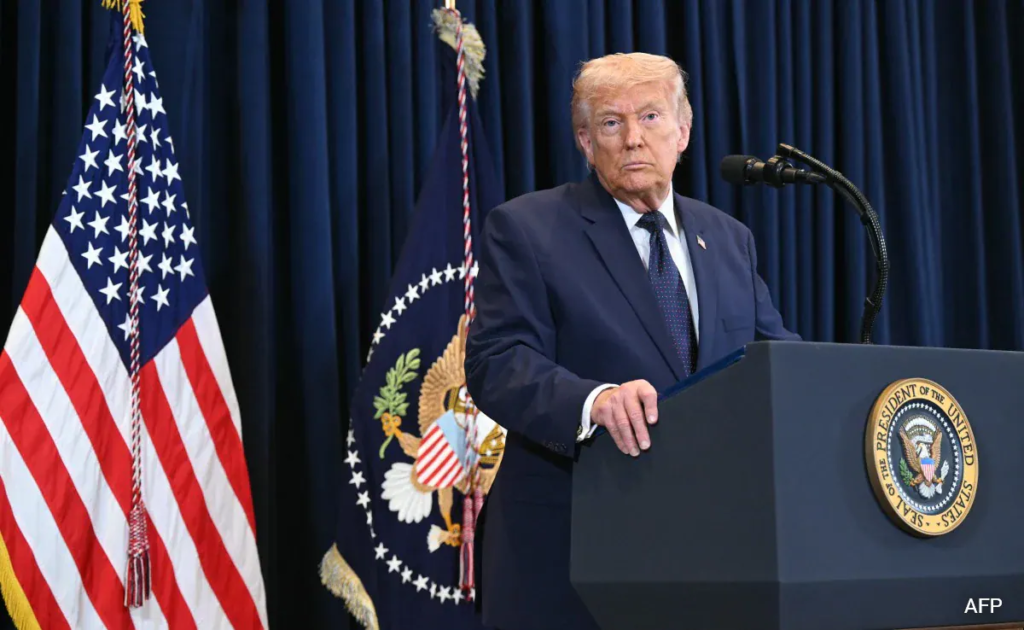
According to Trump, coordinated operations by the U.S. and Israel have dealt major blows to Iran’s military capabilities, particularly its missile infrastructure and strategic command centers. He indicated that these operations have placed immense pressure on Iran’s leadership, potentially forcing them to reconsider further escalation.
Trump’s remarks also suggested that diplomatic channels may be working behind the scenes to push for a ceasefire or negotiated settlement.
Although he did not provide detailed timelines, his assertion that the conflict could end “very soon” has fueled speculation that major military operations may already be nearing completion.
Throughout the conflict, Israel has carried out multiple airstrikes against strategic targets linked to Iran’s military and defense infrastructure.
The operations were reportedly aimed at weakening Iran’s ability to launch missiles and coordinate military actions across the region. Israeli officials have stated that these strikes were designed to prevent future threats to national security.
Israel has long considered Iran’s missile programs and regional alliances a major security concern. The current conflict represents one of the most direct confrontations between the two countries in decades.
Israeli leaders have emphasized that their military campaign is focused on eliminating threats that could endanger the country and its allies.
The United States has played a crucial role in the conflict by providing intelligence, logistical support, and military coordination to Israel.
American forces in the region have also increased defensive deployments to protect allies and maintain stability in key strategic locations.
The involvement of the United States has significantly raised the stakes of the conflict, transforming it from a regional confrontation into a broader geopolitical crisis.
Trump’s recent remarks appear to suggest that the United States believes its military involvement has achieved critical objectives and may soon transition toward diplomatic solutions.

Iran has responded to the strikes by launching missiles and drones targeting military installations and strategic locations associated with Israel and its allies.
These retaliatory actions have heightened fears of a wider regional war, especially given Iran’s network of allied groups and military partnerships across the Middle East.
Despite the intensity of the exchanges, analysts note that Iran has also shown signs of caution, potentially indicating that both sides are seeking to avoid an all-out regional conflict.
Trump’s prediction that the war could end soon may reflect intelligence assessments suggesting that Iran may be approaching a point where further escalation becomes strategically costly.
Even as military operations continue, diplomatic efforts are reportedly underway to prevent further escalation.
Several international actors—including European governments and regional powers—have been quietly encouraging dialogue between the parties involved.
Back-channel negotiations often play a key role in resolving conflicts of this scale. While such talks rarely appear in public headlines, they can significantly influence the pace and direction of military operations.
If Trump’s comments are based on ongoing diplomatic developments, they could indicate that negotiations are progressing toward a possible ceasefire or de-escalation agreement.
The conflict has also raised serious concerns about global economic stability, particularly in relation to energy supplies.
Iran occupies a critical position in global oil markets, and any prolonged war in the region could disrupt major shipping routes and energy infrastructure.
Financial markets have reacted nervously to the escalating tensions, with fluctuations in oil prices and investor sentiment reflecting fears of prolonged instability.
If the conflict ends soon, as Trump suggested, it could help ease pressure on global markets and restore confidence in international trade routes that pass through the Middle East.
Despite Trump’s optimistic remarks, many experts caution that predicting the end of a conflict is extremely difficult.
Wars often evolve rapidly, and even minor incidents can trigger new waves of escalation. Military analysts emphasize that while progress toward de-escalation is possible, the situation remains fragile.
Regional alliances, political dynamics, and strategic calculations will all play a role in determining how the conflict ultimately unfolds.
Trump’s statement has certainly raised hopes for a swift resolution, but the reality on the ground will depend on complex diplomatic and military developments in the coming days and weeks.
The conflict between the United States, Israel, and Iran represents a major turning point for the Middle East.
For decades, tensions between Israel and Iran have been a central feature of regional geopolitics. However, the current confrontation has brought these tensions into a much more direct and visible phase.
If the conflict does end soon, it could open the door to new diplomatic negotiations and potentially reshape alliances across the region.

However, even if active fighting subsides, the underlying strategic rivalry between the involved nations is unlikely to disappear entirely.
Governments around the world have been closely monitoring the situation. Many countries have called for restraint and urged all parties to prioritize diplomacy over further military escalation.
International organizations and global leaders have emphasized the importance of preventing the conflict from spreading beyond the immediate participants.
A prolonged war could have devastating consequences not only for the Middle East but also for global security and economic stability.
The coming weeks will likely determine whether Trump’s prediction proves accurate.
If diplomatic negotiations succeed and military operations slow down, the conflict could indeed move toward a rapid conclusion.
However, if new developments trigger further escalation, the war could continue longer than expected.
For now, Trump’s statement has injected a new element of optimism into a situation that has been dominated by uncertainty and tension.
Whether that optimism translates into lasting peace remains one of the most important questions facing the international community today.
Read Also : 5 Big Updates: Government Responds To LPG Cylinder Shortage Hitting Mumbai & Bengaluru Eateries