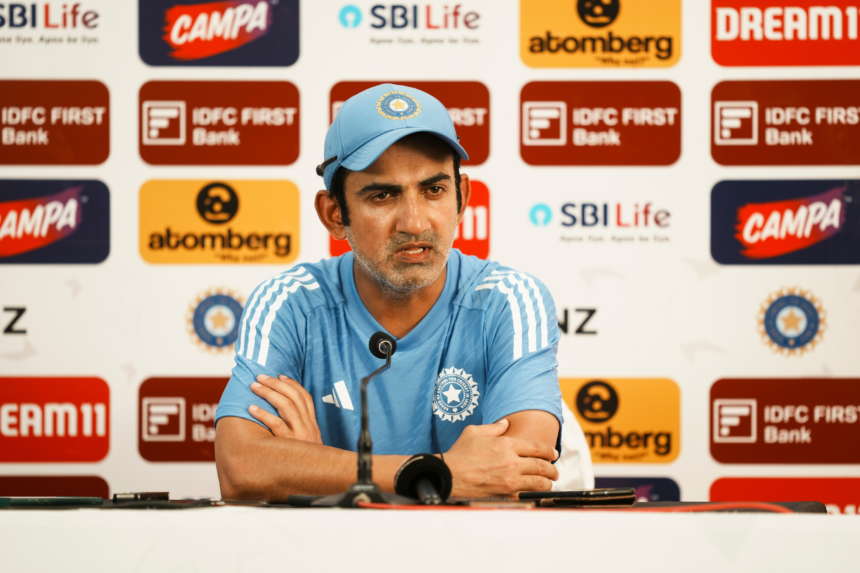
India Coach Refuses to Defend Team as New Zealand Expose 5 Shocking Flaws in Crushing Defeat
India coach refuses to defend his players after defeat against New Zealand, admitting major flaws as the Kiwis expose key weaknesses in the team’s performance
India’s defeat in the second ODI against New Zealand highlighted various flaws in the team that were otherwise hidden due to Virat Kohli and Rohit Sharma’s exemplary performances with the bat. In a match where the veteran duo failed to continue their hot form, India lost the match while failing to even challenge the opponent team. Speaking at the post-match press conference, assistant coach Ryan Ten Doeschate refused to shield his players as he urged the bowlers, particularly spinners, to pull up their socks.

“We probably want to bowl a little bit better than we did tonight,” Ten Doeschate said, pointing directly at India’s poor spin performance and the need for sharper execution in the 50-over format.
India managed to pick just three wickets against New Zealand in the second ODI at Rajkot, with two of those going to pacers – Harshit Rana and Prasidh Krishna. Kuldeep Yadav did bag a wicket, of Will Young, but it came after the Kiwis had put a 162-run stand for the third wicket.
“Particularly spinners, like you say, about lengths. But we’ll go back and look at those lengths in more detail. But it’s never just one reason for losing a game. There’s a lot of different things going into that loss tonight,” he added, underlining that India’s defeat was a collective failure rather than an isolated issue.
Daryl Mitchell, the Player of the Match for New Zealand, revealed that the team had orchestrated a deliberate plan to disrupt Kuldeep early in his spell during the match.
“Kuldeep is one of the best bowlers in the world, he can turn it both ways,” Mitchell said after being named Player of the Match.
“It was about adapting to different situations and finding different options against him,” he added, explaining the planning that went into deciding the team’s gameplan, especially against the dangerous left-arm spinner.
India’s latest defeat against New Zealand has triggered intense scrutiny, not just because of the result, but due to the rare and brutally honest response from the Indian team’s head coach. Instead of shielding his players or blaming external factors, the coach openly acknowledged that New Zealand exposed multiple flaws in India’s performance—flaws that can no longer be ignored at the highest level of international cricket.
The loss has reignited debates around team balance, selection decisions, tactical rigidity, and mental toughness, with fans and experts questioning whether India’s current approach is sufficient to dominate elite opposition consistently.
In the post-match press conference, the India coach made it clear that there would be no excuses. He refused to defend substandard performances, stating that New Zealand were simply better prepared, more disciplined, and tactically superior on the day.
Such candour is uncommon in international cricket, where coaches often deflect criticism by citing conditions, injuries, or scheduling pressures. This time, however, the message was unmistakable: India were outplayed, and accountability is non-negotiable.

New Zealand’s victory was not built on individual brilliance alone. It was a comprehensive team effort that targeted India’s vulnerabilities with clinical precision.
1. Fragile Top Order Under Pressure
One of the most glaring flaws exposed was India’s fragile top order. New Zealand’s bowlers applied relentless pressure with disciplined line and length, forcing Indian batters into mistakes early in their innings.
The lack of adaptability against swing and seam movement once again proved costly. Despite having technically sound players, India failed to adjust their approach, leading to soft dismissals that set the tone for the rest of the match.
2. Over-Reliance on a Few Star Performers
The coach admitted that India’s dependence on a handful of senior players has become a structural problem. When those players fail, the rest of the batting lineup struggles to absorb pressure or build partnerships.
New Zealand, by contrast, showcased depth and balance, with contributions coming from across the order. This difference highlighted a worrying trend in India’s team composition.
3. Poor Shot Selection and Game Awareness
Another issue repeatedly highlighted was poor shot selection. Indian batters attempted high-risk strokes without assessing match situations, resulting in unnecessary wickets.
The coach pointed out that cricketing intelligence and situational awareness are as important as raw talent—areas where New Zealand excelled and India faltered.
While the batting collapse grabbed headlines, India’s bowling unit also came under scrutiny. The coach acknowledged that bowlers failed to maintain pressure consistently, allowing New Zealand batters to rotate strike freely and build momentum.
Lack of Penetration in Middle Overs
India struggled to break partnerships in the middle overs, a phase where New Zealand seized control. The absence of wicket-taking options during this period allowed the opposition to dictate terms.
Predictable Bowling Patterns
New Zealand’s batters appeared well-prepared for India’s bowling plans. Predictable field placements and repetitive bowling lengths made it easier for them to settle and score runs.
The coach hinted that tactical flexibility and innovation are urgently required to prevent opponents from exploiting set patterns.
Fielding—often considered one of India’s strengths—was another area where standards slipped. Missed catches, slow ground fielding, and poor throwing compounded India’s troubles.
At international level, such lapses can change the course of a match, and New Zealand capitalized fully on every opportunity offered.
Beyond technical flaws, the coach emphasized the importance of mental resilience. According to him, New Zealand displayed superior composure under pressure, while India struggled to regain control once momentum shifted.
The inability to halt collapses—both with the bat and ball—has become a recurring issue, raising concerns ahead of future high-stakes tournaments.The defeat has also intensified debate around team selection. Fans and former players have questioned whether the right balance between experience and youth has been achieved.
The coach acknowledged that selection policies would be reviewed, hinting that no position is guaranteed. Performances, not reputation, will determine future selections—a statement likely to send a strong message within the dressing room.
While much focus has been on India’s shortcomings, credit must be given to New Zealand for executing their plans to perfection.
- Disciplined bowling with clear strategies
- Smart batting partnerships built on patience
- Sharp fielding and relentless intensity
- Calm leadership and tactical clarity
New Zealand’s approach once again reinforced their reputation as one of the most mentally tough and tactically astute teams in world cricket.
The coach’s blunt assessment sparked widespread discussion on social media. While some fans applauded the honesty, others expressed frustration at recurring issues that seem unresolved despite repeated setbacks.
Former cricketers also weighed in, calling for structural changes rather than temporary fixes. Many emphasized the need to groom backups and invest in long-term solutions instead of relying on short-term brilliance.
This defeat could prove to be a turning point if lessons are learned and acted upon decisively. With major international tournaments and series on the horizon, India cannot afford to ignore the warning signs highlighted by New Zealand.
The coach stressed that introspection, adaptability, and hunger for improvement must define the team’s path forward.
Strengthening the middle order
Developing match-winning all-rounders
Improving bowling variety and execution
Enhancing mental conditioning and pressure handling
Raising fielding standards consistently
While defeats are part of sport, how teams respond defines their legacy. The India coach’s refusal to defend underperformance signals a shift toward accountability and transparency—qualities essential for sustained success.
Whether this honesty leads to meaningful change remains to be seen. What is clear, however, is that New Zealand have once again exposed gaps that India must urgently address if they aim to remain among the world’s elite cricketing nations.