

Mumbai Mayor & BMC Election Results 2026 LIVE: BJP 12 Seats Short of Majority, Shinde Emerges Kingmaker, CM Fadnavis Signs 5 Global MoUs in Davos
Mumbai Mayor & BMC Election Results 2026 LIVE: BJP falls 12 seats short of majority as Shinde holds the key to power, while CM Fadnavis signs 5 major global MoUs in Davos
The 2026 Brihanmumbai Municipal Corporation (BMC) election results have delivered a dramatic political moment for Maharashtra and India’s financial capital. In one of the most closely watched civic contests in the country, the Bharatiya Janata Party (BJP) has emerged as the single largest party but has fallen short of an outright majority, throwing the race for the Mumbai Mayor’s post wide open. As vote counting continues and final tallies trickle in, all eyes are now on Chief Minister Eknath Shinde, whose faction holds the balance of power and could determine who governs Asia’s richest municipal body.
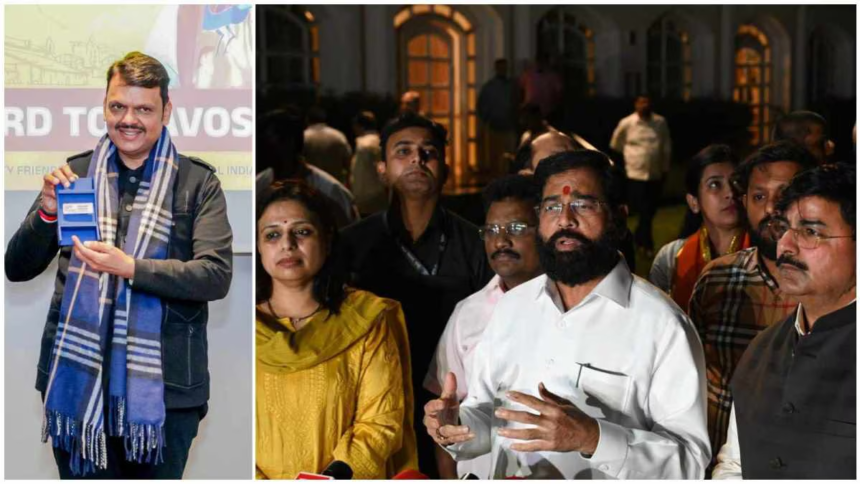
Adding an international dimension to this high-stakes political drama, Maharashtra Chief Minister Devendra Fadnavis, currently in Davos for the World Economic Forum (WEF), signed multiple high-value global Memorandums of Understanding (MoUs) aimed at boosting foreign investment, infrastructure development, and employment generation in the state. The convergence of local political uncertainty and global economic outreach has made January 2026 a defining moment for Maharashtra’s political and economic future.

As of the latest official update, the BJP has secured 108 seats in the 227-member BMC, falling 12 seats short of the majority mark of 114. While this makes the BJP the largest single party in the civic body, it does not give them the numbers needed to independently form the municipal government or claim the prestigious post of Mumbai Mayor.
The Shiv Sena (Uddhav Balasaheb Thackeray faction), the Congress, the Nationalist Congress Party (Sharad Pawar faction), and several smaller regional outfits have collectively performed better than expected, splitting votes and denying the BJP a clean sweep.
Political analysts say this fractured mandate reflects voter dissatisfaction with traditional alliances and a growing preference for localized leadership over national party narratives. Civic issues such as water shortages, pothole-ridden roads, housing redevelopment delays, air pollution, and coastal erosion dominated the campaign, pushing national ideological debates into the background.
The real story of the 2026 BMC elections, however, is not the BJP’s lead—it is the strategic position occupied by Chief Minister Eknath Shinde’s Shiv Sena faction. With 18 crucial seats, Shinde has emerged as the kingmaker in Mumbai’s civic politics.
His bloc’s support could push the BJP past the majority mark and allow it to claim the Mayor’s post. Alternatively, Shinde could explore the possibility of a broader anti-BJP alliance, though such a move would be politically complex given his current alliance with the BJP at the state level.
Sources close to the Chief Minister say backchannel negotiations are already underway. Senior BJP leaders have reportedly offered Shinde a larger share in civic governance, including key committee chairmanships and control over major urban development portfolios.

“Shinde’s decision will not just shape Mumbai’s municipal leadership for the next five years; it will also influence the broader political equation in Maharashtra ahead of the 2029 Assembly elections,” a senior political analyst told reporters.
With no party crossing the halfway mark, the contest for the Mayor’s chair has turned into a multi-cornered negotiation exercise. Traditionally, the Mumbai Mayor’s post has been a symbolic yet politically powerful position, controlling one of the world’s wealthiest municipal corporations with an annual budget exceeding ₹52,000 crore.
The BJP has declared that, as the single largest party, it has the “first right” to stake claim to the Mayor’s post. However, opposition parties have countered that moral legitimacy comes from majority support, not merely from leading the seat tally.
If Shinde backs the BJP, Mumbai could see its first BJP-backed Mayor in over three decades. If he chooses neutrality or aligns with opposition forces, the BJP could be forced into the opposition benches despite winning the most seats.
The Shiv Sena (UBT), Congress, and NCP (SP) have already hinted at a possible tactical alliance to block the BJP from controlling the BMC. Combined, these parties currently hold 101 seats, just 13 short of the majority mark.
Uddhav Thackeray, addressing party workers in Mumbai, said, “The people of Mumbai have given a clear message against unilateral control. We are open to all democratic options to form a stable, inclusive civic government.”
Congress leaders have echoed similar sentiments, stating that their priority is to ensure transparency, accountability, and citizen-centric governance at the municipal level.
However, forging such a coalition would require careful coordination among parties that have historically been rivals. Differences over leadership roles, portfolio allocation, and policy priorities could derail any potential alliance.
While political leaders in Mumbai are locked in negotiations, Chief Minister Devendra Fadnavis has been making headlines on the global stage. At the World Economic Forum in Davos, Fadnavis signed five major MoUs with multinational corporations and foreign governments, promising investments worth over $6.5 billion (₹54,000 crore) in Maharashtra.
These MoUs cover sectors such as renewable energy, electric mobility, semiconductor manufacturing, data centers, and green infrastructure. According to official statements, the projects are expected to generate more than 85,000 direct and indirect jobs over the next five years.

“Maharashtra is open for business. These agreements reflect global confidence in our economic vision and policy stability,” Fadnavis said while addressing investors in Davos.
The timing of these MoUs is politically significant. With the BMC elections delivering a fractured verdict, the BJP leadership is keen to showcase its governance credentials and economic achievements to strengthen its political narrative both within the state and nationally.
The contrast between Mumbai’s civic uncertainty and Maharashtra’s global investment push has not gone unnoticed. Critics argue that while the state government is focused on attracting foreign capital, it has failed to secure political stability at the grassroots level.
Opposition leaders have accused the BJP of prioritizing global optics over local governance challenges.
“Signing MoUs in Davos is important, but what about Mumbai’s roads, housing crisis, and water supply? The people have voted for accountability, not just announcements,” a senior Shiv Sena (UBT) leader said.
BJP leaders, however, have dismissed these criticisms, stating that economic development and civic governance are interconnected.
“A stronger economy leads to better municipal funding, infrastructure growth, and improved quality of life for citizens. Our efforts in Davos will directly benefit Mumbai and Maharashtra,” a BJP spokesperson said.
With negotiations ongoing, several possible outcomes could emerge over the next 72 hours:
Scenario 1: BJP–Shinde Alliance
If Shinde backs the BJP, the alliance would comfortably cross the majority mark, allowing the BJP to claim the Mayor’s post and form the municipal government. This would strengthen the BJP–Shinde partnership ahead of future elections.
Scenario 2: Opposition Coalition
If opposition parties unite and attract a few independents, they could form a coalition government and block the BJP from power despite it being the largest party.
Scenario 3: Political Deadlock
If no stable alliance emerges, Mumbai could face a prolonged political deadlock, potentially leading to administrative control by a government-appointed administrator.
Each scenario carries significant political and administrative implications for Mumbai’s future.
Public reaction to the BMC election results has been mixed. While BJP supporters have celebrated the party’s strong showing, many Mumbai residents have expressed frustration over the lack of a clear mandate.
Social media platforms are flooded with debates over coalition ethics, leadership accountability, and the future of Mumbai’s civic governance.
Interestingly, stock market analysts have noted a mild uptick in infrastructure and real estate stocks following the announcement of the Davos MoUs, signaling investor optimism about Maharashtra’s growth prospects despite political uncertainties.
The BMC is not just a municipal body; it is a political power center with a budget larger than that of several Indian states. Control over the BMC influences urban planning, infrastructure contracts, healthcare facilities, public education, and disaster management in Mumbai.

Moreover, the 2026 BMC elections are widely seen as a political litmus test ahead of the 2029 Maharashtra Assembly elections and the 2029 Lok Sabha polls.
A BJP-led municipal government would bolster the party’s narrative of urban dominance, while an opposition victory would signal growing resistance to BJP’s political expansion in metropolitan India.
Read Also : After Standoff, Shinde Signals Power-Sharing with BJP in BMC – 5 Big Political Shifts

