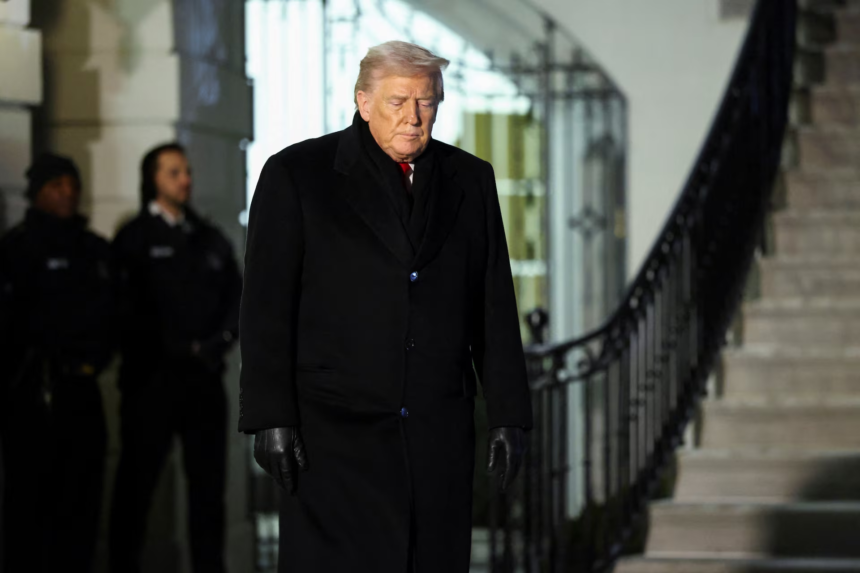
Determined to Seize Greenland, Trump Faces 7 Major Setbacks and Frosty Reception at Davos 2026
Determined to seize Greenland, Donald Trump faces a frosty reception and 7 major diplomatic setbacks at Davos 2026
Former U.S. President Donald Trump’s long-standing ambition to bring Greenland under American control has once again taken center stage—this time on the global stage at the World Economic Forum (WEF) in Davos. What Trump reportedly hoped would be a strategic pitch to world leaders instead turned into a diplomatic embarrassment, as his remarks about “seizing” Greenland were met with skepticism, criticism, and a notably cold reception from international delegates.
The episode has reignited a global debate about sovereignty, Arctic geopolitics, and the evolving power struggle between major nations over resource-rich territories. It has also underscored how Trump’s unconventional diplomacy continues to unsettle allies and rivals alike.

Trump’s interest in Greenland is not new. During his presidency in 2019, he famously floated the idea of purchasing the massive Arctic island from Denmark, calling it a “large real estate deal.” The proposal was swiftly rejected by both Denmark and Greenland’s autonomous government, triggering a diplomatic rift and the cancellation of a planned state visit to Copenhagen.
Since then, Trump has repeatedly referenced Greenland in speeches, interviews, and campaign rallies, portraying it as a strategic asset crucial for U.S. national security, mineral access, and Arctic dominance.
At Davos 2026, Trump reportedly doubled down on his rhetoric, telling a closed-door session of investors and political figures that Greenland “belongs in America’s strategic orbit” and that Washington should “do whatever it takes” to secure long-term control or influence over the territory.
Instead of applause, Trump’s comments were met with uncomfortable silence and visible unease. According to multiple attendees, several European leaders and diplomats exchanged glances and whispered reactions, clearly taken aback by the tone and implications of his remarks.
A senior Scandinavian diplomat reportedly described Trump’s comments as “reckless and deeply disrespectful to international law.”
“This isn’t the 19th century,” the diplomat said. “You can’t just talk about seizing another country’s territory and expect the world to nod along.”
Even some U.S. business leaders present at Davos distanced themselves from Trump’s statements, stressing that geopolitical stability is essential for long-term investment.
Trump’s Greenland pitch unraveled quickly, facing resistance on multiple fronts. Here are the seven major setbacks that defined his Davos moment:

1. Denmark’s Firm Rejection
Denmark’s Prime Minister issued a sharp response from Copenhagen, reiterating that Greenland is not for sale and never will be. “Greenland is an autonomous territory with its own elected government. Any suggestion of external seizure is unacceptable,” the statement read.
2. Greenland’s Government Pushes Back
Greenland’s Premier called Trump’s remarks “colonial-era thinking” and emphasized that Greenlanders alone have the right to decide their future. The government announced plans to raise the issue at international forums if the rhetoric continues.
3. European Union Condemns the Idea
The European Commission released a brief but pointed note reminding all nations of the principles of sovereignty and territorial integrity. While not naming Trump directly, the message was widely interpreted as a rebuke.
4. NATO Allies Express Concern
Several NATO members privately expressed alarm over Trump’s language, warning that such rhetoric could destabilize Arctic cooperation and strain transatlantic relations.
5. China and Russia Weigh In
Both Beijing and Moscow seized the opportunity to criticize U.S. “imperial ambitions.” Russian officials accused Washington of double standards, while Chinese diplomats warned against turning the Arctic into a geopolitical battlefield.
6. Investor Skepticism
Major institutional investors reportedly questioned the feasibility and legality of any attempt to “seize” Greenland, warning that geopolitical instability would deter Arctic investment rather than encourage it.
7. U.S. Political Blowback
Back home, Trump faced criticism from both Democrats and Republicans. Several lawmakers called his remarks irresponsible and harmful to U.S. diplomacy.
Greenland is not just a frozen expanse of ice. It is strategically invaluable for several reasons:
- Geopolitical Location:
Greenland sits at a critical junction between North America and Europe, making it a key asset for missile defense systems and early-warning radar installations. - Natural Resources:
The island is believed to contain vast reserves of rare earth minerals, oil, gas, and uranium—resources that are becoming increasingly vital in the global energy transition. - Arctic Shipping Routes:
As polar ice melts, new shipping lanes are opening, significantly shortening travel times between Asia, Europe, and North America. - Climate Research and Military Presence:
The U.S. already operates a major military base at Thule in northern Greenland, underscoring its strategic interest in the region.
Trump’s argument hinges on the idea that securing Greenland would ensure U.S. dominance in the Arctic and counter the growing influence of China and Russia.
One of the most significant obstacles Trump faces is international law. The United Nations Charter explicitly prohibits the acquisition of territory by force.

“Any attempt to seize Greenland would violate international law and trigger severe diplomatic and economic consequences,” said a professor of international relations at Oxford University.
Even the idea of purchasing Greenland, as Trump suggested in 2019, would require approval from both Denmark and Greenland’s autonomous government—an outcome that remains politically unthinkable.
Although Trump currently holds no official government position, his statements carry weight due to his continued influence in U.S. politics and his potential return to power.
U.S. diplomats attending Davos were reportedly blindsided by his remarks and spent much of the day reassuring European allies that Trump’s comments do not reflect official U.S. policy.
“This is exactly the kind of thing that undermines trust in American diplomacy,” said a former U.S. ambassador to Germany.
Social media erupted with reactions to Trump’s Davos comments, with hashtags like #GreenlandGate and #NotForSale trending globally.
Some users mocked the idea as another example of Trump’s eccentric geopolitical thinking.
“Next he’ll try to buy the Moon,” one user joked.
Others expressed genuine alarm, warning that such rhetoric could escalate geopolitical tensions in the Arctic.
“This isn’t funny. The Arctic is already a flashpoint. We don’t need more reckless talk,” another user posted.
Trump’s Greenland remarks come at a time when the Arctic is rapidly emerging as a new geopolitical frontier.
China has declared itself a “near-Arctic state” and is investing heavily in polar infrastructure. Russia has expanded its military presence across its Arctic territories. NATO has increased surveillance and exercises in the region.
Against this backdrop, Trump’s rhetoric risks inflaming an already tense strategic environment.
“Instead of cooperative governance of the Arctic, we’re seeing a shift toward militarization and zero-sum competition,” said a security analyst in Oslo.
Experts overwhelmingly say no.
“The idea of the U.S. seizing Greenland is pure fantasy,” said a former Pentagon official. “It would require military action against a NATO ally and would isolate Washington internationally.”
Even a negotiated transfer of sovereignty is seen as virtually impossible, given strong opposition from Greenlanders themselves.
Surveys conducted in Greenland consistently show overwhelming resistance to any form of foreign takeover.
While Trump’s Davos comments have not changed any official policies, they have injected fresh uncertainty into Arctic diplomacy.

Greenland’s government is expected to seek assurances from Washington, while Denmark may raise the issue within NATO and the European Union.
Meanwhile, Trump’s political rivals are likely to use the episode to portray him as reckless and unfit for leadership.