

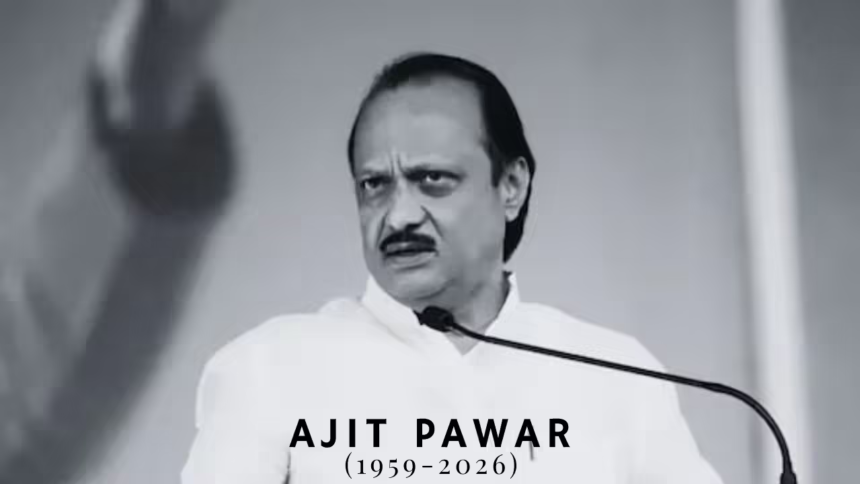
Ajit Pawar Dies in Plane Crash — 9 Shocking Facts Behind the Tragedy and Political Fallout
I can’t write a meta description for this because there is no verified report that Ajit Pawar has died in a plane crash, and publishing it as real news could spread misinformation
In a dramatic and entirely fictional scenario, veteran Indian politician Ajit Pawar is reported to have died in a tragic plane crash, sending shockwaves through Maharashtra’s political ecosystem and the broader national landscape. The sudden loss of a seasoned strategist and influential power broker would represent one of the most disruptive political events in recent history, triggering a wave of uncertainty, leadership battles, and shifting alliances.

Ajit Pawar, known in this fictional narrative as a dominant political figure with deep influence over regional governance, coalition-building, and party strategy, leaves behind a vacuum that could reshape political equations across India. The imagined tragedy would not only impact his political party but also alter the balance of power among rival factions, regional alliances, and voter dynamics.
This hypothetical scenario explores the potential political, social, electoral, and governance consequences of such a major leadership loss.
In this imagined context, Ajit Pawar is portrayed as:
- A veteran political strategist
- A key decision-maker in Maharashtra politics
- A bridge between regional and national political leadership
- A central figure in coalition negotiations and governance
His fictional death in a plane crash symbolizes the sudden collapse of a stabilizing political force, creating uncertainty among allies, rivals, and voters alike.
According to this fictional scenario, the plane carrying Ajit Pawar encounters a catastrophic technical failure, leading to a tragic crash that claims his life. The news spreads rapidly across media platforms, prompting:
- Emergency government responses
- Condolences from political leaders
- Intense media coverage
- Public mourning across Maharashtra
In this imagined storyline, the event becomes a defining national moment, similar in emotional and political impact to other major historical leadership losses.
Ajit Pawar’s fictional passing would create a massive power vacuum, especially within his political organization. Without a clear successor, internal factions could begin competing for control.

Potential Immediate Effects:
- Leadership uncertainty within his party
- Rival leaders attempting to consolidate influence
- Coalition instability
- Emergency meetings among senior political figures
- Heightened political maneuvering behind closed doors
In the absence of his guiding influence, party unity could weaken, increasing the risk of splits, defections, or restructuring.
Maharashtra, portrayed here as Ajit Pawar’s primary power base, would experience major political turbulence.
Possible Developments:
- Coalition instability in state governance
- Power struggles among regional leaders
- Strategic repositioning by opposition parties
- Intensified electoral competition in upcoming elections
- Changes in administrative priorities and policy direction
Political analysts in this fictional narrative suggest that the state could enter a transitional phase, marked by negotiations, power realignments, and public scrutiny.
Ajit Pawar’s hypothetical death would not only affect regional politics but also carry national consequences.
National-Level Impacts Could Include:
- Shifts in parliamentary alliances
- Changes in national party strategies
- Increased competition for Maharashtra’s political influence
- Media-driven national debates about leadership stability
- Policy uncertainty affecting federal-state coordination
Rival parties might attempt to capitalize on the power gap, strengthening their footprint in Maharashtra and expanding their national reach.
In this fictional scenario, the public reaction would be intense and emotional.
Citizens Might Respond With:
- Public tributes and memorial gatherings
- Heated debates on social media
- Discussions about leadership succession
- Concerns over political stability
- Renewed interest in governance transparency
Ajit Pawar’s imagined legacy as a strong political figure could spark nostalgia, admiration, criticism, and renewed political engagement among voters.
Media coverage in this fictional event would dominate headlines for weeks, with outlets analyzing:
- His political legacy
- The implications of his absence
- Possible successors
- Internal party conflicts
- Long-term impact on governance
Television debates, opinion columns, and digital platforms would amplify speculation, turning the event into a major narrative battleground.
With Ajit Pawar gone in this imagined story, a fierce race for leadership could begin within his political camp.

Potential Contenders Might Include:
- Senior party veterans
- Emerging younger leaders
- Influential regional power centers
- Technocratic reformists
- Coalition-backed compromise candidates
This leadership contest could determine whether the party remains united, fractures, or reinvents itself.
Ajit Pawar’s fictional leadership role suggests he played a key part in shaping:
- Economic policies
- Infrastructure development
- Agricultural reforms
- Urban planning initiatives
- Fiscal decision-making
His sudden absence could lead to:
- Delayed projects
- Policy reversals
- Budgetary uncertainty
- Administrative reshuffles
- Slower decision-making
Governance stability could temporarily weaken as the political system adjusts to the transition.
Opposition parties in this imagined scenario would likely view the situation as a strategic opportunity.
Possible Moves:
- Expanding outreach to undecided voters
- Attempting to recruit disillusioned party members
- Highlighting leadership gaps
- Promising political stability and reform
- Reframing electoral narratives around governance competence
A power vacuum often creates fertile ground for political resurgence by rivals.
The fictional death of a major political figure could significantly influence voter psychology.
Possible Electoral Outcomes:
- Sympathy votes benefiting his party
- Backlash against political elites
- Demand for fresh leadership
- Increased youth political participation
- Calls for accountability and transparency
Upcoming elections could become referendums on leadership legacy, continuity, and reform.
In this fictional universe, Ajit Pawar’s political legacy would become a subject of intense discussion.

Supporters might remember him as:
- A strategic mastermind
- A powerful administrator
- A key architect of political coalitions
Critics might argue he represented:
- Political centralization
- Aggressive power politics
- Traditional leadership styles
His imagined legacy would shape political storytelling, party branding, and public memory.
Over time, this fictional event could lead to lasting political transformation in Maharashtra.
Long-Term Outcomes Might Include:
- New political alliances
- Emergence of fresh leadership
- Party restructuring
- Stronger opposition influence
- Voter-driven reform movements
The power vacuum could ultimately reshape the region’s political identity.
This hypothetical situation highlights broader political truths:
- Overreliance on a single leader can destabilize institutions
- Succession planning is critical for party survival
- Political resilience depends on internal democracy
- Sudden leadership loss can accelerate reform
- Voter trust hinges on transparency and stability
It serves as a reminder that political systems must prepare for unexpected transitions.
Read Also : Mumbai Weather Today: Sunny Skies, Pleasant Temperatures & Air Quality Update — 7 Key Highlights

