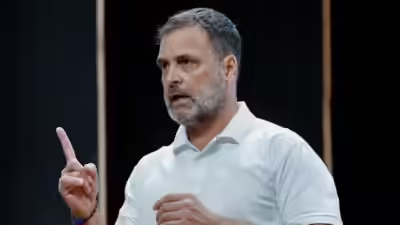
No-Confidence Motion Against Om Birla: Why Rahul Gandhi Did Not Sign the Notice
The opposition’s move to bring a no-confidence motion against Lok Sabha Speaker Om Birla has triggered fresh political debate, particularly over why Congress leader Rahul Gandhi did not sign the notice submitted by opposition MPs.
The development comes amid heightened tensions in Parliament, where clashes between the ruling Bharatiya Janata Party (BJP) and opposition parties have repeatedly disrupted proceedings.
The No-Confidence Move Explained
A group of opposition MPs submitted a formal notice seeking a no-confidence motion against the Lok Sabha Speaker, alleging bias and improper conduct in the functioning of the House. The move is rare and politically significant, as Speakers are traditionally expected to function above party politics.
The notice was backed by multiple opposition leaders, but Rahul Gandhi’s absence from the signatories list immediately drew attention.
Why Rahul Gandhi Stayed Out
According to Congress sources, Rahul Gandhi’s decision not to sign the notice was strategic rather than ideological. Party insiders said that the Congress did not want the issue to be framed as a personal confrontation led by Gandhi, which could allow the BJP to shift the narrative away from institutional concerns.
Instead, the party aimed to project the move as a collective opposition effort, avoiding the perception that it was driven by a single leader.
Congress’ Institutional Argument
Congress leaders argue that the no-confidence motion is about protecting parliamentary democracy, not targeting individuals. By keeping Rahul Gandhi’s name off the notice, the party believes the focus remains on the Speaker’s conduct rather than on political personalities.
The Congress has also maintained that it respects the office of the Speaker, even while questioning specific decisions taken during recent sessions.
BJP’s Response
The BJP dismissed the motion as a political stunt, accusing the opposition of undermining parliamentary institutions. Ruling party leaders questioned the seriousness of the move, pointing to Rahul Gandhi’s absence as evidence of internal divisions within the opposition.
They also defended Om Birla, saying he has conducted proceedings in line with parliamentary rules and conventions.
Opposition Unity in Focus
The episode has once again brought opposition unity under the spotlight. While parties have come together on several issues during the session, differences over strategy and leadership continue to surface.
Political analysts say Rahul Gandhi’s calculated distance from the motion reflects the Congress’ broader attempt to balance assertiveness with restraint.
What Happens Next
For a no-confidence motion against the Speaker to proceed, it must meet procedural requirements and gain adequate support. Even if admitted, such motions rarely succeed, but they often serve as powerful political statements.
The opposition is expected to continue raising concerns over parliamentary functioning as the session progresses.
Conclusion
Rahul Gandhi’s decision not to sign the no-confidence notice against Om Birla underscores a tactical approach by the Congress, aimed at keeping the spotlight on institutional accountability rather than individual leadership. As Parliament remains deeply polarized, the move adds another layer to the ongoing political confrontation.
Also Read : US Tariff Cut to Boost India’s AYUSH and Nutraceutical Sectors Under Interim Trade Deal