Pune Clash: 9 Injured After BJP-Congress Workers Fight Over Harshwardhan Sapkal’s Shivaji-Tipu Remarks
Violence erupts in Pune as workers of the Bharatiya Janata Party and Indian National Congress clash over Harshwardhan Sapkal’s remarks on Shivaji Maharaj and Tipu Sultan, leaving 9 injured and tensions high
Political tensions flared in Pune after a violent clash broke out between workers of the Bharatiya Janata Party and the Indian National Congress. The confrontation reportedly stemmed from controversial remarks made by Harshwardhan Sapkal regarding historical figures Chhatrapati Shivaji Maharaj and Tipu Sultan. The incident left at least nine people injured and sparked a fresh political row in Maharashtra.
The clash has triggered sharp reactions from political leaders, raised concerns about rising political intolerance, and brought historical narratives back into the centre of contemporary political discourse.
The roots of the clash lie in a statement attributed to Harshwardhan Sapkal that allegedly compared or referenced Shivaji Maharaj and Tipu Sultan in a way that angered BJP workers. Shivaji Maharaj holds immense cultural and historical significance in Maharashtra, revered as a symbol of pride and resistance. Any perceived attempt to equate or reinterpret his legacy often provokes strong reactions.
Soon after the remarks surfaced, BJP leaders and workers condemned the statement, accusing Sapkal of insulting the legacy of Shivaji Maharaj. Congress leaders, meanwhile, defended their colleague, claiming his comments were taken out of context and politicised for electoral gain.
The controversy quickly escalated from a verbal political spat to a full-blown street confrontation.
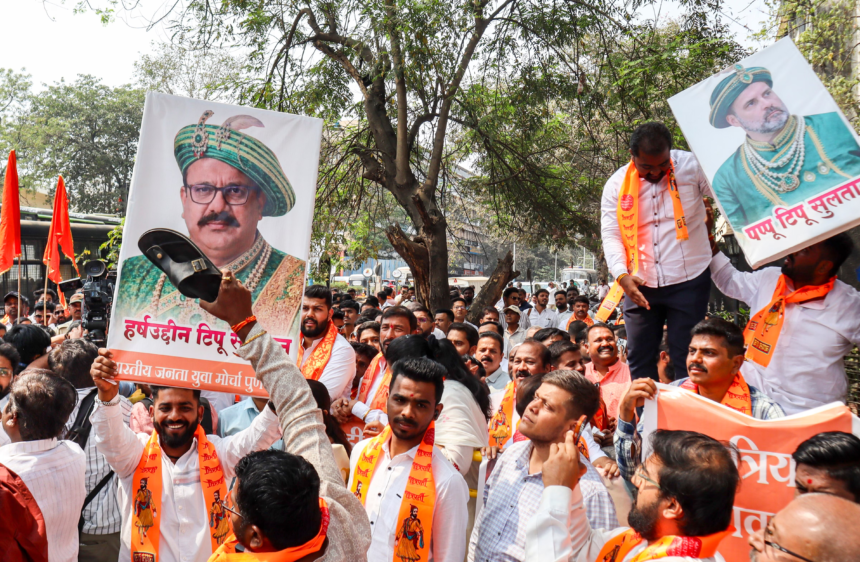
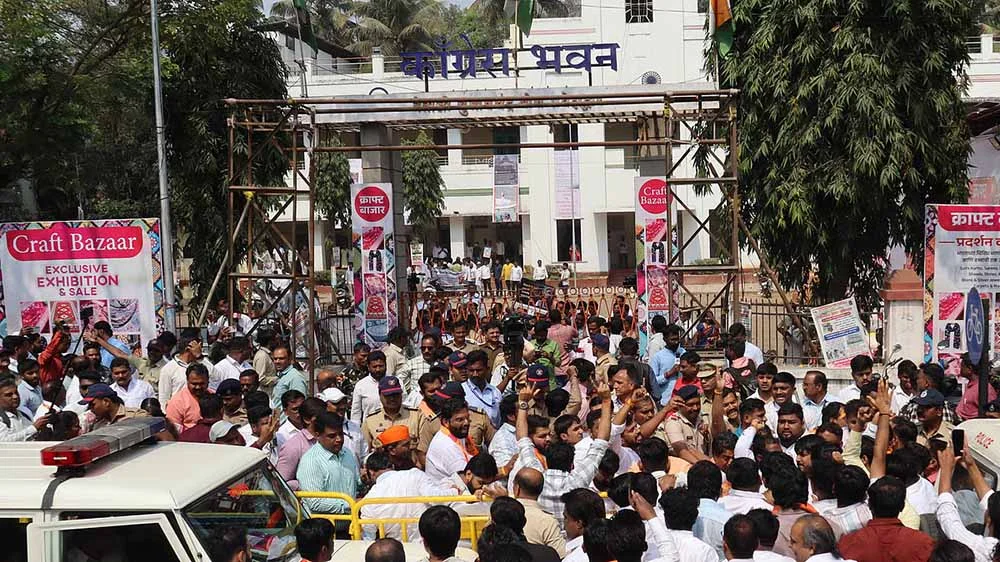
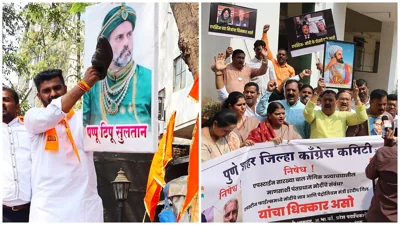
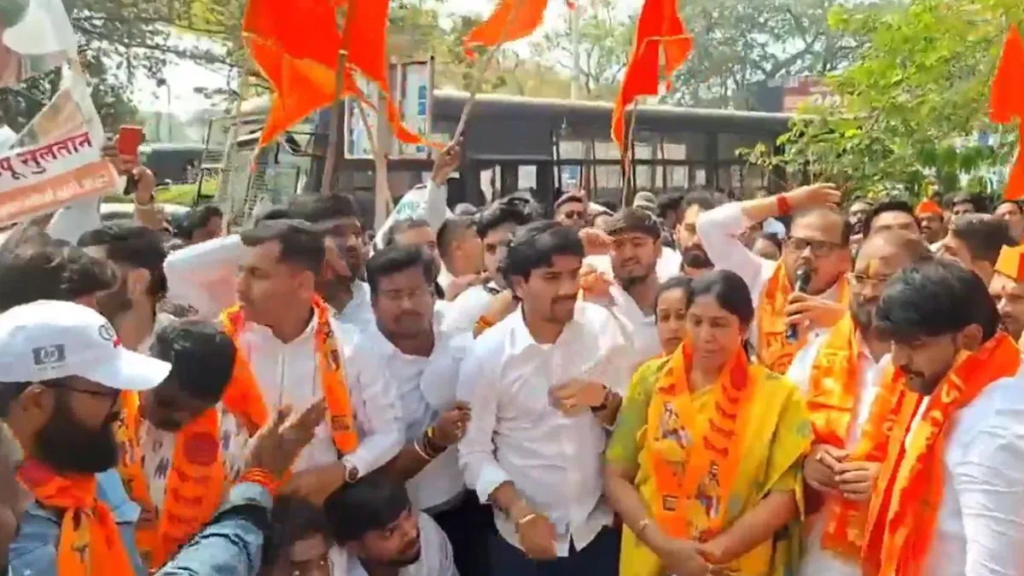
According to reports, tensions began building as members of both parties gathered in parts of Pune to protest and counter-protest. Slogans were raised, banners were displayed, and the atmosphere grew increasingly charged.
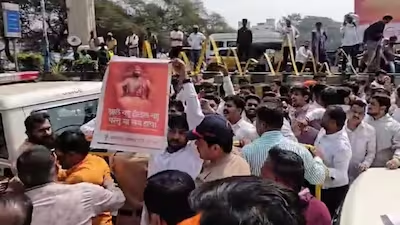
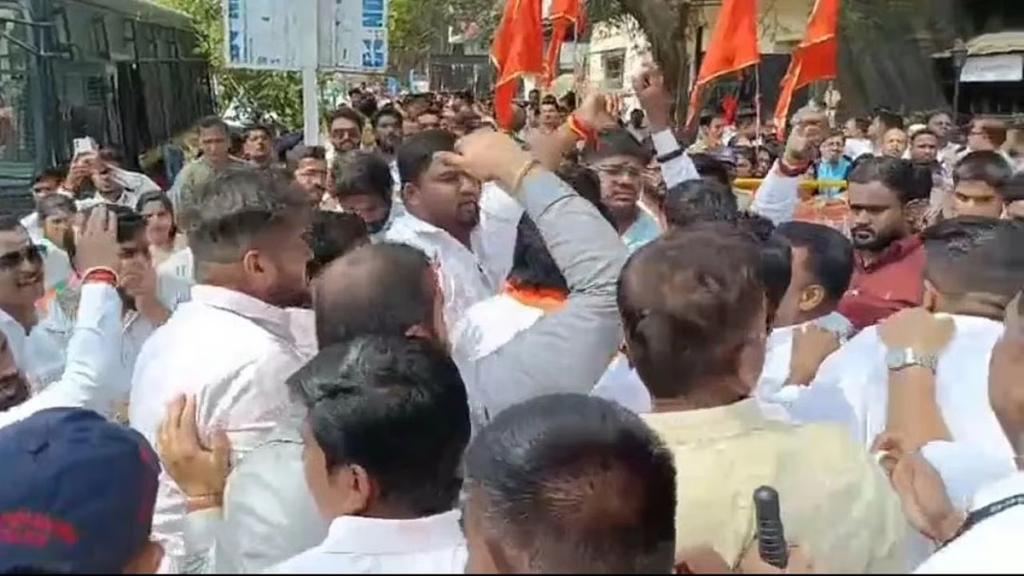
The situation spiralled into violence when groups from both sides allegedly began pushing, throwing objects, and engaging in physical altercations. Eyewitnesses described scenes of chaos as party workers clashed in public areas, causing panic among bystanders.
Police were deployed swiftly to control the situation, but not before at least nine individuals sustained injuries. Some of the injured were reportedly treated for minor wounds, while a few required hospitalisation.
Local law enforcement agencies responded quickly to prevent further escalation. Senior police officials arrived at the scene and dispersed the crowd, while additional forces were deployed in sensitive areas of the city.
Authorities have reportedly registered cases and begun identifying individuals involved in the violence. CCTV footage and video clips circulating on social media are being examined as part of the investigation.
Police have also appealed to citizens to maintain peace and refrain from spreading inflammatory content online. Security has been tightened in key parts of Pune to prevent retaliatory clashes.
The clash has triggered strong political reactions from both sides, with leaders trading accusations over who was responsible for the violence.
BJP leaders condemned the remarks attributed to Sapkal, calling them “insulting” and “provocative.” They demanded a public apology and accused the Congress of disrespecting regional icons for political mileage.
Congress leaders, on the other hand, accused the BJP of orchestrating protests to inflame tensions. They claimed the controversy was being amplified deliberately to divert attention from governance issues.
The war of words quickly spread to social media platforms, where party supporters engaged in heated debates, further intensifying the political atmosphere.
The controversy highlights the deep emotional connection many Maharashtrians have with Chhatrapati Shivaji Maharaj. Revered as a warrior king and founder of the Maratha Empire, Shivaji Maharaj occupies a unique place in Maharashtra’s cultural identity.
Political parties across the spectrum often invoke his legacy, but any perceived misrepresentation can trigger strong public reactions. Over the years, several controversies have erupted over statements related to Shivaji Maharaj, often leading to protests and political confrontations.
The latest incident underscores how historical narratives continue to shape modern political conflicts.
The mention of Tipu Sultan in the controversy adds another layer of complexity. While some view him as a freedom fighter who resisted British colonial rule, others criticise aspects of his reign, making him a polarising historical figure in Indian politics.
Debates around Tipu Sultan often become politically charged, especially when juxtaposed with regional icons like Shivaji Maharaj. Such comparisons frequently ignite ideological divides, as seen in the Pune clash.
The Sapkal controversy appears to have reignited these long-standing historical debates, turning them into a flashpoint for political confrontation.
The Pune clash reflects a broader trend of rising political polarisation in urban centres across Maharashtra. Once known for relatively calm political discourse, cities like Pune have witnessed increasing instances of protests, confrontations, and ideological clashes in recent years.
Experts suggest that heightened social media influence, aggressive political messaging, and identity-driven narratives are contributing to this shift. Local issues are increasingly intertwined with national political debates, leading to rapid escalation of tensions.
The incident has sparked concerns about whether political rivalry is increasingly spilling onto the streets.
The violence caused temporary disruptions in parts of Pune, with traffic diversions and heightened security affecting daily commuters. Shops in certain areas reportedly downed shutters briefly as a precautionary measure.
Residents expressed concern over the incident, urging political leaders to exercise restraint. Many locals said that Pune, known for its educational institutions and cultural vibrancy, should not become a battleground for political violence.
Civil society groups have also called for dialogue and responsible political conduct to prevent such incidents in the future.
As with many modern political controversies, social media played a significant role in amplifying the incident. Videos of the clash quickly went viral, sparking widespread reactions and debates online.
Supporters from both sides shared their versions of events, often adding to the confusion and misinformation. Hashtags related to the controversy began trending, drawing national attention to what began as a local issue.
Authorities have urged people to verify information before sharing content, warning that misinformation could further inflame tensions.
Following the clash, demands for accountability have emerged from various quarters. Political leaders, activists, and citizens alike have called for strict action against those involved in the violence, regardless of party affiliation.
Some analysts argue that holding individuals accountable is crucial to deter future incidents. Others believe that political parties must introspect and avoid rhetoric that could incite unrest.
The coming days are likely to see further political developments, including possible protests, inquiries, and statements from senior leaders.
The clash also comes at a time when political tensions in Maharashtra are already high due to shifting alliances and intense competition among parties. Statements that touch upon identity, history, and regional pride often gain traction quickly in such an environment.
Observers believe that incidents like the Pune clash are not isolated but part of a larger pattern of increasingly aggressive political engagement. With elections and political campaigns intensifying periodically, such flashpoints may become more frequent.
This makes it all the more important for leaders across parties to exercise caution and responsibility.
Read Also : 5 Years of Love: Dia Mirza Shares 7 Unseen Wedding Pics with Vaibhav Rekhi