Holi 2026: 5 Explosive Reasons Why the Festival of Colours Transforms India — And the World — Into a Rainbow Celebration
Holi 2026 celebrates 5 vibrant traditions as India and communities worldwide mark the Hindu Festival of Colours with joyful rituals, music, bonfires, and spectacular bursts of colour symbolising unity and renewal
Every spring, India bursts into a spectacular explosion of color, music, laughter, and shared celebration as millions mark Holi — the Hindu Festival of Colours. Known for its playful throwing of powdered pigments and water, Holi is far more than a visual spectacle. It is a deeply symbolic festival rooted in mythology, spirituality, seasonal renewal, and social unity.
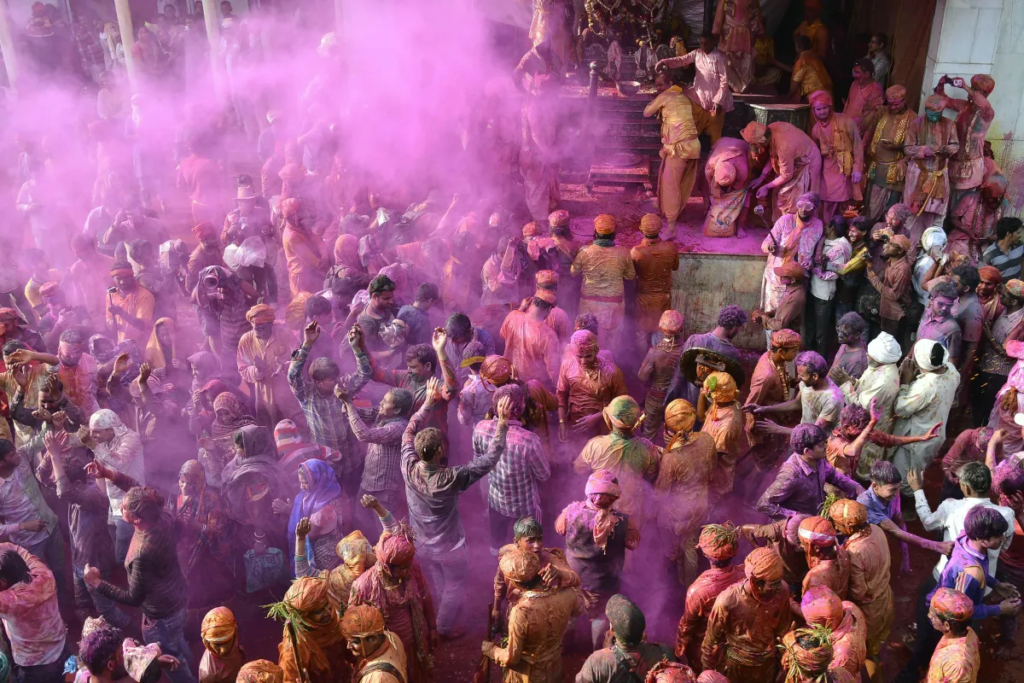
From temple towns in North India to diaspora communities in Europe, North America, and beyond, Holi has grown into a global cultural phenomenon. Yet at its heart, it remains a celebration of good triumphing over evil, the arrival of spring, and the breaking down of social barriers.
Here are seven vibrant traditions and powerful meanings that define Holi in India and across the world.
Holi’s origins are tied to ancient Hindu mythology, particularly the story of Prahlad and Holika. According to tradition, the demon king Hiranyakashipu demanded that everyone worship him. However, his son Prahlad remained devoted to Lord Vishnu. Enraged, Hiranyakashipu plotted to kill Prahlad with the help of his sister Holika, who possessed a magical cloak that made her immune to fire.
Holika sat in a blazing pyre with Prahlad on her lap, intending to burn him alive. But divine intervention reversed the outcome — Holika perished in the flames, while Prahlad emerged unharmed.
This victory of faith and righteousness over arrogance and evil is commemorated through Holika Dahan, a bonfire ritual held on the eve of Holi. Across neighborhoods, families gather around towering bonfires, symbolically burning away negativity and welcoming purification.
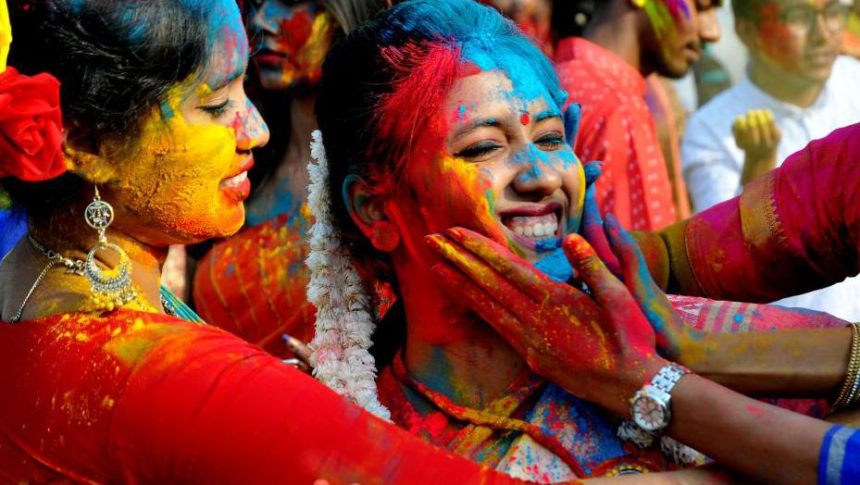
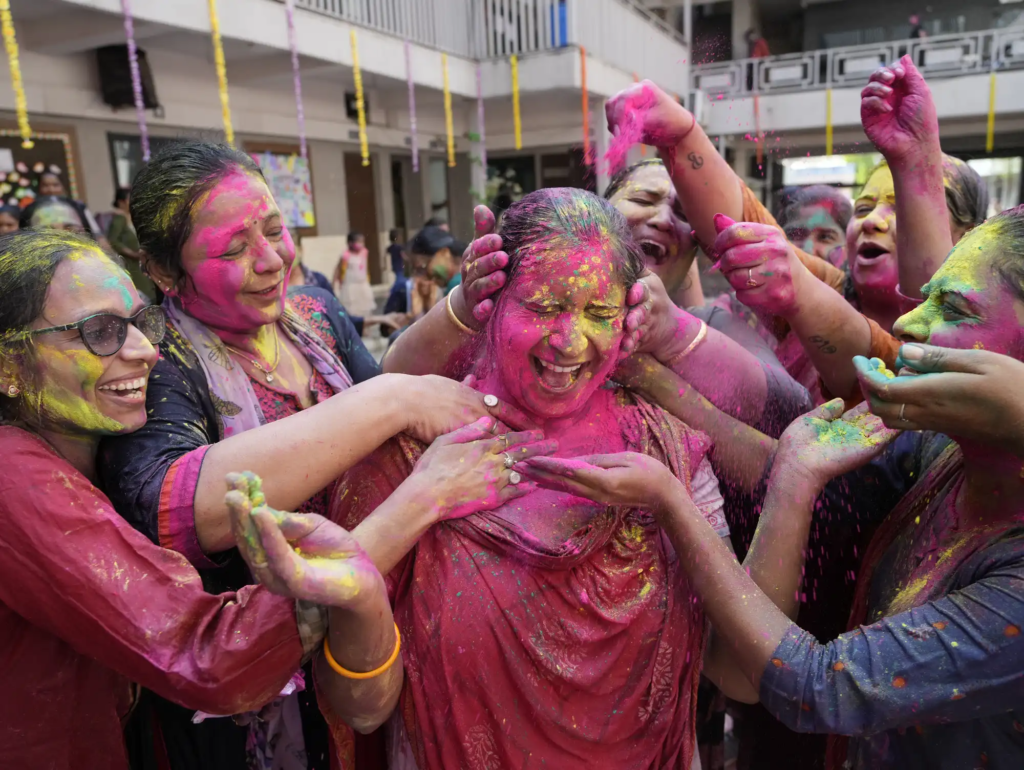
The most iconic aspect of Holi is the exuberant throwing of gulal — brightly colored powders — and spraying of colored water. Streets, parks, and public squares transform into kaleidoscopic playgrounds where age, status, and background momentarily dissolve.
Participants smear colors on one another’s faces, shouting “Happy Holi!” in joyful abandon. The colors themselves carry symbolic meaning:
- Red represents love and fertility
- Green symbolizes new beginnings and harvest
- Yellow reflects knowledge and turmeric’s sacred significance
- Blue is associated with Lord Krishna
In cities like Mathura and Vrindavan, Holi celebrations are particularly grand, as these towns are closely associated with Lord Krishna’s childhood legends.
Another layer of Holi’s significance comes from stories of Lord Krishna and Radha. According to folklore, young Krishna complained to his mother about Radha’s fair complexion compared to his dark skin. His mother playfully suggested he apply color to Radha’s face — a gesture that evolved into the festival’s playful color-smearing tradition.
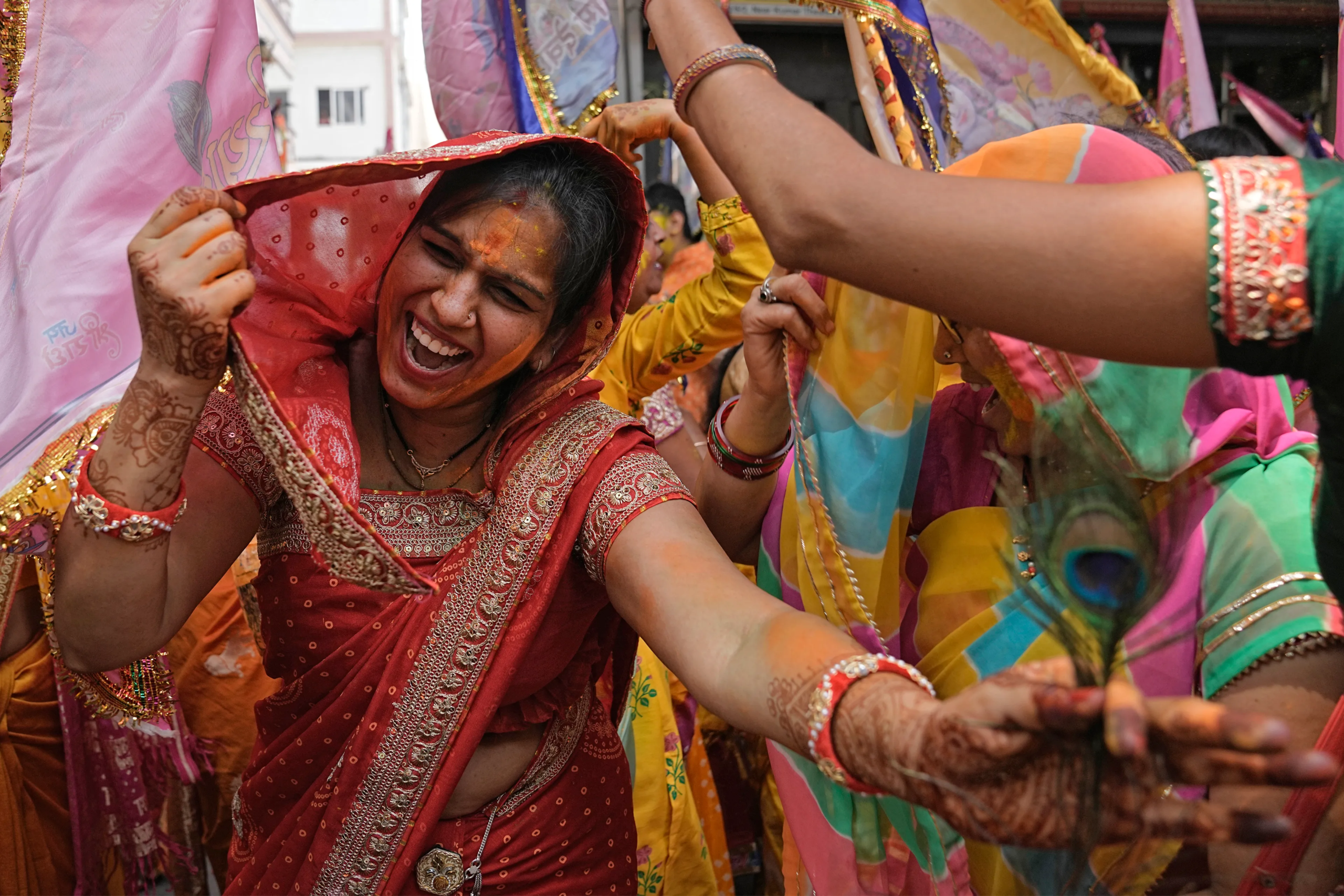
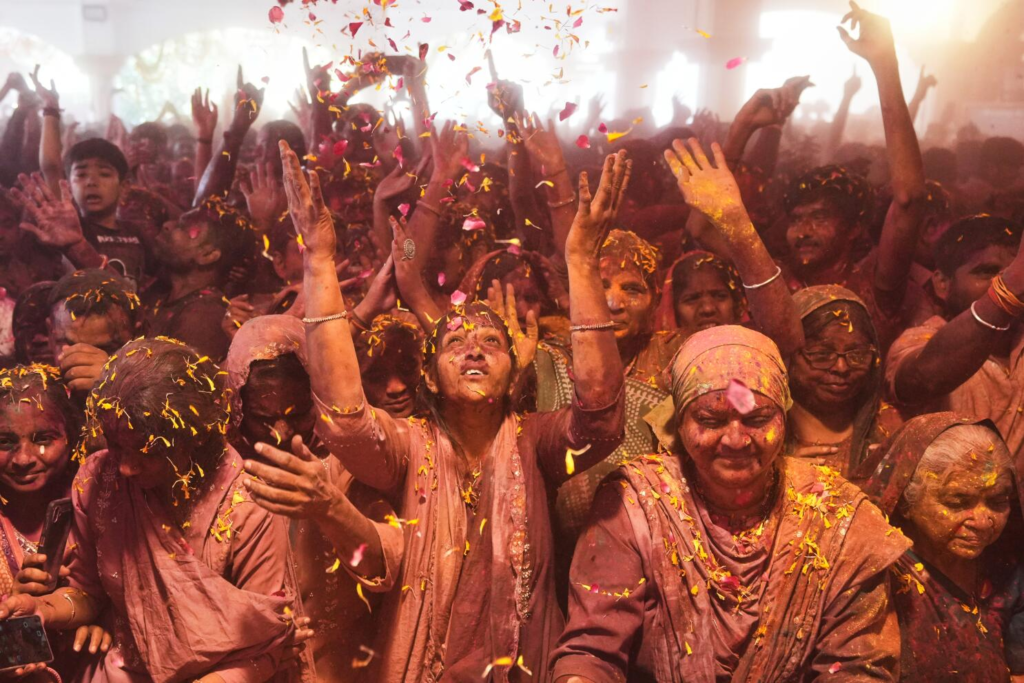
Temples dedicated to Krishna host elaborate Holi festivities featuring devotional songs, flower petals, and ceremonial color rituals.
In regions of Uttar Pradesh, the Lathmar Holi tradition sees women playfully striking men with sticks in a re-enactment of Krishna teasing Radha and her friends — a spirited celebration that draws thousands of tourists annually.
Holi is often described as a “great equalizer.” During the festival, social hierarchies temporarily dissolve. Strangers embrace, differences fade, and forgiveness is encouraged.
The phrase “Bura na mano, Holi hai” (Don’t take offense, it’s Holi) reflects the playful spirit of the day. It is a time to mend broken relationships, let go of grudges, and reconnect with loved ones.
Even workplaces and schools organize Holi gatherings, fostering camaraderie and cultural exchange.
No Holi celebration is complete without music and traditional delicacies. Folk songs known as “Holi geet” fill the air, while Bollywood Holi tracks amplify the festive mood.
Families prepare sweets such as gujiya — a deep-fried pastry stuffed with khoya and dry fruits — along with malpua and thandai, a refreshing milk-based drink often flavored with saffron and nuts.
Public squares transform into open dance floors where communities gather to celebrate spring’s arrival with boundless enthusiasm.
Over the past two decades, Holi has transcended borders. Indian diaspora communities organize vibrant events in cities like London, New York, Sydney, and Toronto.
In the United States, large-scale Holi festivals often combine traditional rituals with live music and cultural performances, attracting participants from diverse backgrounds.
Even non-Hindu communities have embraced the festival’s universal themes of joy, color, and renewal. Universities worldwide host Holi events as symbols of cultural inclusivity and global celebration.
This globalization has turned Holi into one of India’s most recognized cultural exports.
In recent years, there has been growing emphasis on eco-friendly Holi practices. Environmental advocates encourage the use of natural colors derived from flowers, turmeric, and herbs rather than synthetic dyes.
Water conservation campaigns promote “dry Holi” celebrations to minimize excessive water use, particularly in drought-prone regions.
Many communities now focus on sustainable bonfires and biodegradable materials, ensuring that the festival remains aligned with environmental responsibility.
Holi significantly boosts local economies. From color powder vendors and sweet shops to travel agencies and hotels, the festival drives substantial seasonal business.
Tourist hotspots experience surges in visitors eager to witness the spectacle firsthand. Hotels in cities like Jaipur and Varanasi often report full occupancy during Holi week.
The festival’s global appeal also strengthens India’s cultural diplomacy, showcasing its rich traditions to international audiences.
At its core, Holi marks the transition from winter to spring — a season of rebirth and agricultural abundance. It is a celebration of life’s cyclical nature and the enduring power of positivity.
The vibrant colors serve as metaphors for the diversity and vitality of human existence. They remind participants that differences can coexist harmoniously.
As communities gather around bonfires and dance beneath clouds of color, Holi becomes more than a festival — it becomes a shared human experience of joy, unity, and renewal.
Holi’s enduring appeal lies in its universality. In an increasingly divided world, a festival centered on forgiveness, laughter, and shared celebration resonates deeply.
Whether in a small Indian village or a bustling international metropolis, Holi carries the same message: let go of negativity, embrace connection, and welcome the vibrant possibilities of a new season.
As colored powders settle and the echoes of laughter fade, the spirit of Holi lingers — a reminder that even in challenging times, joy can be rediscovered in the simplest acts of togetherness.
Read Also : Inside Arjun Tendulkar’s Pre-Wedding: Sara & Mom Anjali Steal Spotlight in 2 Show-Stopping Designer Lehengas