Australia Anti-Immigration Protests 2025: Thousands Rally in Melbourne, Sydney, Perth & Adelaide — 6 Big Takeaways from Nationwide Unrest
Australia Anti-Immigration Protests 2025: Thousands march across Melbourne, Sydney, Perth, and Adelaide. Discover 6 key takeaways from the nationwide rallies and political reactions
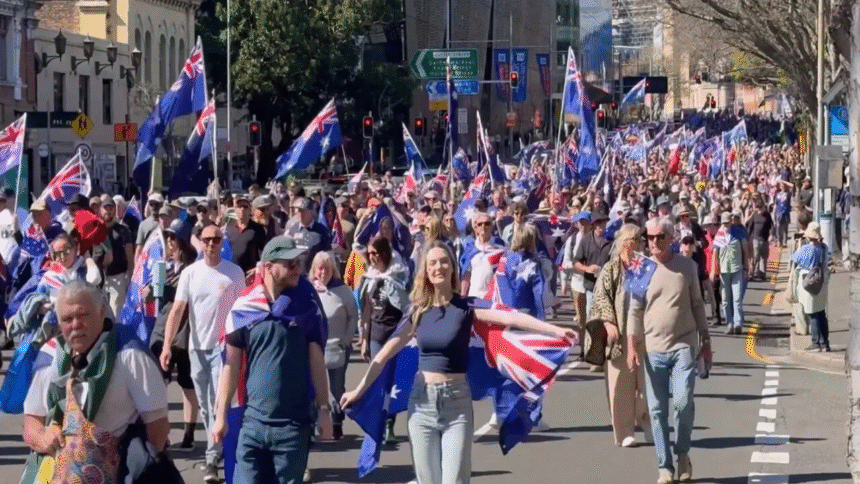
Neo-Nazis and politicians took part in anti-immigration “March for Australia” rallies across multiple Australian cities on Sunday, with tense confrontations between protesters and counter-demonstrators. The marches drew attention for the presence of far-right figures and some elected officials, reports The Guardian.
In Melbourne, protesters gathered outside Flinders Street station, waving Australian flags and carrying anti-immigration placards. A counter-protest merged with the weekly pro-Palestine rally outside the State Library of Victoria. Police blocked Flinders and Swanston streets to separate the groups, but the crowds met near Collins and Elizabeth streets.
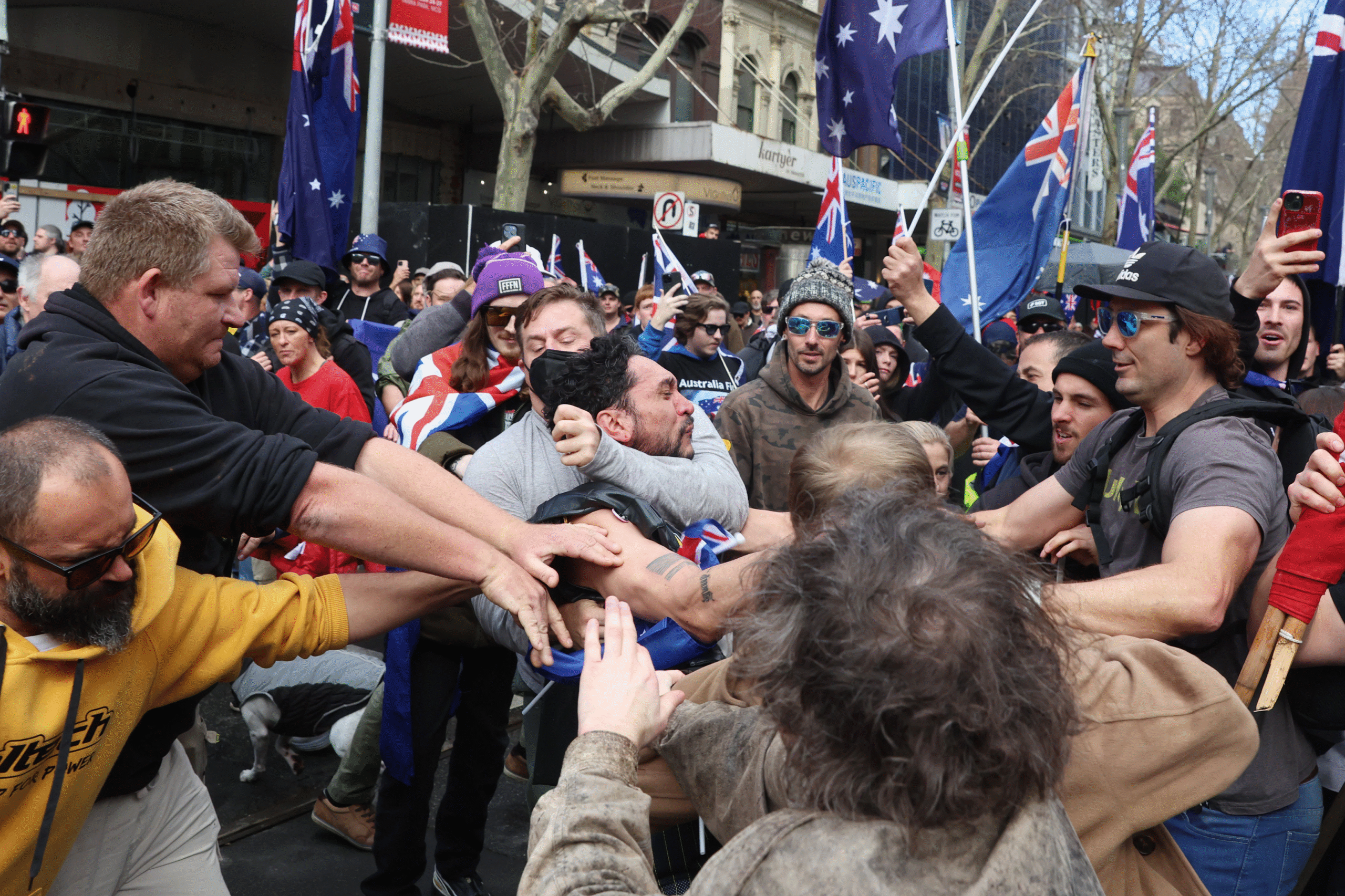
Tensions escalated when a bottle and an open can of beer were thrown across police lines. Riot police pepper-sprayed about a dozen counter-protesters and pushed them back. Six people were arrested on charges including assaulting police, attempted robbery, and rioting. Two officers were injured but did not require hospitalisation.
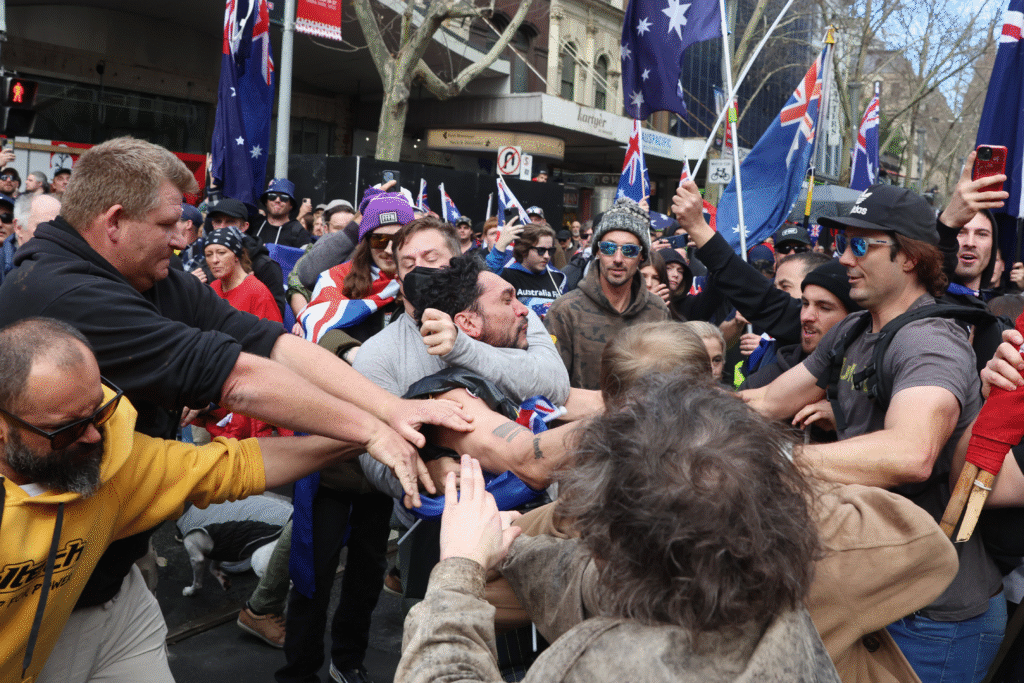
Three people were arrested, including a 23-year-old man for assaulting police and two 32-year-old men for “wearing articles of disguise” and failing to state personal details, reports ABC News.
One woman was arrested in Hyde Park where a pro-Palestine protest was being held for allegedly disturbing the peace.
The Melbourne rally continued to state parliament, where neo-Nazi Thomas Sewell addressed the crowd. “If we do not stop immigration, then our death is certain,” he said. Another unidentified speaker told demonstrators, “Australians are sick and tired of the rising tide of mass immigration in this country,” leading chants of “Albo must go” and “Aussie Aussie Aussie”.
Political figures also attended the rallies. One Nation leader Pauline Hanson joined the Canberra march alongside Senator Malcolm Roberts, while federal MP Bob Katter appeared at a Townsville protest. Their attendance drew criticism from government leaders who described the demonstrations as hateful and divisive.
Victorian Premier Jacinta Allan condemned those who “walk with Nazis”. “No one who has ever tried to divide this country has ever succeeded,” she said. Federal minister Murray Watt added, “We absolutely condemn the March for Australia rally…we don’t support rallies like this that are about spreading hate,” as quoted by The Guardian.
Police across states estimated 5,000 participants in Melbourne, and about 15,000 in Adelaide, where three arrests were made. Sydney and Canberra saw smaller gatherings, with counter-protesters kept separate by police lines. Brisbane saw brief clashes at Roma Street parklands, where some counter-protesters criticized the march for ignoring Indigenous land rights.
Some protesters in Brisbane and Adelaide expressed support for alleged Porepunkah police killer Dezi Freeman. In Brisbane, a woman carried a sign reading “I identify as sovereign” while repeatedly shouting “I stand with Dezi”. Freeman’s wife Amalia Freeman released a statement pleading with him to surrender.
Federal opposition leader Sussan Ley warned against violence and racism ahead of the marches. “We cannot let hatred and fear tear at our social cohesion,” she said.
Shadow Attorney General Julian Leeser cautioned participants to be mindful of extremist elements. “I’ve seen some of the material for that particular protest and I’m really concerned about the anti-Indian sentiment … and some of the antisemitic undertones,” he said.
In Perth, around 5,000 anti-immigration protesters and several hundred counter-protesters hurled abuse and chants at each other.
Australia witnessed a wave of anti-immigration protests as thousands of demonstrators took to the streets in Melbourne, Sydney, Perth, and Adelaide, voicing concerns over migration policies and their impact on jobs, housing, and social security. The rallies, which saw a strong turnout, have intensified the national debate around immigration levels amid economic pressures and rising living costs.
Organized by multiple civic groups and fueled by online campaigns, the protests drew widespread media attention and political responses. Here are the six biggest takeaways from the nationwide unrest.
From Melbourne’s Federation Square to Sydney’s Hyde Park, protesters gathered in large numbers. Estimates suggest that over 20,000 people collectively joined demonstrations across four cities. Many waved placards demanding tighter border controls and reduced immigration quotas.
A recurring theme across all rallies was fear of job competition and housing shortages. Protesters argued that high immigration levels are worsening unemployment among locals while driving up rents and property prices, making life unaffordable for many Australian families.
The protests triggered sharp responses from political leaders. Opposition figures backed calls for stricter immigration policies, while government ministers defended current levels, arguing that migration is essential for addressing skill shortages and sustaining economic growth. The divide is expected to dominate parliamentary debates in the coming weeks.
In contrast, several pro-immigration groups staged counter-rallies in Sydney and Melbourne, emphasizing the importance of cultural diversity and the contributions migrants make to Australia’s economy. This created tense stand-offs in certain areas, although police reported no major violence.
Authorities deployed hundreds of police officers across the four cities to maintain order. While the protests remained largely peaceful, a few instances of scuffles were reported. Law enforcement officials praised the overall discipline of demonstrators but warned against any escalation in future rallies.
The protests come at a crucial time, as the government is preparing its annual immigration intake review. Analysts believe the demonstrations could influence public sentiment and force policymakers to revisit the balance between economic needs and social pressures.