Afghanistan Earthquake Disaster: 2,200 Dead as Two Powerful Aftershocks Devastate Survivors
Afghanistan reels as two powerful aftershocks strike after deadly earthquakes killed 2,200 people. Rescue teams race against time amid rising casualties and devastation
Two powerful aftershocks shook eastern Afghanistan in a span of 12 hours, the German Research Center for Geosciences (GFZ) said, triggering fears of more deaths and destruction on Friday (September 5, 2025) in a region where about 2,200 people died in quakes in four days.
They follow two earthquakes that have already ravaged the South Asian nation, crushed by war, poverty and shrinking aid. The Taliban administration estimated 2,205 deaths and 3,640 injuries by Thursday (September 4, 2025).
Friday’s (September 5, 2025) earthquake of magnitude 5.4 struck the southeast at a depth of 10 km (6.2 miles), GFZ said, hours after one late on Thursday (September 4, 2025) night.
The week’s first earthquake of magnitude 6, just minutes before midnight on Sunday (August 31, 2025), was one of Afghanistan’s deadliest, unleashing damage and destruction in the provinces of Nangarhar and Kunar when it struck at a shallow depth of 10 km (6 miles).
A second quake of magnitude 5.5 on Tuesday (September 2, 2025) caused panic and interrupted rescue efforts as it sent rocks sliding down mountains and cut off roads to villages in remote areas.

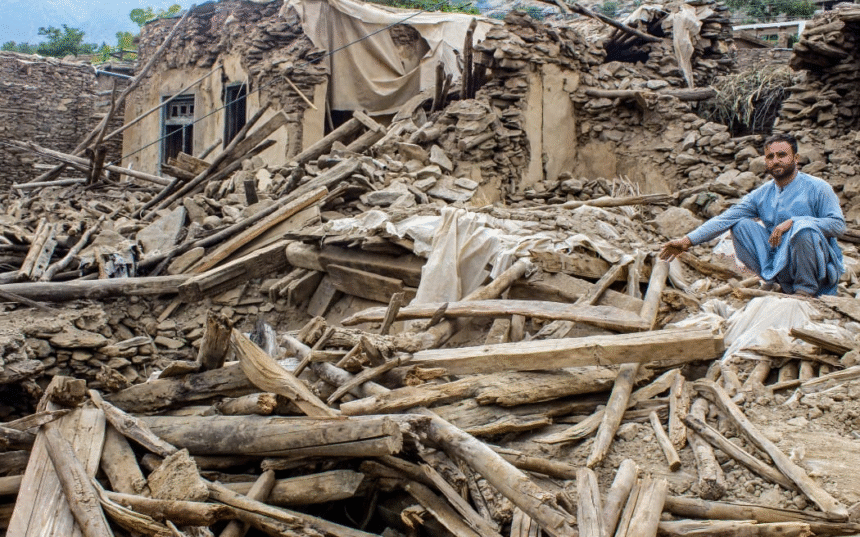
With houses built mostly of dry masonry, stone, and timber, some families preferred to stay in the open rather than return home, as a precaution against aftershocks.
Naqibullah Rahimi, a spokesperson for the health department in Nangarhar province, said the epicentre of Thursday’s earthquake was in the district of Shiwa near the border with Pakistan, and there were some initial reports of damage.
The earlier quakes flattened villages in both provinces, destroying more than 6,700 homes, and rescue workers pulled bodies from the rubble on Thursday.
Survivors in the quake-prone region have been left without basic amenities as the United Nations and other agencies warn of a critical need for food, medical supplies and shelter.
The earthquakes mainly happen in the Hindu Kush mountain range, where the Indian and Eurasian tectonic plates meet.
Afghanistan has been hit by a new wave of devastation after two powerful aftershocks rocked the nation, following the catastrophic earthquakes that have already killed over 2,200 people and left thousands more injured. The tremors, which struck in the western regions, have intensified fears of further destruction in communities that are already reeling from the deadliest seismic disaster in years.

According to local authorities and humanitarian agencies, entire villages have been flattened, homes reduced to rubble, and critical infrastructure destroyed. The initial quakes left widespread damage, with rescue teams working around the clock to pull survivors from beneath collapsed buildings. However, the sudden aftershocks have triggered new collapses, making rescue operations even more dangerous and complicated.
The death toll, which now surpasses 2,200, is expected to rise as many remain trapped under debris. More than 9,000 people have been injured, stretching hospitals and health facilities beyond their limits. Medical staff are struggling to treat victims amid shortages of equipment, medicine, and electricity.
For survivors, the aftershocks have sparked panic. Many families, already homeless after the earlier earthquakes, were forced to flee into open fields once again, fearing their damaged homes would collapse entirely. Humanitarian groups warn that tens of thousands are now exposed to the elements without proper shelter, food, or clean drinking water.
Children and the elderly are among the most vulnerable. Aid workers on the ground describe heartbreaking scenes of families digging through rubble with bare hands, searching for loved ones, while others desperately seek emergency supplies.
The Afghan government has called for urgent international assistance, acknowledging that the scale of the disaster is beyond its capacity to handle alone. Neighboring countries and global relief organizations have pledged support, but reaching the affected areas remains a major challenge due to poor road conditions, ongoing security concerns, and communication breakdowns.
The United Nations has warned that this disaster could quickly escalate into a humanitarian emergency unless immediate large-scale relief is delivered. Emergency tents, blankets, food packets, and medical supplies are being mobilized, but the need is enormous.

Seismologists have warned that aftershocks may continue for days, raising the risk of further collapses in already weakened structures. Residents are being urged to stay outdoors when possible, but this has left thousands without adequate shelter, sleeping in the open under cold night skies.
Afghanistan has faced years of political and economic turmoil, and this disaster adds yet another layer of hardship for its people. Experts stress that beyond immediate relief, long-term rebuilding and psychological support will be essential to help communities recover.
The tragedy has sparked a wave of global sympathy, with many world leaders expressing condolences and solidarity. Yet for the people on the ground, the urgent need remains simple—rescue, relief, and survival.
Read Also : Pakistan Blast 2025: Bomb Explosion at Rally in Southwestern Region Kills 11, Injures Dozens