AI Impact Summit 2026 Chaos: 10+ Youth Congress Workers Strip Shirts, Raise Slogans — Viral Video Stuns India
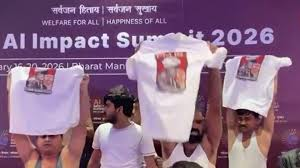
Tensions explode at AI Impact Summit 2026 as 10+ Youth Congress workers stage a dramatic shirtless protest, raising slogans inside the venue
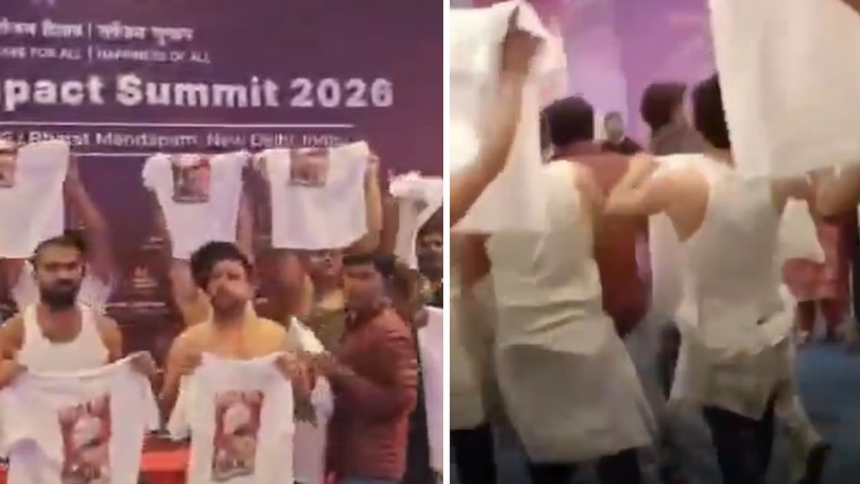
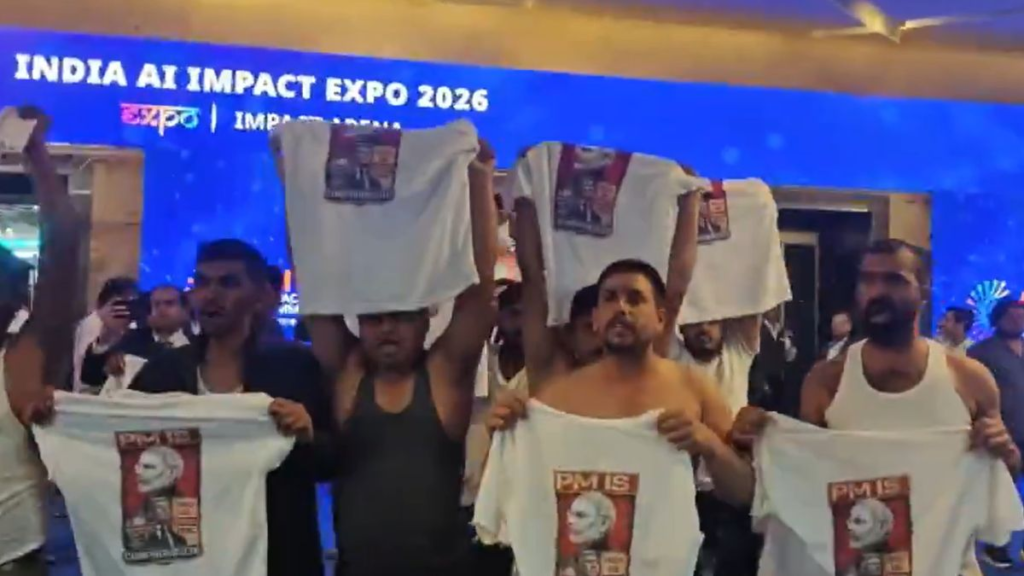
A major political controversy erupted at the AI Impact Summit 2026 after a dramatic protest by members of the Indian Youth Congress grabbed national attention. What was meant to be a forward-looking event focused on artificial intelligence and innovation quickly turned into a scene of chaos and political confrontation, as Youth Congress workers staged a high-voltage demonstration inside the venue. Videos of the protest — showing participants stripping their shirts and raising slogans — have since gone viral, sparking intense debate across social media and political circles.
The AI Impact Summit 2026 was expected to be a landmark gathering of policymakers, entrepreneurs, academics, and tech leaders discussing the future of artificial intelligence in India. With sessions planned around AI governance, innovation ecosystems, digital transformation, and ethical AI, the summit was positioned as a key platform to shape India’s technological roadmap.
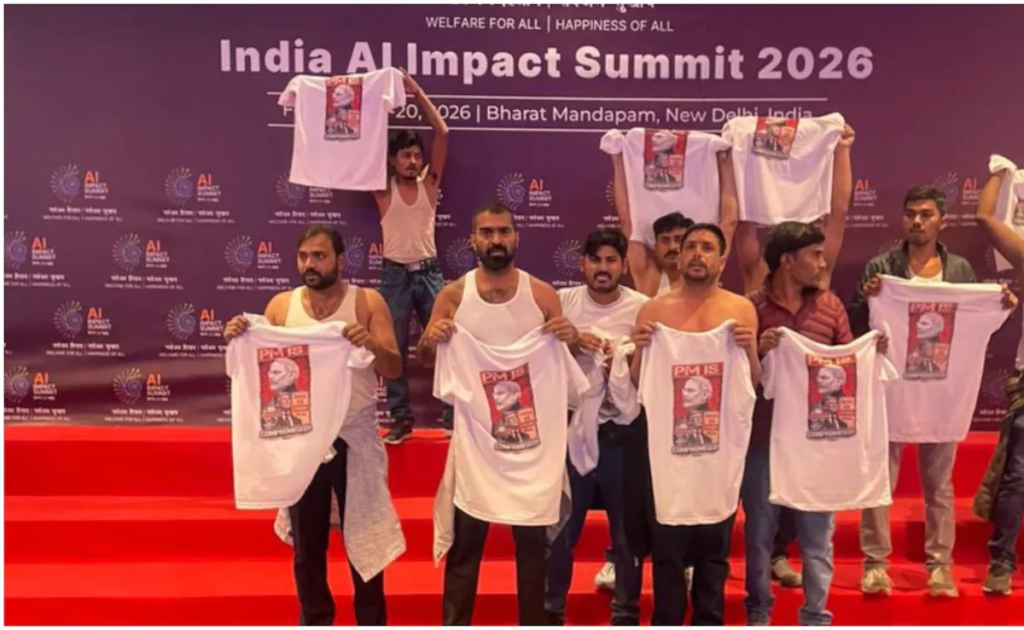
However, the narrative shifted dramatically when a group of Youth Congress activists entered the venue and launched a protest that stunned attendees. Eyewitnesses reported that over 10 protesters began raising slogans inside the event premises, disrupting proceedings and drawing immediate attention from security personnel and media crews.
Videos circulating online show a highly charged atmosphere, with protesters chanting slogans against the government and accusing authorities of ignoring pressing issues affecting youth. In a move that amplified the spectacle, several protesters removed their shirts while continuing to shout slogans — a symbolic act often used in political demonstrations to express anger or desperation.
The sudden escalation caught organizers off guard. Delegates attending panel discussions were visibly startled as the protest unfolded. Within minutes, clips of the incident began surfacing on social media platforms, turning the protest into one of the most talked-about political flashpoints of the day.
According to initial reports, the protesting Youth Congress workers were attempting to draw attention to issues related to unemployment, rising costs of education, and concerns over opportunities for young Indians in the rapidly evolving AI-driven economy. The group alleged that while grand summits highlight technological progress, grassroots issues affecting youth remain unresolved.
Leaders from the broader Indian National Congress later echoed similar sentiments, stating that young people are increasingly anxious about job security in an age of automation and artificial intelligence. They argued that discussions around AI must be accompanied by policies that protect employment and ensure inclusive growth.
Security personnel quickly intervened as the situation escalated. Organizers temporarily paused sessions while authorities escorted the protesters out of the venue. The disruption reportedly lasted several minutes, but its impact on the summit’s atmosphere was significant.
Attendees described the incident as “unexpected” and “highly charged,” noting that the protest created an uneasy environment in what was supposed to be a collaborative and forward-looking gathering. Some delegates expressed concerns over security lapses, while others viewed the protest as a reflection of growing political polarization.
Within hours, videos of the protest began trending across platforms, triggering widespread reactions. Supporters of the protesters hailed the act as a bold expression of dissent, arguing that dramatic protests are sometimes necessary to draw attention to ignored issues. Critics, however, condemned the disruption, calling it inappropriate for a professional summit centered on innovation and policy dialogue.
The viral nature of the footage amplified the incident far beyond the confines of the venue. Hashtags related to the protest trended online, with users debating the role of political activism in spaces traditionally reserved for industry and policy engagement.
As the video gained traction, political reactions followed swiftly. Opposition leaders defended the protesters, claiming that youth frustrations are reaching a boiling point and that such demonstrations reflect broader anxieties about the future. They emphasized that India’s young population must have a central voice in conversations about AI and automation.
On the other hand, critics accused the protesters of politicizing a non-political event. Several commentators argued that technology summits should remain focused on dialogue and collaboration rather than political theatrics. Some also questioned the appropriateness of disruptive tactics in forums designed to foster global partnerships.
The protest has reignited an important conversation about how artificial intelligence will shape the future of employment and education. While AI is widely seen as a transformative force capable of boosting productivity and innovation, it also raises concerns about job displacement and skill gaps.
India, with its massive youth population, faces a unique challenge: balancing rapid technological adoption with employment generation. Experts have long warned that without large-scale reskilling and policy safeguards, automation could widen socio-economic disparities.
The Youth Congress protest appears to tap into these anxieties, highlighting the disconnect many young people feel between high-level technology discourse and everyday realities. Whether one agrees with the method or not, the protest has brought attention to a crucial issue — ensuring that the benefits of AI are distributed equitably.
For organizers, the incident was an unwelcome distraction. The AI Impact Summit was intended to showcase India’s ambitions as a global AI powerhouse and attract investment, collaboration, and policy momentum. Instead, headlines shifted from innovation breakthroughs to political controversy.
Despite the disruption, summit proceedings resumed shortly after the protesters were removed. Speakers continued discussions on AI regulation, startup ecosystems, and international collaboration. However, the viral protest continued to dominate online conversations, overshadowing many of the summit’s key takeaways.
The incident underscores how quickly moments of disruption can dominate narratives in the digital age. A protest lasting only a few minutes can generate hours — even days — of online debate once videos go viral. In this case, the visual intensity of the shirtless protest played a major role in capturing public attention.
Social media platforms became battlegrounds for competing narratives, with users interpreting the event through political, ideological, and generational lenses. The speed of virality ensured that the summit’s global messaging was partially eclipsed by domestic political drama.
The controversy has raised several broader questions:
- Should political protests be allowed inside high-profile industry events?
- How can organizers balance open expression with maintaining event decorum?
- Are current policy discussions on AI adequately addressing youth concerns?
- Does dramatic activism help amplify issues or dilute constructive dialogue?
These questions are likely to persist long after the summit concludes, influencing how future events manage political sensitivities.

Observers note that political protests at public events are not new, but the scale and theatricality of demonstrations appear to be increasing. In an era dominated by viral videos and instant digital amplification, protests are often designed with visibility in mind.
The AI Impact Summit incident may represent a broader shift in how political messaging is delivered — with activists leveraging high-profile platforms to maximize attention. Whether this trend strengthens democratic discourse or undermines institutional dialogue remains a subject of debate.
Read Also : Trump Tariff Shock: India Duties Cut to 10% from Feb 24 for 150 Days — Big Trade Boost