BMC Cracks Down on Illegal Encroachments: Major Anti-Encroachment Drive on Mohammed Ali Road & Ibrahim Merchant Road in Mumbai
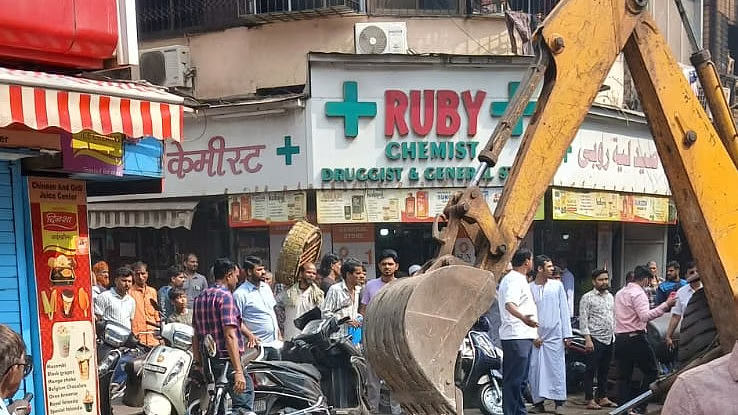
BMC conducts a major anti-encroachment drive on Mohammed Ali Road and Ibrahim Merchant Road in Mumbai, removing illegal structures to ease traffic and improve public safety
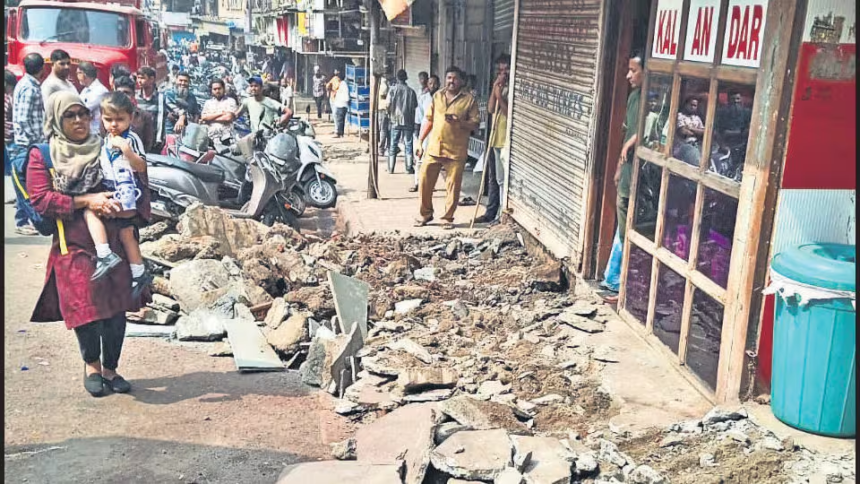
The Brihanmumbai Municipal Corporation (BMC) has launched a major anti-encroachment drive on Mohammed Ali Road and Ibrahim Merchant Road, two of Mumbai’s busiest and most commercially active streets. The large-scale operation aims to remove illegal encroachments, ease traffic congestion, improve pedestrian movement, and restore public spaces that had been overtaken by unauthorized stalls, temporary structures, and roadside vendors.
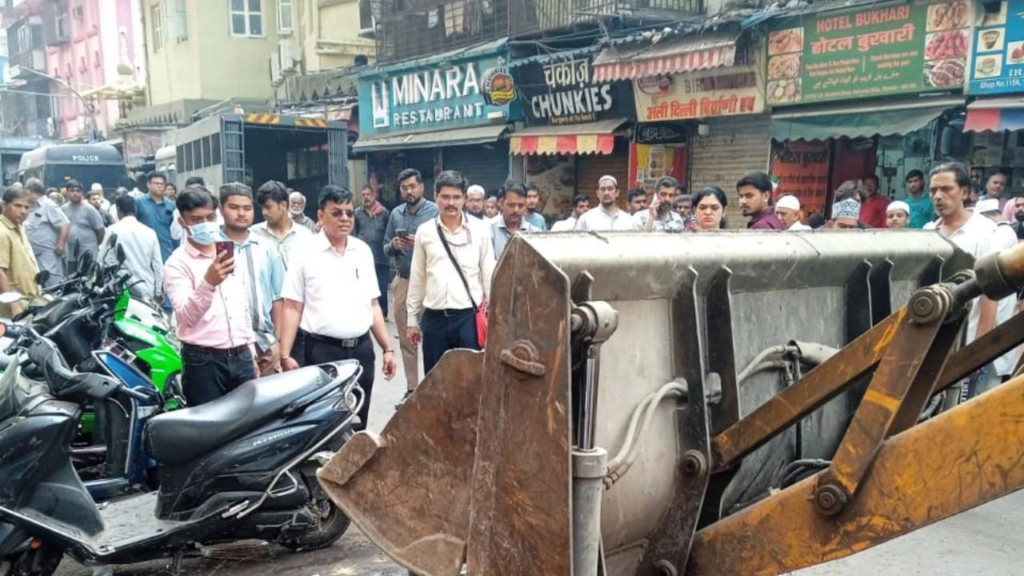
The civic body’s action marks a renewed effort to enforce municipal regulations and bring order to crowded urban zones that frequently face safety hazards, bottlenecks, and hygiene concerns due to illegal occupancy of public land.
Mohammed Ali Road and Ibrahim Merchant Road are known for their high footfall, dense commercial activity, and cultural importance, especially during festivals such as Ramzan and other major celebrations. However, the growing number of unauthorized vendors, illegal extensions, and makeshift structures has created persistent issues, including:
- Severe traffic congestion
- Obstructed pedestrian walkways
- Increased fire safety risks
- Emergency vehicle access challenges
- Sanitation and waste management problems
According to BMC officials, repeated warnings had been issued to encroachers, but compliance remained limited. As a result, the civic body decided to take strict enforcement action to ensure that public roads and footpaths remain accessible and safe.
The anti-encroachment drive was carried out by a multi-departmental BMC team, including:
- Encroachment removal staff
- Ward-level civic officials
- Traffic police personnel
- Local law enforcement teams
During the operation, authorities:
- Removed illegal stalls and roadside extensions
- Cleared footpaths blocked by unauthorized structures
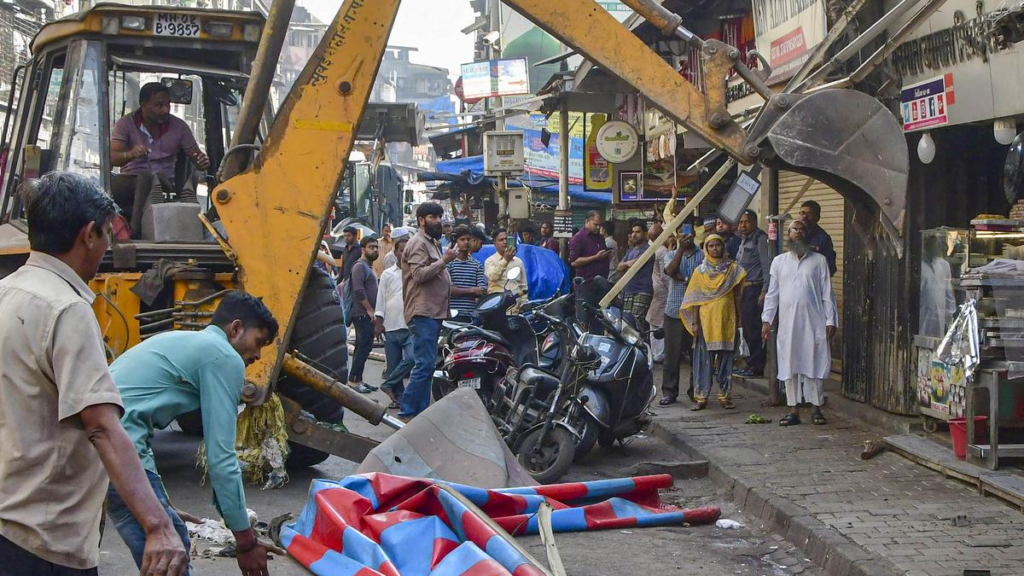
- Demolished temporary sheds and encroaching shop fronts
- Seized goods from non-compliant vendors
- Ensured smoother vehicular and pedestrian flow
Several illegally erected kiosks, street-side counters, and unauthorized commercial expansions were dismantled as part of the enforcement drive.
One of the primary objectives of the BMC’s drive is to reduce traffic bottlenecks in central Mumbai, particularly in areas that experience daily congestion due to commercial crowding.
With encroachments removed:
- Road width has been restored, allowing smoother vehicle movement
- Footpaths are now more accessible for pedestrians
- Public safety has improved, especially during peak hours
- Emergency services such as ambulances and fire engines can operate more efficiently
Residents and daily commuters have expressed cautious optimism, hoping the city will maintain these improvements in the long run.
The anti-encroachment drive has received mixed reactions from the public.
Supporters Say the Drive Was Necessary
Many residents and commuters welcomed the BMC’s action, stating that:
- Encroachments had made walking difficult and unsafe
- Traffic congestion had become unmanageable
- Illegal vendors were creating hygiene and sanitation issues
- The drive helps restore order and improve urban aesthetics
Local citizens noted that enforcement had been overdue and emphasized the importance of maintaining public infrastructure.
On the other hand, some small vendors and traders expressed concerns about loss of livelihood, arguing that street vending is their primary source of income.
Vendor groups have urged authorities to:
- Provide designated vending zones
- Offer rehabilitation or relocation plans
- Implement humane enforcement measures
Civic officials have stated that future plans may include regulated vending spaces, but reiterated that illegal encroachment on public roads cannot be permitted.
Mohammed Ali Road is known for its dense crowds, restaurants, street food stalls, and retail outlets, making it a high-risk zone for fire hazards, particularly when illegal structures obstruct access routes.
Authorities have pointed out that encroachments:
- Increase fire risk due to gas cylinders and electrical wiring
- Block fire engine movement
- Reduce emergency evacuation space
- Complicate rescue operations during emergencies
By clearing unauthorized constructions, the BMC aims to improve safety standards and reduce disaster risks in these crowded areas.
The anti-encroachment drive is part of the BMC’s broader urban management and infrastructure improvement strategy, which includes:
- Road widening initiatives
- Pedestrian-friendly infrastructure
- Public safety enhancement
- Cleanliness and beautification projects
- Smart city planning and regulation enforcement
Officials have stated that such drives will continue across multiple high-density areas in Mumbai to ensure better urban governance and improved quality of life.
The civic action has also drawn responses from local political leaders and civic activists.
Some political representatives praised the BMC for taking decisive action against illegal encroachments, stating that public property must be protected.
Others urged the authorities to:
- Balance enforcement with social responsibility
- Consider small business rehabilitation
- Ensure that enforcement is fair, consistent, and non-discriminatory
The BMC has assured the public that enforcement drives will follow legal protocols and transparent procedures.
While large commercial establishments are expected to benefit from improved accessibility, smaller roadside vendors may face temporary challenges.
Potential Positive Impacts
- Better customer access to legal shops
- Improved street cleanliness
- Increased commercial visibility
- More organized retail environment
Challenges for Street Vendors
- Loss of informal selling spaces
- Need for relocation or licensing
- Short-term income disruption
Urban planning experts have recommended a balanced policy approach that supports both orderly development and inclusive economic opportunities.
Encroachment has long been a persistent challenge in Mumbai, driven by:
- High population density
- Limited commercial space
- Informal economy dependence
- Rapid urban expansion
Experts emphasize that sustainable solutions require a combination of:
- Strict enforcement
- Urban planning reforms
- Affordable commercial zones
- Vendor regulation and licensing
- Public awareness campaigns
Without long-term planning, encroachments are likely to re-emerge even after repeated clearance drives.
BMC officials have confirmed that the anti-encroachment drive will continue in other key Mumbai localities, particularly in areas known for:
- Heavy pedestrian traffic
- Market congestion
- Illegal roadside commercialization
- Infrastructure strain
The civic body is also exploring digital mapping, surveillance, and licensing systems to prevent illegal encroachment in the future.
Read Also : Maharashtra Wins Big in Budget 2026–27: ₹98,306 Crore Central Tax Boost, Says Fadnavis