

From Idea in 1986 to First Flight in 2025: 39 Years, 1 Dream — The Long Wait for Navi Mumbai International Airport
From its conception in 1986 to its first flight in 2025, here’s the 39-year journey of Navi Mumbai International Airport and why it took so long
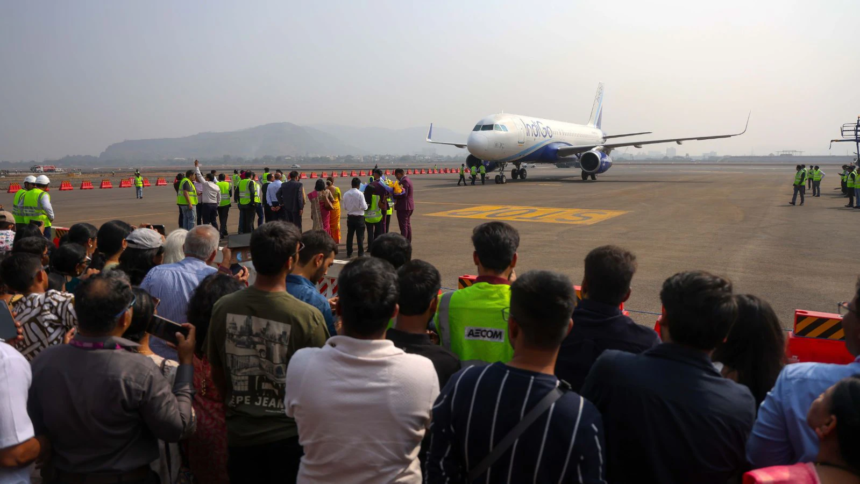
When the first commercial aircraft finally takes off from Navi Mumbai International Airport (NMIA) in 2025, it will mark the end of one of India’s longest and most complex infrastructure journeys. Conceived nearly four decades ago in 1986, the airport’s story is a case study in ambitious planning, bureaucratic delays, environmental challenges, land acquisition struggles, political shifts, and renewed momentum.
The 39-year wait for Navi Mumbai International Airport is not just about an airport—it reflects the growing pains of India’s financial capital and the evolving challenges of urban development in a rapidly expanding metropolis.
Mumbai’s Chhatrapati Shivaji Maharaj International Airport (CSMIA) has long been among the busiest single-runway airports in the world. By the mid-1980s, it was clear that Mumbai’s aviation infrastructure would struggle to keep pace with rising passenger numbers, cargo traffic, and economic growth.
In 1986, planners first proposed a second international airport to decongest Mumbai and support long-term growth. Navi Mumbai, then a developing satellite city planned by CIDCO (City and Industrial Development Corporation), was identified as the ideal location.
- Reduce pressure on CSMIA
- Boost economic development in Navi Mumbai
- Create a global aviation hub for western India
What followed, however, was a journey filled with hurdles.
Despite the proposal gaining attention in policy circles, progress remained slow through the late 1980s and 1990s. Several factors contributed to this inertia:
- Lack of political consensus
- Limited private sector participation in aviation infrastructure
- Unclear funding models
- Competing priorities in urban development
During this period, India’s aviation sector itself was undergoing transformation, with liberalization only beginning in the 1990s. As a result, the Navi Mumbai airport remained largely on paper.
As planning advanced in the early 2000s, environmental concerns emerged as a major roadblock. The proposed site required:

- Diversion of the Ulwe river
- Clearing of mangroves
- Relocation of several villages
Environmental clearances became one of the most time-consuming aspects of the project. Multiple studies, revisions, and approvals were required, leading to years of delay.
At the same time, land acquisition proved contentious. Thousands of families living in the area faced displacement, triggering protests and legal challenges. Negotiations over compensation and rehabilitation slowed progress further.
A significant breakthrough came when authorities decided to develop the airport under a Public-Private Partnership (PPP) model. After several bidding rounds and delays, the project was eventually awarded to Navi Mumbai International Airport Ltd (NMIAL), led by the Adani Group in partnership with CIDCO.
This marked a crucial shift:
- Clear timelines were established
- Private capital and expertise entered the project
- Accountability mechanisms improved
By the late 2010s, the airport finally moved from planning to visible construction.
Actual construction gathered pace around 2018–2019, but challenges continued. These included:
- Completing river diversion works
- Relocating high-voltage power lines
- Clearing remaining land parcels
- Coordinating between multiple government agencies
Then came the COVID-19 pandemic, which disrupted supply chains, labor availability, and timelines across India’s infrastructure sector. Once again, the airport’s opening was pushed back.

Despite this, construction resumed steadily post-pandemic, with authorities reaffirming their commitment to the project.
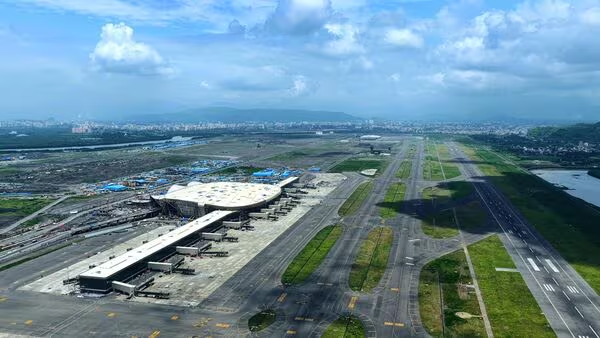
When operational, Navi Mumbai International Airport is expected to be one of India’s most advanced aviation hubs. Key features include:
- Two parallel runways (unlike Mumbai’s single-runway setup)
- Initial capacity of around 20 million passengers annually, scalable to over 90 million in later phases
- Modern terminal design inspired by local geography
- Dedicated cargo facilities to boost logistics and trade
The airport is also strategically located near major highways, ports, and upcoming metro and rail links, making it a critical node in the Mumbai Metropolitan Region (MMR).
The long-awaited airport is expected to be a game changer for the region’s economy. Experts project:
- Thousands of direct and indirect jobs
- Growth in hospitality, real estate, and logistics
- Increased foreign investment
- Balanced development between Mumbai and Navi Mumbai
For years, Navi Mumbai has been promoted as a planned alternative to Mumbai’s congestion. The airport is central to that vision.
The prolonged timeline of Navi Mumbai International Airport can be attributed to several overlapping factors:
- Bureaucratic delays across multiple governments
- Environmental clearances and legal challenges
- Land acquisition and rehabilitation issues
- Funding and bidding complications
- Political changes at the state and central levels
- External shocks like the COVID-19 pandemic
While critics argue that better coordination could have reduced delays, planners counter that the scale and complexity of the project made such timelines inevitable.
The planned first flight in 2025 is more than a technical milestone—it is symbolic of persistence and long-term planning finally bearing fruit. For residents of Navi Mumbai, it represents:
- Recognition of the city’s growing importance
- Improved connectivity to global destinations
- A shift in Mumbai’s urban geography
For policymakers, it serves as a reminder of the need for faster execution of critical infrastructure projects.
The story of Navi Mumbai International Airport offers several lessons:
- Early stakeholder engagement is crucial
- Environmental planning must be integrated from day one
- Transparent land acquisition policies reduce conflict
- Clear accountability improves timelines
As India embarks on massive infrastructure expansion—from airports to expressways—the Navi Mumbai experience will remain a key reference point.
With the airport nearing operational readiness, attention is now turning to:
- Trial runs and safety audits
- Airline onboarding
- Connectivity through metro, rail, and road networks
If executed well, Navi Mumbai International Airport could redefine aviation in western India for decades to come.
Read Also : Supreme Court Rejects Urgent Plea Against PMO’s Chadar Offering at Ajmer Sharif — 5 Key Details

