Goregaon College Controversy Erupts: Campus Sparks Massive Row After Burqa Ban; 100 of Students Protest New Rule
Goregaon College sparks a major row after banning burqas in classrooms, triggering intense student protests and widespread debate
Vivek Vidyalaya Junior College in Mumbai’s Goregaon has come under scrutiny after introducing a new dress code that bars students from wearing burqas inside classrooms, a shift that has surprised many, as the attire had been permitted for years.
While Mumbai colleges often restrict outfits like ripped jeans, shorts, or crop tops, this institution has now added religious coverings such as burqas and niqabs to the list, citing the need to avoid clothing that reveals religion or shows cultural disparity. Hijabs and headscarves, however, continue to be allowed.
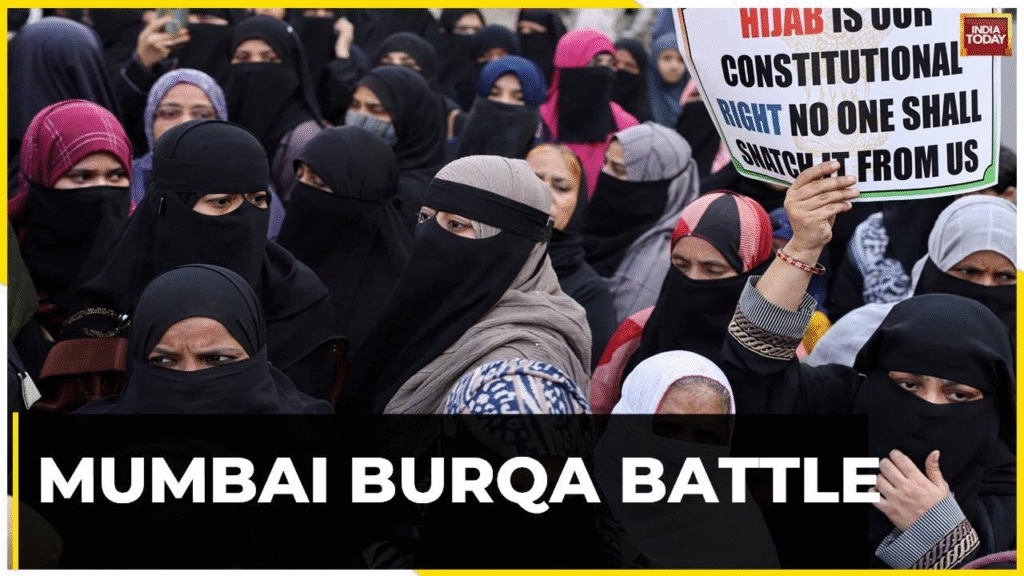
The controversy escalated after a video shared by local news portal GalliNews went viral on X, showing burqa-wearing students being stopped at the college entrance. A student narrates the situation, and the clip later shows the group meeting the principal, who appears firm in rejecting their request to withdraw the rule.
Several students stated that they now arrive on campus in burqas, change into regular clothes in the washroom before class, and switch back afterward. “I’ve worn a burqa all my life. Sitting in class without one feels uncomfortable,” said an FYJC student, as quoted by Mid-day.
Importantly, the ban applies only to the junior college section; the senior college has no such restriction. Students who questioned the decision claimed they were asked to cancel their admissions if they disagreed with the policy.
On December 1, a group of affected students, joined by AIMIM advocate Jahanara Shaikh, approached the Teen Dongri police station in Goregaon West. The principal was summoned for discussions. Shaikh confirmed that no legal action has been taken yet. “We requested the principal to revoke the rule, but she refused, saying she would consult the management. We will meet the authorities again in two days,” she said, as quoted by Mid-day. The college management has not issued any official statement into the matter as of now.
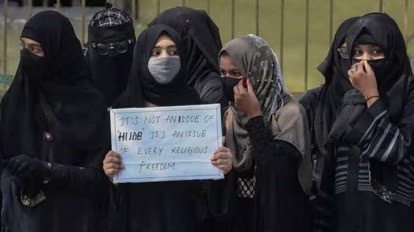
In a move that has ignited campus unrest in Mumbai, Vivek Vidyalaya & Junior College in Goregaon recently banned burqas and niqabs in its classrooms. The new dress-code policy, which came into effect just weeks ago, prohibits religious attire such as burqas or niqabs along with other “inappropriate” clothing like ripped jeans, shorts, sleeveless tops, and revealing outfits.
What has followed is a wave of outrage and protest among students. Several burqa-wearing students reported being stopped at the college entrance and told they could not enter classrooms unless they removed their burqa. A video of this incident went viral on social media, triggering wider attention.
Some students have resorted to attending campus in a burqa, then changing into “regular clothes” in the washroom before class — only to revert to the burqa later. This patchwork solution underscores the discomfort and indignity many feel under the new policy.
The perceived ban on religious attire has not only raised concerns about personal dignity and comfort — but also sparked deeper fears of discrimination and loss of religious freedom.
The contentious dress code has drawn sharp criticism from community and student-rights advocates. An advocate from All India Majlis-e-Ittehadul Muslimeen (AIMIM) has filed a formal complaint with the college and police, calling the order “arbitrary and discriminatory,” and demanding its withdrawal.
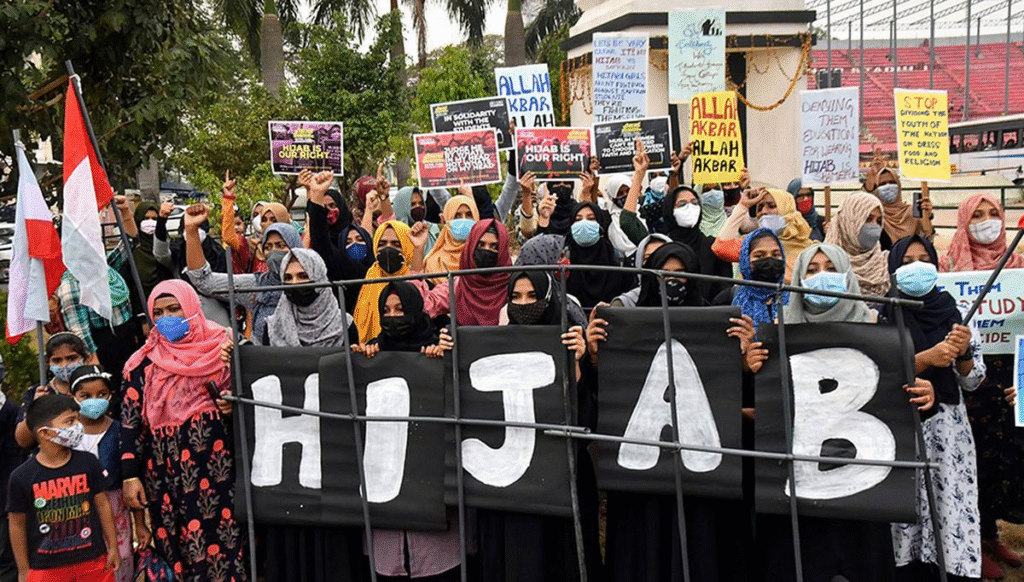
The advocate has warned of a hunger strike to protest the ban — a strong sign of how deeply students and community members view this as a violation of basic rights.
Importantly, the policy at the college draws parallels with previous campus-level dress-code bans elsewhere in Mumbai. For example, in 2024, a similar policy at another college attempted to prohibit hijabs, burqas, caps and naqabs.
While courts have sometimes upheld a college’s right to enforce a uniform or dress code, they have also raised serious concerns about discrimination and freedom of expression.
At this point, for the Goregaon case, the college administration has reportedly refused to withdraw the rule. The principal, when approached, said she would only reconsider after consulting the management — a response that right now has only further inflamed student anger.
This row is more than just about dress — it touches upon larger issues of religious identity, personal freedom, and institutional authority. For many students, wearing a burqa or niqab is not merely a clothing choice — it is tied to faith, identity, and dignity. A sudden prohibition inside classrooms can feel invasive, discriminatory, and demeaning.
At a time when educational institutions are expected to be inclusive, tolerant spaces — especially in a cosmopolitan city like Mumbai — policies like these risk alienating students, disrupting their education, and undermining trust.
Moreover, it raises serious questions about the boundaries of institutional power. When does a college’s “dress code” cross the line into infringing on constitutional rights — freedom of religion, expression, and dignity? Previous legal precedents and community protests suggest this is a deeply contested terrain.
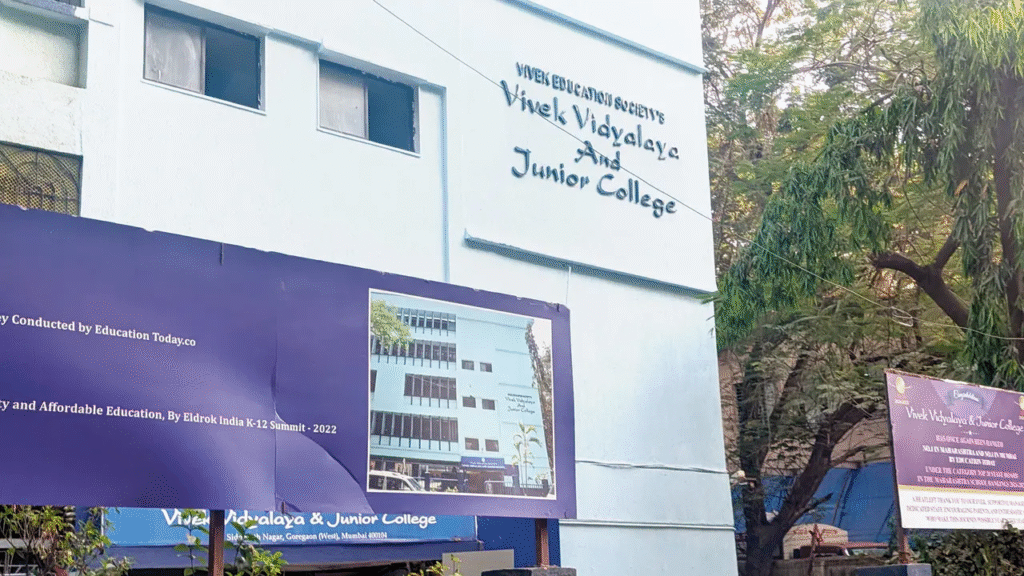
Students and community representatives have approached law-enforcement. Police have been involved, and the matter is under active consideration.
The management has not issued an official public statement backing down — but has also not reiterated the ban, keeping the situation ambiguous.
If the protest and legal pressure grows, the college may be forced to withdraw or revise the code. But for now, the ban remains in force.
For many students, the choice is stark: comply and lose a part of their identity, or protest — and potentially risk academic consequences. What began as a dress code change has become a flashpoint for student rights, religious identity, and institutional policy.