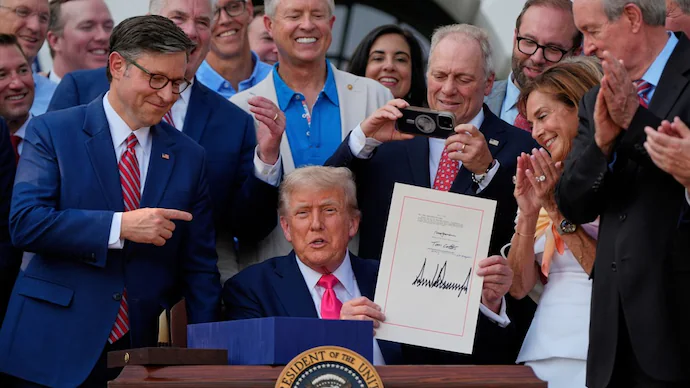
Historic Move: Trump’s Signature on US Currency – 7 Shocking Changes You Must Know
Donald Trump’s signature set to appear on all new US currency in a historic move. Discover key impacts, reasons behind the decision, and what it means for the US economy and global markets
The United States is on the brink of a historic and highly debated transformation in its currency system, as reports suggest that Donald Trump’s signature will soon appear on all newly issued U.S. currency. This unprecedented move has sparked widespread discussion across political, economic, and public spheres, raising questions about tradition, policy, and the future identity of American money.
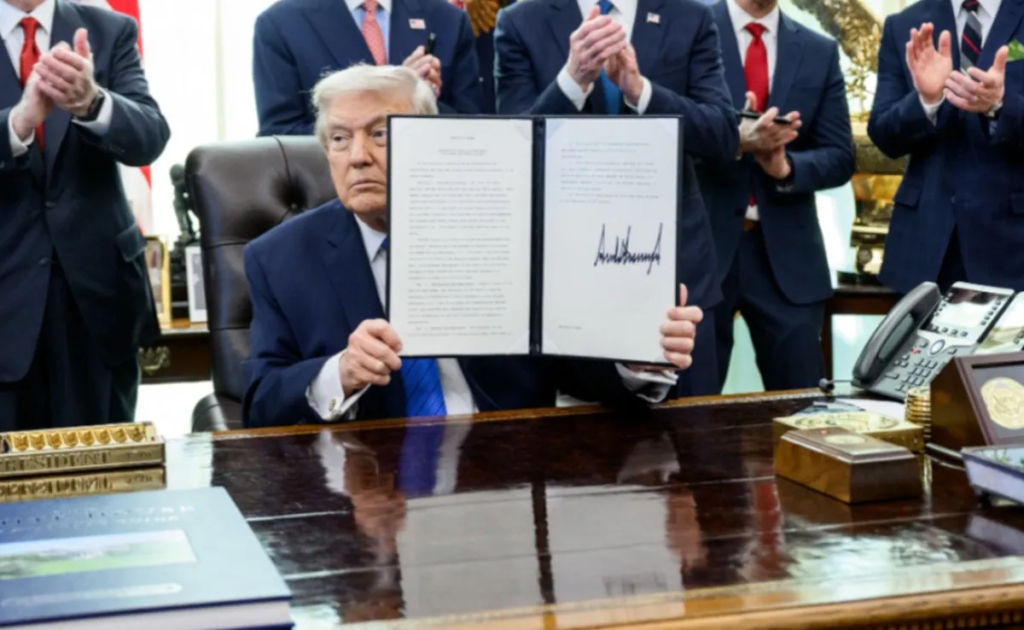
For decades, U.S. currency has followed a consistent and symbolic format. Banknotes typically carry the signatures of the Secretary of the Treasury and the Treasurer of the United States, reflecting institutional authority rather than individual political figures. The proposed inclusion of a sitting or former president’s signature—especially one as polarizing as Donald Trump—marks a dramatic departure from this longstanding tradition.
While U.S. coins often feature images of past presidents, paper currency has maintained a more bureaucratic identity. Introducing Trump’s signature into this space is not merely a design change—it represents a shift in how political identity intersects with national symbols.
Supporters of the decision argue that it reflects strong leadership and a desire to leave a lasting imprint on the nation’s economic legacy. During his tenure, Trump frequently emphasized economic nationalism, domestic manufacturing, and financial sovereignty. Adding his signature to currency, they say, is a symbolic extension of those principles.
Additionally, proponents believe that such a move could reinforce a sense of national pride among his supporters, many of whom view his presidency as transformative. By embedding his signature into everyday financial instruments, the administration aims to create a lasting connection between leadership and economic identity.
However, critics see the move differently. They argue that currency should remain politically neutral and that introducing a president’s signature risks politicizing a fundamental national institution.
One of the biggest questions surrounding this development is its legal feasibility. The design and issuance of U.S. currency are overseen by the United States Department of the Treasury and produced by the Bureau of Engraving and Printing. Any significant design change typically requires adherence to established protocols and, in some cases, legislative approval.
Experts are debating whether a president’s signature can legally replace or accompany the traditional signatures. Some suggest that a compromise could involve adding Trump’s signature alongside existing ones, rather than replacing them entirely.
There are also logistical considerations. Updating currency designs involves complex processes, including redesign, testing, printing, and distribution. Such changes cannot happen overnight and may take years to fully implement.
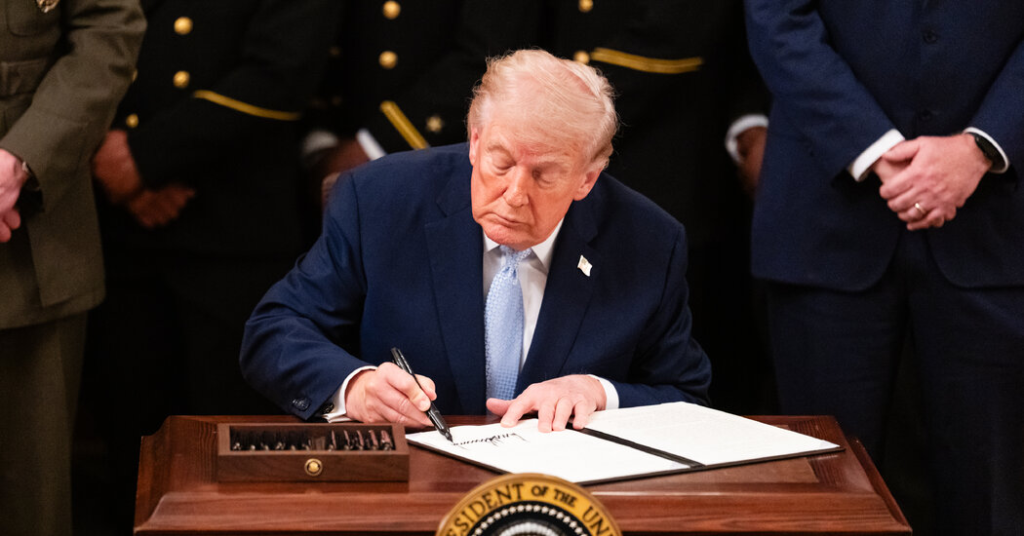
From an economic standpoint, the inclusion of Trump’s signature is unlikely to directly impact the value of the U.S. dollar. Currency value is determined by factors such as inflation, interest rates, and economic stability—not design elements.
However, the psychological and symbolic impact could be significant. Currency is not just a medium of exchange; it is also a representation of national identity and trust. Any change to its design can influence public perception, both domestically and internationally.
Some analysts warn that politicizing currency could undermine confidence, particularly among international investors. The U.S. dollar is the world’s primary reserve currency, and its stability is crucial for global financial systems. Maintaining a sense of neutrality and continuity is therefore essential.
As expected, the announcement has generated mixed reactions. Supporters have hailed it as a bold and historic step, praising Trump’s influence and legacy. Social media platforms have been flooded with messages celebrating the move, with many users calling it “iconic” and “long overdue.”
On the other hand, critics have expressed concern about the implications of linking currency to a specific political figure. They argue that such a move could set a precedent for future administrations, potentially leading to frequent changes in currency design based on political shifts.
Public opinion appears to be deeply divided, reflecting broader political polarization in the country.
The United States is not alone in featuring prominent figures on its currency. Many countries display images of national heroes, leaders, or cultural icons on their banknotes. However, these figures are typically historical and widely accepted as symbols of national unity.
Introducing the signature of a contemporary political figure is relatively rare and could be viewed as unconventional on the global stage. It may also influence how other countries perceive U.S. governance and institutional norms.
Throughout history, currency has often been used as a tool for political messaging. From monarchs placing their portraits on coins to revolutionary governments redesigning banknotes to reflect new ideologies, money has always carried symbolic meaning.
In the U.S., however, there has been a conscious effort to balance symbolism with neutrality. Figures featured on currency, such as George Washington and Abraham Lincoln, are chosen for their historical significance and broad acceptance.
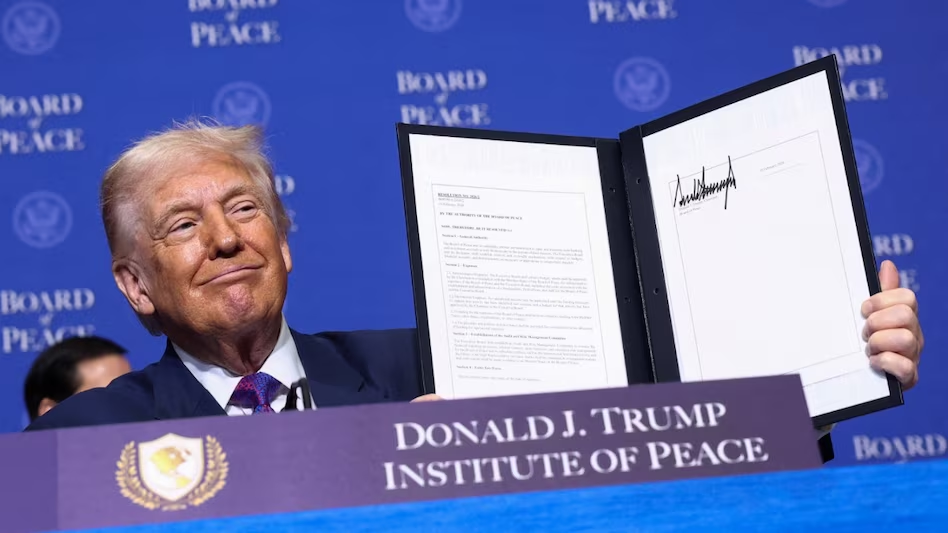
Adding Trump’s signature represents a shift toward a more personalized form of symbolism, which could redefine how future generations view U.S. currency.
Implementing this change will not be without challenges. Beyond legal and logistical hurdles, there is the question of public acceptance. Currency is one of the most widely used and recognized symbols of a nation, and any alteration must resonate with the public.
There may also be resistance from within government institutions, as well as potential legal challenges from those who view the move as unconstitutional or inappropriate.
Furthermore, the cost of redesigning and reprinting currency could be substantial, adding another layer of complexity to the decision.
As discussions continue, the timeline for implementation remains uncertain. If approved, the new currency design would likely be rolled out gradually, with older notes remaining in circulation alongside the new ones.
This phased approach would help minimize disruption while allowing time for public adaptation. Over time, the new notes would become more common, eventually replacing older designs.
Whether viewed as a bold innovation or a controversial departure from tradition, the inclusion of Donald Trump’s signature on U.S. currency is undeniably a significant development. It reflects broader debates about leadership, identity, and the role of symbolism in national institutions.
For some, it represents a celebration of a transformative presidency. For others, it raises concerns about the politicization of public symbols. Regardless of perspective, the move has already made history by sparking a nationwide conversation about the meaning and purpose of money.
Currency is more than just paper and ink—it is a reflection of a nation’s values, history, and identity. Any change to its design carries deep symbolic weight and far-reaching implications.
As the United States navigates this potential transformation, the outcome will likely shape not only the appearance of its currency but also the way it is perceived by its citizens and the world.
The decision to include Donald Trump’s signature is a reminder that even the most familiar aspects of daily life can become arenas for change and debate. Whether this move will stand the test of time remains to be seen, but it has already secured its place as one of the most talked-about developments in modern U.S. history.
Read Also : Big Relief! Petrol Excise Duty Slashed to ₹3, Diesel at ₹0 – 7 Massive Impacts Amid West Asia Crisis