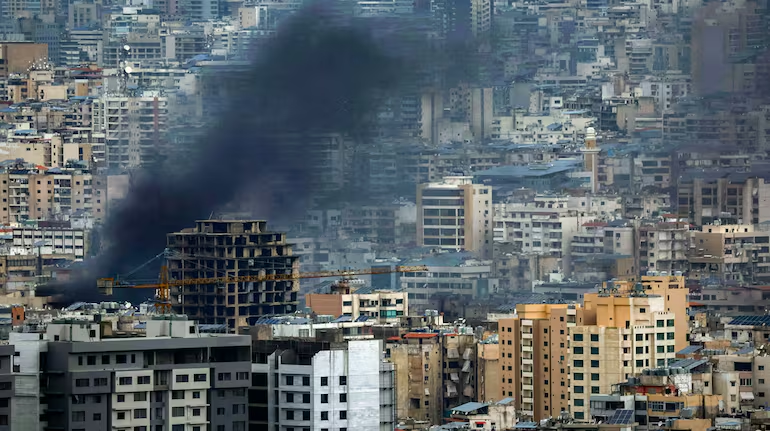
Iran Drone Strike Hits Kuwait Airport — 5 Explosive Details on Fuel Tank Fire
Iran launches a drone strike on Kuwait Airport, igniting fuel tank fires and escalating Middle East tensions
In a dramatic escalation of the ongoing Middle East conflict, Iran launched a drone strike targeting Kuwait International Airport, igniting a major fire in fuel storage tanks and sending shockwaves across the region. The incident marks one of the most serious attacks on critical infrastructure in the Gulf since the conflict began, raising fears of a wider regional war and deepening concerns about global energy security.
The attack, which triggered emergency responses and temporarily disrupted airport operations, underscores how quickly the situation is spiraling beyond traditional battlefields. As tensions between Iran, the United States, and allied nations intensify, strategic targets such as airports, oil facilities, and shipping routes are increasingly coming under fire.
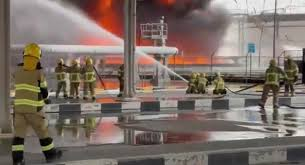
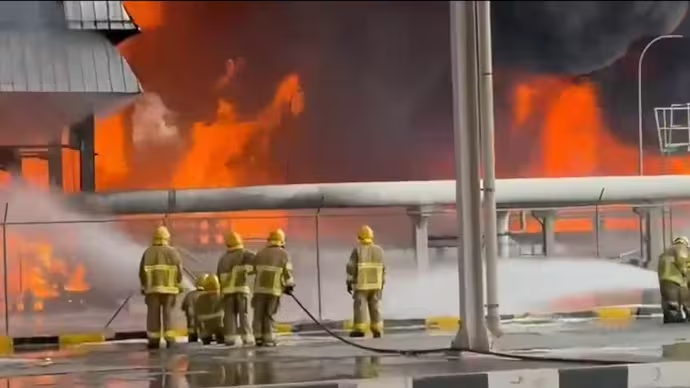
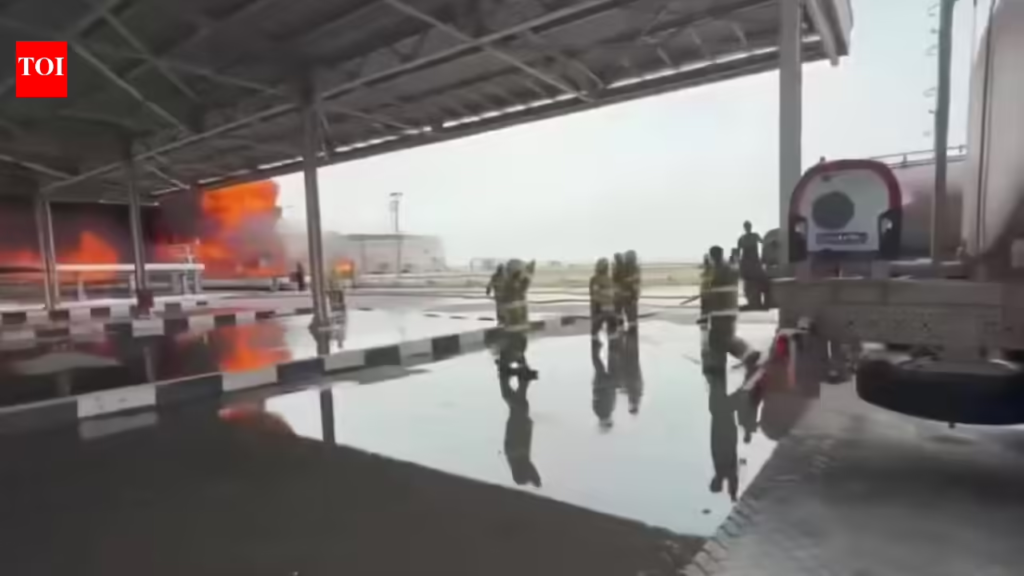
According to initial reports, multiple drones were launched toward Kuwait, with at least one successfully striking a fuel storage tank at Kuwait International Airport. The impact caused a significant fire, producing thick plumes of smoke visible from miles away.
Emergency services responded immediately, activating crisis protocols to contain the blaze and secure the area. Firefighters worked intensively to prevent the flames from spreading to nearby facilities, which could have led to a far more catastrophic outcome.
While early assessments suggest that damage was largely limited to infrastructure, the psychological and geopolitical impact of the attack is far-reaching.
The strike on Kuwait Airport represents more than just another incident in the ongoing conflict—it signals a dangerous expansion of the war into key economic and civilian infrastructure zones.
Here’s why this attack is significant:
- Targeting of civilian infrastructure: Airports are critical hubs for both civilian and military operations.
- Risk to global energy supply: Fuel storage facilities are closely tied to aviation and logistics networks.
- Regional escalation: Kuwait, a key U.S. ally, has now been directly impacted.
This development raises concerns that the conflict could spread further across the Gulf region, drawing in additional countries.
The attack has significantly heightened tensions in the Middle East. By striking Kuwait—a nation hosting strategic Western interests—Iran has expanded the scope of the conflict.
This could prompt stronger responses from allied nations, increasing the risk of a broader confrontation.
Airports are vital to global connectivity, and any attack on such infrastructure raises immediate concerns about passenger safety. While no major casualties have been reported, the incident has forced authorities to reassess security measures.
Flight operations may face disruptions, delays, or temporary suspensions as a precaution.
The Middle East plays a central role in global energy supply, and any instability in the region directly affects oil prices. The attack on fuel storage facilities has intensified fears of supply disruptions.
Potential consequences include:
- Rising oil prices
- Increased transportation costs
- Inflationary pressures worldwide
Following the attack, Kuwait and its allies are likely to enhance air defense systems and surveillance capabilities. This could involve deploying advanced missile defense technologies and increasing military presence in the region.
Such measures aim to prevent future attacks but also contribute to heightened militarization.
The incident is expected to trigger strong diplomatic reactions. Countries around the world may condemn the attack and call for restraint, while also pushing for renewed peace efforts.
However, achieving consensus in such a complex geopolitical environment remains challenging.
One of the most critical concerns is the possibility of retaliation. Attacks on strategic infrastructure often lead to countermeasures, which can further escalate the conflict.
If retaliatory strikes occur, the region could enter a dangerous cycle of escalation.
Beyond energy markets, the attack could disrupt broader trade networks. Airports play a key role in cargo movement, and any disruption can affect supply chains.
This could lead to delays in goods delivery and increased costs for businesses and consumers alike.
The Kuwait airport attack highlights the growing role of drones in modern conflict. Compared to traditional weapons, drones offer several advantages:
- Precision targeting
- Lower operational costs
- Reduced risk to personnel
However, their increasing use also raises concerns about the vulnerability of critical infrastructure and the difficulty of defending against such attacks.
Kuwait’s location and political alliances make it a key player in the region. As a nation with strong ties to Western powers, it serves as an important hub for military and economic activities.
An attack on Kuwait is therefore not just a local issue—it has broader implications for international relations and security dynamics.
The global reaction to the attack has been swift, with governments and organizations closely monitoring the situation. Financial markets have also responded, reflecting heightened uncertainty.
Key reactions include:
- Increased volatility in oil markets
- Investor caution in global stock exchanges
- Rising demand for safe-haven assets
These trends highlight the interconnected nature of geopolitics and economics.
The aftermath of the attack will be critical in determining the future course of the conflict. Several scenarios are possible:
- De-escalation through diplomacy
- Further military escalation
- Increased international involvement
The decisions made by key stakeholders in the coming days will shape the region’s stability.
Read Also : Donald Trump Announces 2–3 Week Exit Plan to End Iran War — 5 Key Takeaways