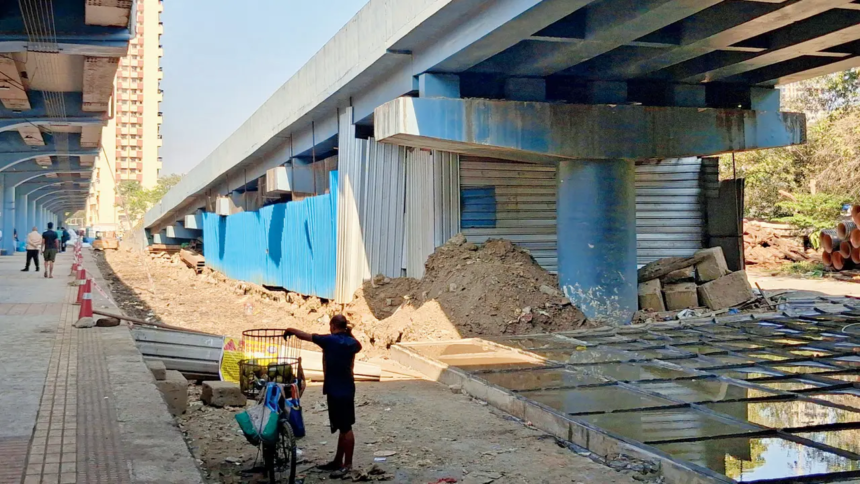
Mumbai Mega Upgrade: ₹70-Crore Plan to Transform Dadar Into the City’s New Midtown Railway Terminus
Mumbai plans a major rail upgrade as Dadar is set to become the city’s new midtown terminus under an ambitious ₹70-crore infrastructure development project
Mumbai’s transport landscape is set for a major transformation as Dadar is poised to emerge as the city’s new midtown railway terminus under an ambitious ₹70-crore development plan. The move is aimed at easing congestion at existing terminal stations while significantly improving passenger convenience and operational efficiency in one of India’s busiest suburban rail networks.In a major capacity-augmentation move, Western Railway has drawn up plans worth Rs 70 crore to expand Dadar station into a bigger midtown terminus, creating space for more express trains and easing pressure on Mumbai Central. The proposal includes new lines, extended platforms, yard rearrangement, and significant overhead equipment (OHE) and signalling upgrades, marking the most ambitious remodelling of Dadar in decades. The new plans will integrate the station with the fifth and sixth lines, which aim to segregate mail express and suburban trains.

Dadar already handles platform-return express trains — services that arrive and depart from the same platform. At present, the station has only two terminal lines, from which nine platform-return trains are operated daily. With the sixth line project absorbing one of these terminal tracks, railway planners say the system will soon hit a bottleneck. “With additional platform-return services planned — at least eight more — the existing arrangement would become unmanageable,” a senior WR official said. “The new Line No 8 is essential to sustain future traffic.”
The brand new Line No. 8 will be added along the eastern flank of Platform 7, complete with full OHE installation, signalling integration, and crossovers linking the new line with the stabling lines. This additional line will be the backbone of the future platform-return operations. In addition to this, Line No. 6 will be extended towards the Dadar Junction Loop (Line No. 4), providing a new shunt signal, upgraded OHE and crossover connectivity between Lines 5 and 6, allowing better flexibility for routing express trains during peak congestion.
To make way for the expanded yard, part of a railway colony quarters block will be dismantled and rebuilt, and the southernmost foot overbridge (FOB) will lose one landing, which will be reconstructed in a new alignment. Additionally, the Passenger Reservation System office will be shifted, while the yard master’s office will be moved slightly eastward. Officials say these interventions will unlock critical space for smooth yard geometry.
‘If an additional line and platform is built, Dadar station can be used as an intermediate small terminal. Due to it being junction for WR and CR, this new line on the WR side can also connect with the CR main line, and WR can run trains for CR.’
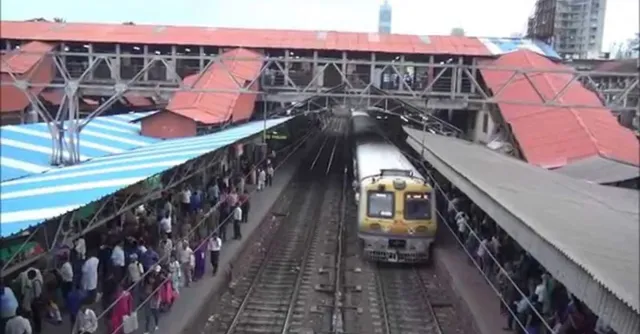
‘The move will help people on the Central Railway side who otherwise need to travel to Bandra or Mumbai Central to catch mail/express trains.’
Mumbai’s transport landscape is set for a major transformation as Dadar is poised to emerge as the city’s new midtown railway terminus under an ambitious ₹70-crore development plan. The move is aimed at easing congestion at existing terminal stations while significantly improving passenger convenience and operational efficiency in one of India’s busiest suburban rail networks.
Dadar already occupies a strategic position in Mumbai’s railway system, serving as the only station where the Western and Central Railway lines intersect. Every day, lakhs of commuters pass through Dadar, making it one of the most crowded yet crucial transit hubs in the city. Railway planners believe that upgrading Dadar into a midtown terminus will help redistribute long-distance train traffic that currently overloads terminals like Mumbai Central and Chhatrapati Shivaji Maharaj Terminus (CSMT).
By converting Dadar into a full-fledged terminus, authorities aim to reduce pressure on south Mumbai stations while offering passengers from central and northern suburbs easier access to long-distance trains.
The ₹70-crore project focuses on infrastructure upgrades designed to support originating and terminating long-distance trains. Key components of the plan include platform extensions, improved track layouts, advanced signaling systems, and better passenger amenities. Officials say the revamp will allow select express and mail trains to start and end their journeys at Dadar, rather than traveling further south into already congested corridors.
In addition to railway infrastructure, the project also emphasizes smoother passenger movement. Wider foot overbridges, improved signage, better waiting areas, and enhanced accessibility features are expected to be part of the overhaul.
Read Also : Who Is Naveed Akram? 7 Key Facts About the Pakistani Man Linked to the Bondi Beach Shooting Case