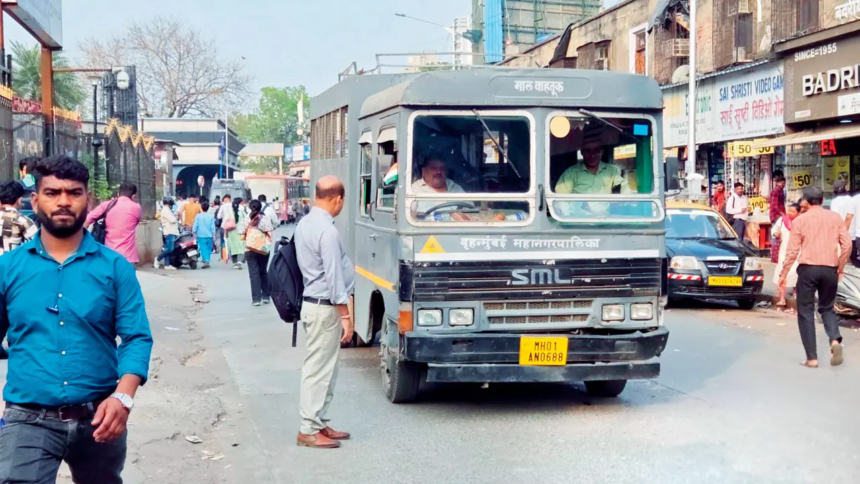
Mumbai Police Suspend Cop Over Inaction Against Illegal Hawkers – Major Crackdown Begins
Mumbai Police suspend a cop for inaction against illegal hawkers, triggering a major crackdown drive
In a strong message against corruption, negligence, and urban lawlessness, Mumbai Police have suspended a police officer for failing to act against illegal hawkers, sparking widespread public debate on law enforcement accountability and the city’s ongoing struggle with encroachment.
The suspension comes amid rising complaints from citizens, traders, and civic authorities over illegal hawking, footpath encroachment, traffic congestion, and alleged police inaction. Officials say the move signals a zero-tolerance policy toward negligence within the police force and a renewed commitment to restoring law and order in Mumbai’s crowded commercial zones.
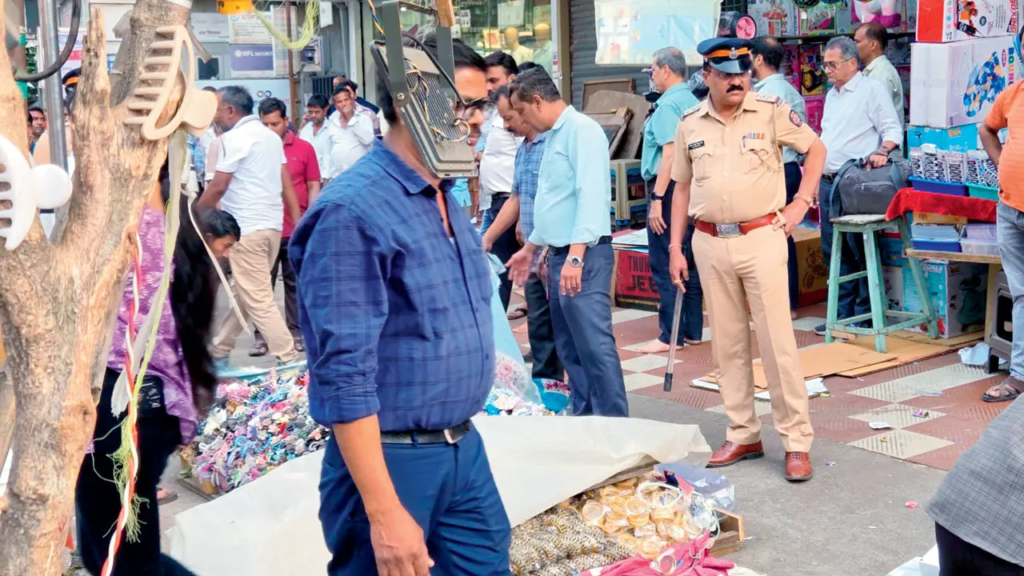
According to senior officials, the suspended officer was found guilty of failing to take action against unauthorized hawkers operating in restricted areas, despite repeated complaints and clear instructions.
An internal inquiry revealed that:
- Illegal hawkers continued operating unchecked
- Complaints from local residents and shop owners went unaddressed
- The officer allegedly ignored enforcement protocols
- There were suspicions of favoritism or deliberate inaction
Following the findings, Mumbai Police took swift disciplinary action, suspending the officer pending further investigation.
Authorities emphasized that the decision reflects a broader effort to clean up corruption, enforce municipal laws, and rebuild public trust in policing.
Illegal hawking has long been a contentious issue in Mumbai, a city struggling to balance:
- Livelihoods of street vendors
- Rights of pedestrians and shop owners
- Traffic management and public safety
- Civic discipline and urban planning
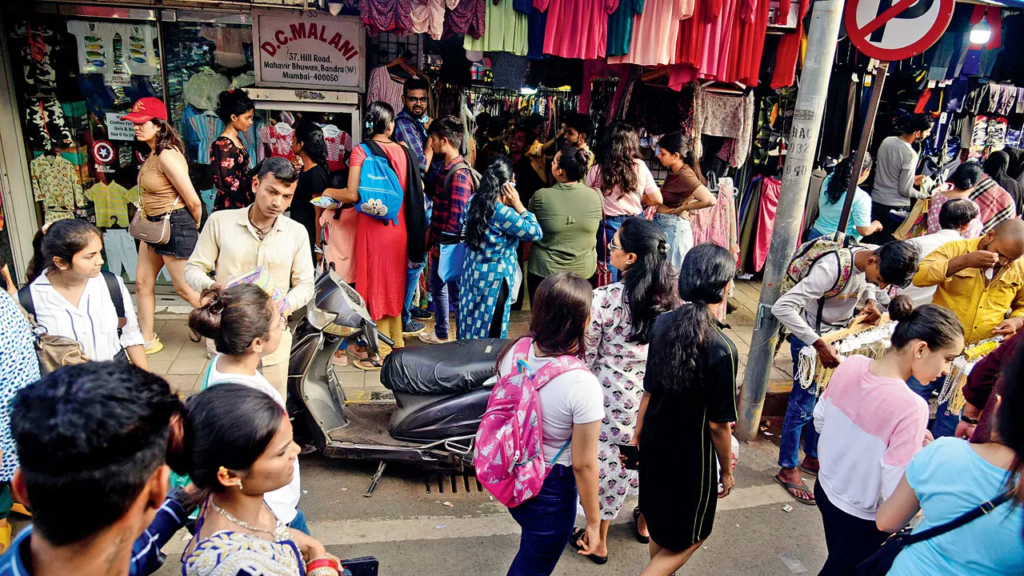
Footpaths and public roads in many areas have become overcrowded with unauthorized vendors, creating:
- Severe pedestrian inconvenience
- Traffic bottlenecks
- Fire and safety hazards
- Sanitation concerns
- Economic losses for licensed businesses
While hawkers provide affordable goods and employment, authorities say unregulated expansion has crossed legal limits, leading to chaos in several neighborhoods.
The suspension reportedly followed multiple complaints from citizens, traders’ associations, and resident welfare groups.
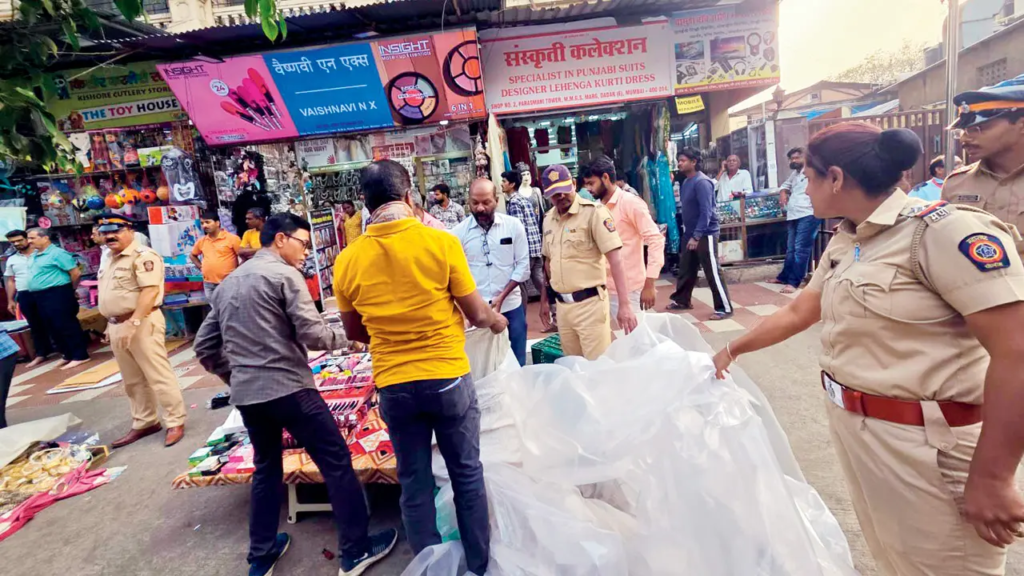
Local business owners have argued that illegal hawkers:
- Block storefront access
- Undercut licensed shops
- Create unfair competition
- Damage commercial infrastructure
Residents, meanwhile, have raised concerns over:
- Obstructed walkways
- Noise pollution
- Waste management issues
- Reduced emergency access
Public pressure has intensified calls for stronger enforcement and police accountability, ultimately leading to the disciplinary action.
Senior Mumbai Police officials stated that no officer will be spared if found negligent or complicit.
A spokesperson said:
Law enforcement officers are expected to uphold duty with integrity. Any failure to act against illegal activities will result in strict disciplinary measures.”
Authorities also clarified that the suspension is part of a wider internal review to ensure that officers follow enforcement guidelines related to:
- Encroachment laws
- Street vending regulations
- Municipal cooperation
- Citizen complaint redressal
The action against the officer coincides with fresh anti-encroachment and hawker removal drives conducted in coordination with:
- Brihanmumbai Municipal Corporation (BMC)
- Traffic Police
- Local ward offices
- Market and civic enforcement teams
These drives aim to:
- Remove illegal stalls from high-footfall areas
- Clear sidewalks and roads
- Improve traffic movement
- Restore pedestrian safety
- Regulate street vending under legal frameworks
Officials say enforcement will continue without bias, while ensuring humane treatment of vendors.
While many citizens support stricter enforcement, street vendors’ unions have expressed concern over the impact on livelihoods.
Vendor groups argue that:
- Thousands depend on street vending for survival
- Evictions should be accompanied by rehabilitation plans
- The government must implement fair vendor licensing systems
- Selective enforcement harms vulnerable workers
They have urged authorities to balance law enforcement with social welfare, warning that abrupt crackdowns could worsen economic hardships.
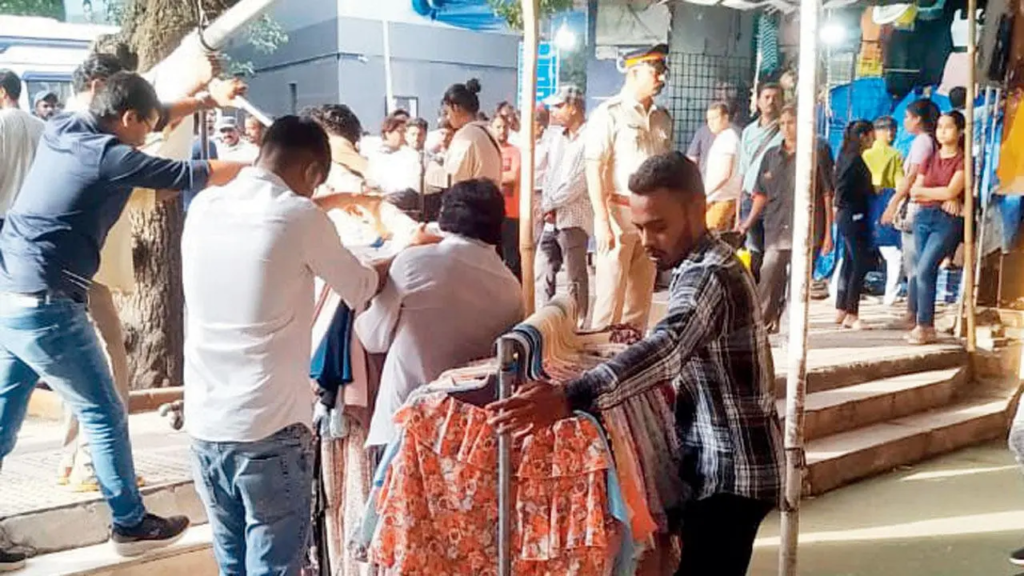
The issue also highlights long-standing challenges in Mumbai’s street vending policy.
Experts say the city needs:
- Clearly designated hawking and no-hawking zones
- Transparent vendor registration systems
- Fair relocation and rehabilitation programs
- Stronger municipal-police coordination
- Technology-based monitoring of encroachments
The Street Vendors (Protection of Livelihood and Regulation of Street Vending) Act was designed to protect vendors while ensuring urban order — but implementation gaps remain a major problem.
The suspension has reignited debate over corruption within enforcement agencies.
Civic activists allege that:
- Illegal hawking often thrives due to bribes and informal arrangements
- Some officers selectively enforce laws
- Political influence shields unauthorized operations
Authorities insist that internal vigilance has been strengthened, and more accountability measures are underway.
This case serves as a warning to officers that negligence, favoritism, or corruption will not be tolerated.
Urban planners say controlling illegal hawking can significantly improve:
- Traffic flow in congested areas
- Emergency vehicle access
- Pedestrian movement
- Public safety
- Cleanliness and waste management
By holding officers accountable, officials hope to improve enforcement efficiency and reduce the everyday frustrations faced by Mumbai residents.
Public reaction to the suspension has been largely supportive, with many residents praising Mumbai Police for taking action.
- Accountability is long overdue
- Illegal hawkers worsen congestion
- Police must enforce laws fairly
- Action should extend beyond one officer
- The system needs deeper reform
- Vendors should not be unfairly targeted
The debate reflects Mumbai’s complex social and economic reality, where governance, livelihoods, and public order intersect.
Political leaders and civic representatives have weighed in, calling for:
- Transparent investigation into the case
- Wider reform in urban enforcement systems
- Fair vendor policies combined with strict regulation
- Improved grievance-redressal mechanisms for citizens
Some leaders have urged authorities to avoid selective crackdowns and ensure consistent citywide enforcement.
The suspended officer may face:
- Departmental inquiry
- Further disciplinary action
- Possible reinstatement if cleared
- Or permanent dismissal if wrongdoing is confirmed
Meanwhile, Mumbai Police are expected to:
- Expand audits of enforcement practices
- Strengthen anti-corruption mechanisms
- Increase monitoring of hawker-related complaints
- Continue coordinated enforcement drives
Officials indicate that more action could follow if systemic issues are uncovered.
This incident is more than a disciplinary case — it reflects Mumbai’s broader struggle with governance, accountability, and urban management.
It highlights:
- The need for responsible law enforcement
- The challenge of regulating informal economies
- The importance of transparent governance
- The growing demand for civic order and fairness
If handled effectively, the case could become a turning point in restoring public confidence in urban law enforcement.
Experts believe sustainable solutions require:
- Institutional reforms within police and municipal bodies
- Digital tracking of complaints and enforcement actions
- Vendor rehabilitation and licensing programs
- Stronger public-participation frameworks
- Political will to address corruption and favoritism
Without systemic reform, critics warn that isolated suspensions may not solve the deeper problem.
The suspension of a Mumbai Police officer over inaction against illegal hawkers sends a powerful message — that accountability, discipline, and lawful governance matter in India’s financial capital.
While the hawker issue remains complex, this step represents a push toward cleaner enforcement, fairer policing, and stronger civic responsibility.
As Mumbai continues to evolve as a megacity, cases like this will shape how authorities balance law, livelihoods, and urban order in the years ahead.
Read Also : Smriti Mandhana & Georgia Voll Power RCB to 2nd WPL Title in Historic Final Victory