Parliament Passes G-RAM-G Bill: MGNREGA Replaced as Opposition Stages Protest | 5 Big Changes Explained
Parliament passes the G-RAM-G Bill, replacing MGNREGA amid strong Opposition protests. Read key changes, political reactions, and what it means for rural employment
Parliament on Thursday cleared the Viksit Bharat Guarantee for Employment and Livelihood Mission (Rural) Bill, dubbed G RAM G, a move that will replace the two-decade-old MGNREGA and promise 125 days of rural wage employment annually, amid fierce Opposition protests in both Houses.
Rural Development Minister Shivraj Singh Chouhan said the overhaul was aimed at correcting structural flaws in the existing scheme.
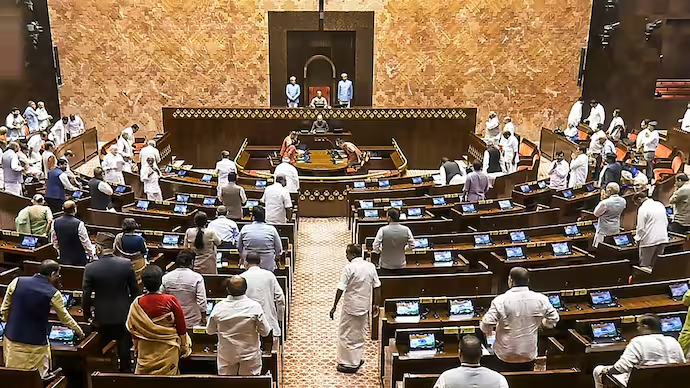
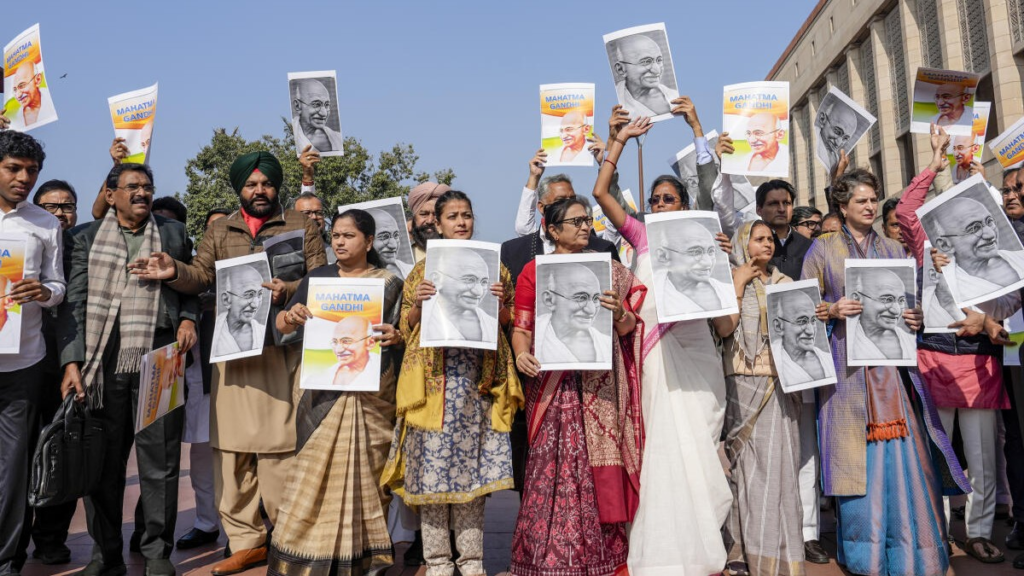
The bill was pushed through the Rajya Sabha by voice vote following a midnight debate hours after it was passed in the Lok Sabha. The Opposition protested the dropping of Mahatma Gandhi’s name from MGNREGA and alleged that the Centre was shifting the scheme’s financial burden onto states.
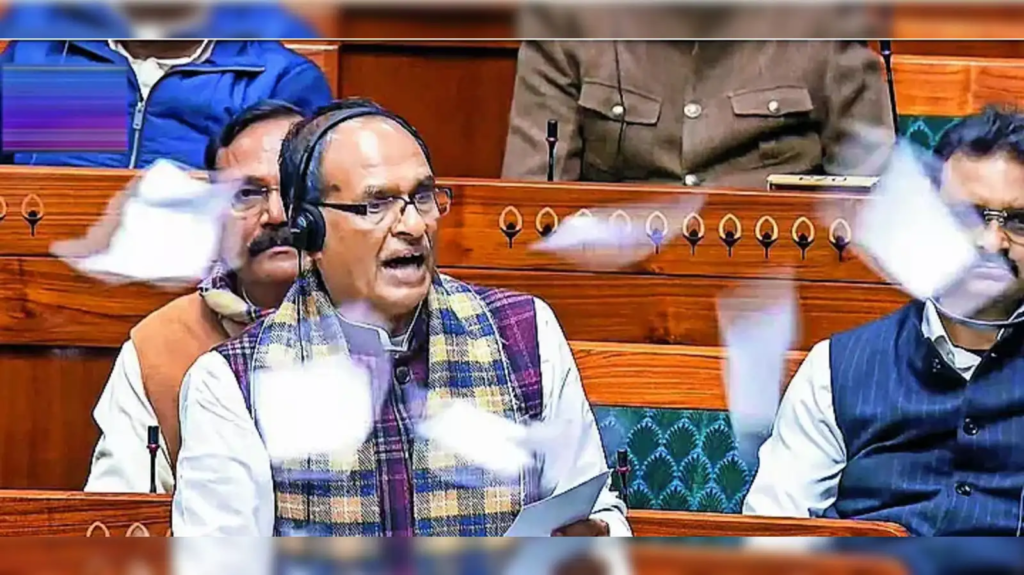
Protesting members in the Rajya Sabha demanded the bill’s withdrawal, raised slogans against the government, and tore copies of the legislation. Several opposition MPs staged a walkout during the passage of the bill, prompting Chairman CP Radhakrishnan to warn them against approaching the treasury benches.
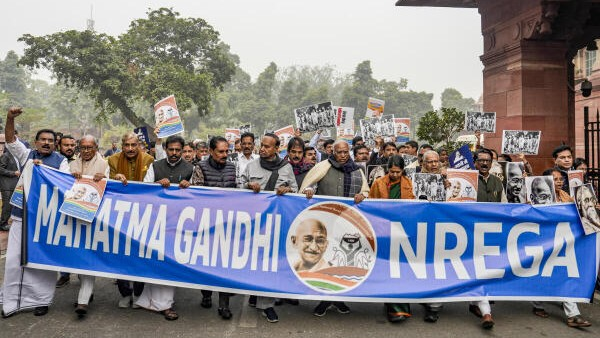
After the passage, opposition parties held a dharna outside the Samvidhan Sadan in the Parliament complex, alleging that the legislation undermined the rural economy and announcing plans for a nationwide agitation. Trinamool Congress MPs decided to sit on a 12-hour protest on the steps of Samvidhan Sadan.
The Opposition also demanded that the bill be referred to a Standing Committee of Parliament for detailed scrutiny.
Replying to a five-hour debate in the Rajya Sabha, Shivraj Singh Chouhan defended the bill, calling it essential for employment generation, rural development and national progress. He accused the Congress of repeatedly ‘killing’ the ideals of Mahatma Gandhi while using his name for political gains.
“This Bill is very necessary, as it will help provide employment opportunities, help development of rural India and take the country forward,” Chouhan said while moving the legislation for passage.
Furthermore, the senior BJP leader alleged that during the UPA government’s tenure, MGNREGA was plagued by corruption and that allocated funds were not adequately spent on material procurement for sanctioned works.
“I listened to the opposition patiently all these hours and expected them to listen to my reply. Making allegations and then running away is like murdering the dreams and ideals of Mahatma Gandhi,” he said as opposition members protested.
The minister claimed the original rural employment scheme was launched in 2005 and that Mahatma Gandhi’s name was added in 2009 by the Congress for electoral benefits. “They use the name of Mahatma Gandhi for politics. If anyone has murdered Gandhi’s ideals, it is the Congress,” he said, citing the Emergency, alleged scams, and disruptions in Parliament as examples.
Earlier, the Lok Sabha passed the Bill amid paper-tearing and slogan-shouting by opposition MPs, who accused the government of destroying the rural economy and disregarding Gandhian principles.
Responding to an eight-hour debate in the lower house, Chouhan said the legislation followed extensive deliberations and aimed to spend Rs 10–11 lakh crore on water conservation, core rural and livelihood infrastructure, and special projects to mitigate extreme weather events.
Parliament on Tuesday passed the G-RAM-G Bill, marking a significant shift in India’s rural employment policy and formally replacing the long-running Mahatma Gandhi National Rural Employment Guarantee Act (MGNREGA). The passage of the Bill came amid loud protests by Opposition parties, who accused the government of dismantling a crucial social safety net for rural households without adequate consultation.
The Bill was cleared following a heated debate in both Houses, with members of the ruling alliance defending the move as a necessary reform aimed at improving efficiency, accountability, and outcomes in rural development schemes. Opposition leaders, however, staged walkouts and demonstrations, claiming the new framework weakens employment guarantees and could adversely affect millions of rural workers.
According to the government, the G-RAM-G (Grameen Rozgar, Assets, and Mobility Guarantee) Bill seeks to modernize rural employment by shifting focus from demand-based wage employment to a broader model that integrates skill development, asset creation, and digital monitoring. The government argues that this approach will not only provide income support but also create long-term economic opportunities in rural areas.
Unlike MGNREGA, which guaranteed 100 days of unskilled manual work to rural households, the new Bill reportedly links employment opportunities to project-based outcomes, local infrastructure needs, and skill training programs.
Defending the legislation, the government said MGNREGA, while impactful in its early years, has faced challenges such as delayed payments, leakages, and limited asset durability. Ministers emphasized that the G-RAM-G Bill aims to address these shortcomings through technology-driven implementation, stricter accountability, and convergence with other development schemes.
“The objective is not to reduce rural employment but to enhance its quality and sustainability,” a senior minister said during the debate, adding that the new system would ensure better utilization of public funds and measurable outcomes on the ground.
Opposition parties strongly opposed the Bill, calling it an “attack on the rural poor.” Several leaders argued that removing a statutory employment guarantee could leave vulnerable households exposed during periods of economic distress, drought, or job scarcity.
During the session, Opposition MPs raised slogans, disrupted proceedings, and accused the government of pushing the Bill through without proper parliamentary scrutiny. Some parties demanded that the Bill be sent to a parliamentary committee for wider consultation with states, panchayats, and civil society organizations.
“This is not a reform, it is a rollback of a hard-earned right,” an Opposition leader said, warning that the move could have serious political and social consequences in rural India.
While the government has promised detailed guidelines, the Bill introduces several structural changes, including:
Greater emphasis on skill-linked rural work
Increased role of digital platforms in registration and wage payments
Integration with infrastructure and livelihood missions
Performance-based funding for states and local bodies
Supporters say these measures will reduce inefficiencies, while critics fear they could exclude the poorest workers who lack digital access or formal skills.
MGNREGA has been one of India’s largest social welfare programs, employing millions annually and acting as a safety net during economic shocks such as droughts and the COVID-19 pandemic. Experts say replacing it represents a major policy shift that will need careful implementation to avoid disruption.
Rural economists caution that any gaps during the transition period could affect household incomes, especially in states heavily dependent on wage employment schemes. They stress the importance of transparency, timely payments, and grievance redress mechanisms under the new system.
Read Also : Bangladesh Protests LIVE: Violence Near Indian Mission Leaves 4 Injured | Shocking Turn in Dhaka Unrest