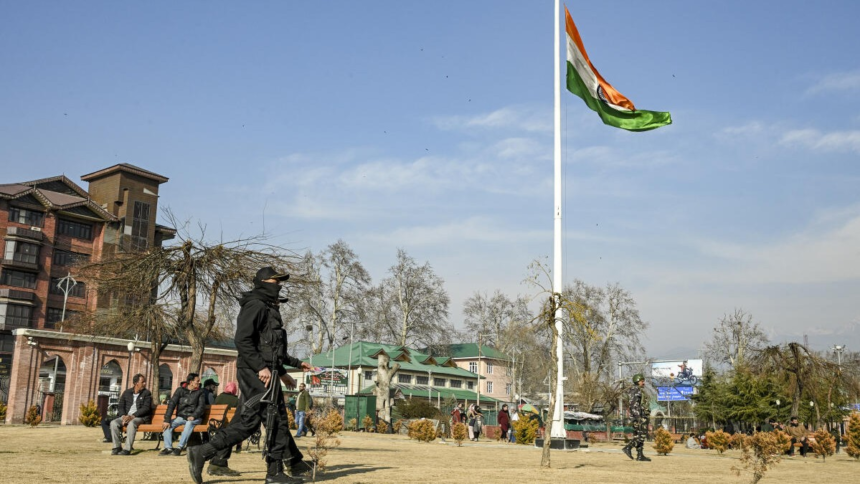
Pulwama Attack 2019: 7 Facts About the February 14 Tragedy That Changed Jammu and Kashmir Forever
February 14, 2019 marks the anniversary of the devastating Pulwama attack that shook Jammu and Kashmir and the nation, remembering the sacrifice of CRPF जवान and the lasting impact on India’s security landscape
February 14, 2019, remains one of the darkest days in India’s modern history. On this day, a devastating terror strike in Jammu and Kashmir claimed the lives of 40 Central Reserve Police Force (CRPF) personnel, leaving the entire nation in shock and grief. The Pulwama attack not only shattered families and communities but also reshaped India’s security policies, political discourse, and geopolitical strategies.
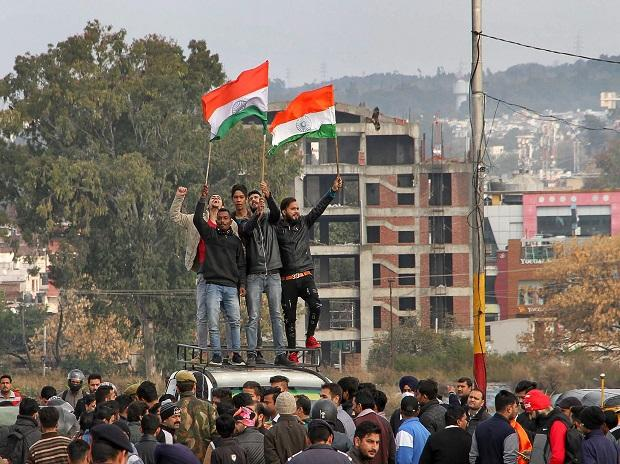
Seven years later, the memory of Pulwama continues to evoke deep emotion, serving as a reminder of sacrifice, resilience, and the ongoing fight against terrorism.
On the afternoon of February 14, 2019, a convoy of CRPF vehicles was moving along the Srinagar-Jammu National Highway. The convoy, one of the largest in the region, was transporting personnel returning to duty after leave. As the vehicles passed through the Pulwama district, a suicide bomber rammed an explosive-laden vehicle into one of the buses.
The massive explosion ripped through the convoy, killing 40 CRPF personnel instantly and injuring several others. The scale of the blast stunned even seasoned security officials, marking it as one of the deadliest attacks on Indian security forces in decades.
The attack was later claimed by the Pakistan-based terror group Jaish-e-Mohammed, intensifying tensions between India and Pakistan.
As news of the attack spread, grief swept across India. Citizens from every corner of the country mourned the fallen जवान, while candlelight vigils and tribute marches were held in cities, towns, and villages.
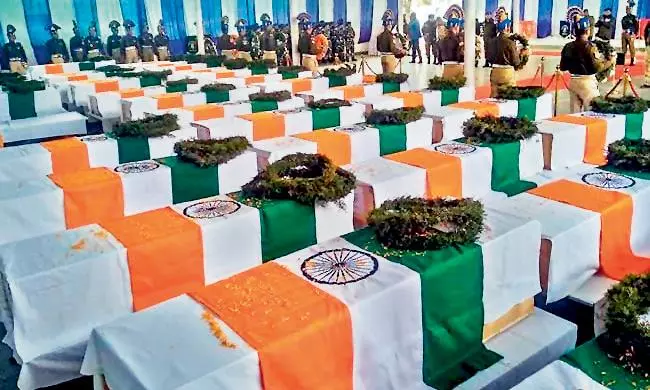
The images of coffins draped in the national flag arriving at the Palam Air Force Station in Delhi left the nation heartbroken. Families of the martyrs were thrust into the spotlight, their stories becoming symbols of sacrifice and patriotism.
The attack triggered an unprecedented wave of national unity, with people across political and social divides standing together in solidarity with the armed forces.
In the aftermath of the attack, India launched a series of diplomatic and military measures. One of the most significant responses was the Balakot airstrike, carried out on February 26, 2019.
Indian Air Force jets struck a major terror training camp in Balakot, deep inside Pakistani territory. The operation marked a major shift in India’s counter-terror doctrine, signaling a willingness to cross borders to target terror infrastructure.
The airstrike was followed by heightened tensions between India and Pakistan, including aerial skirmishes and diplomatic stand-offs. The events brought the two nuclear-armed neighbors to the brink of escalation.
The Pulwama attack led to sweeping changes in security operations across Jammu and Kashmir. Intelligence coordination was significantly strengthened, and convoy movement protocols were revised to prevent similar attacks.
Security agencies ramped up anti-terror operations, resulting in the neutralization of several militant networks in the region. Surveillance and counter-insurgency measures were intensified, reflecting a more aggressive approach to tackling terrorism.
Experts believe that Pulwama served as a turning point in India’s internal security strategy, prompting a shift toward proactive counter-terrorism measures.
Beyond security, the attack had far-reaching political consequences. It intensified the national debate on terrorism and cross-border militancy, becoming a defining issue in India’s political landscape.
Later that year, the government made a historic move by revoking Article 370, which had granted special status to Jammu and Kashmir. While the decision was influenced by multiple factors, many analysts believe the Pulwama attack accelerated policy momentum toward a more integrated national framework for the region.
The reorganization of Jammu and Kashmir into two Union Territories marked a major constitutional shift, altering the region’s administrative and political dynamics.
The Pulwama attack drew widespread condemnation from across the world. Several countries expressed solidarity with India and called for stronger global action against terrorism.
International bodies and global powers urged Pakistan to take decisive steps against terror groups operating from its soil. The attack also renewed global discussions around state-sponsored terrorism and regional stability in South Asia.
India leveraged the global outrage to isolate terror networks diplomatically, strengthening its case for international cooperation in counter-terror efforts.
Behind the statistics were real people—sons, husbands, fathers, and friends whose lives were cut short. The fallen CRPF personnel came from diverse backgrounds, representing different states and communities.
Their stories continue to inspire millions. From young recruits who had recently joined the force to experienced personnel nearing retirement, each martyr left behind a legacy of courage and dedication.
Over the years, memorials, scholarships, and welfare initiatives have been established in their honor, ensuring that their sacrifices are never forgotten.
The impact of the Pulwama attack extended far beyond the immediate loss of lives. Families of the martyrs faced emotional and financial challenges, while survivors carried physical and psychological scars.
The tragedy also highlighted the immense risks faced by security forces deployed in conflict zones. It sparked renewed discussions on improving welfare measures, insurance coverage, and support systems for armed forces personnel and their families.
The nation’s response included financial assistance, government jobs for family members, and long-term support initiatives aimed at honoring the martyrs’ legacy.
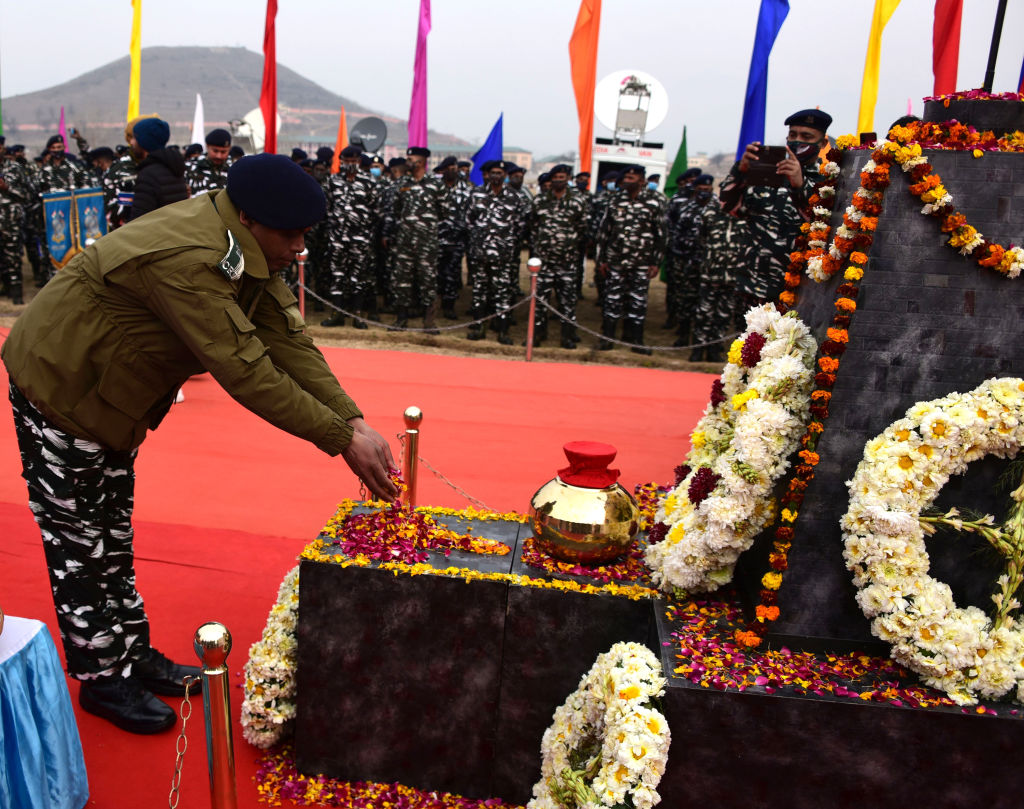
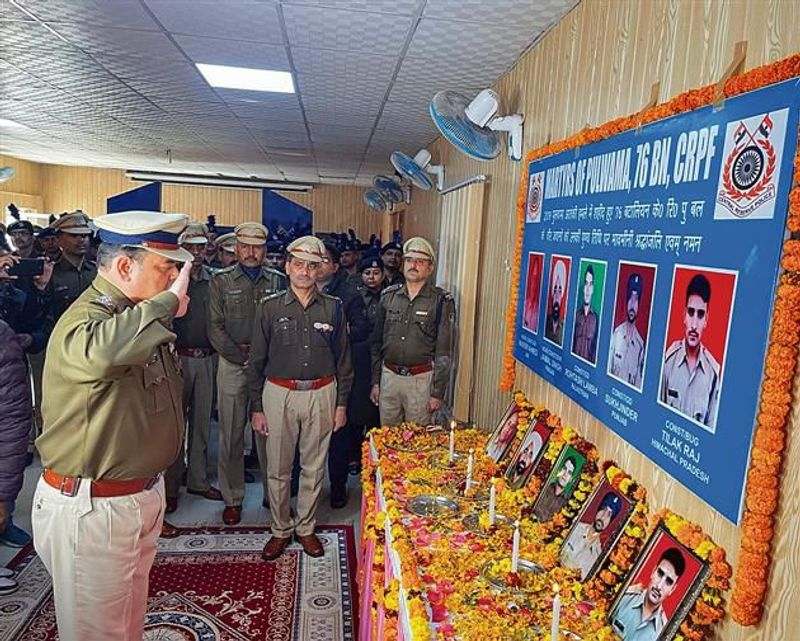
Every year on February 14, tributes pour in from across India. Leaders, security forces, and citizens observe moments of silence, hold memorial events, and share messages of remembrance.
Social media platforms are flooded with hashtags honoring the martyrs, while schools and institutions organize programs to educate younger generations about the significance of the day.
The Pulwama memorial in Lethpora has become a site of remembrance, drawing visitors who come to pay respects to the fallen heroes.
The Pulwama attack served as a grim reminder of the evolving nature of terrorism. It exposed vulnerabilities in convoy security and underscored the need for constant vigilance.
In response, security agencies adopted new technologies, improved intelligence-sharing mechanisms, and enhanced training protocols. The attack also reinforced the importance of public awareness and resilience in the face of terror threats.
Many experts believe that the lessons learned from Pulwama have significantly strengthened India’s preparedness against similar threats.
Even years later, Pulwama continues to occupy a deeply emotional space in India’s collective memory. The attack not only changed policies and strategies but also reshaped the national psyche.
It became a symbol of both vulnerability and strength—highlighting the cost of terrorism while showcasing the resilience of a nation that stands united in adversity.
For many Indians, remembering Pulwama is not just about mourning the past but also about reaffirming a commitment to peace, security, and justice.
Read Also : Bihar Horror: 5 Shocking Details After Dancer Hospitalised as Crowd Forces Coins into Her Mouth