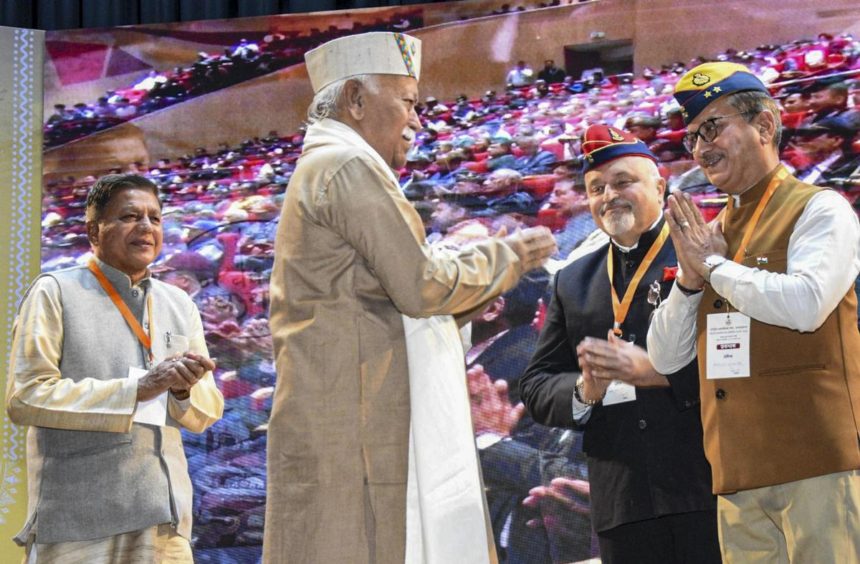
RSS Chief Mohan Bhagwat Pushes for 1 Nation, 1 Law: Calls for Nationwide Uniform Civil Code in Powerful Address
Mohan Bhagwat calls for a nationwide Rashtriya Swayamsevak Sangh push on Uniform Civil Code, reigniting debate over 1 nation, 1 law across India
In a statement that has reignited one of India’s most debated legal and political issues, Mohan Bhagwat, the chief of the Rashtriya Swayamsevak Sangh (RSS), has once again advocated for the implementation of a nationwide Uniform Civil Code (UCC). His remarks have sparked widespread discussion across political, legal, and social circles, bringing the idea of “one nation, one law” back into the national spotlight.
The Uniform Civil Code, which proposes a common set of personal laws governing marriage, divorce, inheritance, and adoption for all citizens regardless of religion, has long been a polarizing subject in India. Bhagwat’s renewed push has intensified the debate, drawing both strong support and sharp criticism.
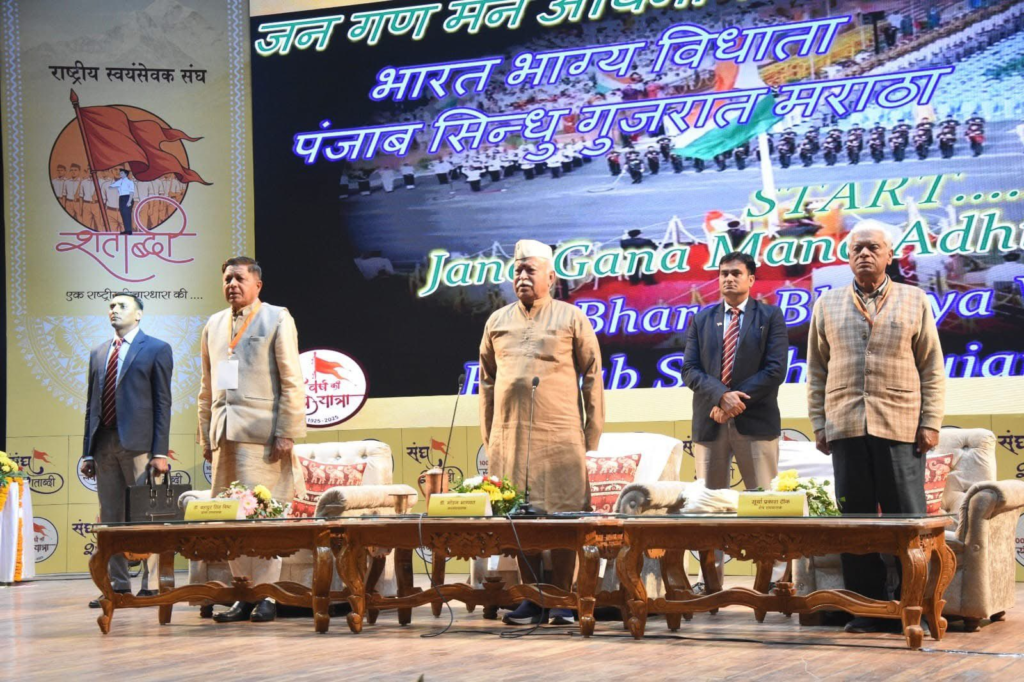
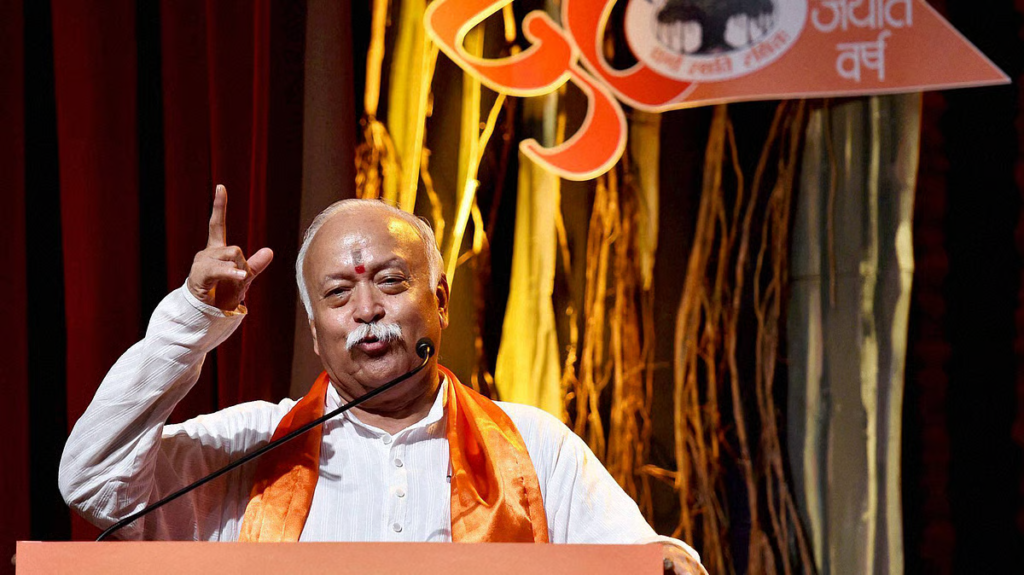
Speaking at a public event, Mohan Bhagwat emphasized the need for unity and equality in legal frameworks governing citizens. He argued that a country as diverse as India should strive toward legal uniformity that ensures equal rights and responsibilities for all.
Bhagwat reportedly stressed that a Uniform Civil Code is not meant to undermine religious practices but to create a fair and consistent legal system. According to him, the idea aligns with the constitutional principle of equality and would help strengthen national unity.
His remarks were framed within the broader vision of building a cohesive national identity while respecting cultural diversity — a stance that has been consistently articulated by the RSS over the years.
The Uniform Civil Code refers to a proposal to replace religion-specific personal laws with a common legal framework applicable to all citizens. Currently, India follows a plural legal system where different communities are governed by their own personal laws in matters such as:
- Marriage and divorce
- Inheritance and succession
- Adoption and guardianship
- Family property rights
For example, Hindu personal laws differ from Muslim, Christian, and Parsi laws in several respects. Advocates of the UCC argue that such differences create legal inequality and gender injustice in some cases.
The concept of UCC is also mentioned in Article 44 of the Indian Constitution, which lists it as a Directive Principle of State Policy, encouraging the state to work toward implementing it.
Mohan Bhagwat’s comments come at a time when discussions around the Uniform Civil Code are gaining renewed political traction. Several states have either formed committees to examine the feasibility of UCC or initiated consultations on the subject.
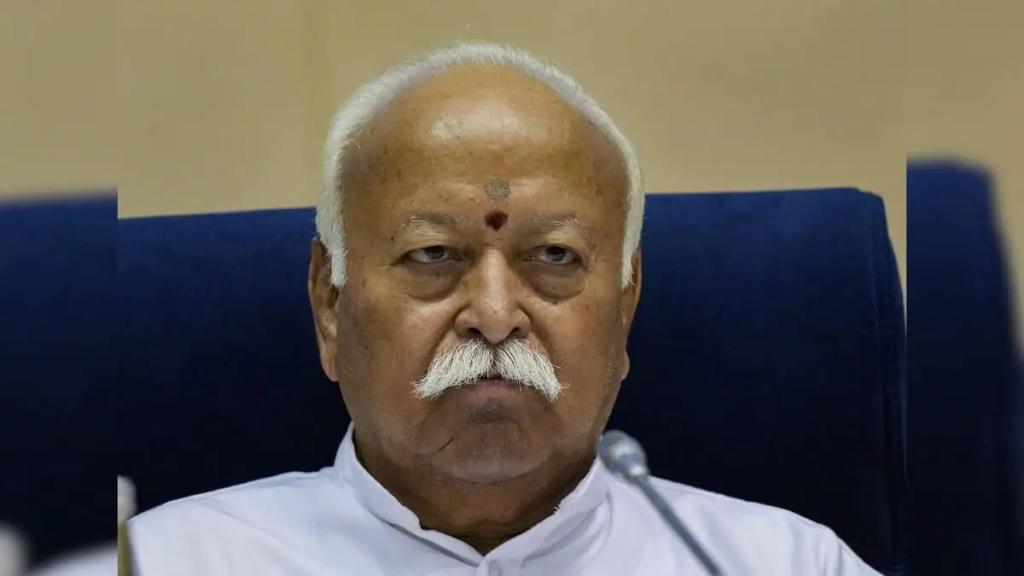
The renewed momentum has made the issue a major talking point in national politics, with leaders across party lines expressing varied opinions.
Bhagwat’s intervention is significant because the RSS has historically played a key ideological role in shaping broader national debates, particularly those related to cultural and constitutional issues.
Supporters of the Uniform Civil Code argue that a common legal framework would ensure equal treatment for all citizens, regardless of religion. Many legal experts believe that the UCC could help eliminate discriminatory practices embedded in certain personal laws.
Key arguments from proponents include:
1. Gender Justice
Advocates say a uniform law could address gender inequalities, especially in areas like divorce, inheritance, and maintenance rights.
2. Legal Clarity
A single civil code would simplify legal processes and reduce confusion arising from multiple personal laws.
3. National Integration
Supporters believe that a common legal framework could strengthen the sense of unity and shared citizenship.
4. Constitutional Alignment
Proponents point to Article 44 as evidence that the Constitution itself envisions a Uniform Civil Code in the long run.
For many backers, Bhagwat’s statement reflects a push toward fulfilling a long-standing constitutional goal.
Despite growing support, the idea of a nationwide UCC remains deeply contentious. Critics argue that imposing a uniform legal system could threaten India’s cultural and religious diversity.
Opposition voices have raised several concerns:
1. Religious Freedom
Critics fear that a common code may infringe upon the right to practice and preserve religious traditions.
2. Diversity Challenges
India’s vast cultural diversity makes it difficult to design a one-size-fits-all legal framework.
3. Minority Apprehensions
Some minority groups worry that the UCC could lead to majoritarian imposition if not handled sensitively.
4. Political Motives
Opponents often frame the UCC debate as politically motivated, especially when it surfaces close to elections.
These concerns highlight why the issue continues to generate intense debate across the country.
The Uniform Civil Code has been a subject of discussion since India’s independence. While the Constitution’s framers included it as a Directive Principle, they also recognized the complexity of implementing it in a diverse society.
Over the decades, the judiciary has occasionally weighed in on the issue. Several Supreme Court observations have highlighted the need for legal reform in personal laws, particularly in cases involving gender justice.
However, the court has also acknowledged that implementing a UCC is ultimately the responsibility of the legislature, not the judiciary.
Bhagwat’s latest remarks have triggered fresh political reactions. Leaders from various parties have responded differently, reflecting the deep divide on the issue.
Some political leaders welcomed the call, describing the Uniform Civil Code as a necessary reform for modern India. Others criticized the statement, arguing that such sensitive issues require broad consensus rather than ideological advocacy.
The debate has once again drawn clear lines between supporters who frame the UCC as progressive reform and critics who see it as a threat to pluralism.
The RSS has long advocated for a Uniform Civil Code as part of its broader ideological framework. For decades, the organization has maintained that legal uniformity is essential for national cohesion.
Mohan Bhagwat himself has spoken about the UCC on multiple occasions, often emphasizing dialogue and consensus-building rather than abrupt implementation.
His latest remarks appear to follow that pattern — reiterating the demand while framing it as a long-term national goal.
While the idea of a UCC continues to gain attention, implementing it remains a complex challenge. Several obstacles stand in the way:
- Need for wide political consensus
- Legal complexities across communities
- Social sensitivities
- Potential constitutional challenges
Experts say that any move toward a Uniform Civil Code would require extensive consultations with stakeholders, including religious leaders, legal scholars, and civil society groups.
Without inclusive dialogue, attempts at implementation could face significant resistance.
Interestingly, some states have begun exploring the idea independently. Committees and study groups have been formed in certain regions to examine the feasibility of drafting state-level versions of a Uniform Civil Code.
This state-driven approach could potentially serve as a testing ground for broader national implementation. However, legal experts warn that a fragmented approach could create further complications.
Whether India moves toward a centralized or phased model remains to be seen.
Public sentiment on the Uniform Civil Code is deeply divided. While some citizens view it as a progressive reform aligned with modern values, others see it as a potential threat to India’s multicultural fabric.
Social media reactions to Bhagwat’s statement reflect this divide, with heated debates unfolding online. Supporters hail the idea as a step toward equality, while critics caution against hasty decisions.
This polarized public discourse underscores the complexity of the issue.
Several countries around the world follow uniform civil laws that apply equally to all citizens. However, India’s unique diversity makes direct comparisons difficult.
Unlike many nations with homogeneous populations, India’s legal pluralism has evolved alongside its cultural diversity. Any attempt to transition toward a uniform system would need to carefully balance global legal models with local realities.
Mohan Bhagwat’s renewed push for a nationwide Uniform Civil Code has once again brought the issue to the forefront of national discourse. Whether it leads to concrete policy action or remains a subject of ideological debate will depend on political will and societal consensus.
Experts believe that if the government chooses to move forward, the process is likely to be gradual, involving multiple stages of consultation and legal drafting.
The coming months could see intensified discussions, policy proposals, and possibly legislative developments.