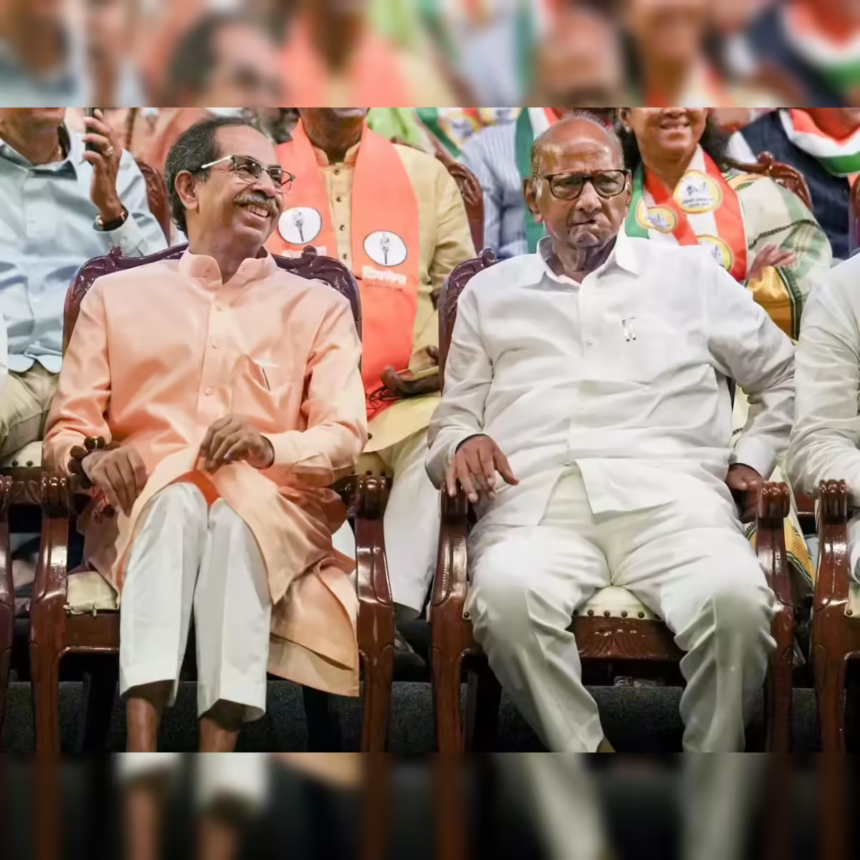
2 Power Posts on MVA Table: Sharad Pawar Eyed for Rajya Sabha, Uddhav Thackeray Tipped for Legislative Council — High-Stakes Maharashtra Deal Signals Major Political Reset
MVA discussions hint at Rajya Sabha berth for Sharad Pawar and Legislative Council role for Uddhav Thackeray, signaling a major Maharashtra political power shift
Maharashtra’s political landscape may be heading toward another dramatic shift as fresh discussions within the Maha Vikas Aghadi (MVA) hint at a strategic power-sharing formula. According to emerging reports, senior leader Sharad Pawar could be nominated to the Rajya Sabha, while former chief minister Uddhav Thackeray may be accommodated in the state Legislative Council.
The proposed arrangement, still under discussion, signals a potential recalibration within the opposition alliance in Maharashtra. If finalized, the move could reshape leadership roles within the alliance and redefine political strategies ahead of upcoming elections.
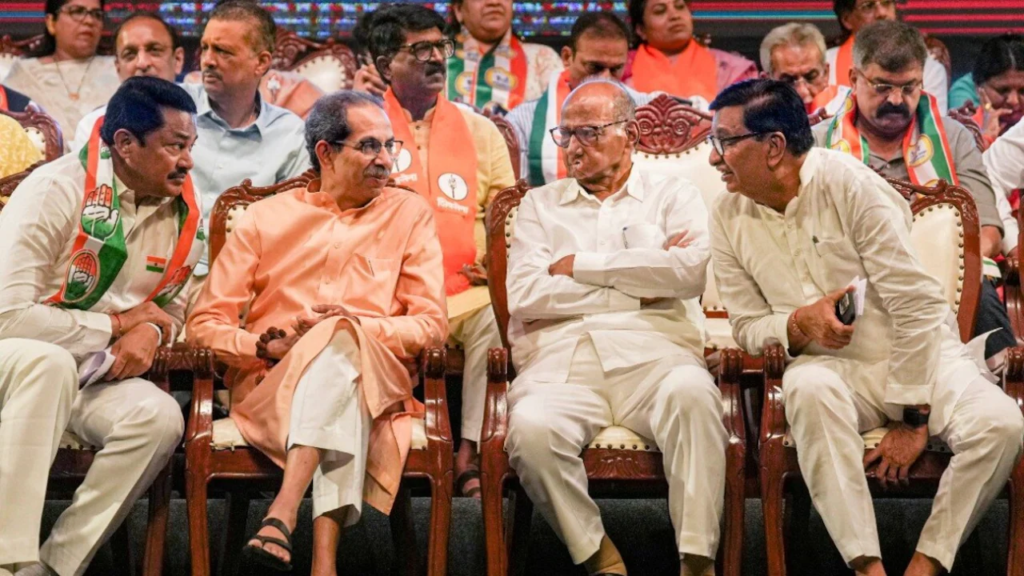
The Maha Vikas Aghadi — an alliance comprising Shiv Sena (Uddhav faction), Nationalist Congress Party, and Indian National Congress — has been navigating complex internal dynamics since losing power in the state.
The reported proposal appears to be aimed at maintaining equilibrium among key leaders while strengthening the alliance’s national and regional influence. With Pawar being one of India’s most seasoned political strategists and Uddhav continuing to command a loyal support base, the arrangement could help the MVA consolidate both experience and mass appeal.
Political observers believe the plan is less about positions and more about preserving unity within the opposition bloc.
At 80+, Sharad Pawar remains one of the most influential figures in Indian politics. A Rajya Sabha berth would allow him to continue playing a pivotal role in national politics without being tied to the rigors of electoral campaigning.
A move to the Upper House would:
- Strengthen opposition coordination at the national level
- Provide strategic guidance during parliamentary battles
- Allow Pawar to mentor younger leaders
Pawar’s ability to build alliances across ideological lines has long been regarded as his biggest strength. A Rajya Sabha presence would ensure that the opposition continues to benefit from his political acumen.
For Uddhav Thackeray, a potential entry into the Maharashtra Legislative Council could serve as a significant step in reinforcing his political positioning within the state.
Since the split in the Shiv Sena and the fall of his government, Uddhav has been working to re-establish his leadership narrative. A Council role would:
- Provide an institutional platform for active politics
- Strengthen his legislative presence
- Reinforce his image as a key opposition face
The move may also help him remain politically relevant within the state assembly ecosystem without directly contesting a high-stakes electoral battle.
The reported formula reflects the complex interplay of personalities and priorities within the MVA. Both Pawar and Uddhav bring distinct strengths to the table — one rooted in decades of political negotiation and the other in grassroots emotional connect with voters.
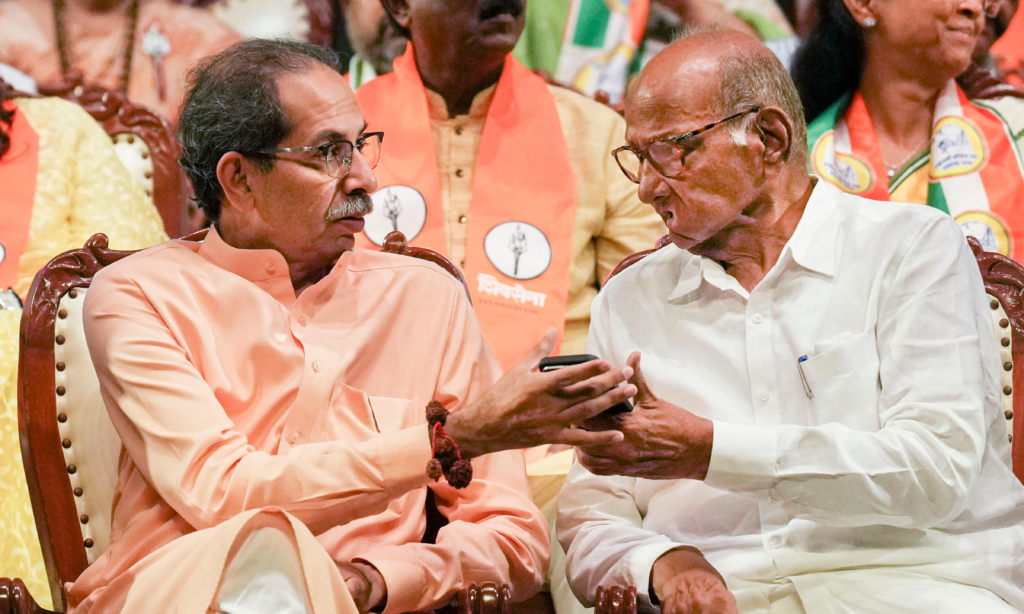
Sources suggest that discussions are focused on ensuring that both leaders remain politically empowered while avoiding internal friction. The balancing act is particularly important as alliances across India increasingly hinge on unity among senior leaders.
If implemented, the arrangement could have far-reaching implications for Maharashtra’s political trajectory.
1. Opposition Consolidation
A clear division of roles may strengthen coordination among alliance partners, making the MVA more cohesive.
2. Leadership Stability
Providing defined roles to top leaders could prevent internal rivalries and send a message of unity to voters.
3. Electoral Strategy
With Pawar focusing on national strategy and Uddhav anchoring state-level politics, the alliance could adopt a dual-track approach ahead of elections.
The move also carries significant national implications. Sharad Pawar has long been seen as a bridge-builder in coalition politics. His presence in the Rajya Sabha could play a crucial role in shaping opposition strategies against the ruling establishment at the Centre.
Meanwhile, strengthening Uddhav’s position within Maharashtra ensures that the alliance retains a strong regional anchor. This dual focus — national influence and regional consolidation — could be key to the MVA’s broader political ambitions.
Despite the apparent strategic logic, the proposal is not without challenges. Political arrangements involving senior leaders often require careful negotiation, and internal disagreements could still emerge.
Key challenges include:
- Managing aspirations of second-rung leaders
- Ensuring smooth coordination among alliance partners
- Addressing ideological differences within the bloc
Additionally, any perceived imbalance could lead to friction, especially in a coalition as diverse as the MVA.
While there has been no official confirmation, the reported formula has already sparked reactions across political circles. Supporters view it as a pragmatic move designed to maximize the strengths of both leaders.
Critics, however, argue that such arrangements may appear overly tactical and could raise questions about internal democracy within alliances.
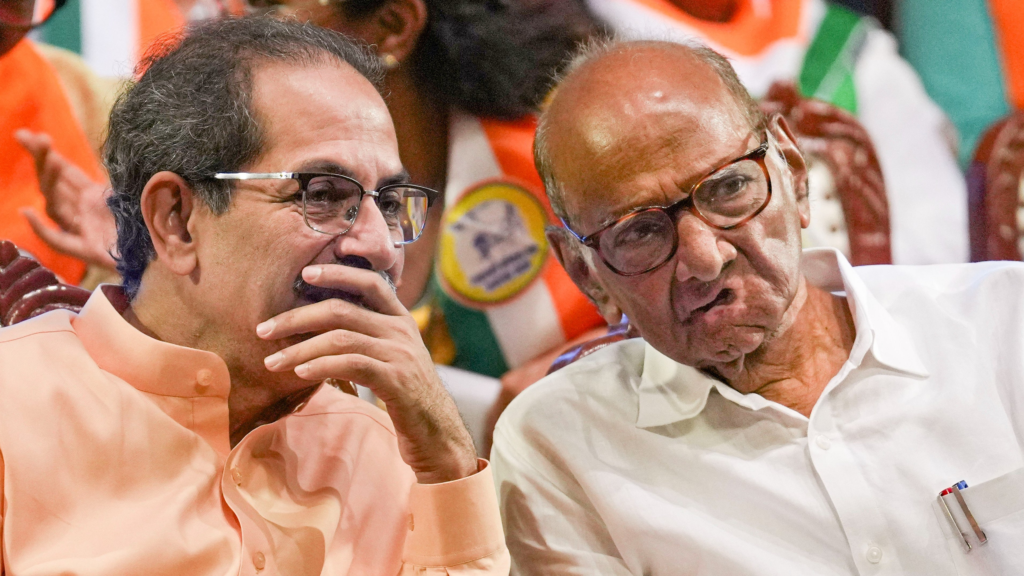
Political analysts suggest that the final outcome will depend on how effectively the alliance communicates the rationale behind the decision to its supporters.
For Uddhav Thackeray, the potential Legislative Council role could also contribute to his ongoing political comeback narrative. After facing setbacks, he has been repositioning himself as a resilient leader capable of navigating adversity.
A formal legislative role would:
- Enhance his political visibility
- Provide a platform for policy interventions
- Reinforce his leadership credentials
It could also help him connect more consistently with voters and party workers across the state.
Sharad Pawar’s possible move to the Rajya Sabha underscores his enduring relevance in Indian politics. Even after decades in public life, he continues to be a central figure in alliance-building efforts.
His experience in navigating coalition politics is widely acknowledged, and many within the opposition see him as a stabilizing force during turbulent political phases.
A Rajya Sabha role would allow him to continue shaping political discourse without the constraints of state-level electoral politics.
As of now, discussions remain in the speculative stage, with no formal announcement from the MVA leadership. However, the very emergence of such a formula suggests active behind-the-scenes negotiations.
Key developments to watch include:
- Official statements from alliance leaders
- Seat allocation discussions
- Signals from party cadres
The coming weeks could provide greater clarity on whether the proposal materializes into a formal political arrangement.
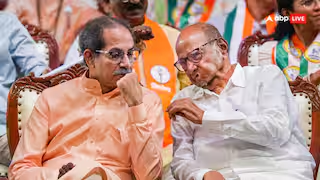
If finalized, the Rajya Sabha–Council formula may go down as a calculated move aimed at preserving unity while maximizing leadership strengths. In a political environment where alliances often struggle with internal contradictions, such strategic adjustments can play a crucial role in long-term stability.
For the MVA, the stakes are high. A well-executed leadership arrangement could reinvigorate the alliance and strengthen its position in both state and national politics.