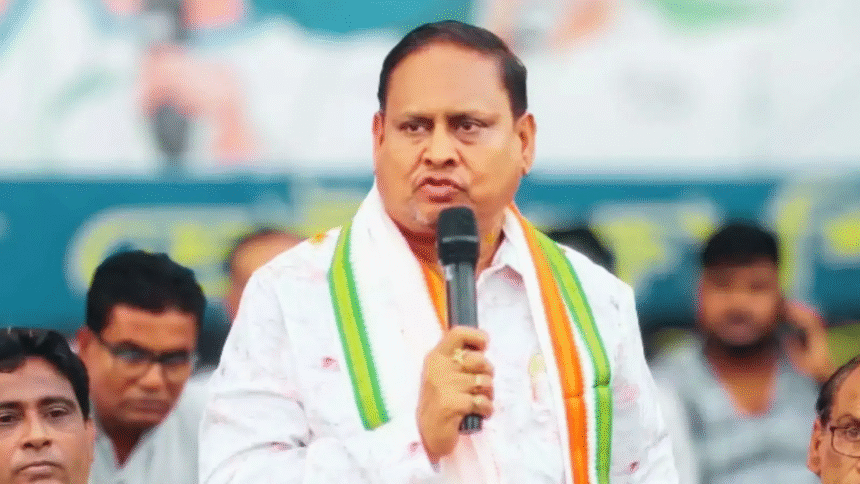
Suspended TMC MLA Humayun Kabir Sparks Massive Row, Lays Foundation Stone for ‘Babri Masjid’ in Bold Move
Suspended TMC MLA Humayun Kabir sparks a major political storm after laying the foundation stone for a ‘Babri Masjid’, triggering intense statewide controversy
On 6 December 2025, a politically charged drama unfolded in Bengal’s Murshidabad district. Suspended Trinamool Congress (TMC) MLA Humayun Kabir defiantly laid the foundation stone for a “Babri-style” mosque at Beldanga — a move that has ignited severe political backlash, communal tension, and widespread media attention.
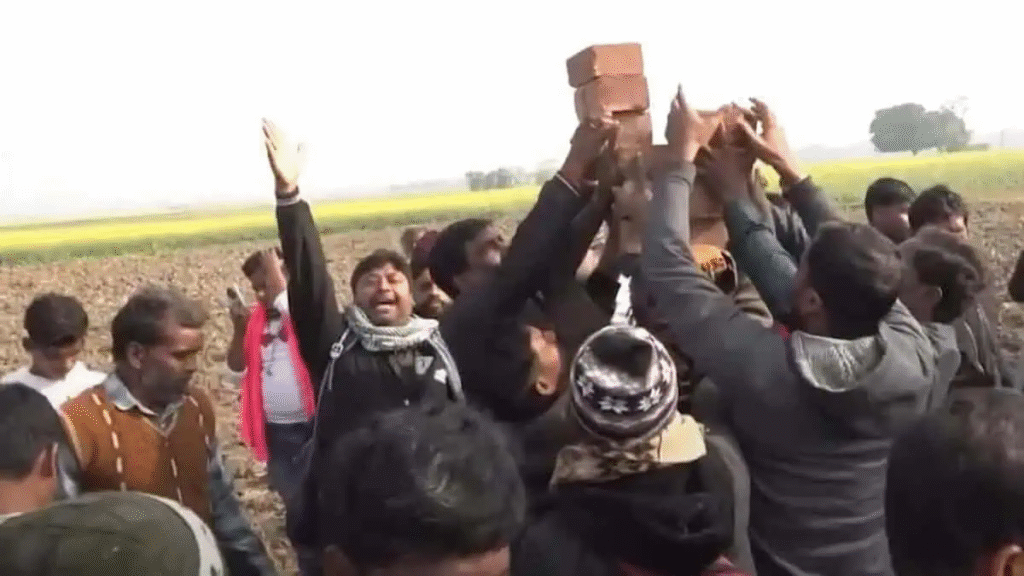
Kabir began the ceremony with a public recitation of the Quran, followed by the ceremonial laying of the foundation stone at noon.
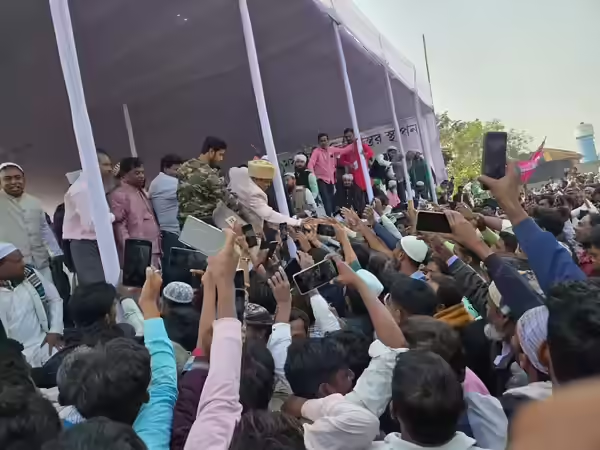
The event reportedly drew thousands of attendees from across Murshidabad and neighboring areas.
Organisers — under Kabir’s direction — arranged large-scale logistics for what was claimed to be a grand public gathering. Reports suggest the mosque complex would be built on 20 bighas of land and could include additional infrastructure like a college, hospital, and a multi-storey rest house.
Security was tightened: local police, district forces, and central forces (including RAF and other rapid-action units) were deployed across Rejinagar, Beldanga and adjoining areas to keep law and order.
Authorities reportedly converted the area around NH-12 into a high-vigilance zone for the duration of the ceremony.
Despite being suspended from his party, Kabir declared the event would go on — stating that the administration was cooperating, and police had assured security.
The foundation-stone laying was preceded by a near-immediate response from his party. On 4 December 2025, just days before the event, the TMC suspended Humayun Kabir for what party leaders described as “communal politics.”
Senior TMC figures publicly condemned his move, saying that building a “Babri Masjid” in Murshidabad — especially timed on the 6 December anniversary — was deliberate provocation.
Kabir, however, remained defiant. He stated that he would resign from the party, launch his own political outfit by 22 December, and contest the upcoming state elections — vowing to contest as many as 135 Assembly seats.
Kabir insisted the mosque construction was on land legally he controlled via a trust; he claimed no further approval was required, and that the mosque would benefit the community at large.
The name “Babri Masjid” evokes a very painful chapter in Indian history. The original Babri Masjid — a 16th-century mosque in Ayodhya — was demolished on 6 December 1992, triggering nationwide riots, communal violence, and polarising socio-political upheaval.
Announcing a “Babri-style mosque” on the same date, and in a state with a long history of communal sensitivities, has therefore triggered alarm among politicians, administrative bodies, and civil-society watchdogs. Many view the act not as purely religious, but as deeply political — aimed at consolidating a particular vote bank ahead of elections.
The TMC and allied leaders have accused Kabir of playing into divisive identity politics, warning that such acts risk communal harmony.
Given the volatile mix of religion and politics, the state administration has taken the matter extremely seriously. Ahead of the ceremony, heavy security was deployed across Murshidabad — including RAF and central forces — to pre-empt any communal clashes or law-and-order breakdowns.
A petition to pause or restrain the event was filed, but the Calcutta High Court reportedly refused to intervene directly. Instead, it directed the State and district authorities to ensure peace and public order.
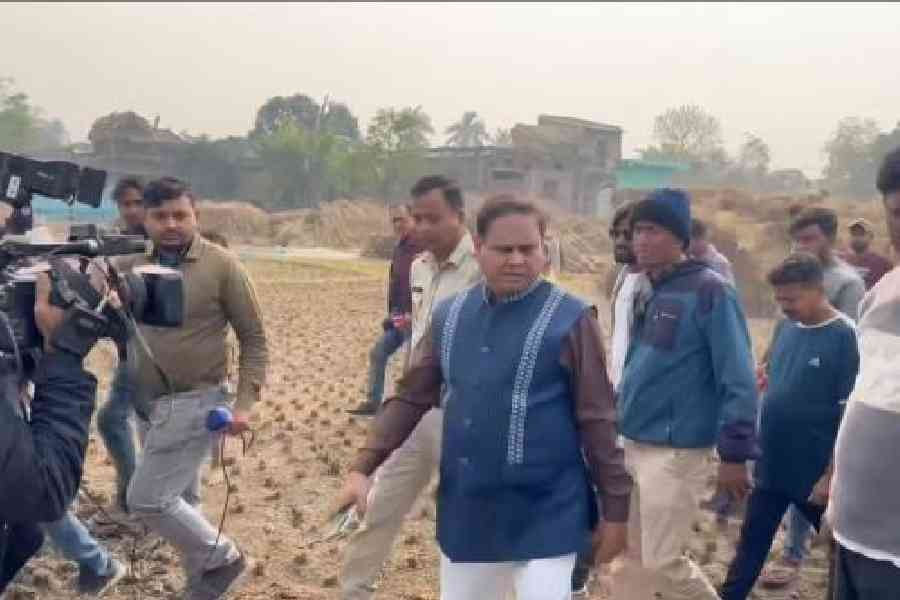
Kabir, meanwhile, expressed gratitude to the police for cooperation, stating publicly that “all is well” and the administration was supporting the event — a claim the authorities have neither fully denied nor confirmed.
As expected, the move triggered a furious reaction from opponents. The Bharatiya Janata Party (BJP), opposition groups, and many civil-society voices condemned the decision, characterising the act as “provocative,” “divisive,” and aimed at polarising religious sentiments.
Critics have argued that reviving the “Babri Masjid” symbolism endangers communal harmony and undermines the broader goal of peaceful coexistence. Some warn that such acts could reopen wounds decades after the original demolition, stirring unrest in a fragile socio-political environment.
On the ground, ordinary citizens in Murshidabad and around Beldanga express anxiety mixed with tension. For many, the event isn’t just about building a mosque — it evokes memories of past violence, communal riots, and deep-seated mistrust between communities.
Meanwhile, supporters of Kabir paint the move as an assertion of religious identity and a challenge to what they see as political hypocrisy. For them, the mosque represents more than bricks and mortar — it stands for representation and rights.
With state elections looming, the timing — and symbolism — of Kabir’s act appears strategic. By launching the foundation-stone ceremony just before the polls, he may be aiming to position himself as a champion of minority rights, appealing to a specific voter base disenchanted with mainstream parties.
If Kabir actually follows through — building a mosque, then extending the project into a broader complex (with facilities like a college and hospital over 20-bigha land) — it could mark the birth of a significant local power centre.
On the other hand, the move could also backfire: it risks alienating moderate and secular voters, may draw legal challenges, and — worst-case — could spark communal trouble that undermines any political gains.
For the ruling TMC, this is a test of its secular credentials. By suspending Kabir, the party has drawn a line — but the fact that the ceremony still took place could raise questions about their control and discipline.
Read Also : Mumbai Rail Crackdown: 7 Strict New Rules to Stop Fake Season Tickets