
1 Bengaluru College Student Murdered After Refusing Marriage – Chilling Plot Uncovered
A Bengaluru college student was tragically murdered after refusing a marriage proposal. Investigation reveals the accused meticulously planned the attack
In a chilling and deeply disturbing incident in Bengaluru, a 20‑year‑old college student was murdered after rejecting a marriage proposal, and investigators say the attack was not spontaneous — but planned. The crime has sent shock‑waves through Karnataka, raising urgent questions about gender‑based violence, entitlement, and the protection of young women.
On the afternoon of 16 October 2025 (around 2:30 pm), near a railway track in Bengaluru’s Swatantrapalya / Malleswaram area, the body of 20‑year‑old Yamini G Priya (a first‑year pharmacy student) was found with her throat slit.
According to police, the accused, 28‑year‑old K Vignesh (a neighbour of the victim), had been repeatedly pressuring Yamini to marry him. When she refused, he allegedly launched a premeditated attack with a sharp weapon.
A second man has also been arrested for allegedly aiding or sheltering the main accused. The two‑wheeler used in the crime was seized.
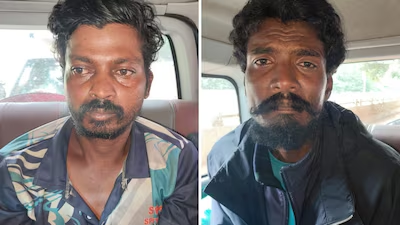
Investigators say that Vignesh had a “close” or at least longstanding acquaintance with Yamini — he lived opposite her home and had known the family. He repeatedly asked her to marry him, and when she declined and perhaps showed interest elsewhere, his possessiveness turned to rage. In his confession, Vignesh admitted he suspected Yamini of seeing someone “better” and decided to kill her because she would not comply with his marriage demand.
This highlights a deeply troubling cultural reality: the idea that a woman’s refusal of a marriage proposal is treated not as her right, but as a provocation or affront, thus justifying violence in the mind of the perpetrator.
The location (near a railway track) and timing (when Yamini was returning from college) indicate calculation and opportunity.
The accused appears to have had prior knowledge of her movements and home location.
A second person is involved, indicating assistance or facilitation.
Arrests and seizures of the vehicle strengthen the case for pre‑meditation.
In other words: This was not a spontaneous argument turned violent; it was a murder committed in cold blood after repeated rejection.
Yamini was a young college student — first year in pharmacy — with hopes and aspirations. She was from Swatantrapalya, Bengaluru.
Her refusal to marry Vignesh was her lawful right, yet it cost her her life. The raw brutality of the act — throat‑slitting by someone who should have been a neighbour — underscores how unsafe even the “familiar” spaces can become for women when rights and boundaries are not respected.
This case is far from isolated; in fact, it reflects a broader pattern in India and elsewhere where rejection of a proposal triggers violent retaliation. Consider:
Another incident in Karnataka where a former classmate stabbed a young woman after her refusal.
Cases of stalking and harassment escalating into murder after refusal of marriage or relationship demands.
What this points to is a deadly mix of male entitlement, inadequate respect for a woman’s autonomous choice, and easy access to weapons or sharp objects.
The feeling of “I asked you, you refused me, therefore I’ll punish you” is the underlying mindset. When such attitudes are embedded in social norms—implicitly or explicitly—they create a fertile ground for violence.
The murder case was registered at the Shrirampura police station soon after Yamini’s father filed a complaint.
The Bengaluru police responded swiftly, arresting Vignesh and the second accused. The vehicle used in the crime was seized.
Yet, the rapid arrest does not negate the larger systemic issues: how did the pressure build up unchecked? Why did repeated demands and harassment apparently go unnoticed or un‑addressed until tragedy struck?
These are challenging questions that require not just police action but societal change.
The incident has reignited debate about women’s safety in educational institutions and neighbourhoods, and about the adequacy of preventive measures. Some of the key take‑aways:
Educational institutions must do more than impart academic knowledge: they must inculcate respect for personal autonomy and train students about consent, respect, and boundaries.
Parents and communities must take seriously the signs of harassment or persistent unsolicited marriage proposals — an uncomfortable “request” can escalate into a deadly threat if ignored.
Neighbours and friends must not dismiss repeated proposals, stalking or pressure as “harmless infatuation” — such behaviour may well be an early warning of dangerous entitlement.
Law enforcement and local authorities need systems to track and act on harassment complaints — long before it leads to murder.
Women’s right to refuse must be recognized not just legally but culturally — the right to say no should be supported by both society and law.
India has been grappling with high rates of gender‑based violence: domestic violence, honour killings, murder following marital or relationship refusals, etc. This case fits into that grim pattern.
Specifically:
The refusal of a marriage proposal is increasingly recognised as a trigger for fatal attacks.
Young women in transitional spaces (college, employment) face particular vulnerability: away from home, navigating new freedom, yet still subject to traditional pressures of obedience, marriage and submission.
The presence (or perception) of a “better suitor”, rejection of offer, and fear of social embarrassment or loss of honour for the aggressor are recurring tropes in these crimes.
Yamini’s life was cut short, but her death must be a wake‑up call. Justice must be served — the accused must be held accountable under the full rigour of law. But that is not enough. Her case must spark institutional reforms in Bengaluru and beyond.
Her family, her peers and society at large deserve more: transparency in the investigation, protective measures for other young women in the area, and public discussion of the root problems.
The neighbourhood where she lived, the college she attended, the city she walked through on her way home — all these spaces must be re‑imagined as places of safety, not threat.