

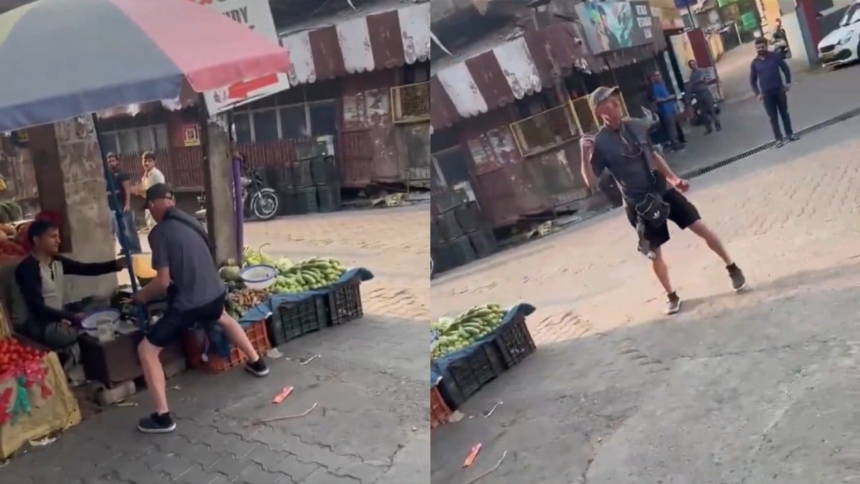
5 Explosive Details Behind Foreign Tourist’s Dharamshala Market Chaos; Viral Video Sparks Outrage
A viral video showing a foreign tourist allegedly creating chaos in Dharamshala market has sparked intense online debate. Social media users question double standards, with many asking, “What if an Indian did this abroad
A viral video from the popular hill town of Dharamshala in Himachal Pradesh has ignited a heated debate across social media platforms after a foreign tourist was allegedly seen creating disruption in a busy local market. The incident, captured on camera by bystanders, quickly spread online and attracted thousands of reactions, comments, and shares, with many users questioning whether similar behavior by an Indian citizen in a foreign country would have been tolerated.
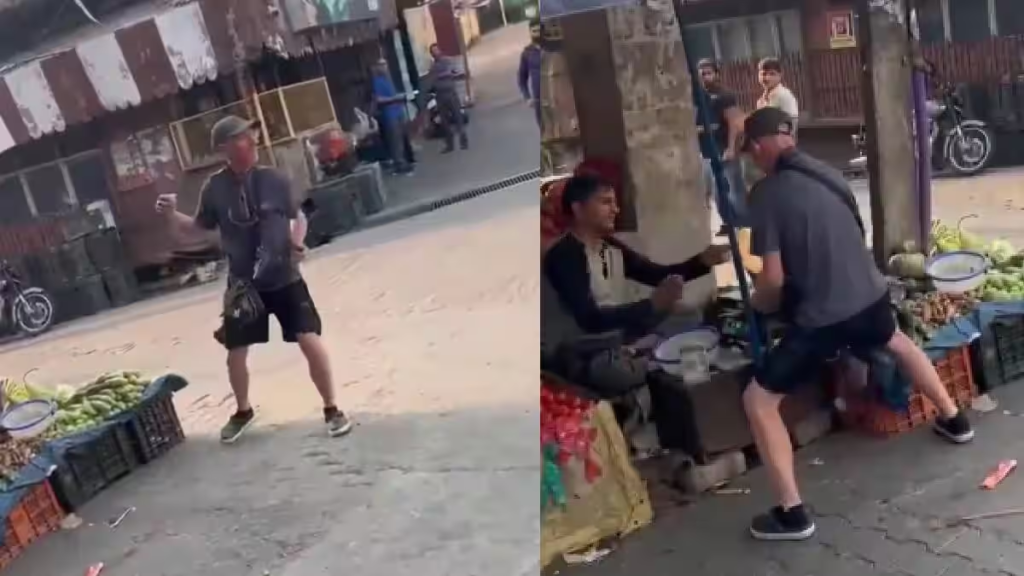
The video, which surfaced on social media earlier this week, shows a foreign tourist reportedly engaging in behavior that several viewers described as disruptive and disrespectful toward local vendors and residents. While the exact circumstances leading to the confrontation remain unclear, the footage has become the center of a broader discussion about tourism, cultural sensitivity, and the expectations placed on visitors in host countries.
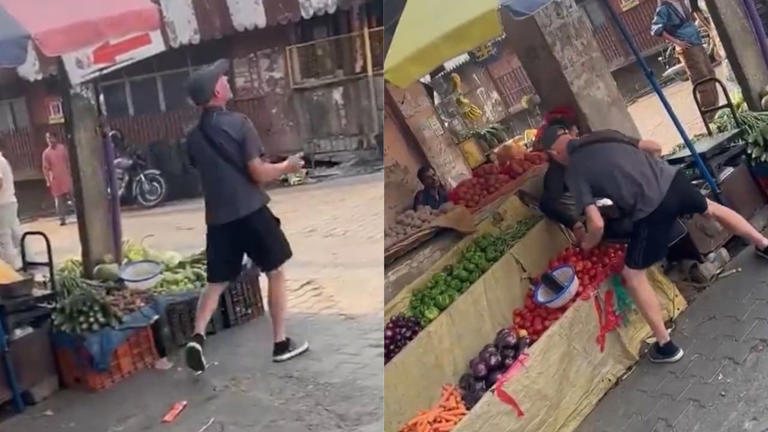
According to social media posts accompanying the viral clip, the incident occurred in one of Dharamshala’s bustling market areas, a destination frequented by both domestic and international tourists throughout the year.
In the footage, the tourist appears to be involved in an argument that drew the attention of nearby shopkeepers, customers, and passersby. As the exchange escalated, several people gathered around the scene, leading to confusion and commotion in the crowded marketplace.
Although different versions of the incident have emerged online, no official statement detailing the complete sequence of events had been released at the time the video gained traction. This has not stopped internet users from sharing their opinions, with many taking strong positions on the matter.
Some viewers argued that the tourist’s actions reflected a lack of respect for local customs and public spaces. Others urged caution, noting that short video clips often fail to provide complete context and can sometimes present a misleading picture of what actually occurred.
The phrase that has appeared repeatedly across online discussions is: “What if an Indian did this abroad?”
This question quickly became the focal point of the debate. Many users claimed that Indians often face criticism for even minor violations in foreign countries and wondered whether similar standards are applied to foreign visitors in India.
Several comments expressed frustration over what some perceive as a double standard. Users argued that visitors should be expected to follow local laws, customs, and social norms regardless of where they come from.
Others highlighted that tourism should be based on mutual respect, emphasizing that travelers have a responsibility to behave appropriately in host communities. They pointed out that local residents often welcome visitors with warmth and hospitality, making respectful conduct all the more important.
At the same time, another group of social media users warned against generalizing the actions of one individual to an entire nationality or community. They stressed that isolated incidents should not be used to create negative stereotypes about foreign tourists as a whole.
Dharamshala is one of India’s most internationally recognized tourist destinations. Nestled in the scenic mountains of Himachal Pradesh, the town attracts visitors from around the world due to its natural beauty, Tibetan culture, spiritual centers, and peaceful atmosphere.
The region is also known as the home of the Tibetan government-in-exile and has long served as a cultural bridge connecting travelers from diverse backgrounds.
Every year, thousands of international tourists visit Dharamshala seeking trekking experiences, meditation retreats, yoga programs, and cultural exploration. As a result, interactions between locals and visitors are a routine part of daily life in the town.
Most of these interactions are positive and contribute significantly to the local economy. Tourism supports hotels, restaurants, transportation services, handicraft businesses, and countless small vendors who rely on visitor spending.
Because of this close relationship between tourists and local communities, incidents that generate controversy often attract significant public attention.
The Dharamshala incident has once again highlighted the growing conversation surrounding responsible tourism.
Travel experts frequently emphasize that tourism is not only about sightseeing but also about understanding and respecting the places people visit. Responsible travelers are encouraged to learn about local customs, traditions, and regulations before arriving at a destination.
Simple acts such as respecting public spaces, following local rules, dressing appropriately when required, and treating residents with courtesy can help create positive experiences for everyone involved.
Many tourism organizations around the world promote the idea that visitors are temporary guests in another community and should behave accordingly.
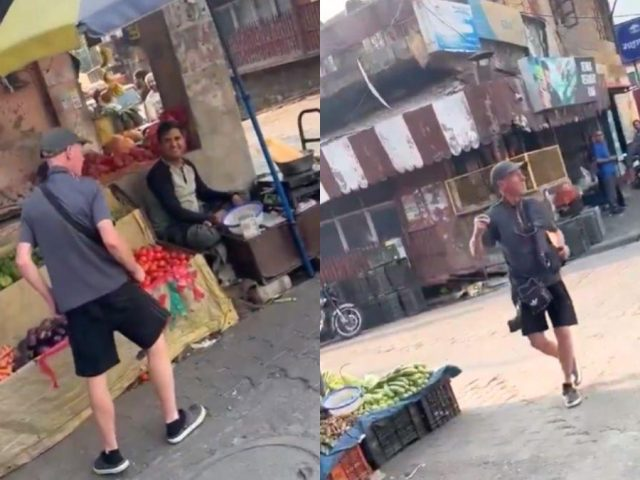
The viral Dharamshala video has led many commentators to revisit these principles, arguing that cultural awareness should be a key part of modern travel.
While the incident has generated strong reactions, several observers have urged the public to avoid reaching conclusions before all facts become available.
Experts on digital media often point out that viral videos frequently capture only a small segment of a larger event. Without knowing what happened before or after the recording began, it can be difficult to accurately assess responsibility.
This concern has become increasingly relevant in the age of social media, where short clips can reach millions of viewers within hours.
Many users have therefore called for a balanced approach, suggesting that people should wait for verified information before making definitive judgments.
They argue that while accountability is important, fairness and accuracy are equally essential when discussing incidents that involve individuals who may not have the opportunity to explain their side of the story.
One of the key themes emerging from the online discussion is whether the expectations placed on tourists should be universal.
Supporters of this view argue that all travelers—regardless of nationality—should be held to the same standards of conduct. They believe respect for local communities is a universal responsibility that transcends borders.
Others suggest that perceptions of behavior can vary depending on cultural contexts and personal interpretations. What may appear unusual or inappropriate in one country might be viewed differently elsewhere.
Nevertheless, most participants in the debate agree on one point: mutual respect remains essential for maintaining positive relationships between visitors and host communities.
Incidents like the one in Dharamshala often attract attention because they influence public perceptions about tourism more broadly.
When videos of confrontations or disruptive behavior go viral, they can create concerns among residents who worry about the impact on their communities. At the same time, tourism stakeholders recognize that the vast majority of travelers contribute positively to local economies and cultural exchange.
Maintaining a balance between welcoming visitors and ensuring community well-being remains a challenge for popular tourist destinations around the world.
Authorities, tourism boards, and local businesses frequently work together to promote respectful travel practices while preserving the welcoming atmosphere that attracts visitors in the first place.
Read Also : Heartwarming Moment: Army Officer’s 1 Surprise Marriage Proposal Steals the Show After Passing-Out Parade