5 Injured in JNUSU Protest Clash: Police vs Students Face-Off Turns Violent, FIR Filed After Shocking Campus Chaos at Jawaharlal Nehru University
JNUSU protest clash at Jawaharlal Nehru University leaves police and students injured, FIR filed after campus violence escalates, sparking nationwide debate
Police and students were injured after clashes broke out during a march by the Jawaharlal Nehru University Students’ Union (JNUSU) at the campus gate on Thursday, with both sides accusing each other of assault. An FIR has been registered, police said.
According to the police, around 400–500 students gathered on campus for a “Long March” to the Ministry of Education as part of ongoing protests over issues including UGC regulations, rustication of JNUSU office-bearers and remarks by Vice Chancellor Santishree Dhulipudi Pandit.
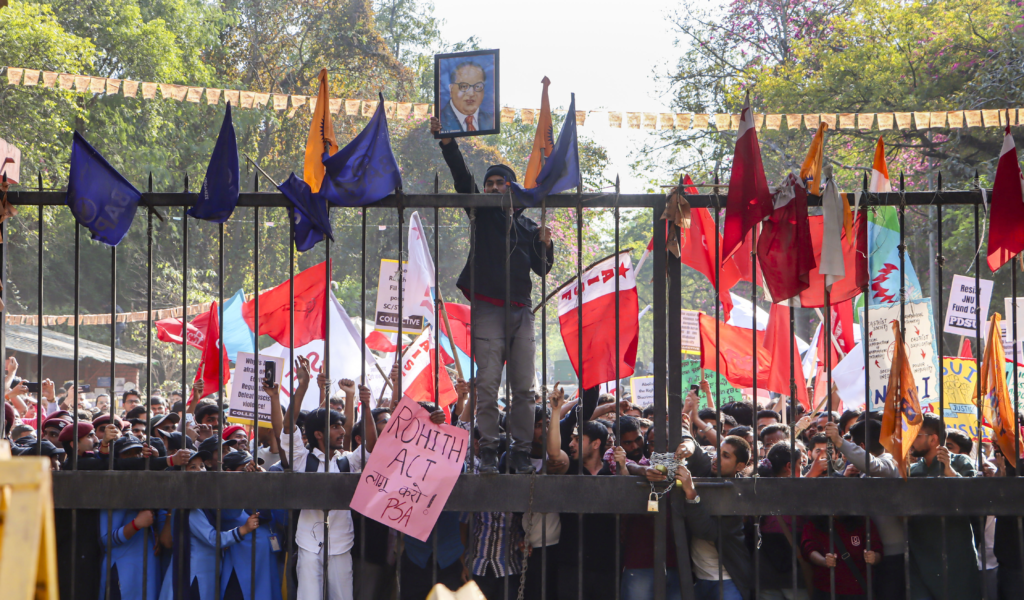
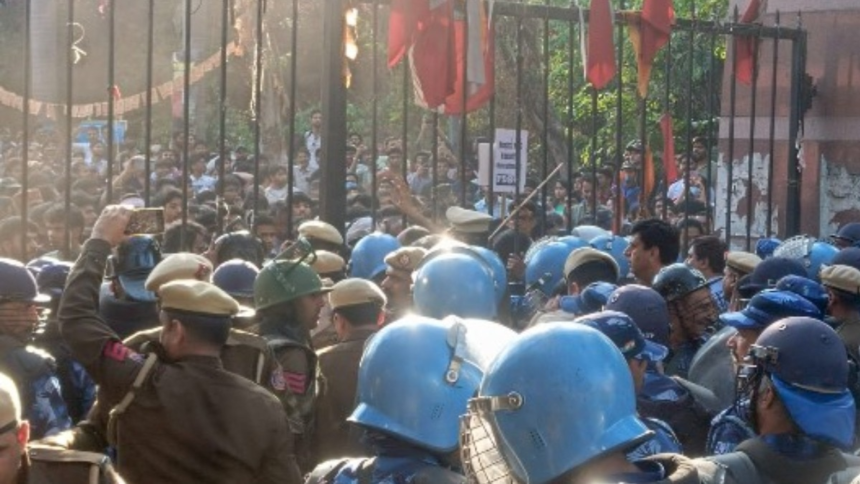
Around 3.20 pm, protesters moved out through the main gate and attempted to proceed towards the ministry. Police stopped them at the North Gate and pushed them back inside the campus.
“Barricades placed outside the campus were damaged as the situation escalated. The protesters pelted banners and sticks, threw shoes and resorted to physical assault. Some police personnel were bitten during the scuffle, resulting in injuries to several officers deployed at the spot,” a senior police officer told PTI.
Police said around 25 personnel were injured, including ACP Ved Prakash, ACP Sanghamitra, SHO Atul Tyagi and SHO Ajai Yadav.
An FIR was registered at Vasant Kunj North police station under BNS sections 221, 121(1), 132 and 3(5), alleging obstruction and assault on public servants.
“We have detained some of the protestors. Some protestors are levelling allegations that police manhandled them which are completely baseless. Every single officer deputed there were maintaining law and order,” the officer said.
JNUSU president Aditi Mishra and former president Nitish Kumar were among the 51 protesters detained, police said.
Students, however, alleged that excessive force was used against them and claimed several protesters, including women, were injured. The JNU Teachers Association condemned what it described as “brutal use of force” and expressed concern that some detained students were taken to “unconfirmed locations”.
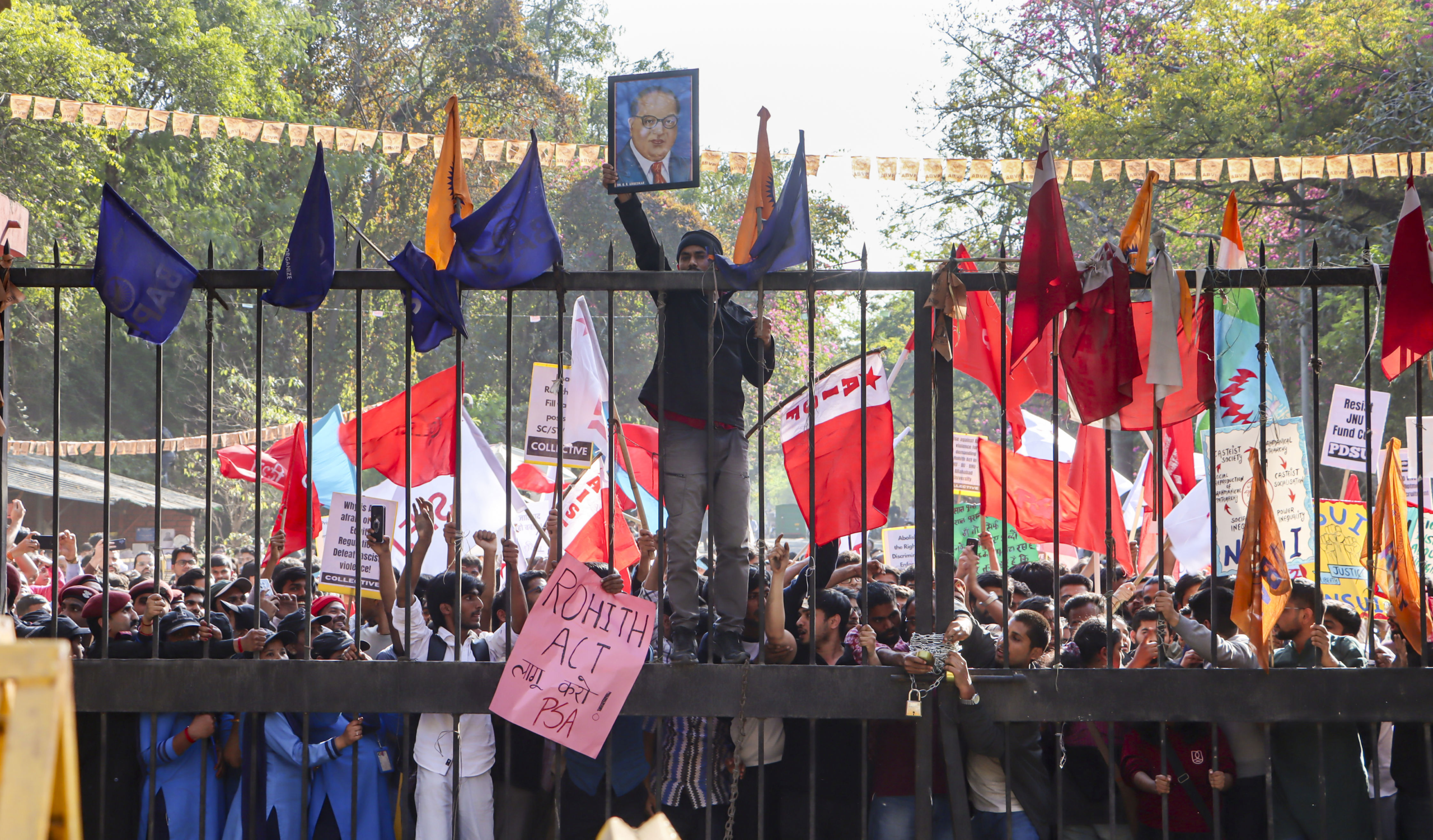
The JNUSU also alleged that a portrait of B R Ambedkar was damaged during the police action. Videos of the clash circulated online, though PTI could not independently verify their authenticity.
In a statement, the university administration said the students had been informed that no permission was granted for protests outside the campus and were advised to restrict demonstrations within university premises.
“JNUSU protestors are demanding UGC regulations to be implemented. This is in violation of the Honorable Supreme Court which issued a stay on the regulations. JNU Vice Chancellor or Registrar have no powers over the regulations,” the statement said.
It added that students rusticated following a proctorial inquiry for alleged vandalism and violence were responsible for the unrest.
Security remains tight inside and outside the campus following the clash.
Tensions flared at Jawaharlal Nehru University (JNU) after a protest by the Jawaharlal Nehru University Students’ Union (JNUSU) turned violent, leaving several students and police personnel injured. The clash, which unfolded during a demonstration on campus, has triggered a fresh wave of debate around student activism, policing, and freedom of protest in India’s universities.
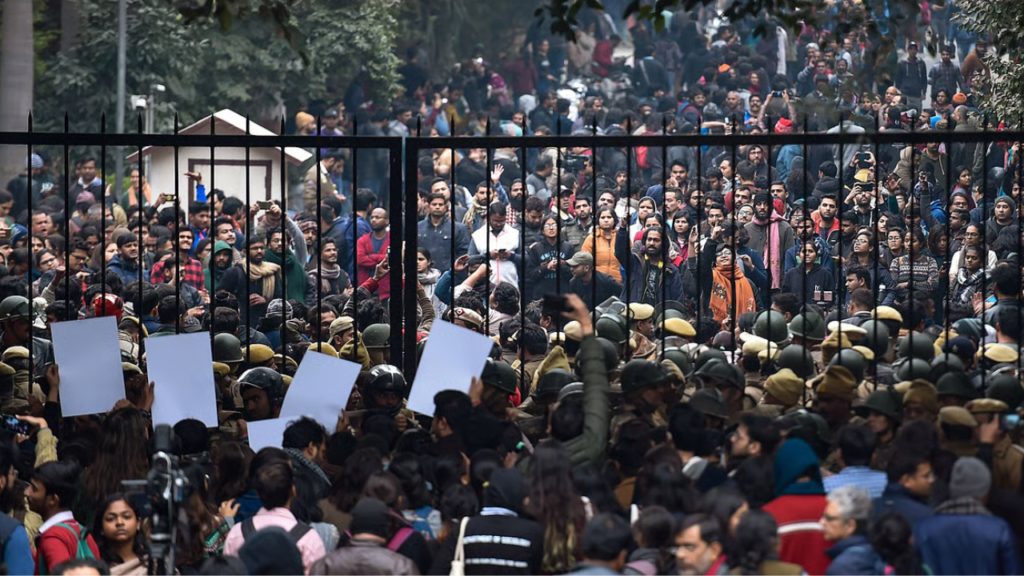
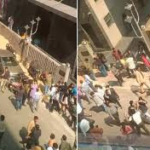
Authorities confirmed that an FIR has been filed following the incident, even as both sides traded accusations over who initiated the violence. The situation quickly escalated from a peaceful protest into a chaotic confrontation, with visuals circulating online showing pushing, scuffles, and heightened tensions between protesters and security forces.
According to student leaders, the protest was organized to raise concerns over administrative decisions and campus policies that they claim affect student welfare and democratic functioning. Protesters alleged that repeated appeals to the university administration had gone unanswered, forcing them to take to the streets in a show of dissent.
JNUSU members reportedly gathered in large numbers, raising slogans and demanding dialogue with authorities. Initially, the demonstration remained peaceful, but the situation deteriorated when police personnel intervened to disperse the gathering.
Eyewitness accounts suggest that the confrontation began when police attempted to control the crowd and prevent protesters from moving toward restricted areas. Students claim that excessive force was used during the attempt to disperse the gathering, leading to panic and resistance.
On the other hand, police sources stated that officers were provoked by aggressive behavior and were forced to act to maintain order. The situation quickly spiraled into a physical confrontation, with pushing and scuffles reported from multiple parts of the campus.
Videos shared on social media showed injured individuals being escorted away and heated exchanges between students and law enforcement, amplifying public attention on the incident.
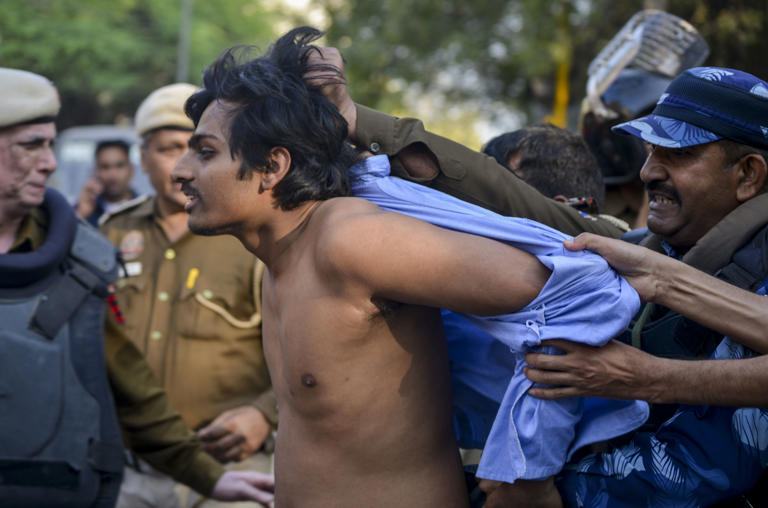
Officials confirmed that several people sustained minor injuries during the clash, including both students and police personnel. Some injured individuals were reportedly treated on campus, while others were taken to nearby medical facilities as a precaution.
While no serious injuries have been officially reported so far, the incident has raised concerns about campus safety and the growing frequency of confrontations between students and authorities.
Following the clash, police registered a First Information Report (FIR) to investigate the circumstances leading to the violence. Authorities stated that the case will examine allegations of unlawful assembly, obstruction, and physical confrontation.
Investigators are expected to review video footage, eyewitness statements, and other evidence to determine accountability. Officials have indicated that action will be taken against individuals found responsible for inciting or participating in violence.
However, the move has drawn criticism from student groups, who argue that filing an FIR could intimidate protesters and discourage democratic dissent.
Student leaders have accused the police of using disproportionate force during the crackdown. According to JNUSU representatives, the protest was meant to be peaceful, and the escalation occurred only after authorities intervened aggressively.

They also claimed that some students were manhandled during the dispersal, calling for an independent inquiry into the incident. Several student organizations have expressed solidarity, urging the administration to ensure that campuses remain spaces for dialogue and debate.
Police officials, however, maintain that their actions were necessary to maintain law and order. According to their statement, the gathering risked turning disruptive, prompting preventive action to avoid a larger security situation.
Authorities emphasized that restraint was exercised and that injuries were minor. They also reiterated that the FIR is part of a standard legal process to establish facts and ensure accountability.
The incident has sparked widespread reactions across political and social circles. Several activists and public figures have weighed in, with opinions sharply divided along ideological lines.
Some have condemned the violence and called for better communication between universities and students to prevent such clashes. Others have raised concerns about the criminalization of student protests and the shrinking space for dissent on campuses.
Social media has been flooded with hashtags and debates, with users sharing videos, opinions, and demands for transparency in the investigation.
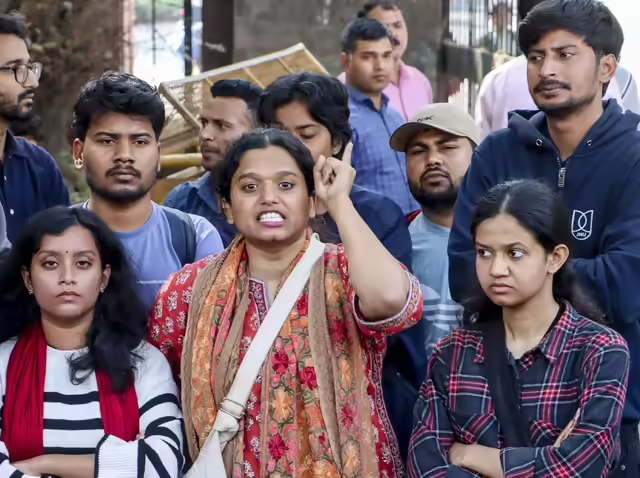
In the aftermath of the clash, the atmosphere on campus remains tense. Additional security measures have reportedly been put in place to prevent further incidents. Students, meanwhile, are continuing discussions on the next course of action, including possible peaceful demonstrations or legal challenges.
University authorities have yet to issue a detailed statement addressing the core demands of the protest, though sources indicate that internal meetings are underway to defuse tensions.
The incident has reignited broader questions about the role of student activism in democratic societies. Universities have historically been spaces for debate and political engagement, but increasing confrontations have raised concerns about balancing dissent with order.
Experts argue that open communication between administrations, students, and law enforcement is essential to prevent escalation. Without dialogue, even small disagreements risk turning into major confrontations, as seen in this case.