7 Shocking Updates: Khamenei’s Coffin Reaches Mashhad as Funeral Delayed Due to Massive Crowds
Get the latest updates on Khamenei’s funeral as his coffin reaches Mashhad
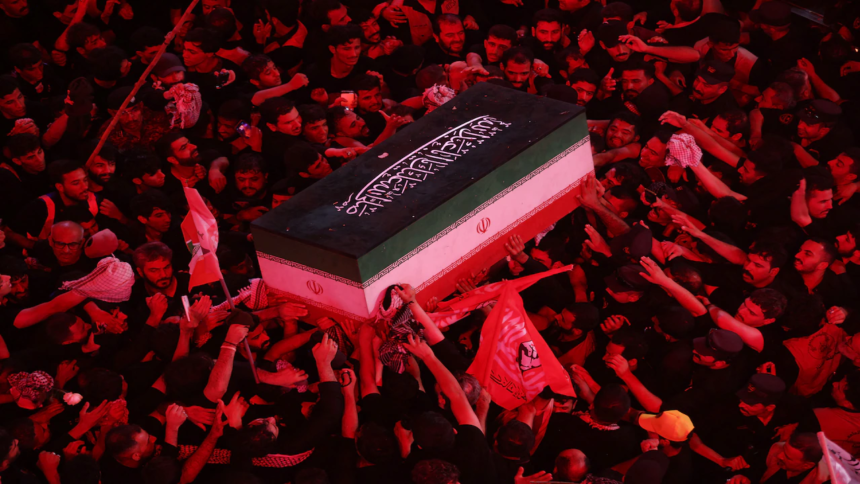
In a moment of unprecedented scale and profound grief for the Islamic Republic, the coffin containing the remains of Iran’s late Supreme Leader, Ayatollah Ali Khamenei, arrived in the northeastern holy city of Mashhad on Thursday morning. Escorted into Iranian airspace by a formation of tactical fighter jets, the aircraft carrying the late leader landed at Shahid Hasheminejad Airport, setting the stage for what is expected to be one of the largest public gatherings in modern Middle Eastern history.
However, the sheer velocity of the mass mobilization has upended official state protocols. Originally scheduled to commence at 6:00 AM local time, the final funeral procession and burial rites were officially delayed by several hours. Organizers and state-run media confirmed that the delay was caused by a combination of logistically overwhelming crowds filling the streets of Mashhad and extended, marathon ceremonies in the Iraqi holy cities of Najaf and Karbala on Wednesday, which ran significantly past their slated timelines.
Mashhad Governor Hassan Hosseini announced on state television that municipal and security forces are preparing to manage up to 15 million mourners inundating the spiritual capital, transforming the late leader’s final journey into a massive demonstration of state solidarity amidst a highly volatile geopolitical backdrop.
The High Committee for the State Funeral has recalibrated the logistical schedule to accommodate the millions of black-clad mourners blocking major transport arteries leading to the city’s spiritual heart.
The Revised Schedule
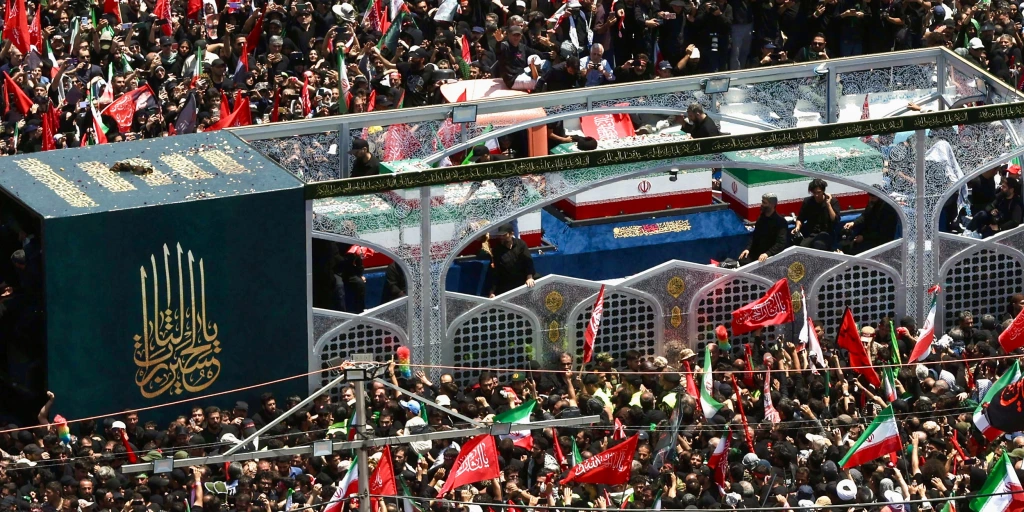
- Delayed Commencement: The main public procession, originally set for the early morning, was rescheduled to begin at 2:00 PM local time (IRT).
- The Procession Route: The funeral cortege is scheduled to move through Mashhad’s historic Shohada Square, advancing slowly down the main boulevards toward the holy sanctuary.
- The Venue of Burial: The final interment is scheduled for Thursday evening within the inner sanctum of the Imam Reza Shrine—the most revered religious site in Iran and the final resting place of the eighth Shia Imam.
- Joint Burial: Khamenei is to be buried alongside family members who perished with him, including his daughter, son-in-law, an infant granddaughter, and Zahra Haddad Adel (the wife of Mojtaba Khamenei).
The multi-day funeral process represents the final, solemn closure to a national crisis that began on February 28, 2026, when Ayatollah Ali Khamenei was assassinated at the age of 86 in a devastating, precision joint airstrike executed by US and Israeli forces in Tehran. The strike, which targeted high-level strategic compounds using actionable intelligence, triggered months of intense regional conflict, military exchanges, and profound national polarization.
While initial public responses inside Iran were intensely mixed—marked by pockets of anti-regime celebrations in cities like Isfahan and Sanandaj alongside immense pro-government grieving—the clerical establishment has spent the intervening months organizing a monumental farewell. The multi-day ceremonies, which began on July 4 after a fragile ceasefire temporarily halted active hostilities, are designed to project absolute unity, institutional continuity, and defiance to external adversaries.
Before arriving at his final resting place in Mashhad—his absolute birthplace and the city where his clerical journey began—Khamenei’s body was taken on an extensive, highly symbolic journey across the ideological and spiritual pillars of the Shia world.
1.Lying-in-State and Tehran Procession:July 4 – July 6.
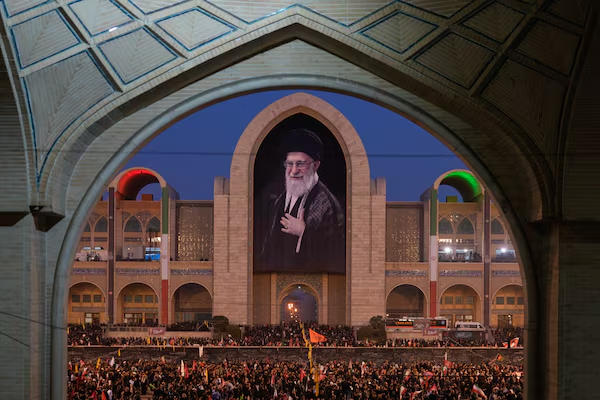
The ceremonies commenced in the capital, where Khamenei’s flag-draped coffin was displayed at the Imam Khomeini Hussainiya. Millions gathered at Tehran’s Grand Mosalla for the main public farewell, where a large coterie of foreign dignitaries—including Pakistani Prime Minister Shehbaz Sharif and delegations from China, Afghanistan, and the Caucasus—paid their respects.
2.The Clerical Core of Qom:July 7.
The cortege moved south to the theological center of Qom. Tens of thousands of Islamic scholars, seminarians, and residents filled the streets surrounding the Fatima Masumeh Shrine, emphasizing the clerical establishment’s allegiance to the foundational principles of the 1979 Islamic Revolution.
3.The Iraqi Holy Cities Arc:July 8.
In an extraordinary transnational arrangement, the body was flown to Iraq. Massive crowds flooded Baghdad, Najaf, and Karbala. The coffin was carried through the sacred shrines of Imam Ali, Imam Hussein, and Hazrat Abbas, reinforcing the geopolitical reach of the “Axis of Resistance” and drawing hundreds of thousands of Iraqi mourners before returning to Iran.
The execution of the final burial rites comes at a moment of acute operational friction. Just as the funeral procession entered its final phase in Mashhad, the fragile ceasefire holding the region together was strained yet again. The United States launched a fresh wave of precision military strikes on select targets within southwestern Iran, executing a retaliatory response to subsequent attacks targeting commercial maritime vessels in the crucial Strait of Hormuz.
In response to these unfolding developments, Mashhad has been placed under a total security lockdown:
- Airspace Closure: Commercial aviation over northeastern Iran has been completely halted, with combat air patrols (CAP) maintained by the Iranian Air Force.
- Signal Jamming: Electronic countermeasure units have deployed widespread GPS and cellular signal dampening around the Imam Reza Shrine perimeter to mitigate the threat of remote-detonated devices or uncrewed aerial vehicle (UAV) incursions.
- Paramilitary Deployment: Over 50,000 personnel from the Islamic Revolutionary Guard Corps (IRGC) and the auxiliary Basij militia have formed multi-layered security cordons across Mashhad to manage the volatile crowds and prevent potential civil unrest.
The choice of the Imam Reza Shrine as the final resting place carries deep historic and political meaning. Khamenei himself explicitly designated Mashhad for his final resting place in his written testament, moving away from the precedent set by his predecessor, Ayatollah Ruhollah Khomeini, who is buried in an expansive, standalone mausoleum south of Tehran.
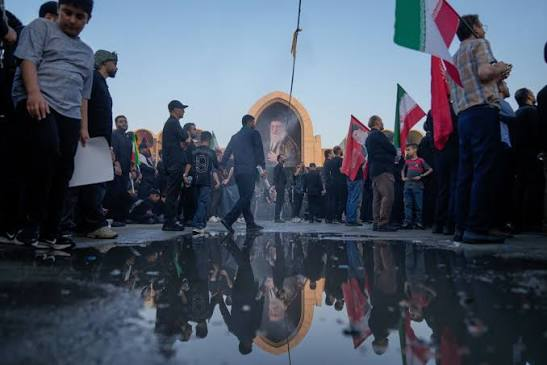
As millions fill the courtyards of Mashhad, shouting classical revolutionary slogans and hoisting portraits of the late leader, the political structure in Tehran is undergoing a tense transition. Following the 2026 Iranian Supreme Leader election held by the Assembly of Experts, Mojtaba Khamenei has assumed office, stepping into his father’s role during a period defined by economic isolation, external military pressure, and a highly polarized domestic public.
The massive scale of the crowds in Mashhad provides the newly configured leadership with a temporary mantle of public legitimacy. However, as the final prayers are read and the late leader is lowered into the earth, the true test for the post-Khamenei era begins. The administration must balance the revolutionary fervor displayed at the gates of the Imam Reza Shrine against the stark modern realities of a country navigating structural economic strain and a tense regional standoff.