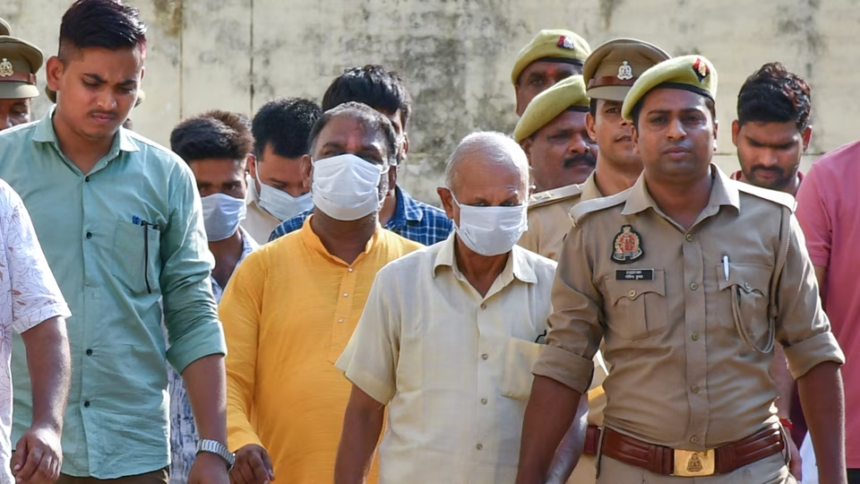
Ram Mandir Donation Row: 1 Samajwadi Party Leader’s Post Sparks Massive Political Storm
Ram Mandir donation row explained: A Samajwadi Party leader’s social media post has triggered a major political controversy
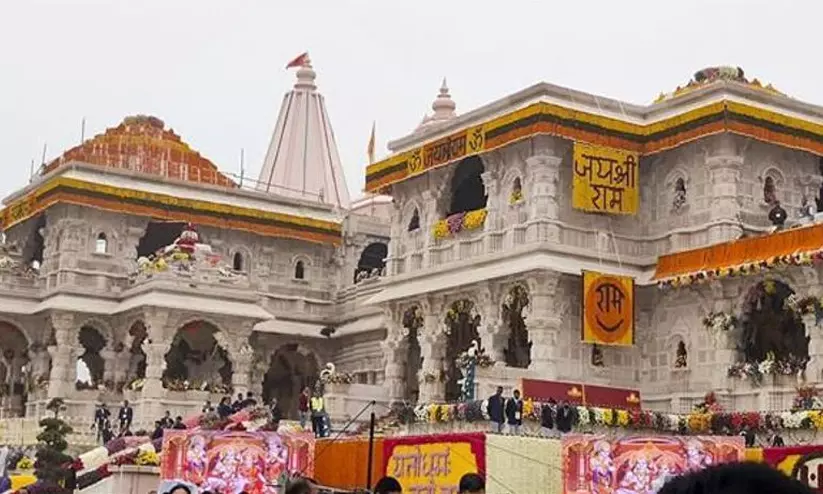
A fresh political controversy has erupted over donations made to the Ram Mandir in Ayodhya after a social media post by a Samajwadi Party (SP) leader triggered widespread debate and sharp reactions from political parties, religious organizations, and devotees across the country. What began as a single online post soon snowballed into a nationwide controversy, reigniting discussions around faith, transparency, politics, and freedom of expression.
The issue has once again placed the Ram Mandir—a symbol of immense religious and political significance—at the center of India’s political discourse. The controversy also highlights how social media can amplify statements, shape public narratives, and influence political debates within hours.
The row began after a Samajwadi Party leader shared a post on social media questioning aspects related to donations collected for the Ram Mandir. The post reportedly raised concerns about the management, utilization, or transparency of the funds collected for the temple’s construction.
Within minutes, screenshots of the post began circulating widely across social media platforms. Supporters of the Ram Mandir accused the SP leader of insulting the sentiments of millions of Hindus, while opposition supporters defended the right to question financial transparency in public institutions.
The debate quickly transcended the original post and evolved into a broader political confrontation.
The Bharatiya Janata Party (BJP) strongly condemned the remarks, accusing the Samajwadi Party of repeatedly targeting Hindu faith and religious institutions.
Several BJP leaders described the comments as “anti-Hindu” and demanded an apology from the Samajwadi Party. Party spokespersons argued that questioning donations made voluntarily by devotees amounted to disrespecting their religious beliefs.
Meanwhile, Samajwadi Party leaders defended their colleague, claiming that raising questions about financial accountability should not be interpreted as an attack on religion. They maintained that transparency is expected from every public institution regardless of religious affiliation.
As television debates intensified, political leaders from both camps exchanged accusations, further fueling public interest in the issue.
Hashtags related to the Ram Mandir donation controversy began trending on X (formerly Twitter), Facebook, Instagram, and YouTube.
Supporters of the temple launched campaigns demanding strict action against those questioning the donation process, while others argued that accountability should never be viewed as opposition to faith.
Numerous influencers, political commentators, and journalists joined the debate, offering contrasting perspectives. Some emphasized the emotional significance of the Ram Mandir for millions of devotees, while others stressed that transparency strengthens public trust rather than weakens it.
Memes, opinion videos, fact-check posts, and political commentary flooded social media feeds throughout the day.
The Ram Mandir project has been one of India’s largest public-funded religious initiatives, with millions of devotees voluntarily contributing over several years.
Donations came from individuals across India and the global Indian diaspora. Many families contributed symbolic amounts, while some organizations and philanthropists made substantial donations.
For many devotees, contributing to the temple represented not merely financial support but also participation in a historic religious movement spanning several decades.
Because of this emotional connection, any public statement regarding temple donations tends to attract intense attention and strong reactions.
Although political rhetoric dominated headlines, the controversy also revived an important conversation regarding transparency in charitable and religious trusts.
Experts point out that many religious institutions voluntarily publish audited financial reports and maintain accounting systems to ensure donor confidence.
Supporters of greater transparency argue that public disclosure of financial information helps prevent misinformation and reinforces trust among devotees.
Critics, however, believe that politically motivated allegations often overshadow factual discussions and unnecessarily create divisions among communities.
The latest controversy illustrates how discussions about financial accountability can rapidly become politicized in today’s polarized environment.
Several Hindu religious organizations criticized the Samajwadi Party leader’s remarks, stating that questioning devotees’ contributions hurts religious sentiments.
Some groups demanded legal action, while others appealed for restraint and urged political parties not to exploit religious issues for electoral gains.
Religious leaders emphasized that donations made by devotees are acts of faith and should be respected irrespective of political differences.
At the same time, a few civil society voices called for balanced public discourse, suggesting that questions regarding institutional governance should be addressed with facts rather than political accusations.
Leaders from opposition parties offered varying responses.
Some avoided directly commenting on the controversy, while others argued that democratic societies should permit questions regarding financial administration without branding critics as anti-religious.
Several opposition leaders maintained that political parties should distinguish between questioning institutional practices and disrespecting religious beliefs.
This divergence of opinions demonstrated how sensitive issues involving religion often create complex political dynamics, even within opposition alliances.
Public opinion remains sharply divided.
Many devotees viewed the comments as offensive and unnecessary, believing that the Ram Mandir represents a deeply emotional chapter in India’s cultural history.
Others argued that transparency and accountability are universal principles applicable to all organizations receiving public donations.
The debate has therefore evolved beyond one individual’s social media post into a larger discussion concerning governance, religious institutions, and political communication.
The controversy also illustrates the growing influence of digital platforms in shaping political narratives.
A single social media post can now reach millions within hours, often generating reactions before complete context becomes available.
Algorithms amplify emotionally charged content, enabling political controversies to dominate public conversations rapidly.
Experts have repeatedly cautioned political leaders about the importance of responsible communication, especially when discussing subjects involving religion, national identity, or public faith.
The controversy has also acquired electoral significance in Uttar Pradesh, where both the BJP and Samajwadi Party remain major political rivals.
The Ram Mandir continues to hold immense symbolic importance in the state’s political landscape.
Political analysts believe both parties may use the issue to reinforce their respective voter bases ahead of future elections.
The BJP is expected to project itself as the protector of Hindu religious sentiments, while the Samajwadi Party may attempt to frame the debate around accountability and democratic questioning.
Whether the controversy ultimately influences voter behavior remains uncertain, but it has undoubtedly become another flashpoint in Uttar Pradesh’s intensely competitive political environment.
As the controversy continues, experts emphasize the importance of separating political disagreements from religious sensitivities.
Healthy democratic debate allows questions regarding governance, administration, and financial management, but discussions involving deeply held religious beliefs require careful and respectful communication.
Political leaders, public representatives, and social media users all play a crucial role in preventing misinformation and reducing unnecessary polarization.
Constructive dialogue supported by verified information remains essential for maintaining public trust.
Read Also : Kolkata Warehouse Collapse: 5 Dead, Several Injured as Under-Construction Building Crashes in Taratala