7 Big Reasons Amit Shah’s Farewell Dinner for Ex-IB Chief Tapan Deka Has Delhi Buzzing
Read the latest updates on Amit Shah’s farewell dinner for former IB chief Tapan Deka
In the highly secretive and calculated power corridors of New Delhi, a social gathering is rarely just a social gathering—especially when it involves the Union Home Minister, a carefully curated photo op on social media, and the outgoing chief of India’s premier domestic intelligence agency
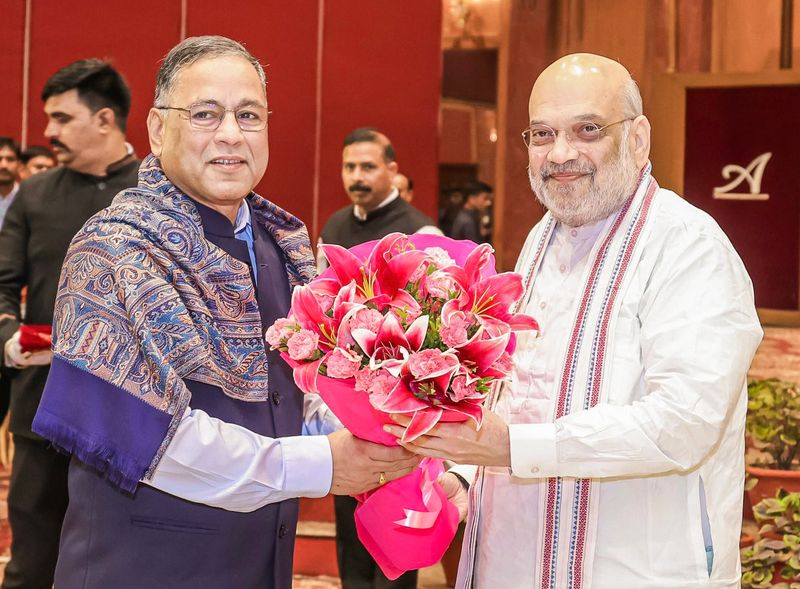
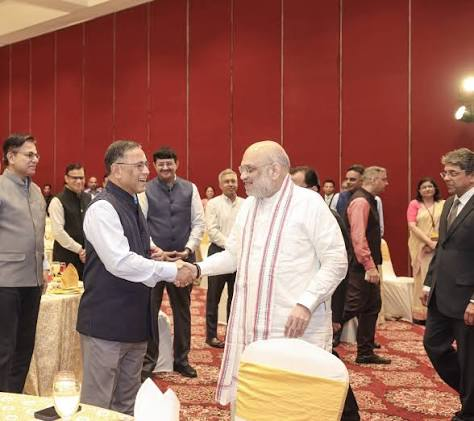
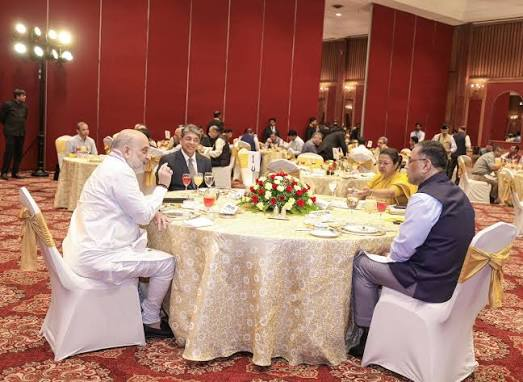
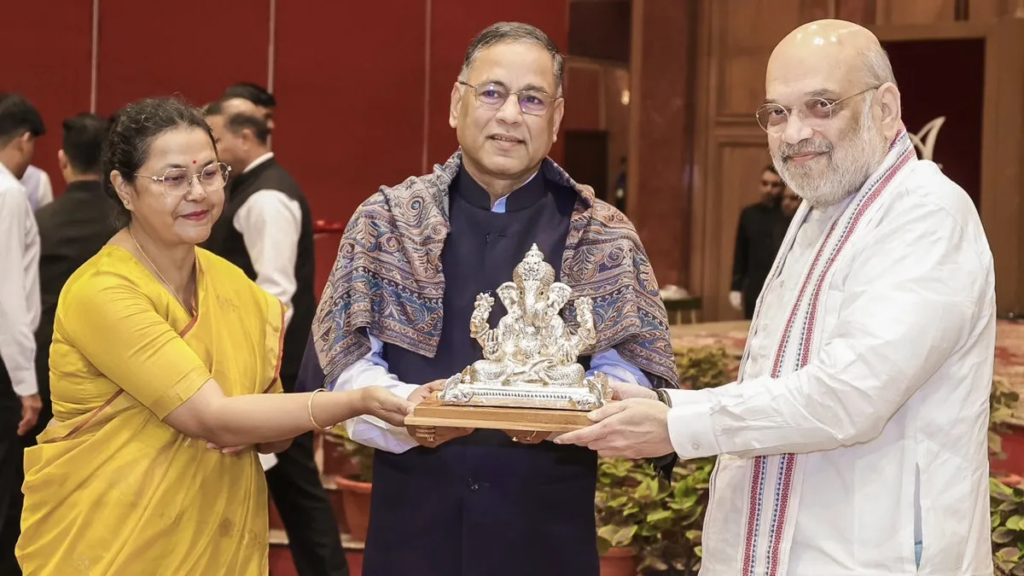
On Tuesday, July 7, 2026, Union Home Minister Amit Shah hosted an exclusive, high-profile farewell dinner for the outgoing Director of the Intelligence Bureau (IB), Tapan Kumar Deka. Deka, a seasoned 1988-batch Indian Police Service (IPS) officer of the Himachal Pradesh cadre, officially stepped down after a historic, record-breaking four-year tenure at the helm of the spy agency. The dinner, which was also attended by Deka’s successor, Dr. Mahesh Dixit (a 1993-batch IPS officer), was capped off by a personal public tribute from Amit Shah on X (formerly Twitter), featuring photographs of the event and the presentation of a parting gift to Mr. and Mrs. Deka.
While ceremonial send-offs are standard protocol for retiring chiefs, the deliberate public visibility and warmth of this particular dinner have sent national security circles and political analysts into overdrive. In a regime notorious for keeping its intelligence apparatus strictly low-profile, the highly publicized nature of this farewell has sparked intense speculation regarding Tapan Deka’s next professional destination.
To understand why a farewell dinner has generated such intense political gravity, one must look at Tapan Deka’s standing within the current administration. By completing a continuous four-year stint as the head of the IB, Deka has broken a 44-year-old institutional record. He has become the longest-serving Director of the Intelligence Bureau since S.N. Mathur, who led the agency from 1975 to 1980.
Initially appointed for a fixed two-year term in July 2022, Deka received two consecutive one-year extensions from the Appointments Committee of the Cabinet (ACC) in 2024 and 2025.
Throughout his four decades in uniform and over twenty years in the IB’s operations wing, Deka earned a reputation as a quiet, lethal crisis manager. His structural impact on India’s national security is extensive:
- The 26/11 Response: Deka was the boots-on-the-ground operational commander managing counter-assault intelligence during the 2008 Mumbai terror attacks.
- Neutralization of Indian Mujahideen: He systematically spearheaded the multi-state operations that dismantled the Indian Mujahideen terror network in the late 2000s.
- Jammu & Kashmir Border Grid: Alongside National Security Advisor (NSA) Ajit Doval, Deka engineered the post-Article 370 security architecture and oversaw localized counter-terrorism strategies, including handling security operations following recent retaliatory strikes on terror infrastructure in May 2025.
- The Northeast and CAA Crisis: A native of Assam, he was the government’s direct envoy sent to defuse the violent, volatile law-and-order crisis in the Northeast following the passage of the Citizenship Amendment Act (CAA) in 2019.
The unprecedented public display of appreciation by the Home Minister has convinced intelligence veterans that Tapan Deka is not heading into a quiet retirement. Instead, the political executive appears to be setting the stage for a major lateral transition. Three distinct, high-impact scenarios are dominating discussions in New Delhi:
1. A Top-Tier Post in the National Security Secretariat (NSCS)
The most prominent theory suggests Deka will be integrated into the National Security Council Secretariat, potentially as a Deputy National Security Advisor (Deputy NSA) or in a specially created apex internal security advisory role. With NSA Ajit Doval heavily focusing on macro geopolitical shifts, defense indigenization, and global strategic alliances, the administration requires a battle-hardened internal operations expert to manage the evolving domestic threat matrix—ranging from technological and drone-based cross-border incursions to cyber warfare.
2. The Next Lieutenant Governor of a Sensitive Region
Given his deep, foundational understanding of demographic conflicts and geopolitical friction points, Deka’s name is being actively floated for a gubernatorial or Lieutenant Governor (LG) appointment. Speculation points strongly toward either Jammu & Kashmir—which is navigating a critical transition phase—or a sensitive northeastern state like Manipur, where ethnic divisions require an administrator with immense security experience and structural neutrality.
3. Transition to His Home State: Future Assam DGP or Strategic Advisor
Before taking over the IB, rumors long suggested Deka would return to his roots to lead the Assam Police as its Director General. While that window has shifted, political circles in Dispur speculate that Chief Minister Himanta Biswa Sarma’s administration, in close coordination with New Delhi, could appoint Deka as a Principal Strategic Advisor on Internal Security and Border Management to navigate complex boundary equations and regional stability.
Even as speculation swirls around Deka’s next move, the dinner served another crucial administrative purpose: signaling a seamless, friction-free transition of power to the new IB chief, Dr. Mahesh Dixit.
Dr. Dixit, an IPS officer of the Andhra Pradesh cadre hailing from Nashik, Maharashtra, stepped into the top post after serving as the Special Director within the bureau. Known to be an absolute expert on counter-radicalization and tech-driven intelligence gathering, Dixit’s presence at the dinner alongside Amit Shah sends a clear message to external and internal adversaries: India’s domestic intelligence priorities will maintain absolute policy continuity without a single day of structural disruption.
Whoever takes the ultimate lead in advising the Home Ministry on internal safety will face a highly complex, modernized threat profile. Bureaucratic sources confirm that while traditional cross-border terror modules have been significantly contained during Deka’s tenure, the intelligence apparatus must now aggressively pivot toward highly technical threats.
The security architecture over the next 24 months will be forced to prioritize:
- Drone-Based Incursions: Combatting the frequent dropping of weapons, narcotics, and counterfeit currency via uncrewed aerial vehicles along the international border in Punjab and Jammu.
- AI-Driven Radicalization: Tracking encrypted, decentralized digital footprints used by extremist networks to radicalize youth without physical handlers.
- Deepfake and Information Warfare: Mitigating state-sponsored, synthetic disinformation campaigns designed to instigate communal friction and civil unrest within domestic pockets.
By hosting a visible, highly respectful farewell for the man who managed the transition into this modern security era, Amit Shah has verified that the political executive places an extraordinary premium on its top-tier security brains. Whether Deka emerges in a quiet advisory office at Raisina Hill or takes up a public-facing administrative mantle in a troubled border province, his journey within India’s deep state is far from over.
Read Also : 7 Shocking Updates: Khamenei’s Coffin Reaches Mashhad as Funeral Delayed Due to Massive Crowds