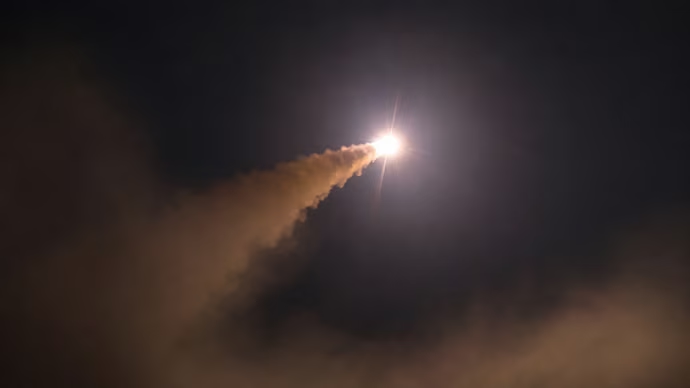
Iran Strikes Back: 7 Explosive Claims After US Attack, Says Patriot Systems and Drone Fleet Destroyed
Iran hits back after US strikes, claiming the destruction of Patriot missile systems and a drone fleet
The escalating confrontation between the United States and the Islamic Republic of Iran has reached a dangerous flashpoint. Following intensive American airstrikes targeting Iranian infrastructure, Tehran launched a highly coordinated, multi-phased retaliatory offensive across the Persian Gulf. In an official declaration issued by the Islamic Revolutionary Guard Corps (IRGC), Iran asserted that its aerospace and missile forces successfully compromised multiple American defense installations, explicitly claiming the destruction of U.S. Patriot missile batteries, vital early-warning radar arrays, and critical drone command infrastructure across several Gulf states.
This latest surge in violence marks a severe breakdown of the fragile interim ceasefire reached earlier in the summer and threatens to drag the region into an unmanageable wider war. With both sides trading massive kinetic strikes, the strategic shipping corridors of the Strait of Hormuz have effectively frozen, triggering alarm bells across global energy markets and the international community.
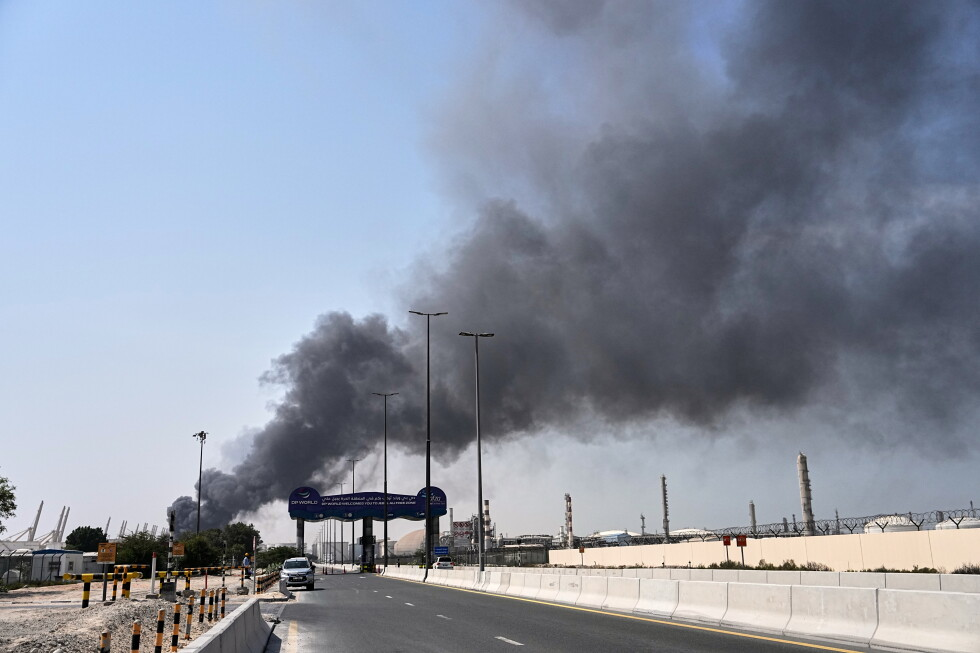
The current cycle of escalation was ignited by a wave of heavy U.S. military bombardments executed under the purview of U.S. Central Command (CENTCOM). Acting on directives from Washington, American forces mobilized a massive array of assets—including carrier-based fighter aircraft, naval vessels, one-way attack aerial drones, and, for the first time, unmanned sea drones—to strike deep into southern Iran.
According to reports from CENTCOM, the American operation focused heavily on degrading Iran’s anti-access/area-denial (A2/AD) capabilities along the strategic maritime chokepoint of the Strait of Hormuz. The primary targets included:
- Coastal Radar Installations: Early-warning networks used by Iran to track international shipping and military transits.
- Air Defense Nodes: Ground-to-air missile batteries protecting major ports.
- IRGC Naval Assets: Speedboats and fast-attack craft frequently deployed by the IRGC Navy to intercept commercial tankers.
The strikes caused substantial infrastructure damage and casualties on the Iranian mainland, with state media reporting heavy explosions in major port cities like Bandar Abbas, Sirik, Jask, and across Qeshm Island. Provincial authorities in Khuzestan confirmed that civilian infrastructure was caught in the crossfire, highlighting a strike on an agricultural water pumping station in Mahshahr that resulted in casualties.
U.S. officials defended the heavy bombardment as necessary “retribution” and degradation of Iran’s capacity to threaten civilian shipping. However, rather than deterring the Islamic Republic, the American operation prompted a massive, multi-theater response from Tehran.
Hours after American munitions impacted southern Iran, the IRGC unleashed what it termed the third phase of its “eye-for-an-eye” counter-offensive, codenamed under its broader systemic responses as part of its regional strategy. Utilizing a dense mix of high-precision ballistic missiles, loitering munitions (kamikaze drones), and cruise missiles, Iran bypassed regional air defense umbrellas to strike multiple U.S. military facilities situated in neighboring sovereign nations.
The IRGC issued an explicit warning to Washington and its regional partners, stating:
In response to the continued criminal American aggression against areas in the south of the country, the Islamic Republic of Iran’s armed forces have targeted enemy positions. The consequences of such movements and insecurity in the region will be borne by the American-Zionist enemy, and if these attacks are repeated, we will respond more severely.”
Tehran’s retaliation was structurally divided into distinct geographic phases, intentionally widening the theater of war to hit U.S. hubs in Kuwait, Bahrain, Qatar, Jordan, and Oman.
The opening salvo of the Iranian response materialized as a combined ballistic missile and drone strike on Prince Hassan Air Base in Jordan. The facility, which has long served as a vital logistical and staging ground for U.S. and allied operations in the Levant, suffered direct hits. The IRGC claimed that the barrage successfully targeted and ignited massive fuel depots and ammunition storage facilities, sending plumes of smoke visible for miles and forcing personnel into bunkers.
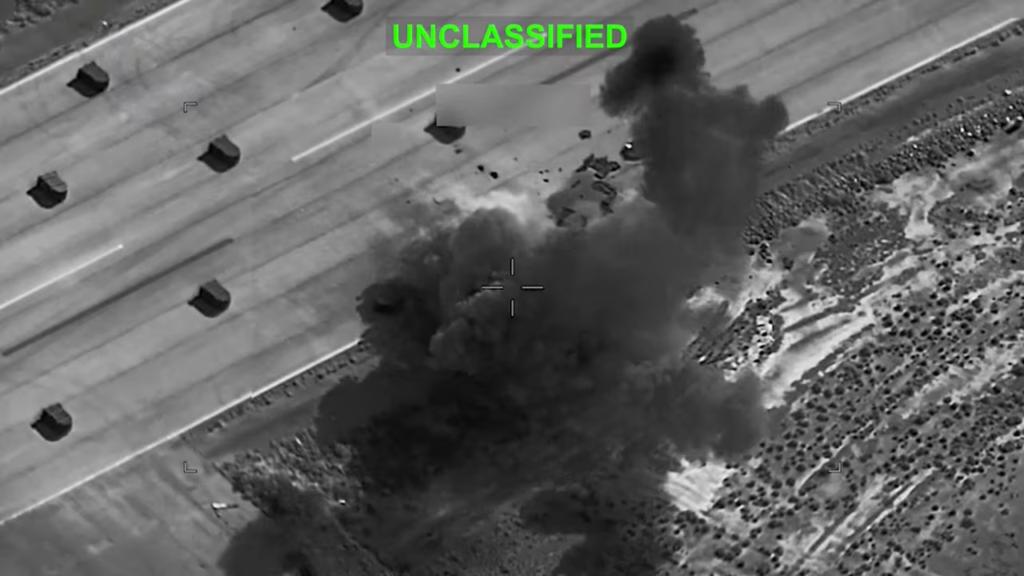
The second phase shifted focus to the immediate maritime theater, zeroing in on U.S. assets in Bahrain—the home of the U.S. Navy’s Fifth Fleet. IRGC aerospace units launched a wave of explosive drones against the Sheikh Isa Air Base. Tehran claimed this specific strike achieved high-tactical success, asserting that it systematically hit:
- The U.S. Army’s localized drone command-and-control center, effectively grounding regional surveillance assets.
- Helicopter repair, maintenance, and overhaul facilities.
- A high-value hangar housing a P-8 Poseidon maritime patrol and electronic warfare aircraft.
As long-range drones breached Bahraini airspace, air raid sirens wailed across the island nation at dawn, prompting the Bahraini Interior Ministry to issue emergency protocols ordering citizens to shelter in safe places.
The most critical and contested claim made by Tehran emerged from its strikes on U.S. airbases in Kuwait. The IRGC announced that its high-precision assets had “completely destroyed” U.S.-operated MIM-104 Patriot air defense systems and adjacent fuel infrastructure at the Ali Al-Salem Air Base.
Furthermore, the IRGC claimed to have knocked out a strategic FPS early-warning radar system located at the Ahmed Al-Jaber Air Base. By targeting the Patriot batteries—the apex of American theater air defense—Iran sought to visually and operationally demonstrate that Washington’s highly touted defensive shields could be overwhelmed and neutralized by saturated drone and missile tactics.
In a significant departure from previous baseline parameters of the conflict, Iran expanded its target list to include nations that had previously attempted to maintain diplomatic neutrality or act as regional mediators.
- Qatar (Al Udeid Air Base): Iran launched long-range ballistic missiles at the expansive Al Udeid Air Base in Qatar, a massive facility hosting thousands of U.S. personnel. The IRGC claimed the strikes successfully neutralized a specialized fighter jet maintenance hangar and a primary command center. Falling debris from intercepted missiles resulted in several civilian injuries outside the base, leading Doha to hold Iran “fully legally responsible” for violating its security.
- Oman (Port of Duqm): In the southern reaches of the Arabian Peninsula, Iranian forces targeted U.S. aircraft carrier support and refueling platforms at the port of Duqm, asserting that the asymmetric strikes disrupted the U.S. Navy’s logistical lifeline to capital ships operating in the Arabian Sea.
Beyond the immediate kinetic exchanges, the war has manifested as an existential battle for control over the global economy’s most critical energy transit artery: the Strait of Hormuz.
Following the U.S. strikes, the newly established Persian Gulf Strait Authority—an Iranian regulatory body formed to assert hegemony over the waterway—declared that passage through the strait had become impossible due to “illegal movements by the United States military.” Effectively enforcing a blockade, the IRGC Navy claimed to have intercepted and struck two commercial vessels attempting transit without explicit Iranian authorization, accusing them of traveling with their automated tracking systems disabled.
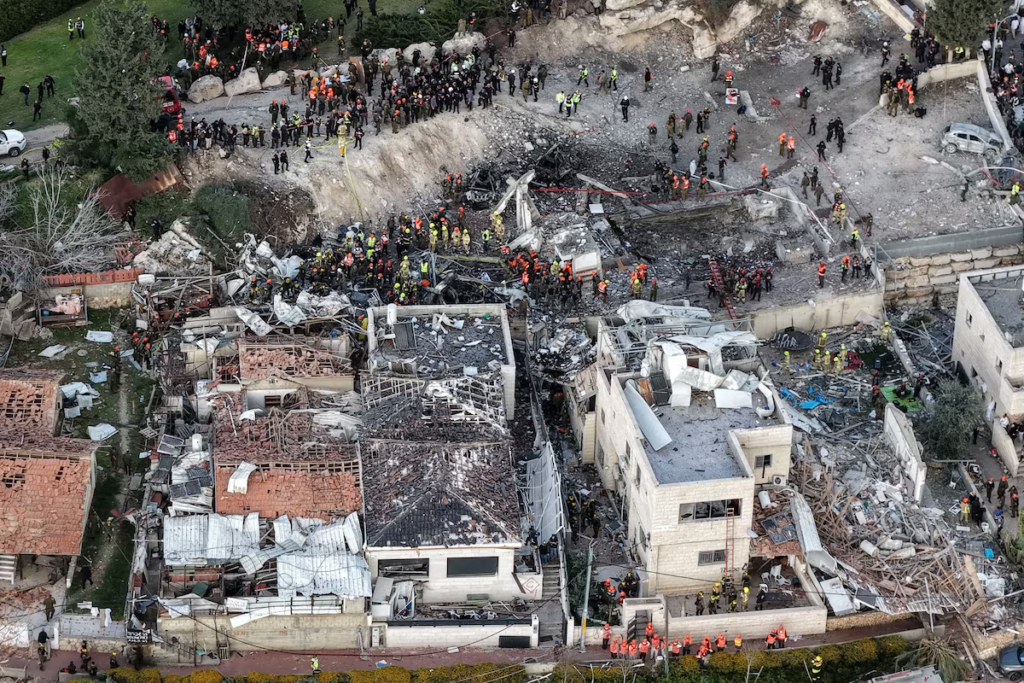
Washington has vehemently rejected Iran’s claims of physical control. CENTCOM issued counter-statements emphasizing that maritime traffic continues to flow through an expanded southern navigation route near Oman, declaring flatly: “Iran does not control the strait. Traffic is flowing.” Nonetheless, commercial shipping companies have begun halting transits, driving Brent crude oil prices to unprecedented heights and threatening a severe global economic shockwaves.
With the complete collapse of the Muscat talks and the subsequent breakdown of the interim ceasefire, the United States and Iran find themselves locked in an unyielding kinetic spiral. As both nations bolster their forward deployments, the international community watches with mounting dread, fully aware that a single miscalculation in the Persian Gulf could spark a full-scale, catastrophic regional war.
Read Also : Shocking Crime: Law Student Held for Mother’s Murder, Uncle Claims She Also Killed Father – 7 Key Facts