After 2 Major Clashes in a Day, BMC Cracks Down and Clears 50 Illegal Stalls in Mulund
After two clashes in a day, the BMC launched a major crackdown in Mulund, clearing 50 illegal stall
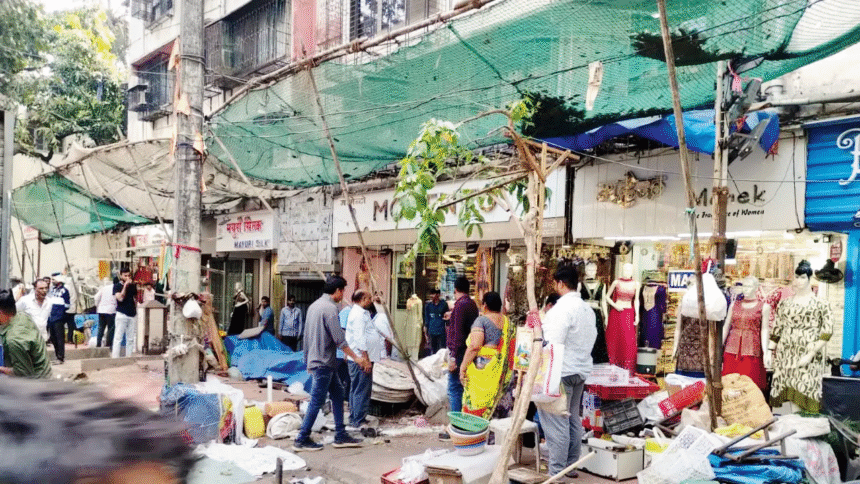
The Brihanmumbai Municipal Corporation’s T ward launched a crackdown on hawkers encroaching footpaths and roads in Mulund on Wednesday, a day after clashes broke out between residents and hawkers over illegal occupation of public spaces.
The BMC removed more than 50 hawkers from the Mulund market area and nearby arterial roads. On Tuesday, two separate altercations took place between locals and hawkers over encroachments on RRT Road, Ganesh Gawde Road and Walji Raja Road. Residents alleged they were verbally abused and threatened when they objected, prompting two police complaints from citizens who say they have been raising the issue for over two years.
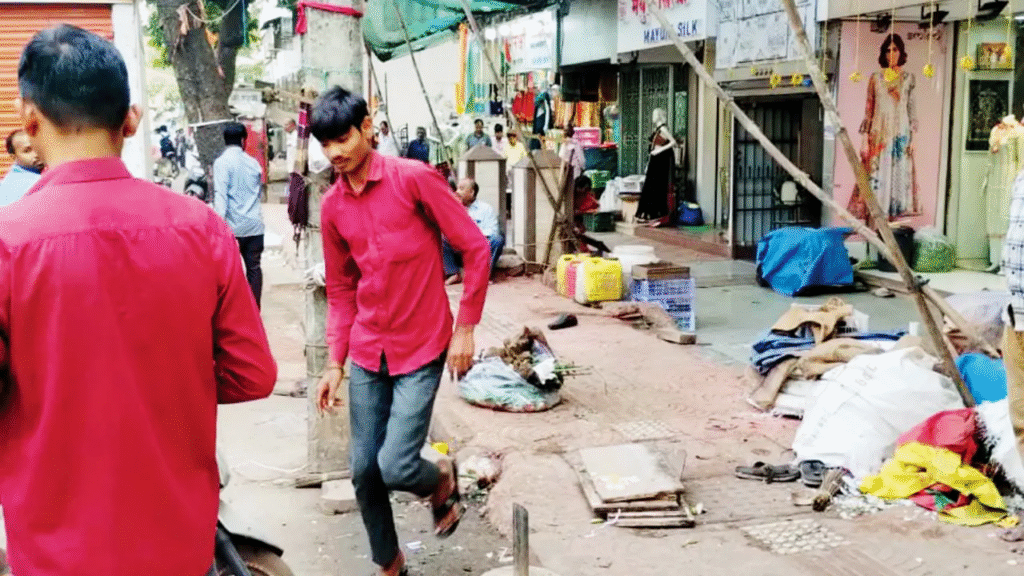
Nirmal Thakkar, a Mulund resident and member of the citizens’ group Jagrut Mulundkar, and one of the complainants, said, “After the two incidents on Tuesday, we also approached the DCP, who assured us that action will be taken against hawkers who are threatening residents.”
Residents say hawkers have increasingly taken over footpaths and road corners, creating severe congestion. In a letter to the BMC earlier this year, resident Sharad Sejpal wrote, “For years hawkers have been selling on the roadside, but in recent months they have taken things to the extreme. They have encroached on sidewalks and set up bases at every junction. Pregnant women, the elderly, schoolchildren and all Mulundkars are struggling to walk and drive. Traffic problems are increasing. Is this acceptable?”
Residents have repeatedly demanded that hawkers be removed from junctions and high-footfall areas. In his letter, Sejpal urged the civic body, “These hawkers should be removed from all road corners in Mulund as soon as possible. These junctions must be cleared, and hawkers shifted some distance away so that residents can get permanent relief from this problem.”
On December 3, 2025, the BMC’s T-ward launched a large-scale enforcement drive in Mulund, clearing 50 illegal stalls from the Mulund market area and nearby arterial roads — a strong response coming just a day after two separate clashes erupted between residents and hawkers over public-space encroachments.
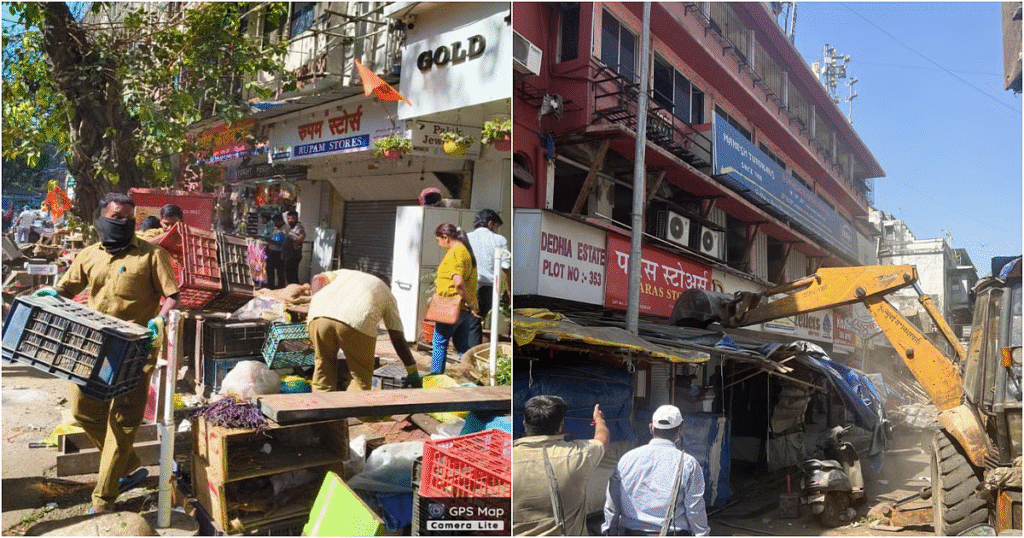
The previous day, tensions first flared on RRT Road and Ganesh Gawde Road, and later on Walji Raja Road. Locals alleged that hawkers had unlawfully occupied footpaths and road corners with stalls, blocking pavements and causing severe congestion. When residents objected, some claimed they were verbally abused and threatened. This led to two police complaints filed by citizens — some of whom say they have been raising the issue for over two years.
According to local activists, the encroachments had turned chronic. “Hawkers have increasingly taken over footpaths and junctions,” claimed one resident. In a letter earlier this year, another resident noted that people from all walks of life — pregnant women, the elderly, schoolchildren — were struggling to walk or commute due to illegal stalls blocking pedestrian paths. The letter urged the BMC to act and clear these junctions.
That mounting frustration appears to have reached a tipping point. With residents demanding action, and after repeated warnings, the BMC’s enforcement team stepped in decisively — removing 50 hawker stalls overnight. According to reports, the crackdown covered not only the main market area, but also high-footfall junctions where illegal hawking was most prevalent.
Footpath and road encroachment by hawkers — especially when unregulated — has long been a major concern in many localities across Mumbai. For residents, such encroachments disrupt pedestrian movement, create traffic bottlenecks, compromise safety, and make daily life difficult. In many cases, such encroachments have been repeatedly flagged but seldom addressed with urgency.
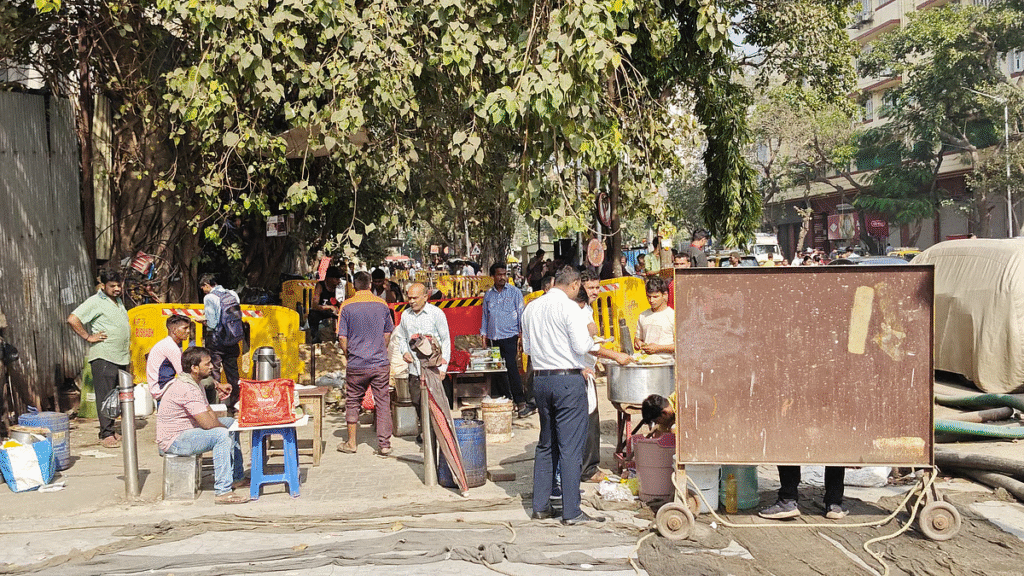
In Mulund, these problems had persisted for years. But after repeated clashes and formal complaints, the pressure from residents — along with civic responsibility — seems to have forced action. The latest operation underscores the BMC’s renewed focus on reclaiming public space, ensuring footpaths and roads are free from unauthorised stalls that disrupt daily life.
The crackdown also reflects a broader pattern in recent months: the civic body appears to be intensifying efforts to uproot illegal hawker encroachments city-wide. Reports indicate that many unauthorised stalls across Mumbai have faced eviction, as part of efforts to decongest footpaths and manage public safety and hygiene.
For many Mulund residents, the removal of 50 stalls is a welcome relief. With footpaths and road junctions cleared, pedestrians — including senior citizens, schoolchildren, and expectant mothers — will find it easier and safer to walk. The risk of traffic bottlenecks at key junctions could drop, and the general quality of daily commuting may improve.
Local leaders and citizen-groups such as Jagrut Mulundkar — which had raised repeated complaints — welcomed the action. One of the complaint-filers said they had approached the Deputy Commissioner of Police (DCP), who assured them action would be taken against hawkers threatening residents.
However, the situation also highlights deeper structural challenges. Many hawkers — often from economically weaker backgrounds — rely on street stalls for their livelihood. Past crackdowns by BMC have provoked debates about balancing public order with the livelihoods of street vendors.
Critics often argue that evictions without rehabilitation or alternate arrangements can push vendors into informal, precarious means of income, and may fail to solve the root cause of encroachment. Others call for regulated street-vending zones, licensing and better enforcement mechanisms instead of ad-hoc evictions.
The recent crackdown in Mulund could signal a more assertive phase of civic enforcement from BMC. If sustained, similar operations might reshape the landscape of street vending in many parts of Mumbai — with a sharper divide between licensed hawkers in regulated zones and unlicensed vendors on the fringes.
For citizens, this could mean safer, cleaner footpaths and better traffic flow. For hawkers, this means uncertainty — unless authorities create inclusive frameworks balancing livelihoods and public interest.
For urban planners and civic authorities, it’s a clear reminder: enforcement must be paired with long-term strategies. Solutions like licensing, designated vending zones, regular inspections, and community-engagement (including with hawkers) may help avoid repeated clashes and ensure sustainable order.
As for Mulund, today’s action may offer temporary relief — but the real test lies in consistent enforcement, fair rehabilitation of vendors, and a structural roadmap that accommodates both civic discipline and livelihoods.
Read Also : 73 More IndiGo Flights Cancelled at Bengaluru Airport — Shocking Travel Disruption