Bhubaneswar BMC Officer Ratnakar Sahoo Dragged Out, Kicked in Face; 3 Arrested in Shocking Assault
The Shocking Assault on Bhubaneswar BMC Officer – Ratnakar Sahoo Dragged and Brutally Attacked in Broad Daylight
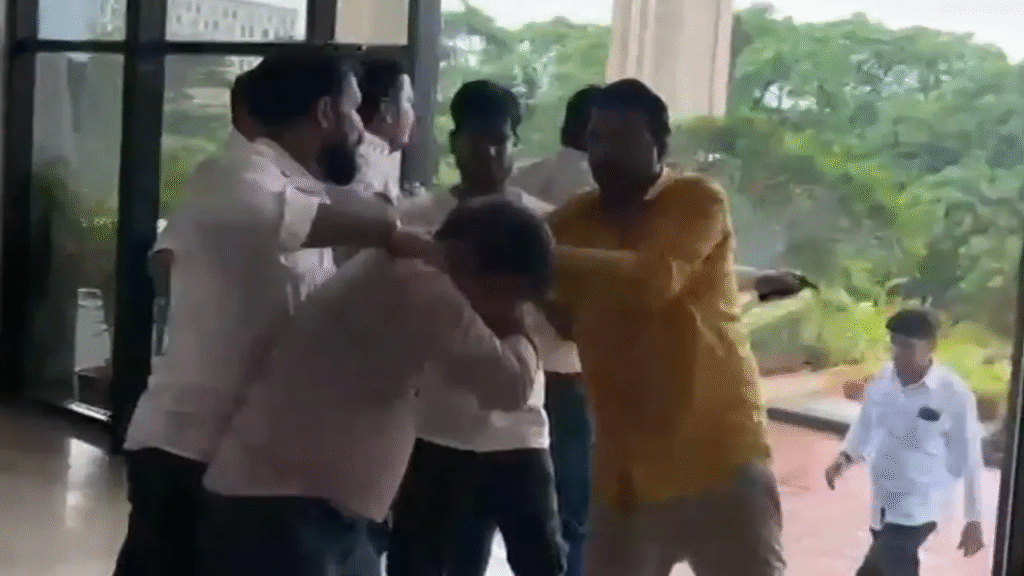
On July 1, 2025, a deeply disturbing incident shook the administrative foundation of Odisha’s capital city, Bhubaneswar. A video that rapidly circulated across social media and news platforms captured a horrific scene: Additional Commissioner of the Bhubaneswar Municipal Corporation (BMC), Ratnakar Sahoo, being dragged out of his official chamber, kicked, punched, and physically assaulted by a group of men. The violent episode, taking place during what should have been a routine public grievance hearing, has since snowballed into a major political and administrative crisis in Odisha.
According to first-hand accounts and confirmed reports, Mr. Sahoo was presiding over a grievance redressal session in his office when five to six individuals, including BMC corporator Jeevan Raut, stormed into his chamber without prior permission. The group reportedly confronted Mr. Sahoo regarding his alleged misconduct with an individual referred to as “Jag bhai,” widely believed to be BJP leader Jagannath Pradhan. The confrontation quickly escalated into physical violence.
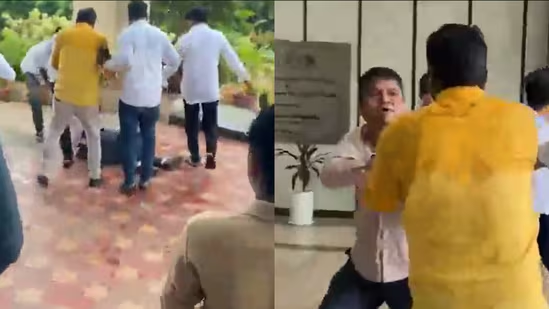
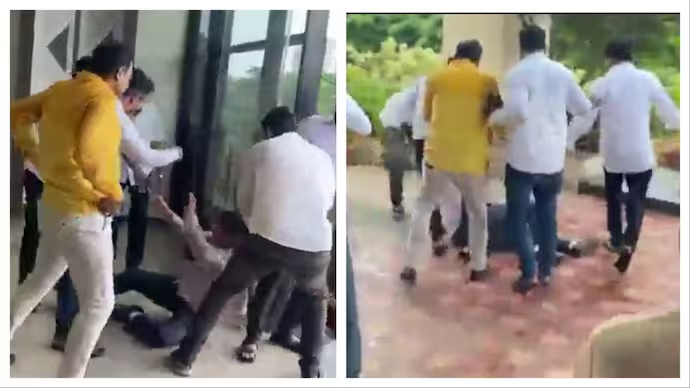
The attackers, disregarding all boundaries of lawful conduct, forcibly grabbed Mr. Sahoo by the collar and began manhandling him. Despite his protestations and attempts to maintain order, the mob physically dragged him out of his office premises. Disturbing visuals from CCTV footage and eyewitness mobile recordings show the Additional Commissioner being shoved to the ground, beaten, and even kicked in the face, before being forcefully dragged down a flight of stairs.
An FIR was promptly filed against the perpetrators, and Bhubaneswar police acted swiftly to arrest three key individuals: Jeevan Raut, Rashmi Mahapatra, and Debashish Pradhan. However, many in the public and political sphere believe that this is only the tip of the iceberg and that more arrests must follow, given the scale and seriousness of the attack.
Political Fallout and Administrative Protest – Widening Crisis After BMC Officer Assault
The aftermath of the assault has triggered widespread outrage across Odisha’s political and bureaucratic circles. Staff members and corporators affiliated with the opposition Biju Janata Dal (BJD) held spontaneous demonstrations at the BMC office and later staged a significant road blockade at Janpath Road, one of Bhubaneswar’s busiest corridors. Protesters demanded immediate action and justice for the assaulted officer, citing a complete breakdown of law and order under the new state administration.
Former Chief Minister and BJD chief Naveen Patnaik, in a strongly worded statement, condemned the “brutal kicking and assault” of Additional Commissioner Ratnakar Sahoo. Patnaik demanded that Chief Minister Mohan Charan Majhi ensure swift and exemplary punishment for all individuals involved in the incident, including those allegedly associated with the ruling Bharatiya Janata Party (BJP).
“This attack was not just on an individual but on the integrity of the administrative system itself,” Patnaik stated. “If a senior officer is not safe within the very premises of his own office, then what message does it send to common citizens about their safety and the rule of law?”
Joining the chorus of condemnation, BMC Mayor Sulochana Das labeled the assault an attempted murder and called for charges to be upgraded accordingly. She noted that the attackers not only beat Mr. Sahoo but attempted to abduct him forcibly—an act that goes far beyond protest or political disagreement. “We have video evidence. This was a planned, premeditated attack. Every single individual involved must be arrested and prosecuted,” she asserted.
In solidarity, the Odisha Administrative Services (OAS) Association declared a state-wide mass leave starting Tuesday, July 2, further escalating the protest. Senior OAS officers expressed that the safety and dignity of administrative personnel must be preserved at all costs and that they would not resume work until substantial action was taken.
Meanwhile, Congress MLA and senior leader from Barabati-Cuttack also condemned the attack, blaming the ruling party for fostering a climate of impunity and lawlessness. “Odisha deserves governance and rule of law, not jungle raj,” she posted on X. “When a senior officer in the capital city is violently attacked, it reflects a complete collapse of governance and emboldenment of rogue elements.”
As the state reels from the shock of this incident, the question now stands before the administration and judiciary: Will justice be swift and complete, or will this act of brazen violence go down as yet another instance of political impunity in Indian bureaucracy?
Legal Proceedings, Bureaucratic Solidarity, and National Response
In the days following the assault, Odisha’s judicial system initiated preliminary legal proceedings against the three arrested suspects. The First Information Report (FIR), registered under multiple sections of the Indian Penal Code, includes charges of assault on a public servant, criminal conspiracy, unlawful assembly, attempt to abduct, and criminal intimidation. Authorities are also examining the possibility of adding Section 307 (attempt to murder) to the case, in line with public and political demands.
Senior legal officials confirmed that forensic evaluation of video footage and digital evidence will play a crucial role in strengthening the case. “We have gathered CCTV recordings from the BMC premises as well as mobile phone footage circulated online. A special legal team is reviewing the material to ensure a robust prosecution process,” a senior Bhubaneswar Police officer stated.
The incident has also drawn national attention. Several senior civil servants and bureaucratic unions across India have expressed solidarity with Ratnakar Sahoo. The Indian Administrative Service (IAS) Association and the Central Secretariat Services Forum released joint statements condemning the violence and demanding comprehensive measures to protect government officials.
“This is a test case for the rule of law in India. The perpetrators must be brought to justice swiftly and without political interference,” the statement said. Many bureaucrats have raised concerns that such incidents could set a dangerous precedent where elected representatives or their affiliates may feel emboldened to take law into their own hands, especially in states where administrative institutions are politically targeted.
In Bhubaneswar, administrative paralysis is already visible. As OAS officers continue their mass leave protest, several key civic functions—ranging from sanitation to building approvals—have come to a standstill. The ripple effects are now being felt across other departments, with allied associations warning of similar protest actions if stringent legal action is not taken.
Meanwhile, CM Mohan Charan Majhi has assured the public that the state government is taking the matter seriously. In a press conference, he announced the formation of a high-level inquiry committee headed by a retired High Court judge. “No one is above the law. We will ensure that justice is served,” Majhi declared, although he faced intense grilling from the opposition for what they described as delayed and politically influenced response.
The BJD has called for a special session of the Odisha Legislative Assembly to discuss the breakdown of law and order, specifically citing the attack on Mr. Sahoo as a symbol of rising political lawlessness in the state. The Congress party has supported the demand, terming the incident “a dangerous reflection of the BJP’s governance model.”
As the inquiry progresses and court proceedings gather pace, all eyes remain on the state’s ability to uphold justice in a case that has transcended individual assault and become a matter of institutional dignity.
Administrative Reforms, Public Sentiment, and the Battle for Governance Credibility
As the political and judicial machinery deals with the implications of the BMC assault case, there is a renewed call for systemic reforms to safeguard India’s bureaucracy from politically motivated violence. The Odisha Administrative Services Association, in a resolution adopted during its emergency meeting, has demanded legislative reforms that mandate enhanced security measures for all senior officers engaged in public grievance or regulatory functions.
Proposals include installation of panic buttons in all administrative chambers, deployment of trained security personnel during public interactions, and mandatory surveillance coverage of all sensitive civic premises. A more controversial suggestion is the introduction of a “Protected Officer Protocol”—a special legal provision granting enhanced legal immunity and support to bureaucrats serving in politically volatile zones.
Public sentiment remains volatile. Citizen groups and civil society organisations have rallied in support of Mr. Sahoo, launching online petitions demanding swift justice and systemic change. A prominent Bhubaneswar-based NGO has called for a state-wide citizen audit of safety in administrative buildings, noting that many district offices lack even the most basic emergency measures.
Simultaneously, voices from within the bureaucracy are warning of a silent crisis brewing across Indian states where political interference in governance is increasing. “Today it is Mr. Sahoo. Tomorrow it could be a collector, a commissioner, or a block development officer. If we allow this assault to be normalised, the very concept of rule-based administration will disintegrate,” said a retired IAS officer during a televised panel discussion.
Opposition leaders continue to criticise the BJP-led government, arguing that the party’s rank-and-file has grown emboldened since coming to power in Odisha. They cite the Sahoo case as a warning of unchecked aggression and its corrosive effects on democratic institutions. Meanwhile, BJP functionaries maintain that the incident was an aberration and insist that the party supports due process.
At the national level, the Union Ministry of Personnel has reportedly taken cognizance of the matter and may initiate consultations with state governments to standardize protection frameworks for officers. Sources indicate that a white paper on “Administrative Integrity and Safety Protocols” may soon be released.
As Odisha inches toward a resolution in the BMC assault case, the road ahead appears long but decisive. The state has reached a moment of institutional introspection. Will this be a turning point for protecting India’s public servants and restoring governance credibility, or will it merely end as another political flashpoint buried under procedural delays?
Judicial Verdicts, Compensation Debates, and Political Reckoning
As legal proceedings advance, the Bhubaneswar Sessions Court has begun framing charges against the primary accused, with the prosecution pushing for non-bailable offenses and maximum custodial sentences. Judicial sources confirm that Section 307 (attempt to murder) has now been formally invoked, which carries a sentence of up to 10 years or life imprisonment.
Meanwhile, debates around compensation and victim support have taken center stage. The Odisha Administrative Services Association has formally demanded a compensation package of ₹1 crore for Mr. Sahoo, alongside a permanent security detail. They’ve also asked for a dedicated medical and trauma support plan for officers affected by political violence.
This has triggered political responses across party lines. The BJD has endorsed the demand as a necessary deterrent against future attacks. The BJP, however, has remained non-committal, stating that the decision must come from a judicial authority or a state-level commission. Congress, seizing the opportunity, has promised to introduce a Bill in the Assembly mandating compensation and rehabilitation in cases of political or administrative violence.
Public rallies supporting Sahoo and condemning political interference have now spread beyond Bhubaneswar. Similar events have been reported in Cuttack, Sambalpur, and Berhampur. Hashtags such as #JusticeForSahoo and #ProtectOurOfficers have trended nationally, with civil servants, journalists, and citizens alike uniting across platforms to demand accountability.
National Policy Response and the Way Forward for Odisha
With the matter now gaining national prominence, the Central Government is reportedly drafting a set of recommendations for “Administrative Safety and Integrity Protocols” to be shared with all states. These will include proposed amendments to the IPC, CrPC, and the All India Services Conduct Rules to ensure fast-track justice in cases involving administrative personnel.
Experts are calling this moment a watershed in India’s bureaucratic history. Former Cabinet Secretary Ajit Seth, speaking at a recent policy roundtable, remarked: “This isn’t just about one assault. It’s a litmus test for the Indian state’s ability to protect its neutral machinery.”
Odisha Chief Minister Mohan Charan Majhi now faces the most critical challenge of his tenure. His handling of the Sahoo case will define not just political optics, but his administration’s long-term legacy. While the high-level inquiry report is expected soon, pressure is mounting for action—not just recommendations.
In parallel, administrative associations across states like West Bengal, Maharashtra, and Tamil Nadu are expressing solidarity with Odisha’s officers, warning that they may call nationwide protests if meaningful reforms are not introduced. The Indian Administrative Service fraternity, long considered the steel frame of India, is now demanding armor.
As the dust settles, one truth has become unavoidable: governance cannot function when fear overshadows duty. What began as an act of local political aggression has become a national call to protect the foundations of lawful, democratic administration.
Long-Term Institutional Changes, Federal Response, and Bureaucratic Transformation
The attack on Additional Commissioner Ratnakar Sahoo has now catalyzed a significant shift in India’s approach to bureaucratic protection and institutional resilience. With pressure mounting from across the administrative spectrum, the Union Government, in consultation with state officials and senior IAS officers, has begun drafting amendments to key sections of the Indian Penal Code and the Code of Criminal Procedure, specifically focused on crimes against public servants while on duty.
One of the proposed changes is the creation of a new section akin to a ‘Public Servant Protection Clause’ under IPC, which will ensure that any violence or intimidation against government officers is treated as a non-compoundable, non-bailable offense with mandatory jail terms. Additionally, the National Crime Records Bureau (NCRB) has been directed to maintain a dedicated register tracking crimes against bureaucrats and civic administrators across India.
At the state level, Odisha has passed an emergency resolution proposing a ‘Civic Protection Bill’, which aims to establish a standing Administrative Protection Cell (APC) within the Home Department. The APC will oversee threat assessments and recommend preventive security measures for vulnerable officers.
Meanwhile, academic institutions and think tanks have also begun taking up the issue. The Indian Institute of Public Administration (IIPA) is preparing a white paper titled “Hostility and Harmony: Administrative Service Under Political Pressure,” aiming to quantify the growing number of incidents involving public servant assaults in Indian states.
Media, Civil Society, and the Reawakening of Citizen Oversight
The media has played a pivotal role in bringing national attention to the Sahoo case. Investigative stories, televised debates, and editorial campaigns have not only sustained public interest but also exposed deep-rooted tensions between India’s administrative framework and political machinery.
Leading national dailies have called for institutional autonomy for civic officials, arguing that frequent transfers, threats, and violence undermine the credibility and neutrality of governance. Popular civil society figures have taken to social media to demand legislation guaranteeing the dignity and security of public servants, mirroring the rights long demanded for police and military personnel.
At the local level, Bhubaneswar has witnessed an unprecedented civic awakening. Public forums, candlelight vigils, and community-led peace rallies have been organized in solidarity with Mr. Sahoo and as a stand against political intimidation. Schools and universities have held awareness drives, emphasizing the importance of institutional respect and democratic accountability.
The Sahoo Effect – How One Assault Sparked a Nationwide Reformation
In bureaucratic circles, what is now being termed as the “Sahoo Effect” has triggered widespread introspection. Administrative academies have updated their training modules to include crisis preparedness, conflict negotiation, and physical safety protocols.
States like Kerala, Karnataka, and Rajasthan have adopted interim administrative security measures modeled on Odisha’s reforms. These include panic alert systems, biometric access restriction in sensitive offices, and real-time surveillance linked to control rooms managed by district collectors.
Moreover, the Sahoo case has led to renewed dialogue on the ethical boundary between public accountability and political overreach. Thought leaders argue that while elected representatives must question administrators, the tone, forum, and method must be within democratic norms.
International observers, including delegates from UNDP and Transparency International, have taken note of India’s evolving approach to protecting governance personnel. There is now conversation around elevating administrative protection as a development metric in governance indices worldwide.
A New Chapter for Indian Bureaucracy – Lessons Learned and Roads Ahead
Three months after the Bhubaneswar assault, the legacy of the incident continues to influence public policy. Ratnakar Sahoo, now reinstated with a commendation for service resilience, has become a national symbol of bureaucratic dignity. His return to duty was marked by public applause, reaffirming public trust in institutional courage.
Odisha’s government, despite initial backlash, has managed to reposition itself as a reform-oriented administration. It has implemented multiple recommendations from the inquiry committee and committed to enacting all long-term structural safeguards proposed by the OAS Association.
The incident has also reshaped political discourse. Parties across ideological lines now find themselves compelled to acknowledge the value of administrative independence. The BJP has initiated an internal review of its cadre discipline mechanisms, while the BJD and Congress have promised to co-sponsor the Administrative Integrity Bill expected to be tabled in the upcoming Winter Session of Parliament.
For India’s bureaucrats, the Sahoo case has become a defining point—a reminder that neutrality must not come at the cost of vulnerability. It has sparked a national awakening to protect those who protect the system.
Also Read : Thailand Leadership in Limbo as Court Suspends PM Paetongtarn Shinawatra Over 1 Legal Challenge