Delhi Breathes Slight Relief: AQI Improves to ‘Poor’ as Cold Wave Tightens Grip; 5 Key Updates Amid IMD Yellow Alert
Delhi AQI improves to ‘poor’ category as cold wave grips the national capital. IMD issues yellow alert for dense fog; visibility and temperature to remain low
Delhi residents woke up to a chilly morning on Tuesday as a severe cold wave continued to grip the national capital, even as air quality showed marginal improvement. According to official data, Delhi’s Air Quality Index (AQI) slipped from the ‘very poor’ category to ‘poor’, offering slight relief from pollution levels that had dominated the city for weeks. However, the India Meteorological Department (IMD) issued a yellow alert for dense fog, warning of reduced visibility, icy winds, and harsh winter conditions over the coming days.
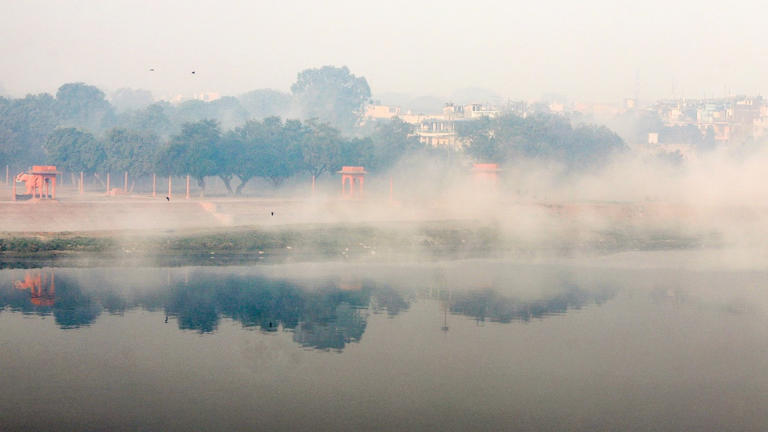
As per data from the Central Pollution Control Board (CPCB), Delhi’s overall AQI was recorded in the ‘poor’ category during the early morning hours. While the improvement brought temporary relief, experts cautioned that ‘poor’ air quality can still cause breathing discomfort, particularly for people with asthma, heart conditions, and other respiratory illnesses.
Environmental experts attributed the slight improvement in air quality to changes in wind patterns and a temporary reduction in local pollution sources. However, they warned that winter meteorological conditions—such as low wind speed, high humidity, and temperature inversion—continue to trap pollutants close to the ground, making sustained improvement unlikely in the short term.
“Any improvement during winter is often fragile. Without consistent wind movement or rainfall, pollution can spike again very quickly,” an air quality expert said.
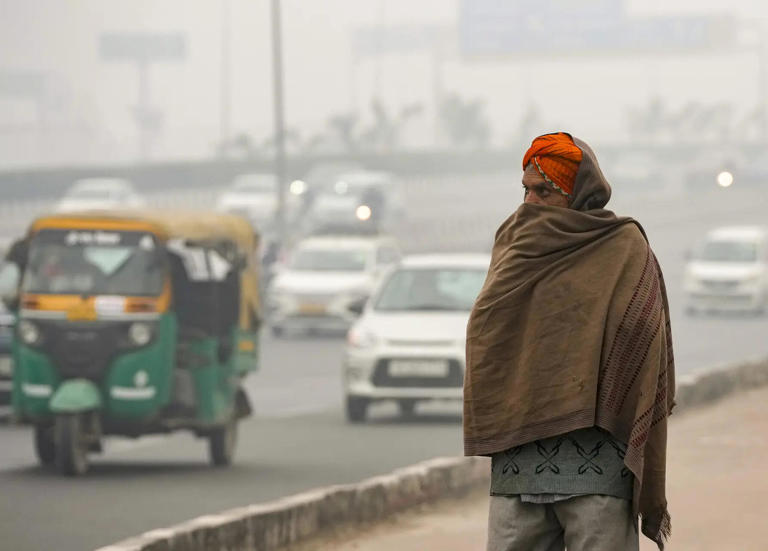
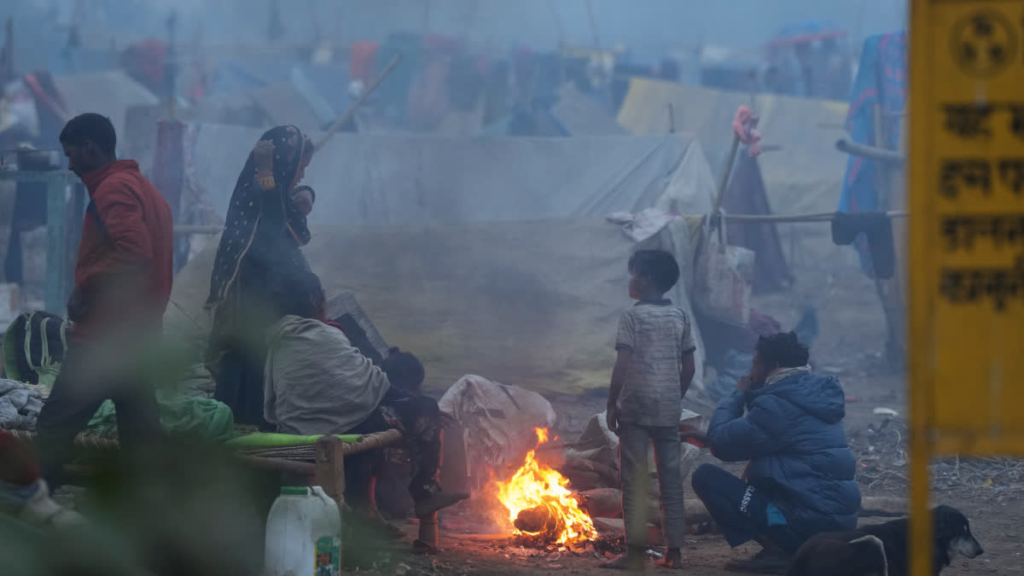
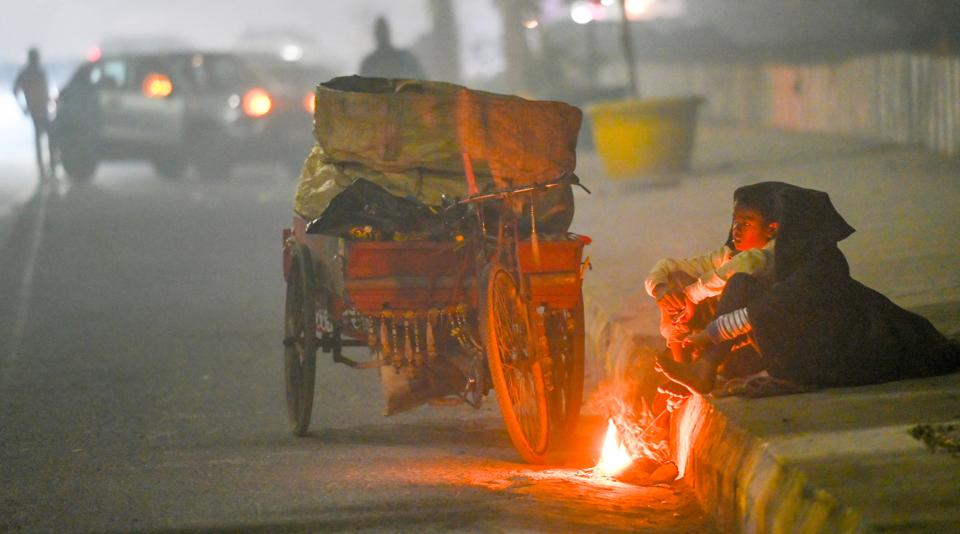
Even as pollution levels dipped marginally, Delhi experienced one of its coldest mornings of the season. Several parts of the city recorded minimum temperatures well below the seasonal average, with biting winds making conditions feel even colder. Residents across North, Central, and South Delhi reported foggy roads, frost-like chill, and limited visibility during early hours.
The IMD confirmed that cold wave conditions are likely to persist for the next few days, particularly during nighttime and early morning hours. In some areas, the “feels-like” temperature dropped further due to wind chill, forcing people to stay indoors or bundle up heavily before stepping out.
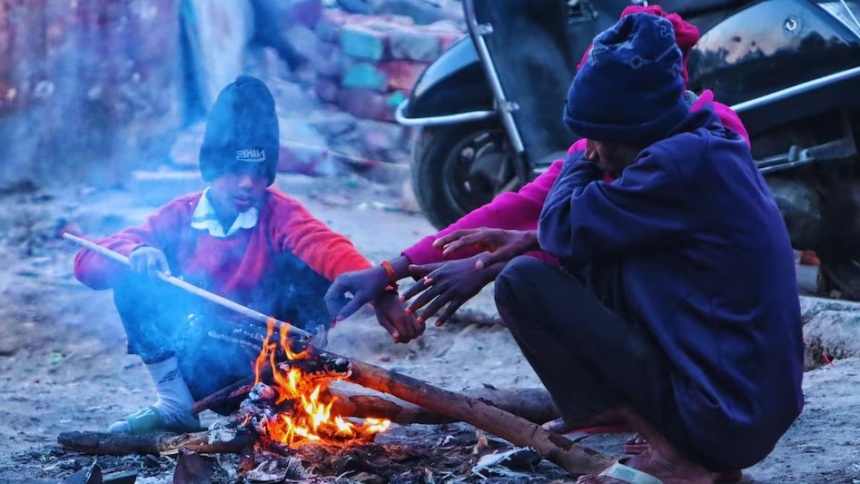
Shelters across the city saw increased footfall as homeless populations sought refuge from the cold. The Delhi government has reportedly activated night shelters and mobile units to provide blankets and warm meals to vulnerable groups.
Adding to commuters’ woes, the IMD issued a yellow alert for dense fog across Delhi and the National Capital Region (NCR). The alert indicates that weather conditions could disrupt daily activities, particularly early-morning travel by road, rail, and air.
Dense fog is expected to reduce visibility levels significantly, especially between late night and early morning hours. Airports and railway authorities have advised passengers to check schedules before travelling, as delays and cancellations remain possible due to poor visibility.
Traffic police also urged motorists to exercise caution, maintain safe distances, and use fog lights where necessary. Several stretches of highways connecting Delhi to neighbouring states reported slowed traffic movement due to fog-induced low visibility.
The combination of cold wave conditions, dense fog, and lingering pollution has significantly affected daily life in the capital. Morning walkers, school children, and outdoor workers are facing increased health risks, particularly exposure to cold air mixed with pollutants.
Doctors have reported a rise in cases related to respiratory infections, dry cough, sore throat, and seasonal flu. Medical experts recommend limiting outdoor exposure during early morning hours, staying hydrated, and wearing masks to reduce inhalation of polluted air.
“Cold air constricts airways, and when combined with pollution, it can trigger severe respiratory distress, especially in elderly people and children,” a senior pulmonologist explained.
Schools have also been advised to avoid outdoor activities during morning assemblies, while parents are encouraged to ensure children are adequately protected from the cold.
Delhi’s air pollution typically worsens during winter due to a combination of meteorological and human factors. Low temperatures lead to temperature inversion, where cold air near the surface gets trapped under warmer air above, preventing pollutants from dispersing.
Additionally, emissions from vehicles, industrial activities, construction dust, and biomass burning in surrounding states further exacerbate pollution levels. Festive firecrackers earlier in the season and stubble burning in neighbouring regions also contribute to poor air quality during winter months.
Although the current AQI improvement offers some respite, experts warn that without structural changes—such as cleaner transport, stricter emission controls, and regional coordination—Delhi’s winter pollution crisis will continue year after year.
Authorities continue to closely monitor air quality and weather conditions. Pollution control agencies remain on alert, ready to enforce emergency measures under the Graded Response Action Plan (GRAP) if pollution levels worsen again.
Officials have urged residents to follow advisories, avoid unnecessary travel during peak pollution hours, and reduce the use of personal vehicles wherever possible. Construction activities remain under scrutiny, and dust-control norms are being enforced in sensitive zones.
Weather officials noted that any significant improvement in air quality would require either strong winds or rainfall, neither of which is currently forecast in the immediate future.
According to IMD forecasts, cold wave conditions are expected to persist for at least the next few days, with dense fog likely during night and early morning hours. Daytime temperatures may remain low, offering little respite from the winter chill.
While the AQI improvement to the ‘poor’ category is a positive development, experts caution against complacency. Pollution levels can fluctuate rapidly in winter, and residents are advised to stay prepared for sudden deterioration in air quality.
As Delhi continues to battle the twin challenges of extreme winter weather and chronic air pollution, the situation underscores the urgent need for long-term solutions. Until then, the capital remains at the mercy of weather patterns, hoping for winds or rain to clear the air while bracing for more cold, foggy mornings.
Read Also : BCCI Orders KKR to Release Mustafizur Rahman — 5 Major Developments in the Bangladesh-IPL Controversy