Indian Farmers’ Massive Uprising: 10 Explosive Reasons Why Modi’s Trade Deal With Trump Sparked Nationwide Protests
Indian farmers launch massive protests against Narendra Modi over his high-stakes trade deal with Donald Trump, citing 7 major concerns about crop prices, imports, and rural livelihoods
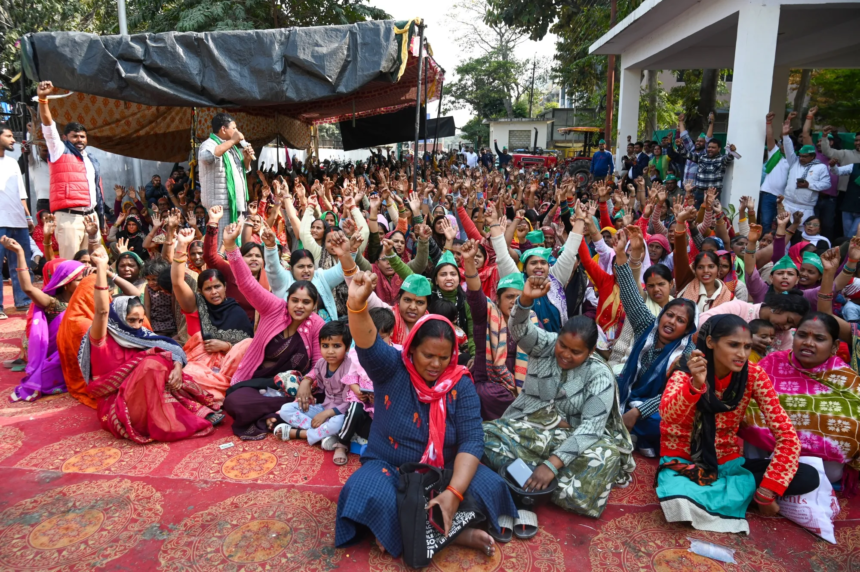
A fresh wave of unrest has swept across India’s agricultural heartland as thousands of farmers mobilize in protest against the proposed trade agreement between Narendra Modi and Donald Trump. The high-stakes negotiations, aimed at strengthening economic ties between India and the United States, have triggered deep anxiety among farming communities who fear devastating consequences for crop prices, import competition, and rural livelihoods.
From Punjab’s wheat fields to Maharashtra’s cotton belts, farmer unions have voiced strong opposition, describing the trade deal as a “tipping point” that could reshape India’s agricultural economy. The unfolding protests underscore the fragile balance between global trade ambitions and domestic economic security.
One of the primary triggers behind the protests is the concern that the trade deal will reduce tariffs on key American agricultural products. Indian farmers argue that cheaper imports of dairy, pulses, soybeans, and other commodities could flood domestic markets, driving down local prices.
The United States, with its heavily mechanized agriculture and substantial subsidies, produces crops at scale and often at lower costs. Indian farmers—many of whom operate on small landholdings—fear they will not be able to compete. For them, even a minor price fluctuation can mean the difference between survival and debt.
Minimum Support Price (MSP) remains the backbone of income security for millions of farmers. Protest leaders argue that increased import competition could undermine the government’s ability to sustain effective procurement at MSP levels.
Farmers worry that market saturation from imported goods would reduce demand for locally grown produce, indirectly weakening price assurance mechanisms. In regions where MSP procurement is crucial, this concern has fueled widespread mobilization.
Many farmer unions point to previous episodes of trade liberalization that led to price volatility in commodities like edible oils and pulses. They argue that without robust safeguards, history could repeat itself.
The protests echo memories of the large-scale agrarian movement against farm reform laws in 2020–21, when farmers demanded stronger legal guarantees. The current agitation reflects a lingering mistrust over policy decisions perceived as being made without adequate grassroots consultation.
India’s dairy sector, one of the largest in the world, is a lifeline for rural households. American dairy producers have long sought greater access to India’s market. Farmer organizations argue that any concession in this sector could severely impact small-scale dairy farmers who rely on cooperative networks.
Similarly, poultry farmers fear that reduced import duties on American poultry products could destabilize local pricing structures. For rural communities dependent on livestock as supplementary income, the stakes are particularly high.
For the government, strengthening ties with the United States represents a strategic economic opportunity. Advocates of the trade deal argue it could boost exports in sectors like textiles, pharmaceuticals, and technology services.
However, critics contend that agriculture should not be compromised in pursuit of broader trade objectives. They argue that rural livelihoods must remain central to economic policymaking, especially in a country where a significant portion of the population still depends on farming.
The political optics are equally significant. Farmers have historically been a powerful voting bloc, and sustained unrest could have electoral implications in key agrarian states.
Farmer leaders claim that negotiations were conducted without meaningful dialogue with agricultural stakeholders. They argue that transparency is essential when policy decisions affect millions of livelihoods.
The lack of detailed public communication about specific agricultural provisions in the trade deal has further amplified suspicion. Protest organizers are demanding written assurances that no concession will harm domestic farmers.
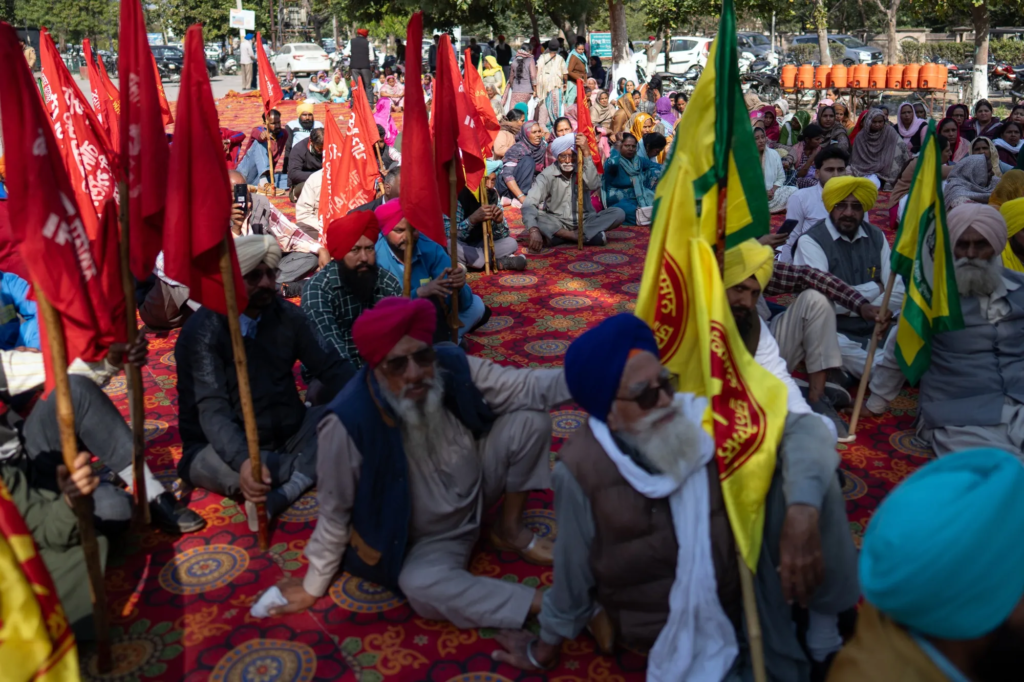
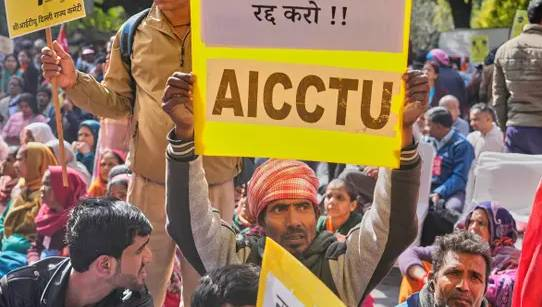
The protests have seen coordinated action across multiple states. Farmer unions have organized rallies, tractor marches, and sit-ins at district headquarters. Social media campaigns have amplified their demands, drawing attention both nationally and internationally.
Solidarity from other rural groups, including labor associations and cooperative societies, has broadened the scope of the movement. What began as sector-specific concern is rapidly evolving into a wider debate about economic sovereignty and food security.
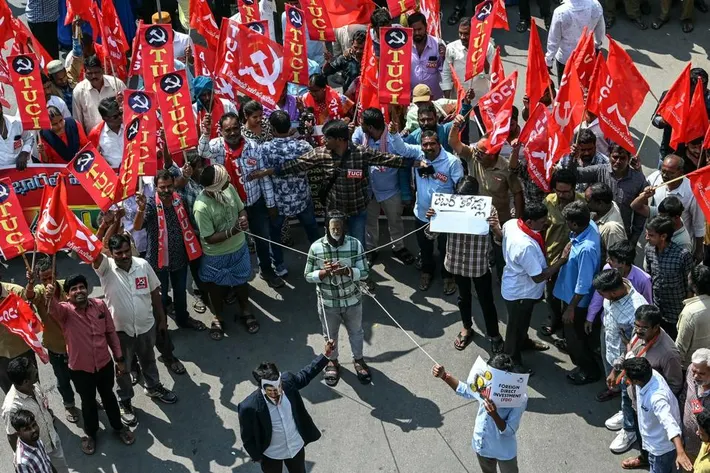
India’s agricultural sector contributes significantly to employment, though its share in GDP has gradually declined. While policymakers emphasize diversification and modernization, farmers argue that structural vulnerabilities persist.
Rising input costs—fertilizers, diesel, seeds—have already strained profit margins. In this context, the prospect of increased foreign competition appears particularly alarming. Protesters insist that without comprehensive safety nets, the trade deal could exacerbate rural distress.
Government officials have defended the negotiations, emphasizing that national interests remain paramount. They argue that trade agreements are structured to protect sensitive sectors and that no final decision would compromise farmer welfare.
Statements from policymakers indicate that any agricultural concessions would be calibrated and accompanied by safeguards. However, until concrete details are released, skepticism within farming communities is likely to persist.
The trajectory of the protests will depend largely on how negotiations evolve and how effectively the government communicates with stakeholders. Experts suggest that confidence-building measures—such as clear exemptions for critical commodities—could ease tensions.
If dialogue channels remain open, a compromise may be possible. However, if distrust deepens, the movement could escalate, potentially disrupting supply chains and drawing broader political attention.
The protests against the Modi–Trump trade deal represent more than a policy dispute. They highlight the complex interplay between globalization and grassroots economics. For India, balancing international trade ambitions with domestic agricultural stability is a delicate challenge.
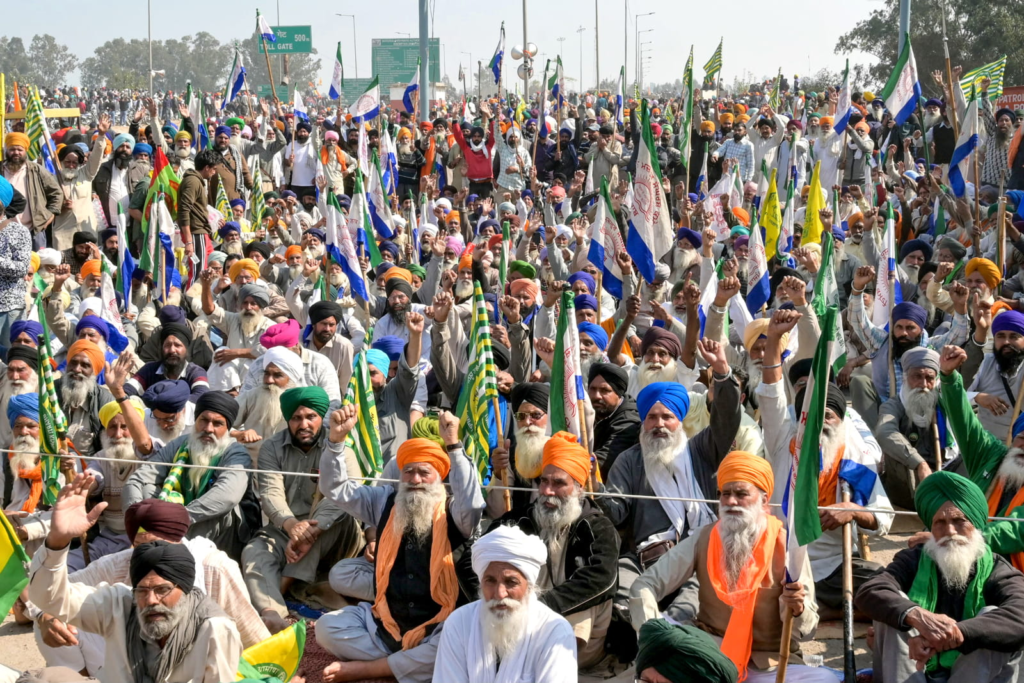
Farmers are not necessarily opposed to modernization or global engagement. Their core demand is security—assurance that policy shifts will not erode already thin profit margins. As negotiations continue, the government faces the task of reconciling macroeconomic strategy with microeconomic realities.
The coming weeks could prove decisive. Transparent dialogue, data-driven assurances, and stakeholder inclusion will be essential to defuse tensions. Whether this episode becomes a short-lived policy debate or a prolonged nationwide movement will hinge on trust, communication, and the perceived fairness of the final agreement.
In a country where agriculture remains deeply intertwined with social stability and economic identity, the outcome of this confrontation will resonate far beyond trade statistics. It may well define the next chapter in India’s rural and political landscape.
Read Also : Tarique Rahman’s Explosive Political Rise: 7 Powerful Moments That Reshaped Bangladesh’s History