Photos: 25 Powerful Images from Iran’s Mass Funeral as Slain Supreme Leader Is Laid to Rest
See powerful photos from Iran’s mass funeral as the slain supreme leader is laid to rest
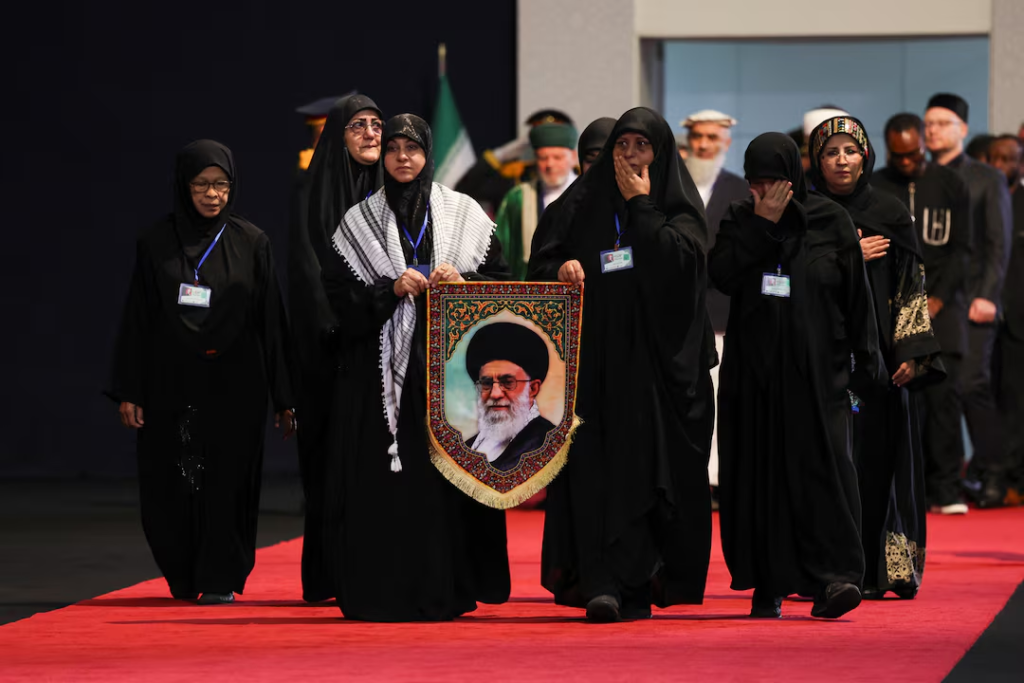
Bringing a historic, emotionally charged week of public mourning to an end, the body of the late Iranian Supreme Leader Ayatollah Ali Khamenei was laid to rest early Friday morning. The final burial, executed inside the innermost sanctuary of the holy Imam Reza Shrine in his northeastern hometown of Mashhad, marked the culmination of a massive, multi-city funeral procession that drew millions of black-clad mourners into the streets of both Iran and Iraq.
The state funeral served as a critical ideological demonstration for Iran’s clerical establishment, which sought to project strength and popular legitimacy following a tumultuous chapter. Khamenei, who ruled Iran with an iron fist for nearly 37 years, was killed on February 28, 2026, alongside four close family members, in a devastating joint airstrike launched by United States and Israeli forces in Tehran. The assassination triggered months of intensive, multi-theater regional war before a fragile, Pakistani-mediated ceasefire paused active hostilities last month.
However, the final chapter of Khamenei’s journey unfolded against a backdrop of acute military tension. The burial directly coincided with a renewed, dramatic burst of tit-for-tat strikes between Washington and Tehran, threatening to rupture the delicate truce and plunge the region back into all-out conflict.
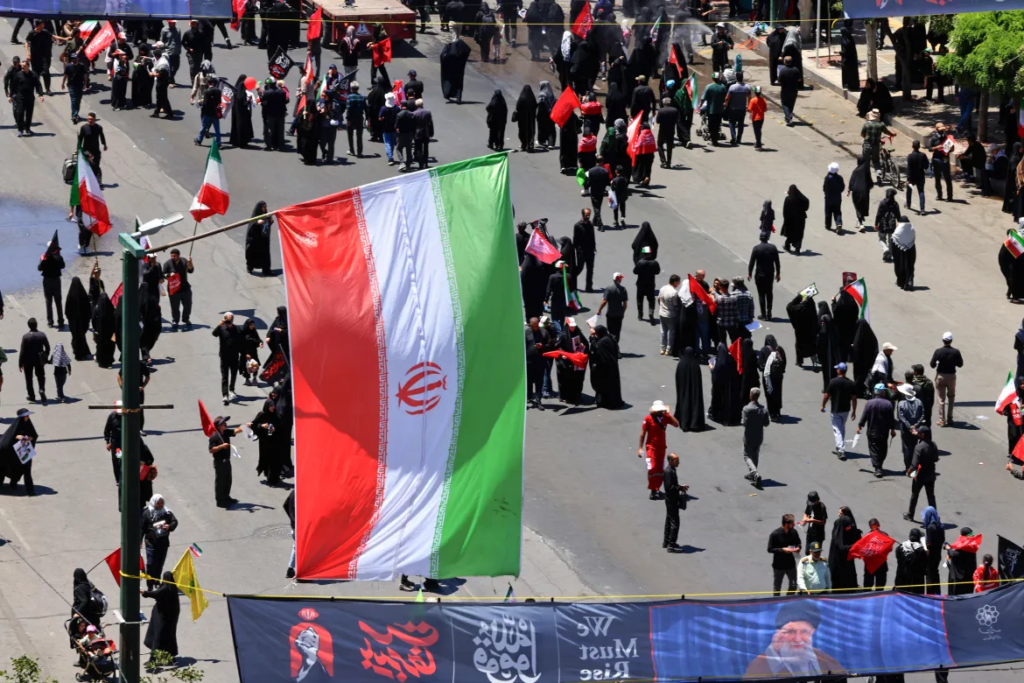
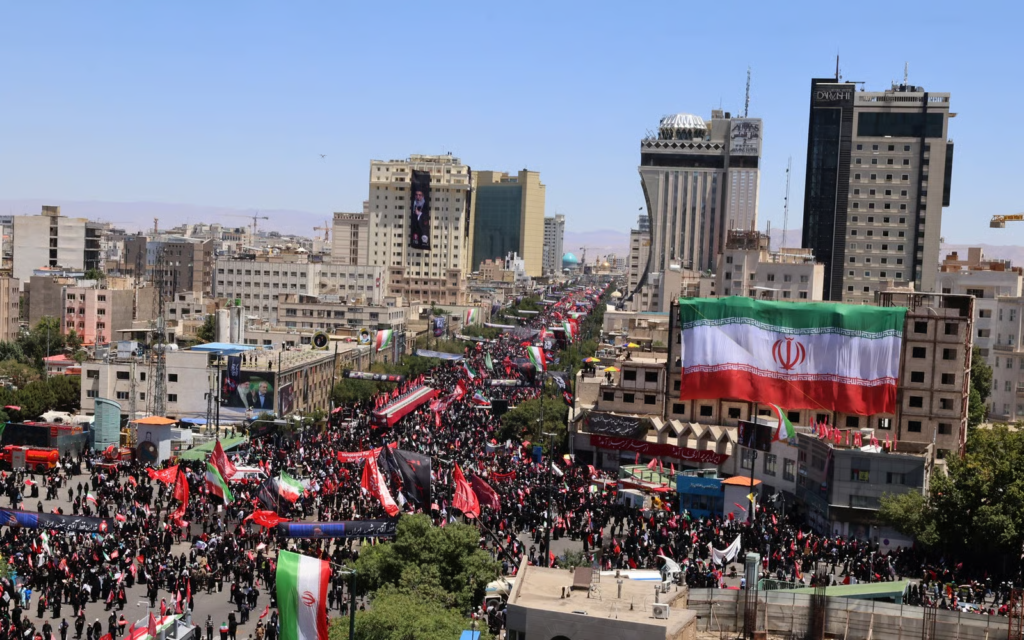
The final leg of the funeral procession on Thursday turned the spiritual capital of Mashhad into an impenetrable sea of black. Millions of mourners packed the thoroughfares leading to the golden dome and soaring minarets of the Imam Reza Shrine. Under the sweltering July heat, municipal workers utilized high-pressure hoses to pump water high into the air, spraying a fine mist over the dense crowds to prevent widespread heat exhaustion.
The sheer volume of the crowd created severe logistical bottlenecks, bringing the custom transport vehicles to a complete standstill.
1.The Traffic Deadlock:Thursday Afternoon.
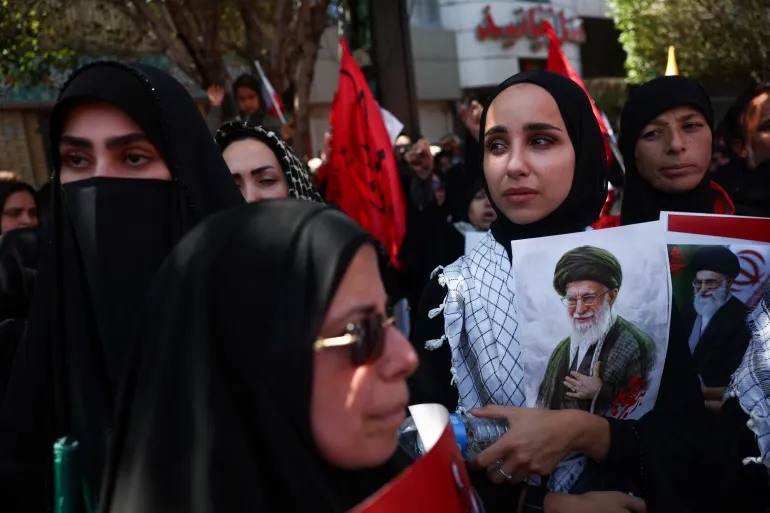
The flatbed truck transporting the flag-draped coffins of Khamenei and his family became physically wedged in by an ocean of mourners waving Iranian flags, portraits of the late leader, and red placards demanding revolutionary vengeance. White-turbaned clerics lining the convoy were unable to move it forward.
2.The Helicopter Extraction:Dusk.
Recognizing that the truck could not penetrate the final stretch to the shrine’s gates, military organizers deployed an Islamic Republic of Iran Army helicopter. In a dramatic sequence watched by millions on live television, the Supreme Leader’s coffin was hoisted from the vehicle over the heads of the crowd and flown into the secure perimeter of the shrine complex.
3.The Final Interment:Friday Early Morning.
Following the traditional ritual circumambulation of the coffin around the inner tomb of Imam Reza, the body was lowered into the earth within the Dar al-Dhikr prayer hall. The state broadcaster (IRIB) confirmed early Friday that the burial was officially complete, placing Khamenei alongside his family members.1
While prominent state figures crowded the raised dais under the intricate blue tiling of the shrine’s arched recess—including Parliament Speaker Mohammad Bagher Ghalibaf, Chief Justice Gholamhossein Mohseni Ejei, and Khamenei’s eldest son, Mostafa Khamenei, who led the final funeral prayers—one critical figure was entirely absent from public view.
The whereabouts of Mojtaba Khamenei, who was formally proclaimed Supreme Leader by the Assembly of Experts a week after his father’s death, remained a deep source of mystery and intrigue.
The Shadow of Succession: Mojtaba has not made a single public, televised, or recorded appearance since assuming office. While he has issued written executive decrees, intelligence reports indicate he was severely disfigured and wounded in the initial February 28 airstrike that claimed his father’s life. His continued absence from the front rows of the final funeral rites highlights the severe security anxieties and internal unease gripping the core of the theocratic state.
The funeral ceremonies were intentionally designed by clerical authorities to channel religious mourning into raw political mobilization. Throughout the thoroughfares of Mashhad, massive banners and placards translated the deep-seated Shia theology of martyrdom into explicit geopolitical threats.
A dominant feature of the final procession was the presence of large placards, held aloft by both men and women, reading “Kill Trump” in multiple languages. Crowds repeatedly chanted rhythmic slogans directed at the current US President, shouting: “I swear by the blood of the Supreme Leader, Trump, we will kill you!”
This public emphasis on targeted retaliation coincides with a sharp escalation in international intelligence friction. Simultaneously on Thursday, Western media reported that Israeli intelligence agencies had uncovered and passed a “specific, fresh, and actionable plot” to US authorities detailing a newly active Iranian intelligence operation designed to assassinate President Donald Trump.
Even as lyrical Shia funeral laments and sorrowful string music broadcasted over the shrine’s loudspeakers, the reality of war reasserted itself. The delicate truce established under Pakistani mediation collapsed over the preceding 48 hours following Iranian attacks on three commercial maritime vessels navigating the strategic Strait of Hormuz.
The ensuing chain reaction hit dangerously close to the funeral proceedings:
- Infrastructure Disruption: A series of precision US airstrikes hitting 90 designated military targets across Iran successfully struck a vital railway line connecting Tehran to Mashhad, temporarily throwing the transport network into chaos on the day of the burial.
- Nuclear Perimeter Impacts: Separate American salvos targeted and hit defensive military installations surrounding the perimeter of an Iranian nuclear power plant, signaling a drastic expansion in target selection.
- Regional Retaliation: The Iranian military immediately launched retaliatory drone and missile attacks targeting American assets hosted across Kuwait, Bahrain, and Qatar, while air defense sirens blared across Jordan as Amman’s military intercepted eight incoming Iranian missiles.
With the physical remains of Ayatollah Ali Khamenei finally secured beneath the marble floors of the Imam Reza Shrine, Iran officially closes a 37-year chapters of singular rule. The massive public turnout engineered by the state successfully demonstrated that the foundational revolutionary fervor of 1979 remains a potent tool of domestic mobilization.
However, the reality facing the new, invisible leadership in Tehran is exceptionally grim. By burying its leader amidst a fresh exchange of missile strikes with the world’s preeminent superpower, the Islamic Republic enters the post-Khamenei era completely shorn of its traditional diplomatic buffers. The coming months will test whether Mojtaba Khamenei’s shadow administration can successfully maintain internal cohesion while navigating an open, multi-front military confrontation across West Asia.
Read Also : Breaking Sohail Khan’s Honest Divorce Confession – 6 Powerful Things He Said About Seema Sajdeh