Trump Says Ukraine Needs to Make a Deal After Summit With Putin Ends Without Ceasefire
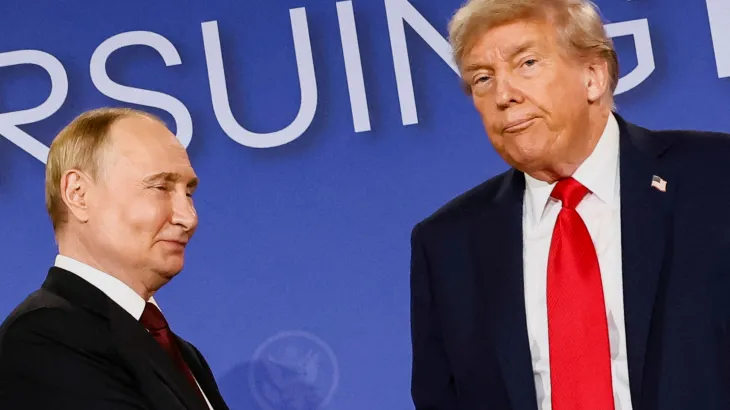
The geopolitical landscape shifted dramatically once again as former U.S. President Donald Trump declared that “Ukraine needs to make a deal” following his highly publicized summit with Russian President Vladimir Putin. The summit, held against the backdrop of the ongoing war in Eastern Europe, ended without the announcement of a ceasefire, dashing hopes for an immediate de-escalation. Trump’s statement has already triggered global debate, sparking questions about the future of diplomacy, U.S. foreign policy, and the trajectory of the Ukraine-Russia conflict.
For months, analysts and policymakers had speculated on whether Trump’s return to the diplomatic stage would alter the war’s dynamics. Many believed that a direct meeting between Trump and Putin might at least lead to symbolic progress. Yet the outcome has been both revealing and controversial. Instead of announcing a breakthrough, Trump emphasized the necessity of compromise on Ukraine’s part, implicitly suggesting that Kyiv should reconsider its maximalist positions.
The Summit Setting: Alaska’s Geopolitical Symbolism
The meeting took place in Alaska, a deliberate choice meant to symbolize neutral ground while also underscoring America’s pivotal role in global power struggles. Alaska carries its own Cold War legacy, once serving as a frontline state during U.S.-Soviet tensions. Holding the summit there evoked historic resonance—an attempt to bridge East and West at a location that geographically straddles both worlds.
While the optics were carefully staged, the substance proved far more complicated. Both leaders presented their national interests firmly, with Putin reiterating Russia’s insistence on security guarantees and territorial recognition, and Trump emphasizing the need for “an end to endless wars” that drain American resources. Yet, their conversations highlighted deep divides, particularly regarding Ukraine’s sovereignty, NATO expansion, and sanctions.
Trump’s Statement: A Strategic Shift or Political Gambit?
When Trump told reporters that “Ukraine needs to make a deal,” his words carried layered meaning. On one hand, it can be interpreted as pragmatic realism: wars typically end through negotiation rather than total victory. On the other hand, critics see it as a concession to Putin, framing Ukraine as the side expected to compromise while Russia retains leverage.
For Trump, the narrative fits into his broader worldview—prioritizing U.S. interests, reducing overseas commitments, and portraying himself as a dealmaker who can resolve conflicts where traditional diplomacy has failed. His supporters argue that this is a dose of necessary realism, acknowledging that Ukraine cannot indefinitely rely on Western aid while facing a militarily entrenched Russia. Detractors, however, warn that such rhetoric undermines Ukraine’s sovereignty, emboldens Moscow, and signals wavering Western resolve.
The Ukrainian Response
In Kyiv, Trump’s comments were met with frustration and concern. Ukrainian officials quickly pushed back, reiterating that peace cannot come at the expense of territorial integrity or national dignity. President Volodymyr Zelenskyy issued a cautious statement, emphasizing Ukraine’s commitment to diplomacy but warning that any settlement must respect international law.
For ordinary Ukrainians, the message was mixed. Some war-weary citizens acknowledged that negotiations may be inevitable after years of devastation, but others saw Trump’s words as a betrayal—an indication that Western allies might pressure Ukraine to concede territory. The psychological weight of this debate reflects the war’s broader toll, as families grapple with displacement, loss, and the uncertainty of their nation’s future.
Putin’s Calculated Silence
Interestingly, Putin refrained from amplifying Trump’s call for a deal. Instead, he maintained his standard position, framing Russia’s actions as defensive and reiterating accusations against NATO’s “aggressive policies.” The Kremlin’s measured response suggests that Putin seeks to leverage Trump’s rhetoric without appearing overly reliant on it. By keeping his tone restrained, Putin positions himself as the one holding the cards, waiting to see how U.S. domestic politics might reshape the global chessboard.
Global Reactions: Allies and Critics Weigh In
The reaction from Europe was immediate. Leaders in Berlin, Paris, and Warsaw expressed concern, emphasizing that peace in Ukraine must be “just and sustainable.” NATO officials issued reminders that the alliance stands united behind Kyiv, a subtle but pointed response to Trump’s remarks. Meanwhile, China, observing from the sidelines, praised the “importance of dialogue” but refrained from endorsing any specific outcome.
For Washington’s political establishment, Trump’s statement deepened ongoing divides. His Republican allies praised his willingness to “tell hard truths,” while Democrats warned that his rhetoric weakened U.S. credibility abroad. President Joe Biden’s administration, though cautious, reaffirmed its support for Ukraine, signaling that current U.S. policy remains unchanged—at least for now.
The Long Shadow of U.S.-Russia Relations
To fully grasp the weight of Trump’s latest statement, one must revisit the long arc of U.S.-Russia relations and their connection to Ukraine. The war of 2022 did not emerge in isolation—it was the culmination of decades of geopolitical friction, beginning with the collapse of the Soviet Union.
When Ukraine declared independence in 1991, it became a pivotal state between East and West, carrying immense strategic, cultural, and economic significance. For Russia, Ukraine was more than a neighbor; it was a historic cradle of Slavic identity and a buffer against Western expansion. For the West, Ukraine represented an emerging democracy striving to escape Moscow’s orbit. This tension has defined the last three decades.
NATO’s steady eastward expansion throughout the 1990s and 2000s deepened Moscow’s anxieties. Russia viewed NATO’s presence in Eastern Europe as a direct threat to its security, while the alliance justified enlargement as a safeguard for new democracies. The competing narratives created a clash of worldviews: Russia saw encirclement; NATO saw protection.
By 2014, when Russia annexed Crimea after the Euromaidan uprising, the geopolitical chessboard had dramatically shifted. Western sanctions followed, relations froze, and Ukraine descended into war in its eastern Donbas region. This was the stage on which Donald Trump entered global politics.
Trump’s First Presidency: A Relationship of Paradoxes
From 2016 to 2020, Trump’s approach to Russia was marked by contradictions. On the one hand, he consistently argued for closer ties with Moscow, praising Putin’s strength and suggesting that the United States should cooperate with Russia rather than confront it. On the other hand, his administration implemented sanctions against Russia, approved lethal aid to Ukraine, and expelled Russian diplomats following international incidents.
These paradoxes reflected Trump’s unique style of diplomacy: he often positioned himself as the “deal-maker” capable of building personal relationships with adversaries, while his administration maintained policies aligned with broader bipartisan consensus. His summit with Putin in Helsinki in 2018, for example, drew criticism at home after Trump appeared to side with Putin over U.S. intelligence agencies on election interference allegations. Yet, Trump defended his approach, insisting that “getting along with Russia is a good thing, not a bad thing.”
Ukraine, during this period, found itself in an uneasy position. While Kyiv appreciated U.S. military aid, it worried about Trump’s rhetoric, which at times implied Ukraine should be willing to negotiate away contested territories. The infamous 2019 impeachment inquiry—triggered by Trump’s phone call with President Volodymyr Zelenskyy—further complicated matters, bringing U.S.-Ukraine relations into the center of domestic American politics.
The Ukraine War and Trump’s New Role
By the time Russia launched its full-scale invasion of Ukraine in 2022, Trump was no longer president, but his voice carried weight in global debates. He criticized the Biden administration’s handling of the war, repeatedly arguing that the conflict would never have escalated under his leadership.
Trump’s claim rested on his belief that Putin would have acted differently if faced with his presidency. Supporters pointed to his unpredictability and transactional style as deterrents. Critics dismissed the claim as revisionist, arguing that Trump’s often sympathetic rhetoric toward Moscow had emboldened Putin in the first place.
Nevertheless, Trump positioned himself as the one figure capable of bringing the war to an end. At rallies, interviews, and campaign events, he declared that he could resolve the conflict “within 24 hours” by pressuring both sides into a settlement. While the claim sounded unrealistic, it resonated with segments of the American public weary of prolonged foreign wars and skeptical of massive financial aid packages to Kyiv.
This narrative set the stage for the Alaska summit. For Trump, it was not merely about diplomacy—it was about proving his thesis correct, showing that his style of negotiation could succeed where traditional diplomacy had faltered. For Putin, it was an opportunity to test Trump’s willingness to pressure Ukraine into concessions.
Ukraine’s Strategic Dilemma
For Ukraine, Trump’s evolving stance has always been a double-edged sword. On one side, his advocacy for negotiation could potentially lead to an end of hostilities, sparing countless lives and halting destruction. On the other side, the terms of such a deal might require Kyiv to surrender territories or sovereignty, outcomes that many Ukrainians view as unacceptable.
Zelenskyy’s government, while committed to diplomacy, has repeatedly insisted that peace cannot come at the cost of territorial integrity. Yet, behind closed doors, Ukrainian officials acknowledge the immense pressure from Western allies. The war has stretched Ukraine’s resources, displaced millions of citizens, and tested the endurance of its armed forces. If U.S. support wavers, Ukraine’s bargaining position weakens considerably.
Thus, Trump’s words—“Ukraine needs to make a deal”—hit at the heart of Kyiv’s strategic dilemma. They represent not just a viewpoint, but a potential shift in Western posture that could redefine the war’s trajectory.
Europe Watches with Unease
European allies, too, are acutely aware of the stakes. The European Union has invested billions in supporting Ukraine, both militarily and economically. For leaders in Paris, Berlin, and Warsaw, Trump’s suggestion of compromise recalls painful chapters of history when smaller states were pressured into concessions for the sake of “peace.”
At the same time, Europe faces war fatigue. Rising energy costs, refugee crises, and political polarization have strained unity. If the U.S. begins signaling that Ukraine should compromise, some European leaders may follow, while others may resist fiercely. This fracture could become one of the defining challenges for NATO in the years ahead.
The Shadow of Great Power Politics
What Trump’s statement ultimately underscores is the enduring reality of great power politics. For the United States, Ukraine is not just a humanitarian issue but a test of global order and credibility. For Russia, Ukraine is a matter of existential security and national pride. For Europe, Ukraine is a frontline in the defense of democratic values.
Trump’s framing—that Ukraine must make a deal—shifts responsibility away from the aggressor and onto the victim. Whether intended as realism or political positioning, it reveals the complexity of navigating diplomacy in a multipolar world where narratives often matter as much as battlefield realities.
The decision to hold the summit in Alaska was not accidental. Geographically, Alaska sits as the closest U.S. territory to Russia, separated only by the Bering Strait. Symbolically, it represents a space where East meets West, a reminder of both Cold War rivalry and the enduring reality of great-power proximity.
Trump’s team pitched Alaska as “neutral ground”—an American state with historical ties to Russia (the territory was purchased from the Russian Empire in 1867) but still firmly under U.S. sovereignty. For Putin, attending the summit on U.S. soil was both a challenge and an opportunity: it allowed him to appear defiant, yet willing to engage in diplomacy.
The atmosphere in Anchorage was tense. Security was unprecedented, with military aircraft patrolling the skies and coast guard ships stationed in surrounding waters. The world’s attention was fixed on the Alaskan wilderness, where two of the most consequential leaders of the era sat across from each other, attempting to resolve one of the bloodiest wars of the 21st century.
Opening Gambits: Trump’s Confidence vs. Putin’s Defiance
When the summit began, Trump entered with the trademark confidence that has defined his political career. He framed himself as the only leader capable of “cutting through the noise” and bringing Putin to the table. Aides described him as upbeat, telling reporters beforehand that “this will be the deal to end all deals.”
Putin, by contrast, arrived with a posture of calculated defiance. He emphasized that Russia’s objectives in Ukraine were “non-negotiable” and that the West needed to “accept new realities.” His delegation was stacked with seasoned diplomats and security officials, all determined to avoid even the perception of concessions.
The opening remarks set the tone: Trump spoke of pragmatism, “finding common ground,” and the futility of endless war. Putin countered by framing Russia’s invasion as a defensive act against NATO encroachment. For the Ukrainian people watching from afar, the message was stark—this summit was not about Kyiv’s voice, but about how two superpowers would define their future.
Behind Closed Doors: The Core Sticking Points
While the official agenda was vague, three central issues dominated discussions:
- Territorial Integrity vs. Recognition of Annexations
- Ukraine and its Western allies insist on the full restoration of Ukraine’s territorial borders, including Crimea, Donetsk, Luhansk, Zaporizhzhia, and Kherson.
- Putin demanded international recognition of Russia’s annexations, framing them as irreversible “facts on the ground.”
- Trump, according to leaks, pressed Putin on “compromise zones,” suggesting that some territories might remain under Russian control temporarily, provided there was a ceasefire. This floated idea angered Kyiv and worried European diplomats, who saw it as legitimizing aggression.
- Ukraine’s NATO Aspirations
- NATO membership for Ukraine remains one of Moscow’s red lines.
- Putin made it clear that any peace deal must include guarantees that Ukraine will never join NATO.
- Trump reportedly suggested “strategic neutrality” for Ukraine, similar to Austria during the Cold War—an idea that could appeal to war-weary Americans but risks undermining Ukraine’s sovereignty.
- Security Guarantees and Sanctions Relief
- Kyiv insists that any deal must come with robust international security guarantees.
- Moscow demanded partial sanctions relief in exchange for even a temporary ceasefire.
- Trump expressed openness to discussing sanctions, hinting that a gradual rollback could be used as leverage to “incentivize peace.”
These points created deadlock. Putin refused to budge on territorial recognition, while Trump refused to concede full sanctions relief without concrete action. Hours stretched into days, and still no breakthrough emerged.
The Turning Point: A Clash of Worldviews
By the second day of talks, frustration was mounting. Reports from insiders suggest that Trump grew impatient with what he saw as Putin’s rigidity. At one point, he is said to have leaned across the table and declared:
“You can fight for ten more years, but at the end of the day, you’ll sit down at a table just like this. Why not do it now?”
Putin reportedly responded coolly, emphasizing that Russia could “outlast any opponent” and that time was on Moscow’s side. For Putin, survival and resilience have always been political weapons; for Trump, impatience and a desire for closure defined his style.
The clash revealed their fundamental difference: Trump sees conflict as a transaction that must eventually be closed with a deal; Putin sees it as a test of willpower, where enduring pain is a form of victory.
Why the Ceasefire Failed
By the summit’s conclusion, no ceasefire had been reached. Several reasons explain the failure:
- Irreconcilable Red Lines: Russia demanded recognition of annexed territories; Ukraine (and the West) refused.
- Distrust: Moscow did not believe Washington would honor neutrality guarantees, while the U.S. doubted Russia’s commitment to any ceasefire.
- Trump’s Framing: His insistence that “Ukraine needs to make a deal” shifted blame onto Kyiv rather than pressuring Moscow, which emboldened Putin to hold firm.
- Symbolism vs. Substance: While the Alaska location carried symbolic weight, it did little to bridge substantive policy gaps.
The summit ended with polite statements about “open channels” and “future dialogue,” but both sides knew little had changed.
Immediate Fallout: Political and Media Reactions
The reactions were swift and polarized:
- In Washington: Democrats blasted Trump for echoing Putin’s framing and undermining Ukraine’s sovereignty. Republicans were divided—some praised his “realism,” others accused him of weakening America’s stance.
- In Kyiv: Zelenskyy expressed diplomatic gratitude for “any effort at peace,” but Ukrainian officials privately expressed alarm, calling Trump’s approach “dangerously close to rewarding aggression.”
- In Moscow: State media portrayed the summit as a victory for Putin, emphasizing that Trump had legitimized Russia’s demand for Ukraine to negotiate.
- In Europe: Leaders in Germany, France, and Poland reacted with unease. For them, the failure of the summit reinforced the fear that U.S. commitment to Ukraine could falter under Trump’s leadership.
The Broader Meaning of the Alaska Summit
In the end, the Alaska summit was less about a breakthrough and more about revealing fault lines. It showcased:
- Trump’s transactional worldview, where wars should be settled by pragmatic deals.
- Putin’s reliance on endurance and his refusal to concede.
- Ukraine’s precarious position, caught between superpower bargaining.
- Europe’s growing anxiety over Western unity.
The summit was a reminder that diplomacy is not merely about bringing leaders together—it is about aligning fundamentally opposed visions of the world. In Alaska, those visions collided, but they did not converge.
Also Read : Raj Kundra’s Shocking Kidney Offer to Guru Leaves Shilpa Shetty Stunned — Viral Video Hits Millions in 2025