

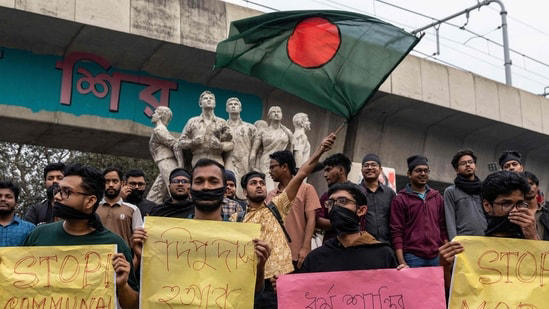
Hindu Man Killed in Bangladesh: Delhi Sees Major Protest as 5 Key Developments Unfold
Protests erupt in Delhi after a Hindu man is killed in Bangladesh, with demonstrators breaking barricades and clashing with police
The killing of a Hindu man in Bangladesh has triggered a wave of outrage in India, culminating in a major protest in Delhi that escalated into clashes with police. Demonstrators broke through barricades, raised slogans, and demanded strong diplomatic action, forcing law enforcement agencies to intervene to prevent the situation from spiralling further.
The incident has not only heightened tensions on the streets of the national capital but has also brought renewed focus on the safety of religious minorities in Bangladesh, cross-border sensitivities, and the challenge of managing emotionally charged protests in India.
The protests were triggered after reports emerged of a Hindu man being killed in Bangladesh under circumstances that many demonstrators described as targeted violence. While authorities in Bangladesh have said investigations are underway, images and videos circulating on social media intensified public anger in India.
Several Hindu organisations, social groups, and activists called for demonstrations in Delhi, demanding:
- Justice for the victim
- Protection for Hindu minorities in Bangladesh
- A strong response from the Indian government
As word spread online, crowds gathered in significant numbers, leading to heightened security deployment in sensitive areas of the capital.
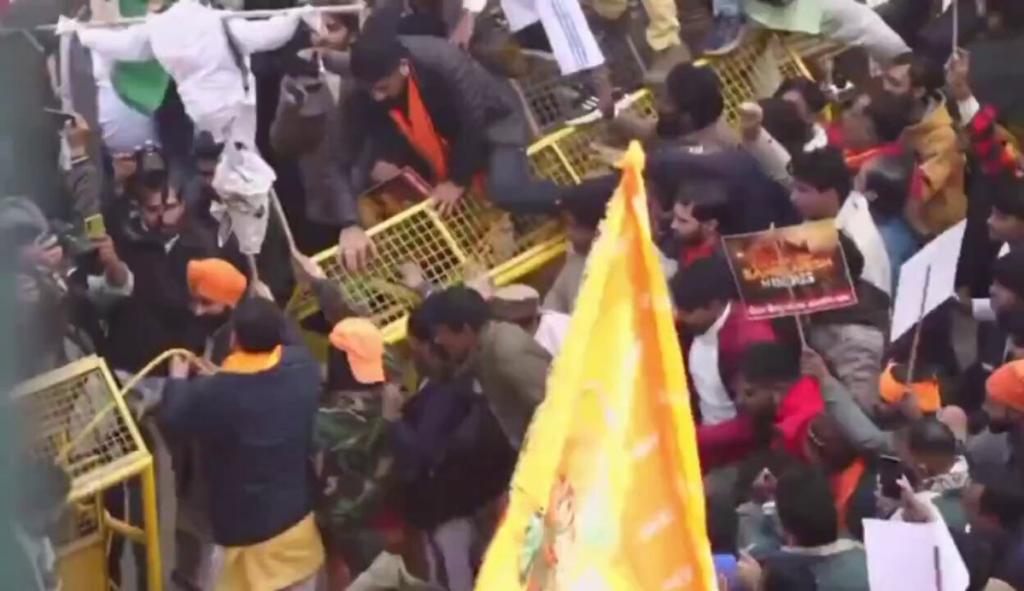
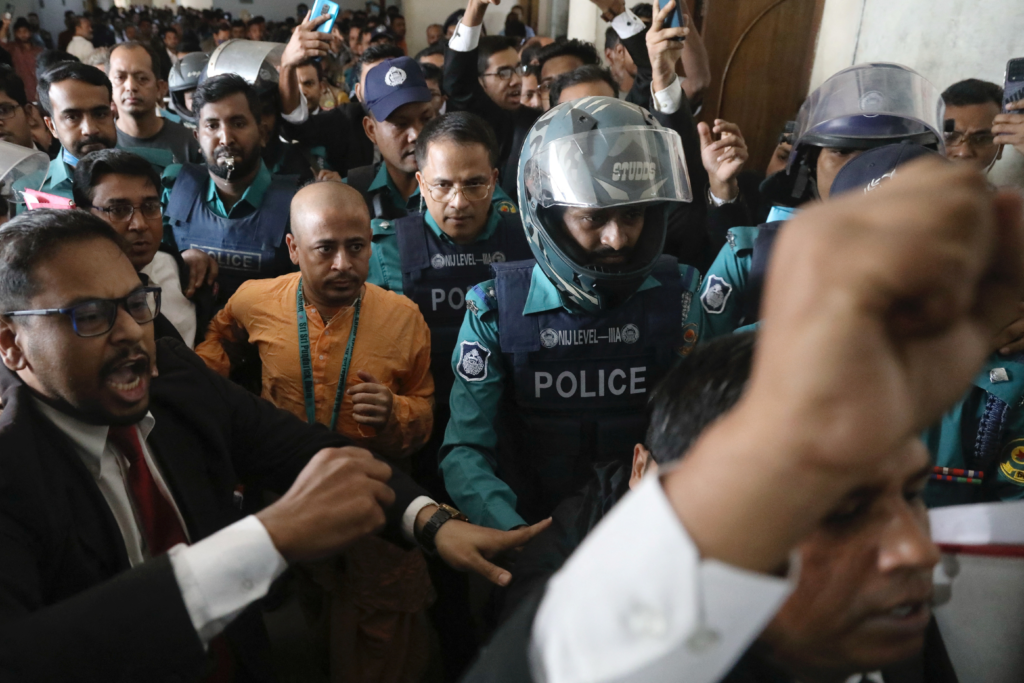
What began as a protest quickly escalated when sections of the crowd attempted to move beyond designated areas. According to police officials, protesters broke through barricades, pushing toward restricted zones despite repeated warnings.
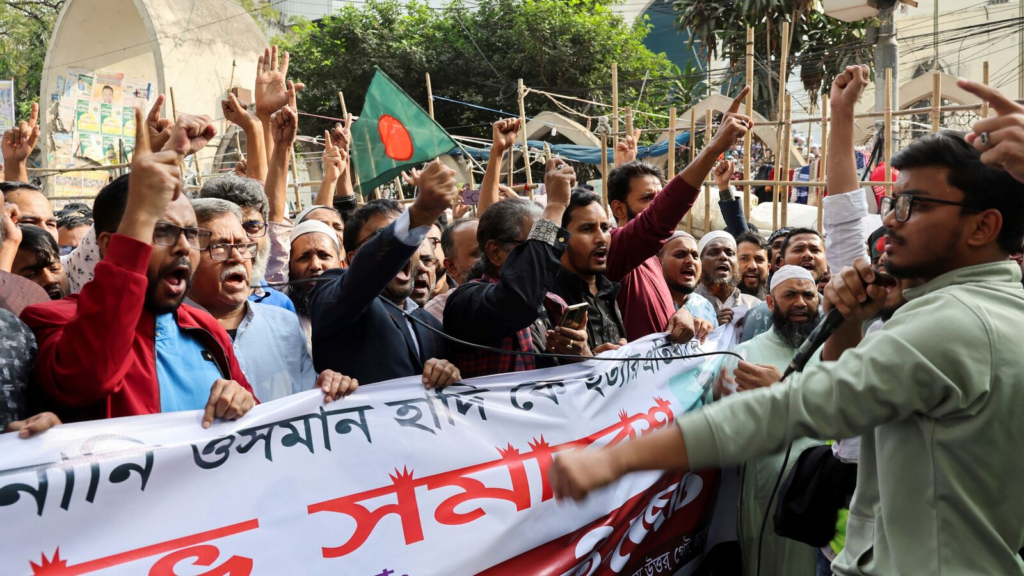
Police responded by forming multiple security cordons and appealing for calm through loudspeakers. However, tensions flared as protesters accused authorities of trying to suppress their voices.
Eyewitnesses reported moments of chaos as:
- Barricades were overturned
- Protesters surged forward
- Police used physical restraint to push crowds back
While no official confirmation of severe injuries was immediately available, officials said several people were detained briefly to restore order.
Delhi Police stated that they had granted permission for a peaceful protest but were forced to act when the situation turned volatile. Senior officers emphasized that public safety and law-and-order considerations required immediate intervention.
Law enforcement used standard crowd-control measures, including:
- Barricading
- Formation of human chains
- Temporary detention of aggressive protesters
Officials stressed that the objective was not to curb dissent but to prevent escalation that could endanger lives or damage public property.
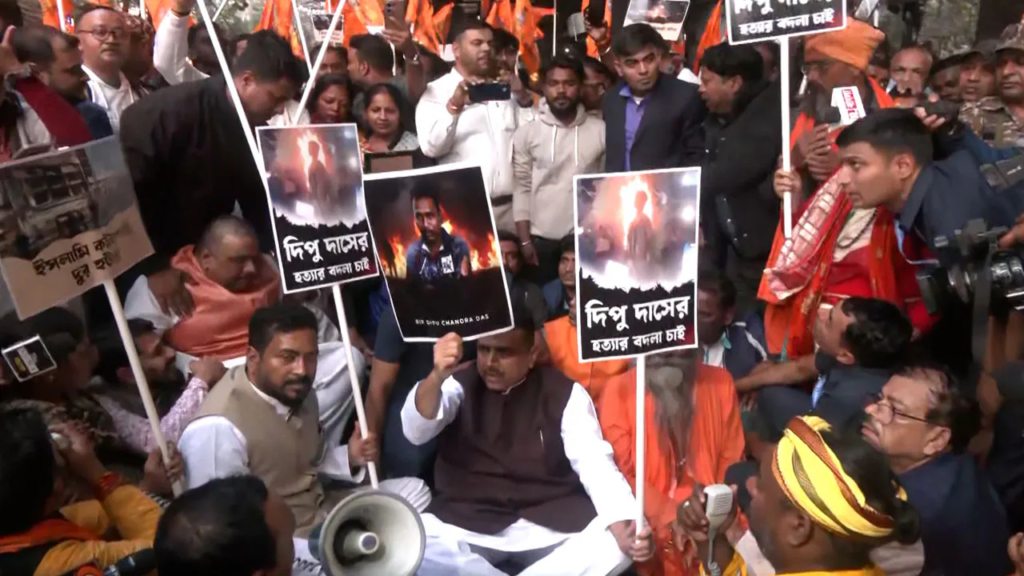
Protesters expressed deep anger over what they described as repeated attacks on Hindu minorities in Bangladesh. Many carried placards and banners calling for international attention to the issue.
Speakers at the protest accused regional and global institutions of ignoring minority rights violations and urged the Indian government to:
- Raise the issue diplomatically
- Ensure accountability for the killing
- Monitor the safety of Hindus across the border
Several protesters also criticised social media platforms for allegedly failing to curb hate content while amplifying disturbing visuals.
Details surrounding the killing in Bangladesh remain under investigation. Local authorities there have said they are probing the incident and have urged restraint, cautioning against the spread of unverified information.
Bangladesh has repeatedly stated that it upholds secular values and minority protection, though incidents involving religious communities periodically strain its domestic politics and international image.
The killing has revived debates about:
- Minority rights in South Asia
- Communal harmony
- The role of governments in preventing targeted violence
India and Bangladesh share deep historical, cultural, and economic ties. However, incidents involving religious violence can quickly become diplomatic flashpoints, particularly when they provoke strong public reactions.
Diplomatic experts note that while public anger is understandable, governments often prefer quiet diplomacy over public confrontation. Any official response from India is likely to balance:
- Domestic public sentiment
- Bilateral relations
- Regional stability
So far, no official diplomatic statement has been released linking the protests directly to government action.
Social media played a significant role in mobilising protesters. Videos and posts related to the killing spread rapidly, often without context or verification.
Experts warn that while digital platforms can raise awareness, they can also:
- Spread misinformation
- Fuel emotional reactions
- Escalate tensions
Delhi Police issued advisories urging citizens to rely on verified sources and avoid sharing inflammatory content.
The Delhi clashes once again highlighted the delicate balance between the constitutional right to protest and the responsibility of the state to maintain law and order.
Legal experts point out that:
- Peaceful protest is a fundamental right
- Violence or breach of restrictions weakens legitimacy
- Authorities are empowered to act if public safety is threatened
Courts in the past have upheld police action when protests crossed permitted limits, even while affirming citizens’ right to dissent.
Major political parties largely avoided immediate provocative statements, possibly to prevent further escalation. Some leaders issued general appeals for peace, urging authorities to ensure justice while maintaining calm.
Analysts say political restraint is crucial in situations involving cross-border religious sensitivities, as inflammatory rhetoric can worsen communal polarisation.
The protests reflect a broader sense of anxiety and anger among sections of the Indian public over incidents affecting Hindu minorities in neighbouring countries. At the same time, civil society groups have urged caution, warning against turning grief into communal hostility.
Human rights advocates argue that:
- Every killing deserves justice regardless of religion
- Accountability should be based on facts, not speculation
- Cross-border issues require careful handling
Authorities in Delhi said they are reviewing footage from the protests to assess whether any legal action is necessary. Meanwhile, investigations in Bangladesh are expected to continue, with updates awaited from official sources.
Security has been heightened in parts of Delhi to prevent further flare-ups, and organisers of future protests have been urged to ensure peaceful conduct.

