Shocking Video: 3,000 Gas Cylinders Swept Away After Floodwaters Breach HPCL Plant – 7 Key Updates
Watch the shocking video of nearly 3,000 gas cylinders floating down a river after floodwaters breached an HPCL plant
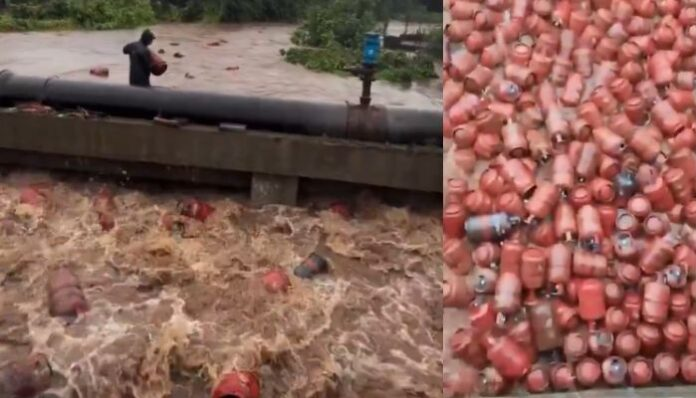
In a dramatic incident triggered by relentless monsoon rains, nearly 3,000 LPG cylinders were swept away into the Patalganga River after floodwaters inundated the HPCL Patalganga LPG Bottling Plant in Maharashtra’s Raigad district. Videos of hundreds of gas cylinders floating rapidly downstream have gone viral on social media, sparking widespread concern over public safety and industrial disaster preparedness. Authorities have urged residents not to touch or collect any cylinders found in or near the river, warning that some may still contain liquefied petroleum gas (LPG) and could pose a serious fire or explosion risk.
The incident occurred after intense rainfall caused floodwaters to breach the HPCL facility in the Rasayani industrial area. While no casualties have been reported, the scale of the incident has raised questions about flood resilience at industrial sites and the challenges posed by increasingly extreme weather events.
Maharashtra has been witnessing heavy monsoon showers over the past several days, with rivers overflowing and low-lying areas experiencing severe flooding. In Raigad district, continuous rainfall caused water levels in the Patalganga River to rise sharply. Floodwaters entered the HPCL bottling plant, dislodging stacks of LPG cylinders and carrying them into the swollen river.
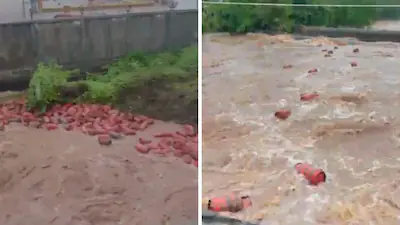
According to officials, both filled and empty cylinders were among those swept away. The powerful current carried the cylinders downstream, creating a striking and potentially hazardous scene captured in multiple viral videos
Soon after the flooding, videos showing hundreds of red LPG cylinders bobbing in the muddy river spread rapidly across platforms such as X, Facebook, Instagram, and WhatsApp.
The visuals shocked viewers across the country because of the sheer number of cylinders floating downstream. Many users expressed concern over the possibility of accidents if any damaged cylinders leaked gas or were mishandled.
The videos also highlighted the force of the floodwaters, which were strong enough to carry heavy industrial equipment away from the storage facility.
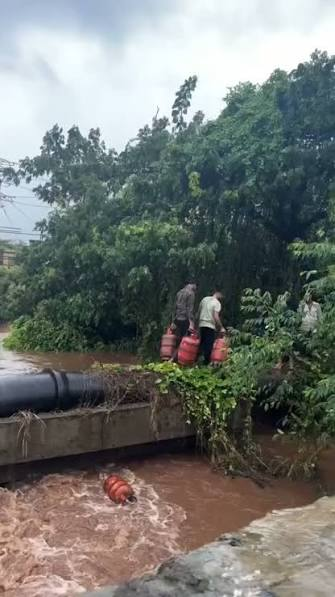
Following the incident, the Raigad district administration issued an urgent advisory requesting residents to stay away from any LPG cylinders found near the riverbanks or downstream.
Officials warned that it is impossible to determine whether a recovered cylinder still contains LPG or whether it has been damaged during the flood. Even apparently intact cylinders could become dangerous if handled improperly. Residents have instead been asked to immediately inform the authorities or return any recovered cylinders to HPCL or designated government collection points.
Teams from HPCL, the local administration, and emergency services have begun efforts to trace and recover the missing cylinders. Recovery operations are challenging because of strong currents, waterlogged terrain, and continuing rainfall.
Authorities are surveying downstream areas while coordinating with local officials to account for the displaced cylinders and minimize potential risks to nearby communities.
LPG cylinders are designed with robust safety features, but exposure to floodwaters, impact with rocks or debris, and uncontrolled movement can damage valves or protective fittings.
If a damaged cylinder leaks gas, it may create a fire or explosion hazard under certain conditions. This is why officials have strongly advised the public not to transport, open, or attempt to use any recovered cylinder unless it has been inspected by trained personnel.
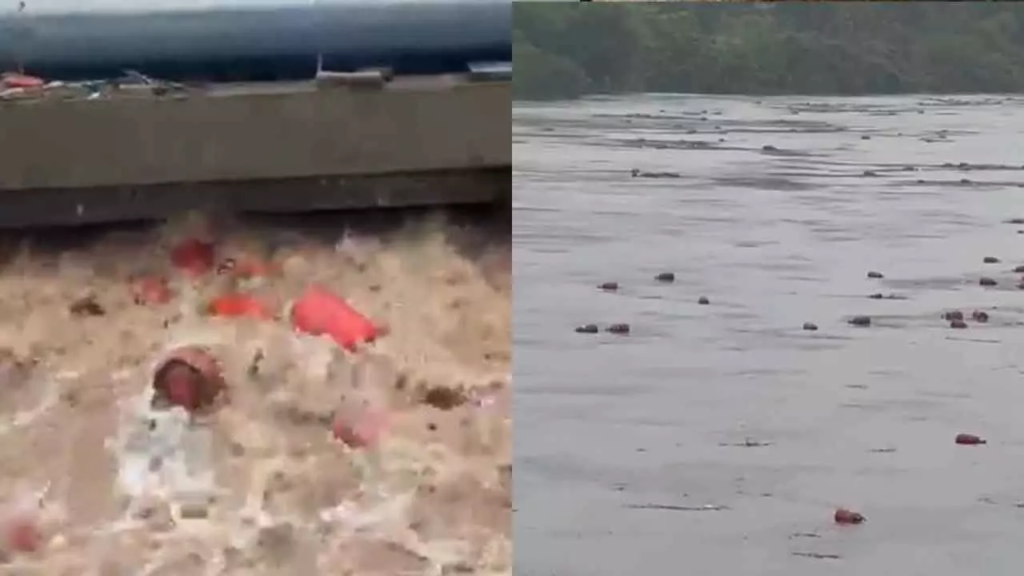
The incident is another reminder of the growing challenges posed by intense monsoon rainfall. Maharashtra experiences flooding every year, but increasingly severe rain events can overwhelm drainage systems, rivers, and industrial infrastructure.
Floodwaters not only affect homes and transportation but can also disrupt critical facilities such as fuel depots, factories, warehouses, and power infrastructure. Industrial areas located close to rivers face additional risks during periods of exceptionally heavy rainfall.
Experts say that companies operating facilities storing hazardous materials should continually review flood-risk assessments and emergency preparedness plans, especially as weather patterns evolve.
Although the flooding was triggered by extreme weather, the incident has prompted discussion about disaster preparedness at industrial sites.
Questions being raised include:
- Whether flood protection measures were sufficient.
- How storage yards can be made more resilient.
- Whether additional barriers or anchoring systems could reduce losses during future floods.
- How emergency response plans can be strengthened.
Any conclusions about the cause or adequacy of safeguards will depend on official assessments rather than speculation.
Recovering thousands of cylinders scattered across a river system is a significant logistical challenge. Beyond the direct financial loss, authorities must ensure that all cylinders are accounted for to prevent safety hazards.
The incident also illustrates the broader economic impact of extreme weather, which can disrupt supply chains, delay LPG distribution, and require extensive recovery operations.
Officials have emphasized that public cooperation is essential. Anyone who spots an LPG cylinder along the river or nearby areas should avoid touching it and instead notify local authorities or HPCL representatives.
Attempts to retrieve cylinders for personal use or curiosity could expose people to unnecessary danger, particularly if a cylinder has been damaged or still contains gas.
As climate-related disasters become more frequent, governments and industries face increasing pressure to improve resilience. Better flood forecasting, stronger protective infrastructure, emergency planning, and public awareness campaigns can help reduce risks during future extreme weather events.
The Raigad incident serves as a reminder that industrial safety and disaster management must evolve alongside changing environmental conditions.