Maharashtra CM Eknath Shinde Joins 50+ Sanitation Workers to Clean Mumbai Roads — Powerful Message on Civic Duty
Maharashtra CM Eknath Shinde joins over 50 Safai workers in a powerful road-cleaning drive across Mumbai, promoting civic responsibility and urban cleanliness through the Deep Clean Campaign
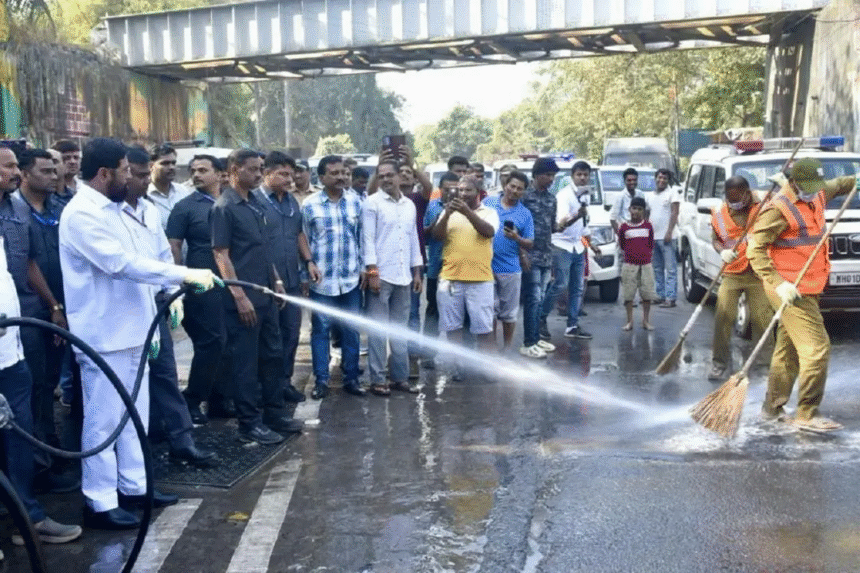
In a striking demonstration of on-ground governance, Maharashtra Chief Minister Eknath Shinde has been personally leading the fight against urban pollution and neglected public spaces. Over 50 sanitation workers joined him as he sprayed and cleaned roads in Mumbai—including Dividers and drain areas—sending a powerful message about shared civic responsibility.
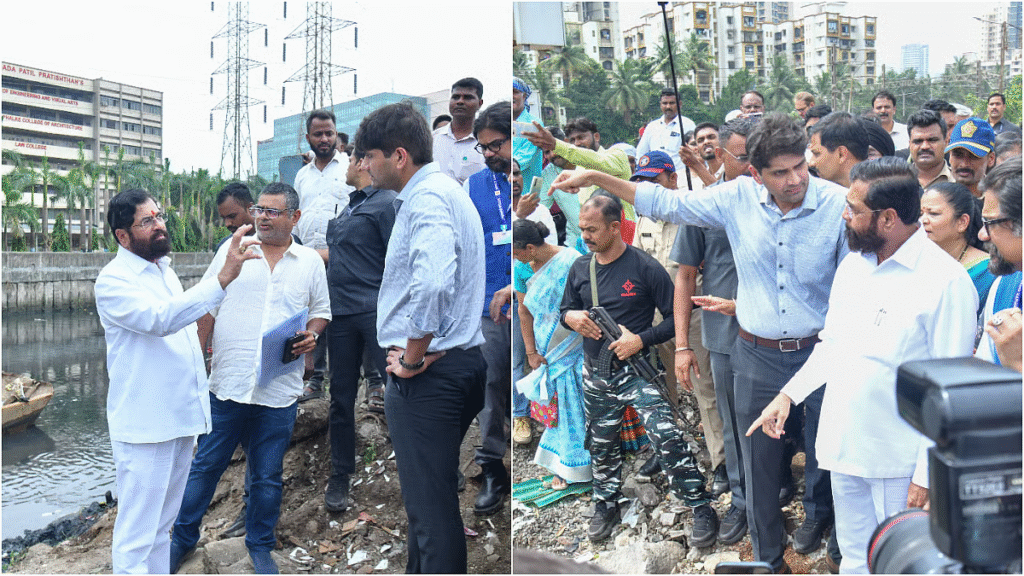
Since late 2023, CM Shinde has spearheaded the “Deep Clean” Campaign across Mumbai and Maharashtra, actively participating for multiple consecutive weeks in cleaning drives alongside municipal and civic officials:
- On December 30, 2023, Shinde rolled up his sleeves for the first time in the Wagle area of Thane, personally wielding a broom across 180 locations to clear litter, drains, public toilets, and footpaths—alongside 2,500 municipal employees, 1,797 sanitation workers, and 5,000 volunteers
Within the same drive, he expanded to 10 pockets in Mumbai including Bandra, Versova, Powai, and Kurla, marking over 22,000 km of road washed, removing 183 tonnes of garbage and 1,100 tonnes of debris
In early 2024, after Mumbai’s slip in the Swachh Survekshan rankings, Shinde ordered the daily cleaning of 1,000 km of roads per day, up from 550 km previously, adding extra manpower and tankers .
By mid-Dec 2023, he attended the third consecutive week of deep-clean drives in Ghatkopar, Chembur, Tilak Nagar—covering footpaths, drains, public toilets, and removing illegal hoardings
In recent episodes, CM Shinde joined over 50 Safai Karamcharis and civic personnel in dynamically cleaning Mumbai roads using high-pressure water jets and tankers:
- A viral video shows Shinde alongside sanitation workers operating a high-powered spray on road dividers near Worli Sea Face. While some critics voiced concerns about water wastage amid shortages, civic officials and Shinde pointed out the use of recycled water from sewage treatment plants, not potable water
His presence at the nozzle exemplifies his message: public cleanliness is a shared responsibility—not just a civic body’s—stressing that officials must lead by example .
Shinde’s initiative goes beyond symbolic leadership. The exercises involve systematic planning, large-scale logistics, and measurable impact:
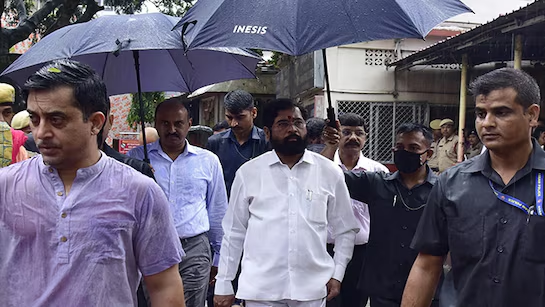
- From December 2023 to early 2024, 367 machines, nearly 22,000 km of road, 183 tonnes of litter, and 1,100 tonnes of construction debris were cleaned from various city pockets
In early 2024, the city’s cleaning drive transitioned from weekly to daily deep cleaning, increasing Mumbai’s washed roads from 550 km to 1,000 km per day, involving extra tankers, personnel, and monitoring .
The repeated road-washing with high-pressure jets yields direct and visible benefits:
- Reduced dust pollution improves air quality.
- Cleaner drains help prevent flooding during monsoons.
- Removal of garbage & hoardings uplifts aesthetics and sanitary habits.
- Frequent cleaning of public toilets enhances public health.
- The use of recycled, non-potable water ensures environmental responsibility
Shinde’s active role in Mumbai’s deep-clean campaign projects several political and public leadership messages:
- An answer to critics who clamored for better Swachh Survekshan rankings, with visible steps and accountability
Demonstrates a hands-on leadership style, resonating with daily laborers rather than detaching in office.
Launching these drives ahead of elections hints at strategic positioning, resonating positively with middle-class and civic-minded voters .
Public responses are mixed, featuring both praise and caution:
- Mumbai citizens express appreciation for cleaner streets, public toilets, and lifted hoardings .
- However, sustainability is questioned—is daily cleaning feasible without water shortages? Reddit debates spotlighted these concerns, even as experts noted the use of recycled water mitigates the issue
Shinde’s leadership isn’t limited to manual efforts. He supports future-ready sanitation technology initiatives:
- In 2022, he unveiled Bandicoot robotic manhole cleaners to prevent human entry into hazardous sewer spaces, showcasing a move toward tech-powered sanitation
In Thane, he encouraged developers to turn lakes and green spaces into urban lungs, blending cleanliness with environmental health
Expansion from selective to statewide cleaning under the Maha Swachhta Abhiyan, spanning beyond Mumbai
Coordination with BMC, MBMC, and civic bodies ensures widescale execution backed by political integrity.
Honors and visibility for sanitation workers reinforces pride in often-overlooked civic roles .
Water Availability – Delhi data shows Mumbai still faces water rationing, so sustainability depends on maximal use of recycled water systems.
Institutionalization – Moving beyond ceremonial events to permanent protocols, daily schedules, report cards, and citizen feedback loops.
Expansion – Broadening inclusion across smaller towns in Maharashtra, leveraging champions like robotic tech & green corridor policy.
Behavior Change – Public education campaigns to sustain cleanliness and discourage littering post-campaign.
CM Shinde’s road-cleaning campaign isn’t just PR—it’s a strategic civil leadership model. By rolling up his sleeves and sparking mass participation, he:
- Elevates consciousness: public cleanliness is everyone’s responsibility.
- Mobilizes groundswell: connecting state machinery with sanitation labor.
- Showcases metrics-driven governance: kilometers of roads cleaned, trash tonnage removed, manpower mobilized.
- Suggests future-ready strategy: recycling water and deploying robotics reflects sustainable planning.
If continued weekly, state-wide, and capped by permanent systems, this campaign could become a model for other urban centers struggling with pollution and civic apathy.
Eknath Shinde’s initiative sends a bold message: civic cleanliness isn’t debris—it’s democracy. And in Mumbai, he’s now scrubbing it clean—not just symbolically, but systemically.
Read Also : Woman Alleges Rape Inside Boys’ Hostel — 1 Student Arrested in 24 Hours