Pakistan Seals 5 Key Crossings with Afghanistan After Deadly Clashes Leave 12 Injured
Both Pakistan and Afghanistan’s Taliban regime claim to have destroyed several border posts and inflicted heavy losses on the other side
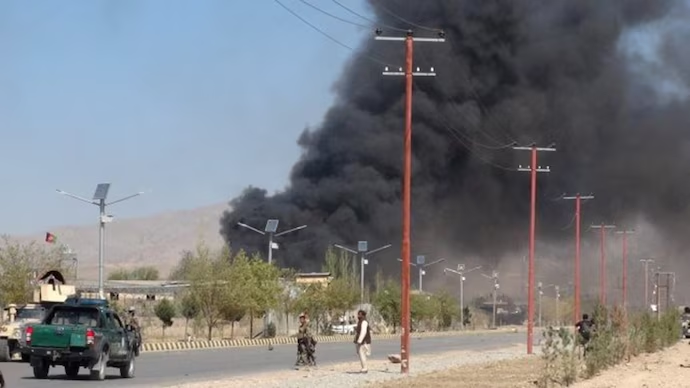
Pakistan sealed border crossings with Afghanistan amid heavy overnight fire exchanges between the two countries, Pakistani officials said on Sunday.
The Torkham crossing in the north-western province of Khyber Pakhtunkhwa and Chaman in the south-western province of Balochistan have been closed, security officials said.
Pakistan’s local media said its security forces had captured at least 19 Afghan border posts using heavy artillery, tanks, fighter jets and drones.
Both Pakistani officials and the Taliban regime in Afghanistan claim to have inflicted heavy losses on the opposing side, though the fighting seems to have largely ended for now.
“The firing by Afghan forces on civilian populations is a blatant violation of international laws,” Pakistani Interior Minister Mohsin Naqvi said in a statement issued by his ministry on X.
“By giving a swift and effective response, Pakistan’s brave forces have proven that no provocation will be tolerated,” he said.
Naqvi also warned that Afghanistan was “playing a game of fire and blood” and would be “given a befitting reply like India, so that it will not dare to look at Pakistan with a malicious eye,” referring to the brief conflict with India this May. Both Islamabad and New Delhi claimed victory in the clashes and to have inflicted far higher losses on the other side.
The Pakistan military said that 23 of its soldiers were killed in the clashes and that it killed more than 200 Afghan fighters. For its part, the Taliban said nine soldiers on its side were killed while also claiming to have killed 58 Pakistani troops.
The Taliban government’s chief spokesman, Zabihullah Mujahid, said its forces have captured 25 Pakistani army posts in the overnight clash.
“The situation on all official borders and de facto lines of Afghanistan is under complete control, and illegal activities have been largely prevented,” Mujahid told a press conference in Kabul.
“If the opposing side again violates Afghanistan’s territorial integrity, our armed forces are fully prepared to defend the nation’s borders and will deliver a strong response,” the ministry added.
Afghan troops opened fire on Pakistan posts late Saturday, the Taliban government confirmed, saying it was in retaliation for Pakistani airstrikes in Afghanistan earlier in the week.
The fighting started after Tehreek-e-Taliban Pakistan (TTP), a group of Pakistani Taliban, claimed responsibility for a series of attacks which killed at least 20 Pakistani security officials and three civilians. Pakistan accuses the Afghan Taliban of harboring and aiding TTP members.
The attacks, which included a suicide bombing on a police tr
Pakistani security analyst Imtiaz Gul said the Taliban regime is failing to take “decisive action” against the TTP.
“In the past week alone, there have been at least four significant attacks, seemingly orchestrated by individuals based in Afghanistan,” he told DW. “Pakistan’s patience has been wearing thin, which has prompted the government to take direct action against TTP leaders.”
Afghan affairs expert Omar Samad warned that hostility between the two sides “can escalate into widespread violence and military action beyond what we are experiencing” and cause irreparable damage to the ties between Islamabad and Kabul.
“Tensions between the Pakistan military establishment and the de facto Afghan government have been rising for the past two years, partly caused by missteps, misunderstandings, and mismanagement,” he told DW.
“There is no time for deception, spin, and bluster,” Samad said, urging “statesmanship, caution, and honest dialogue.”
In a dramatic escalation of tensions along the Pakistan-Afghanistan border, authorities in Pakistan have sealed five key border crossings following clashes that left 12 people injured, including civilians and security personnel. The move comes amid growing concerns over cross-border security and the potential impact on trade and local communities.
The clashes reportedly erupted late Saturday evening near the Chaman and Torkham crossings, two of the most active border points between the two countries. According to Pakistani officials, the confrontation involved border security forces and unidentified armed groups, resulting in a brief but intense exchange of gunfire and stone-throwing incidents.
Eyewitnesses described chaotic scenes as locals and traders scrambled to safety, while security forces cordoned off the affected areas to prevent further escalation. Emergency medical teams rushed to the scene, treating 12 injured individuals, three of whom are reported to be in serious condition.
The Pakistan Ministry of Interior announced the temporary closure of five strategic border points, including:
Chaman Crossing
Torkham Crossing
Angoor Ada
Ghulam Khan
Spin Boldak
Authorities stated that the closures are necessary to restore order, conduct security checks, and prevent further incidents. All crossings are expected to remain closed until the situation is fully stabilized.
In an official statement, Pakistan’s Border Security Force said, “The safety of our personnel and civilians is our top priority. We are closely monitoring the situation and will reopen the crossings only when it is safe to do so.”
The closures have disrupted cross-border trade and movement, particularly affecting small traders and transport operators who rely on these routes for daily commerce. The Pakistan-Afghanistan border is a vital corridor for goods, including agriculture produce, textiles, and essential supplies.
Local businesses have expressed concern over economic losses due to halted trade, while travelers stranded on both sides of the border have called for a swift resolution.
The incident highlights the fragile security situation along the Pakistan-Afghanistan border, a region historically prone to militant activity and smuggling. Analysts suggest that heightened border security measures, though disruptive, are crucial in preventing cross-border infiltration and ensuring regional stability.
“Border management in this area has always been challenging,” said security analyst Dr. Hamid Qureshi. “Both countries must strengthen communication channels and deploy preventive measures to avoid such escalations in the future.”
Neighboring countries and international organizations have urged both Pakistan and Afghanistan to exercise restraint and reopen the crossings as soon as possible. The United Nations Assistance Mission in Afghanistan (UNAMA) called for calm, emphasizing the need to protect civilians and maintain humanitarian access.