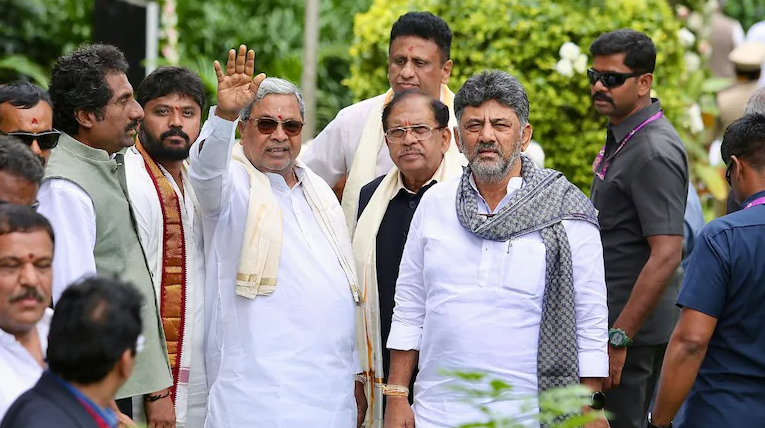
Siddaramaiah Asserts He Will Remain Karnataka Chief Minister for Full 5-Year Term
Siddaramaiah Reaffirms Full-Term Leadership Amid Leadership Row in Karnataka Congress
In a significant assertion aimed at quelling growing speculation and unrest within the Karnataka Congress, Chief Minister Siddaramaiah has stated unequivocally that he will continue to serve as the head of the state government for the full five-year term. This declaration comes amid mounting questions over the durability of the Congress-led administration in the state, sparked by visible tensions between Siddaramaiah and his deputy, DK Shivakumar, as well as signs of unease among sections of the party’s legislative contingent.
Speaking to the press in Mysuru, Siddaramaiah dismissed all rumors of a leadership change. “Yes, I will [continue as Chief Minister]. Why do you have doubts?” he said. He further dismissed claims by opposition parties, particularly the BJP and JD(S), that a mid-term shift was being considered. “Are they the Congress high command?” he asked rhetorically, affirming that only the party’s top leadership holds the authority to make such decisions.
The backdrop to Siddaramaiah’s strong comments includes weeks of internal discord that have seen senior Congress legislators openly expressing support for DK Shivakumar as a potential successor. However, the Chief Minister remains unshaken. “This government will be as solid as a ‘bande’ (rock) for five years,” he declared during a public interaction.
DK Shivakumar Responds to Leadership Speculation, Urges Party Unity
In what appeared to be a bid to cool rising political temperatures, Deputy Chief Minister DK Shivakumar responded publicly to Siddaramaiah’s statement with remarks aimed at restoring internal cohesion. “What option do I have? I have to stand by him and support him,” Shivakumar said when asked about Siddaramaiah’s assertion to complete the full term. “I don’t have any objection to it. Whatever the party high command tells and whatever they decide, it will be fulfilled.”
Shivakumar distanced himself from speculation that he was maneuvering for the top post, asserting that he had not asked any MLA to campaign on his behalf. “I haven’t told anyone to speak in favour of me. It’s not needed. When there is a Chief Minister, there is no question of such statements,” he said.
Despite these remarks, several Congress legislators have openly expressed support for Shivakumar, with MLA Iqbal Hussain claiming that up to 100 of the party’s 138 MLAs would support the Deputy CM’s elevation. Hussain even issued a stark warning that if the party high command ignored such sentiment, the Congress “may not return to power” in the state.
These developments have refocused attention on the internal power dynamics that have simmered since the May 2023 Assembly elections. Though Shivakumar was seen as a key architect of the party’s electoral success and was heavily backed by his supporters for the chief ministership, the party eventually settled on Siddaramaiah as the consensus candidate, citing majority support among the newly elected MLAs. Shivakumar was appointed Deputy CM and retained his position as President of the Karnataka Pradesh Congress Committee (KPCC).
National Leadership’s Role and the Congress High Command’s Delicate Balancing Act
Amid rising speculation and factional tension within the Karnataka Congress, the national leadership of the party has maintained a studied silence. Congress President Mallikarjun Kharge, whose son Priyank Kharge also serves in Siddaramaiah’s cabinet, has made no public comment on the issue of leadership change, leaving political observers to interpret this as a sign of the party’s unwillingness to stir the waters further.
In an interview with NDTV, Priyank Kharge attempted to downplay the internal rift, insisting there was no such discussion within the party high command regarding a leadership transition. “When the Karnataka Congress President, the Deputy Chief Minister, the Chief Minister, and Mr. Kharge, the Congress national president, have all said no decision will be taken on any of the issues, then where is the question?” he said. “As of now, nothing is on the plate. Nothing is in front of us.”
The Congress high command’s measured approach seems intended to avoid repeating past mistakes where indecisiveness or overt bias toward one faction led to government instability, as seen in Punjab, Madhya Pradesh, and earlier in Karnataka. However, this balancing act is becoming increasingly precarious, as the party must manage expectations of both Siddaramaiah’s long-time loyalists and Shivakumar’s ambitious supporters.
Sources within the All India Congress Committee (AICC) suggest that the leadership has chosen a strategy of restraint to let the Karnataka unit stabilize on its own. This approach, however, may come under pressure if Shivakumar’s backers continue to vocalize discontent and demand a formal leadership rotation agreement.
As the Congress prepares for critical upcoming Lok Sabha elections and seeks to expand its national footprint, Karnataka is viewed as one of its rare success stories. Any instability in its largest southern stronghold could have ripple effects for the party’s broader narrative of revival. Hence, the party’s central leadership is watching developments in the state very closely—even if from a distance.
Growing Grassroots Pressure, MLA Dissent, and the Fight to Hold the Karnataka Mandate Together
While top leaders in Karnataka and Delhi present a united front, discontent continues to simmer at the grassroots level within the Congress party’s legislative ranks. A section of party MLAs, feeling sidelined or uncertain about their future within the current power structure, has begun voicing veiled and open criticisms of the state’s leadership dynamics.
The most vocal among them has been MLA Iqbal Hussain, who stirred controversy with his claim that over 100 Congress MLAs support DK Shivakumar and that the party risks losing the next election if the high command does not heed calls for leadership change. Though Hussain was publicly reprimanded by Shivakumar and warned of disciplinary action, his comments reflect deeper undercurrents of factional strain that have not been resolved since the party’s 2023 electoral victory.
Congress insiders confirm that the division is not merely about personalities but also about the distribution of power, allocation of development funds, and cabinet representation. Many legislators who expected ministerial roles or significant portfolios have reportedly expressed disappointment, especially those aligned with the Shivakumar camp.
Amid these tensions, Congress district committees in the Old Mysuru and Bengaluru Rural regions have begun pushing for a more equitable share of influence for Shivakumar’s supporters. Posters and banners lauding DK Shivakumar as the “future CM” have appeared sporadically during public events, despite party leadership ordering restraint. These actions, while disowned by Shivakumar himself, continue to fuel speculation about a slow-brewing campaign for succession.
Siddaramaiah, on the other hand, remains firm in asserting that governance must not be disrupted by internal party ambitions. He has prioritized flagship welfare programs such as ‘Gruha Lakshmi’ and ‘Anna Bhagya’, which were crucial to Congress’s 2023 win. His camp argues that introducing instability or revisiting leadership at this stage would derail the government’s performance and risk alienating the electorate.
The situation has become particularly delicate because both Siddaramaiah and Shivakumar are seen as indispensable. Siddaramaiah has mass appeal, especially in northern Karnataka and among backward class communities, while Shivakumar commands loyalty in the Vokkaliga heartland and maintains a powerful organizational grip over the party.
Caught between these two poles, the Congress high command now faces a dilemma: How to sustain unity in Karnataka without undermining either leader or compromising the party’s ability to deliver governance effectively?
With whispers of rotation agreements, MLA petitions, and grassroots campaigns bubbling under the surface, the challenge is no longer just about leadership—but about trust, timing, and preserving the mandate.
Internal Mechanisms, Rotation Formula Debate, and Future Scenarios for Karnataka Congress
With the leadership debate in Karnataka Congress intensifying under the surface, internal mechanisms within the party have come under scrutiny. The Congress Working Committee (CWC) and the All India Congress Committee (AICC) are reportedly evaluating options to diffuse tensions without publicly altering the existing power structure. At the core of the discussion is a potential rotation formula—an arrangement that would allow Siddaramaiah to continue for a fixed period before handing over the reins to Deputy Chief Minister DK Shivakumar.
Though no such agreement was publicly confirmed during the formation of the government in 2023, insiders close to the negotiation process admit that informal assurances may have been made to accommodate both camps. However, any formal implementation of such a rotation mid-term presents risks. It could not only undermine Siddaramaiah’s authority but also weaken the perceived stability of the Congress government in Karnataka.
Party strategists are now evaluating three broad scenarios:
Scenario 1: Status Quo Continuation – Siddaramaiah completes the full term with Shivakumar continuing as Deputy CM and KPCC President. The high command ensures equitable distribution of influence and resources across regions and factions.
Scenario 2: Mid-Term Leadership Rotation – After completing half the term, Siddaramaiah steps down voluntarily, handing power to Shivakumar. This model, used unsuccessfully in states like Punjab, comes with risks of factional flare-ups and public perception of instability.
Scenario 3: Parallel Empowerment Model – While Siddaramaiah retains the CM post, Shivakumar is elevated further through institutional and financial power-sharing—such as giving him charge of key developmental boards or creating a coordination mechanism for smoother governance.
Each option has its complications. The status quo risks continued MLA unrest, the rotation formula could trigger backlash from Siddaramaiah’s supporters, and parallel empowerment may appear as tokenism to Shivakumar’s base.
The Congress high command’s priority remains preventing a Punjab-like implosion. Unlike the northern state, Karnataka is a major revenue and electoral contributor to the party’s national profile. It is also one of the few states where Congress currently enjoys a clear mandate.
Senior leaders in Delhi, including Rahul Gandhi and Mallikarjun Kharge, have reportedly maintained open lines with both Siddaramaiah and Shivakumar, urging mutual accommodation and patience. Behind closed doors, emissaries have advised Shivakumar to refrain from encouraging loyalist outbursts in the media and warned Siddaramaiah’s team against dismissing factional concerns outright.
As the Lok Sabha elections draw nearer, the party is also considering whether Karnataka’s leadership setup should remain unchanged to project stability. However, if internal tensions worsen, pressure to formalize a leadership transition timeline could intensify.
Ultimately, the future of Karnataka Congress hinges not just on who holds the top post, but on how well both leaders can collaborate to manage competing ambitions, deliver results, and keep the party unified.

Public Perception, BJP’s Political Strategy, and Congress’s Electoral Stakes in Karnataka
Public perception plays a pivotal role in shaping the narrative around governance stability. For the Congress, projecting unity in Karnataka is critical not only to preserving its state government but also to reinforcing its national stature. The electorate has been closely observing the subtle power struggle between Siddaramaiah and DK Shivakumar. While many voters appreciate Siddaramaiah’s welfare-oriented leadership, others view Shivakumar’s assertiveness and grassroots mobilization as necessary for the party’s long-term sustainability.
The BJP, meanwhile, has capitalized on the ongoing tensions. Senior BJP leaders have repeatedly pointed to the alleged discord in Congress as proof of administrative instability. In press conferences, BJP spokespersons have mocked the “double power center” in Karnataka, comparing it unfavorably to the unity the BJP projects in states under its rule.
With Lok Sabha elections approaching, Karnataka will be a critical battleground. Congress currently controls 135 of the 224 Assembly seats, but it won only one Lok Sabha seat in the state in 2019. A credible showing in 2024 could reaffirm the Congress revival narrative nationally. However, prolonged infighting could provide the BJP with ammunition to reclaim lost ground.
Both Siddaramaiah and Shivakumar are aware of these stakes, and thus, the party’s communication strategy has focused on showcasing developmental achievements and downplaying internal rifts. Yet, for the public, actions often speak louder than words.
Media Coverage, Internal Damage Control, and Silent Negotiations
The media has had a field day with the power tussle narrative. Every comment, banner, and reshuffle in Karnataka has been dissected by news channels and social media analysts, often escalating minor incidents into perceived crises.
To counter this, the Congress party has implemented internal protocols—requesting MLAs to refrain from public comments on leadership, encouraging spokespersons to stick to scripted responses, and holding weekly coordination meetings between the Chief Minister’s and Deputy CM’s offices.
Additionally, Congress national leaders have quietly initiated backchannel negotiations. Trusted emissaries from the AICC have been deployed to mediate between the camps and assess ground realities. Feedback reports suggest that while the rivalry is real, there is still space for mutual respect and collaboration.
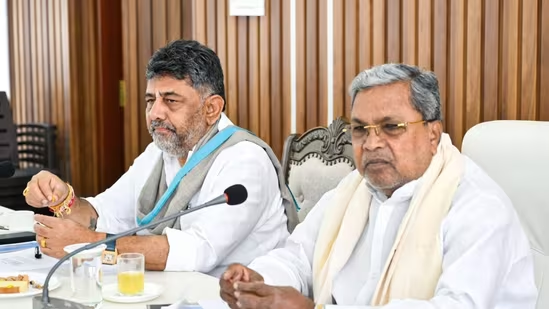
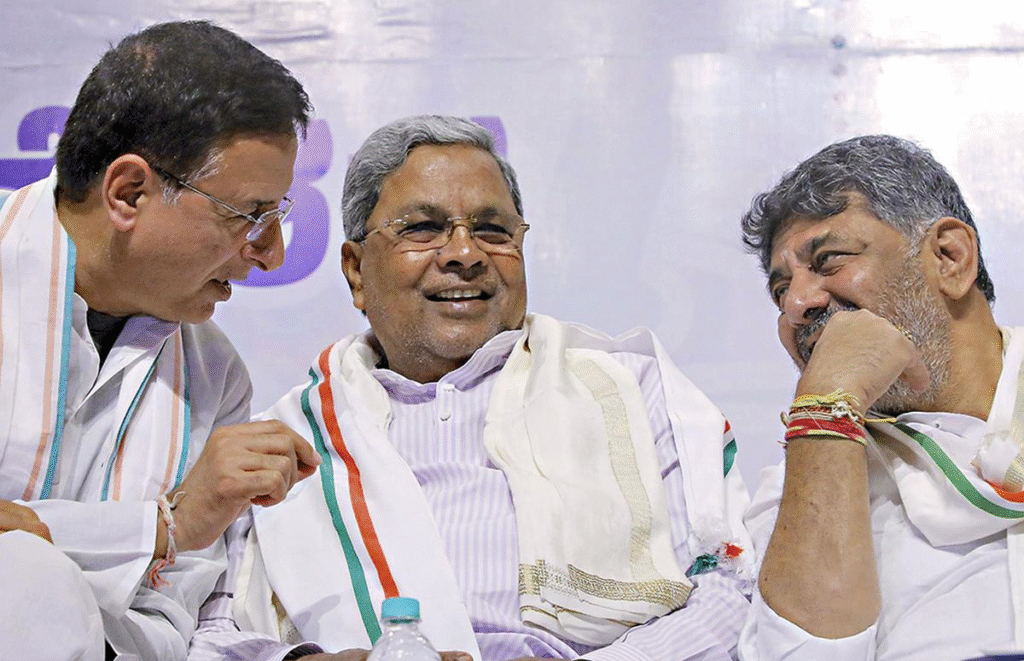
Notably, both leaders have continued to appear together at major public events. This “joint optics” strategy is designed to reassure the public and party workers alike. However, these appearances have not completely silenced the undercurrents of discontent.
Civil Society Response, Youth Congress Reaction, and Organizational Dilemmas
Civil society in Karnataka has also begun weighing in. Public intellectuals, social activists, and local media outlets have expressed concern over the persistent leadership drama distracting from governance priorities. Think tanks have warned that political instability may jeopardize flagship programs and delay crucial budgetary decisions.
Within the Congress’s internal structure, the Youth Congress and student wings have shown greater alignment with DK Shivakumar’s dynamic, mobilization-oriented style. Many younger cadres see him as a natural successor who can energize the party’s base and take on the BJP more aggressively.
Conversely, veteran leaders and bureaucrats tend to gravitate toward Siddaramaiah’s administrative maturity and experience in navigating policy frameworks. This generational divide is now a complicating factor in the leadership debate, as the party struggles to strike a balance between reformist energy and seasoned governance.
At the organizational level, the KPCC has been tasked with addressing grievances, managing factional requests for recognition, and preventing further escalation. Several internal reviews have identified key areas of discontent and have suggested rotational district-level leadership to neutralize local factionalism.
Siddaramaiah’s Policy Push and the Governance vs. Politics Equation
Amidst the political storm, Siddaramaiah has doubled down on governance. His administration has rolled out key components of the Congress’s “Five Guarantees” manifesto—free bus travel for women, increased rations, and monthly stipends for female heads of households. These programs have received positive feedback from rural constituencies and women voters.
Siddaramaiah’s camp believes that strong policy delivery is the best defense against political intrigue. By focusing on tangible outcomes, the Chief Minister aims to shift the conversation from leadership disputes to service performance.
In recent cabinet meetings, he has urged ministers to fast-track pending infrastructure projects and expedite rural development schemes. Additionally, he has ordered performance audits for MLAs, aiming to create a transparent metric of accountability that transcends factional loyalties.
This policy-first approach has earned him praise from several neutral observers but has also irritated some political operators who feel their influence is being diluted. Nonetheless, it reflects Siddaramaiah’s determination to protect his legacy through governance rather than political maneuvering.
Road Ahead—Can Congress Navigate Dual Leadership Without Fragmentation?
As the Karnataka Congress walks a political tightrope, its ability to manage dual leadership without institutional fragmentation will likely serve as a test case for similar situations in other states. The core challenge lies in reconciling ambitions with electoral responsibilities.
The party’s best chance lies in achieving what it has struggled with for decades—conflict resolution through internal democracy, not reactive firefighting. The Congress must institutionalize systems for power-sharing, implement internal arbitration councils, and promote merit-based advancement to reduce factional dependence on personalities.
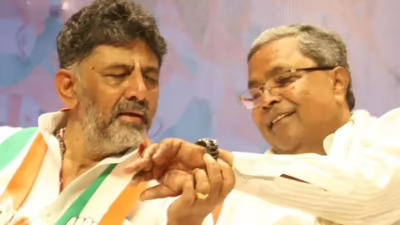
Ultimately, both Siddaramaiah and Shivakumar hold significant cards. If they collaborate instead of compete, the Congress could emerge from this episode stronger, having proven its capacity to govern amid complexity. If not, the BJP stands ready to exploit every misstep.
As Karnataka heads into national polls and deeper legislative terms, the coming months will reveal whether this experiment in parallel leadership becomes a model of cooperative federalism—or yet another cautionary tale of political ambition outpacing institutional foresight.
Also Read : Bhubaneswar BMC Officer Ratnakar Sahoo Dragged Out, Kicked in Face; 3 Arrested in Shocking Assault