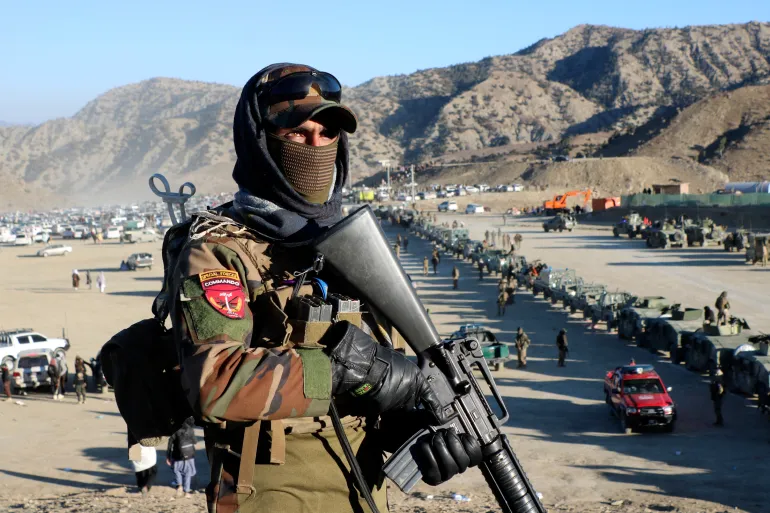
Taliban Launch 3 Retaliatory Border Strikes on Pakistan, Confirm Cross-Border Attacks
The Afghan Taliban has confirmed launching 3 retaliatory cross-border attacks on Pakistan, escalating tensions between the two nations. Get the latest updates on this developing conflict
The Taliban government has confirmed that it attacked Pakistani troops in multiple mountainous locations on the northern border.
Casualties are not yet clear in what the Taliban government called “retaliatory operations”, after it claimed Pakistan had violated Afghan airspace and bombed a market inside its border on Thursday.
Pakistan’s Interior Minister Mohsin Naqvi said the Afghan attacks were “unprovoked” and civilians were fired at, warning that his country’s forces would respond “with a stone for every brick”.
Islamabad has accused Kabul of harbouring terrorists who target Pakistan on its soil, a claim the Taliban government rejected.
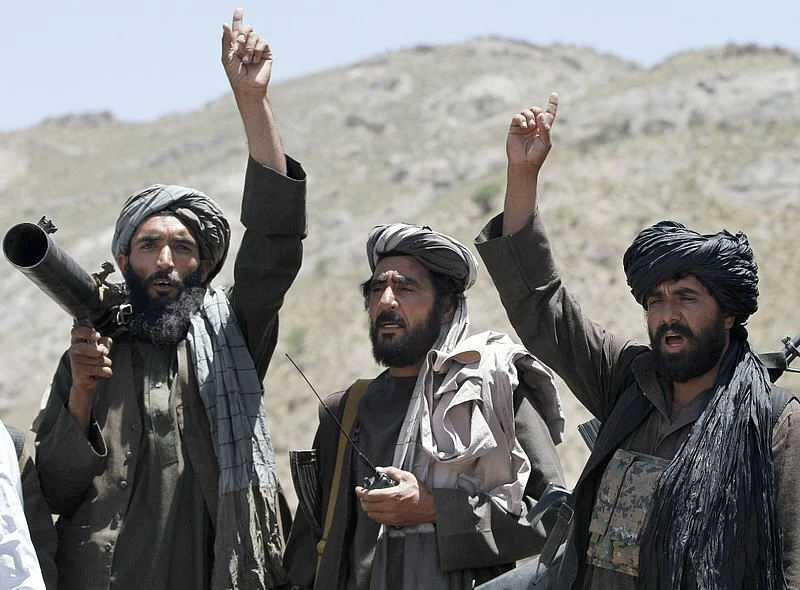
Both the Afghan and Pakistani sides are said to have used small arms and artillery in the Kunar-Kurram region, the BBC understands.
Saying that he “strongly condemns” the Taliban’s attacks, Naqvi stated: “The firing by Afghan forces on civilian populations is a blatant violation of international laws.
“Afghanistan is playing a game of fire and blood,” he said in a post on X.
A Pakistani military spokesman said they would take necessary measures to safeguard Pakistani lives and properties.
Pakistan’s military has not officially commented, but a security source speaking to the BBC claimed that firing took place at several locations along the Pakistani-Afghan border, including Angoor Adda, Bajaur, Kurram, Dir, Chitral and Baramcha.
A police official stationed near the Zero Point in Kurram district told the BBC that heavy weapons fire began from the Afghan side around 22:00 local time (17:00 GMT).
He said they had received reports of intense gunfire from multiple locations along the border.
Last week, Afghanistan’s Taliban government accused Pakistan of violating Kabul’s “sovereign territory”, as two loud blasts were heard in the city late on Thursday.
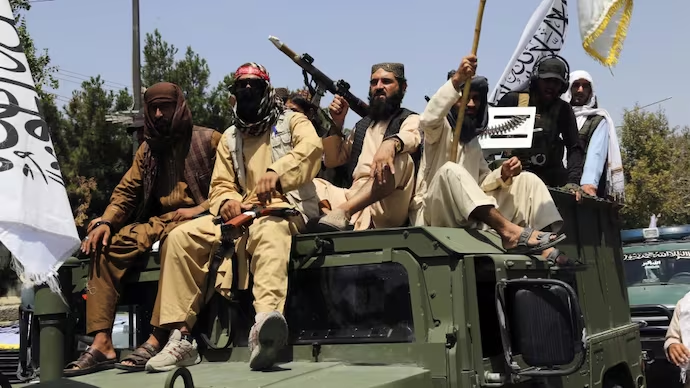
Pakistan bombed a civilian market in the border province of Paktika, in Afghanistan’s south-east, the Taliban Defence Ministry said on Friday. Locals there told the BBC’s Afghan service that a number of shops had been destroyed.
A top Pakistani general alleged Afghanistan was being used as a “base of operation for terrorism against Pakistan”.
Pakistan has long accused the Afghan Taliban of permitting the Pakistan Taliban, known as the TTP, to operate from their land and fight against the Islamabad government in a bid to enforce a strict Islamic-led system of governance.
The Afghan Taliban government has always denied this.
The latest escalation coincided with an historic week-long trip to India made by Afghan Taliban Foreign Minister Amir Khan Muttaqi, his first since the Taliban’s return to power.
In a diplomatic thaw, Delhi said that it would reopen the embassy in Kabul, which was shut four years ago when the Taliban returned to power.
“Afghanistan will also be given a befitting reply like India, so that it will not dare to look at Pakistan with a malicious eye,” Naqvi warned.
In a statement, Saudi Arabia, which signed a mutual defence pact with Pakistan last month, called for self-restraint and avoidance of escalation between Islamabad and Kabul.
Qatar also expressed concern over the Pakistan-Afghanistan border tensions, calling on both sides to “prioritise dialogue, diplomacy, and restraint”.
Taliban authorities say the retaliation was provoked by Pakistani air missions over Kabul and eastern Afghan provinces, including Paktika. They claim these strikes violated Afghan airspace and targeted civilian and market areas. Islamabad has neither fully confirmed nor denied responsibility for all the reported strikes, though Pakistani sources have acknowledged a surge in cross‑border tensions and said their operations are tied to security threats from militant groups operating along the frontier.
The fighting occurred in border areas across several Afghan provinces — notably Kunar, Helmand, Paktika, Khost, Nangarhar and Paktia — all of which lie along or near the Durand Line, the long‑contested boundary between Afghanistan and Pakistan.
The Taliban say their forces carried out “decisive operations” overnight, targeting Pakistani border posts, resulting in high Pakistani casualties and the takeover of several military or frontier posts. They claim that 58 Pakistani soldiers were killed and 25 Pakistani posts captured.
Pakistan, however, disputes some of these figures. Pakistani authorities acknowledge cross‑border firing and engagements, and say their forces responded with artillery and ground operations, destroying multiple Afghan posts.
In reaction to the escalation, Pakistan closed its major border crossings with Afghanistan, including Torkham and Chaman, alongside several smaller crossings (Kharlachi, Angoor Adda, Ghulam Khan).
The curfews and closures have severely affected trade, transit, and daily life for those in border communities, where many depend on cross‑border commerce and movement.
The Taliban administration asserts it has full control of Afghanistan’s borders, accusing Pakistan of repeatedly violating its sovereignty.
Pakistan accuses the Afghan Taliban of giving sanctuary to Tehreek‑e‑Taliban Pakistan (TTP) militants, who launch attacks inside Pakistan. Islamabad frames its cross‑border actions as necessary to protect national security.
Both sides claim the other initiated aggression, and both report damage to border posts. Verification of figures remains difficult due to restricted access to many conflict zones. Independent sources have not yet fully corroborated all casualty numbers.