Ujjain SDM Suspended After Calling Kailash Vijayvargiya’s ‘Ghanta’ Comment ‘Authoritarian Behaviour 1 Top Officer Takes Action
Ujjain SDM Anand Malviya had issued an order for directions on law and order in the district over the Congress protests in the Indore contamination case
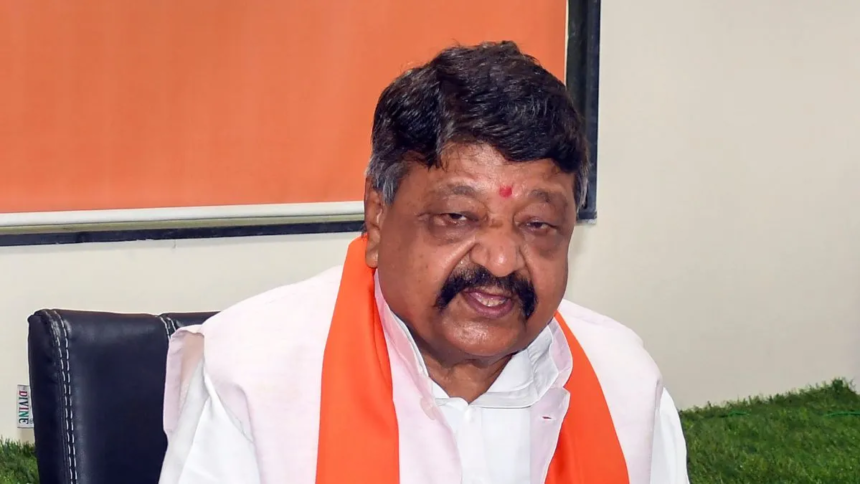
Ujjain’s Sub-Divisional Magistrate (SDM) has been suspended after he issued an order referencing State Urban Development and Housing Minister Kailash Vijayvargiya’s controversial “ghanta” comments, in the wake of the deaths due to water contamination in Indore, as a “symbol of authoritarian behaviour”.
SDM Anand Malviya had issued an order for directions on law and order in the district over the Congress protests in the Indore contamination case.
The order, however, went on to make curious assertions.
It alleged that the deaths occurred after people consumed “contaminated and dirty water supplied by the BJP-run municipal corporation” in Indore. “In Indore, due to consumption of contaminated and dirty water supplied by the BJP-run municipal corporation, 14 people have died and 2,800 persons are undergoing treatment,” it read.
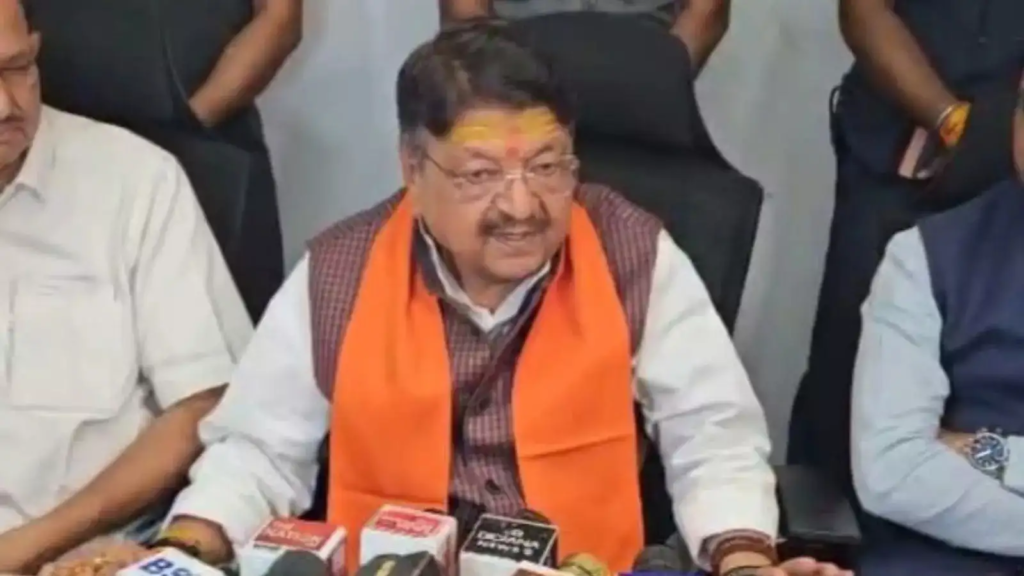
Referring to Vijayvargiya’s remarks on the issue, it described the comment as “inhuman and a symbol of authoritarian behaviour.” It added that the use of the word “ghanta” on such a sensitive matter was “highly objectionable”.
“On this sensitive issue, the objectionable remark made by a state government minister, the use of the word ‘ghanta’ is a sign of inhuman and authoritarian behaviour. The [Congress] State President… Jitu Patwari ji, has taken a decision that in protest against this incident, BJP MPs and MLAs will be gheraoed,” the notice issued by the SDM read.
Following this, the Divisional Commissioner of the Ujjain Division suspended Malviya for serious negligence and irregularity in the discharge of official duties while dealing with a highly sensitive matter.
According to the suspension order issued by the office of the Commissioner, Ujjain Division, on January 5, based on information received on January 3 regarding a proposed protest, an official order was issued without proper verification.
“The order contains portions lifted from a WhatsApp group of the Congress party calling for a protest; the reader had lifted the portions. The health data mentioned was also from official sources, but after the errors were noticed, I rescinded the order and issued a fresh one. But someone made the old order viral,” he said.
The suspension followed a proposal received from the Collector’s office in Dewas on January 4, flagging the issuance of the earlier order as procedurally flawed and factually incorrect. “The said order was issued without examination and on an extremely sensitive and serious issue, using incorrect figures. This reflects grave negligence, indifference, and irregularity in the discharge of official duties,” the order noted.
The Commissioner further held that the act falls under the category of misconduct as defined under the Madhya Pradesh Civil Services (Conduct) Rules, 1965. Citing Rule 9 of the Madhya Pradesh Civil Services (Classification, Control and Appeal) Rules, 1966, the order states that Anand Malviya has been placed under suspension with immediate effect.
During the suspension period, the officer’s headquarters has been fixed at the Commissioner’s office in Ujjain Division, and he will be entitled to subsistence allowance as per rules.
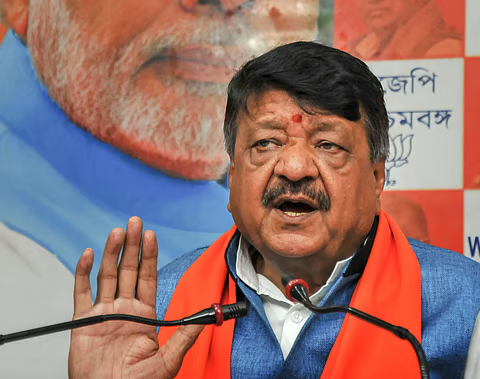
In a major administrative and political development in Madhya Pradesh, the Ujjain Sub-Divisional Magistrate (SDM) has been suspended following her public criticism of BJP leader Kailash Vijayvargiya’s “ghanta” comment, which she described as “authoritarian behaviour.” The suspension has ignited a political storm, drawing reactions from opposition leaders, bureaucrats, and social media users across the state.
The controversy began when Kailash Vijayvargiya, a senior BJP leader and general secretary, made a dismissive remark reportedly including the term “ghanta” in response to criticism of the party or government policies. This casual and controversial use of language immediately attracted attention, and the incident quickly became a talking point in political circles.
The Ujjain SDM, in an official capacity, publicly condemned the remark, calling it “authoritarian behaviour” and suggesting that such comments undermine administrative neutrality and decorum. Her statement highlighted concerns about political interference in governance and the challenges faced by bureaucrats tasked with implementing policies impartially.
Following her remarks, state authorities reportedly issued suspension orders against the SDM, citing a breach of conduct or overstepping her administrative boundaries. While the exact official reasoning has not been fully disclosed, political analysts suggest that the suspension is likely linked to the sensitivity of criticizing high-profile leaders, especially those with significant influence in the state and national politics.
The SDM’s suspension has raised questions about the freedom of bureaucrats to express concerns regarding political behavior and the delicate balance between administrative accountability and political influence.
The suspension has prompted a flurry of reactions from opposition leaders and political commentators. Many have accused the ruling party in Madhya Pradesh of intimidating bureaucrats and curbing dissent.
- Leaders from opposition parties described the action as an attempt to silence civil servants who speak truth to power.
- Political analysts noted that such suspensions often generate public debate on administrative autonomy and the influence of politicians over state machinery.
- Netizens and social media users have also weighed in, with posts emphasizing the need for bureaucrats to maintain independence without fear of retaliation.
From an administrative standpoint, suspension orders are typically used to investigate alleged misconduct or prevent interference in ongoing duties. However, in this case, the SDM’s suspension for criticizing a political remark has reignited debates about bureaucratic freedom, the role of civil servants in a democratic setup, and the ethical boundaries of political communication.
Many experts argue that such incidents highlight the complex relationship between politicians and administrators, especially in states where party politics heavily influences governance.
The incident has also captured the attention of social media users, who have expressed strong opinions on both sides:
- Some praised the SDM for speaking out against what they consider disrespectful political conduct.
- Others questioned whether public criticism of political leaders by serving bureaucrats is appropriate or violates conduct codes.
The hashtag #UjjainSDMSuspended began trending on platforms like X (Twitter) and Instagram, fueling debates and sharing of news articles related to administrative freedom and political accountability.
This suspension has broader implications for governance and the functioning of civil services in Madhya Pradesh:
- Bureaucratic Autonomy – Civil servants may feel constrained in publicly addressing political issues.
- Political-Bureaucratic Relations – Such incidents underscore the delicate balance between elected officials and career administrators.
- Public Perception – Citizens observing the event may question whether political influence affects administrative impartiality.
- Media Attention – The case highlights how social media amplifies controversies, shaping public opinion and political narratives.