

7 Big Developments: North Korea ‘Respects’ Iran’s Choice Of Mojtaba Khamenei As Supreme Leader
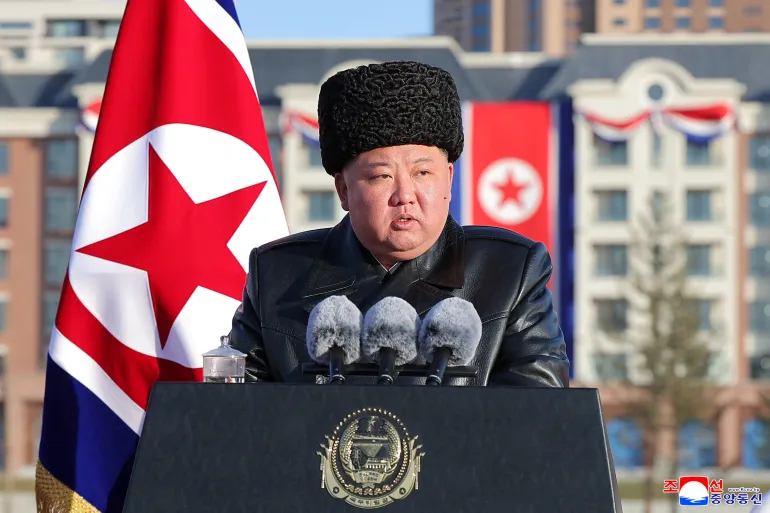
North Korea says it **“respects” Iran’s decision to appoint Mojtaba Khamenei as Supreme Leader
The geopolitical landscape of the Middle East and East Asia witnessed a significant moment after North Korea publicly expressed respect for Iran’s decision to appoint Mojtaba Khamenei as the country’s new Supreme Leader. The statement from Pyongyang came shortly after Iranian authorities confirmed the leadership transition following the death of the long-time leader Ali Khamenei.
The message from North Korea was widely interpreted as a gesture of political solidarity and strategic alignment between two nations that have historically shared strained relations with Western powers. While the statement was brief, it has generated considerable global attention due to the potential implications for international diplomacy, regional alliances, and geopolitical tensions.
Here are seven major developments and implications surrounding North Korea’s reaction to Iran’s leadership transition.

In its official statement, North Korea said it “respects the choice of the Iranian people and leadership” in selecting Mojtaba Khamenei as the country’s Supreme Leader.
The comment is significant because North Korea rarely issues direct statements regarding leadership changes in other countries unless it has strategic or ideological relevance. By acknowledging Iran’s decision, Pyongyang signaled its intention to maintain friendly ties with Tehran during a period of political transition.
Political analysts view the statement as part of North Korea’s broader foreign policy strategy of supporting nations that share similar positions on global power dynamics.
The selection of Mojtaba Khamenei marks a historic moment in Iran’s political structure. The Supreme Leader holds the highest authority in the country, overseeing major aspects of governance including the military, judiciary, and strategic policy decisions.
As the son of Ali Khamenei, Mojtaba has long been viewed as an influential figure within Iran’s political and religious circles. However, his elevation to the Supreme Leader position has sparked debate among analysts about the evolving nature of leadership in Iran.
Supporters argue that Mojtaba Khamenei has extensive experience within the country’s clerical establishment, while critics say the transition raises questions about dynastic succession within Iran’s political system.
Regardless of differing perspectives, his leadership will shape Iran’s domestic and foreign policies for years to come.
The appointment of Mojtaba Khamenei has triggered reactions from governments across the world. Some countries have taken a cautious approach, emphasizing the importance of stability in the region.
Others have focused on how the leadership change may influence Iran’s stance on key international issues such as nuclear negotiations, regional alliances, and relations with Western powers.
For many observers, the transition represents a moment of uncertainty but also a potential opportunity for diplomatic recalibration.
North Korea’s swift statement of support highlights how closely global actors are watching developments inside Iran.
Although geographically distant, Iran and North Korea have maintained political and strategic connections for decades.
Both countries have often faced international sanctions and diplomatic pressure, which has contributed to a sense of shared experience in dealing with global power structures.

Their cooperation has occasionally extended to economic exchanges and discussions on technology and defense matters. While the full extent of such cooperation remains subject to debate, analysts believe the two countries view each other as useful partners in navigating international challenges.
North Korea’s supportive tone following Iran’s leadership transition reinforces this longstanding relationship.
Major global powers—including the United States and European nations—are closely monitoring the implications of Iran’s leadership change.
The Supreme Leader plays a central role in determining Iran’s strategic direction, particularly in areas such as defense policy, regional alliances, and negotiations with foreign governments.
As a result, Mojtaba Khamenei’s leadership style and policy priorities will likely influence the future of international relations involving Iran.
Some analysts believe the transition could either stabilize existing policies or lead to subtle shifts in Iran’s diplomatic approach.
North Korea’s early endorsement may also be viewed as part of a broader geopolitical narrative involving alliances and rivalries across different regions.
The Middle East remains one of the world’s most politically sensitive regions, and leadership changes in major countries often raise concerns about stability.
Iran plays a central role in regional politics due to its influence across several strategic areas. Any change in leadership therefore has the potential to affect diplomatic relationships and security dynamics.
Observers note that the early days of Mojtaba Khamenei’s leadership will be closely watched to see whether Iran maintains its existing policies or signals new directions.
North Korea’s supportive message may have limited direct impact on regional politics, but it highlights how international actors are positioning themselves in response to the leadership shift.
While North Korea’s statement may appear largely symbolic, diplomatic gestures often carry deeper strategic meaning.
By expressing respect for Iran’s leadership decision, North Korea has reaffirmed its willingness to maintain friendly relations with Tehran. Such statements can strengthen diplomatic ties and signal alignment on broader global issues.
In the world of international politics, even short messages from governments can influence perceptions and shape diplomatic narratives.
For Iran, public acknowledgment from foreign governments—even those with complex global relationships—can serve as a signal of legitimacy and international engagement.

The leadership transition in Iran and North Korea’s reaction illustrate how interconnected modern geopolitics has become.
Events in one region can quickly trigger responses from countries across the world, reflecting the complex web of alliances, rivalries, and diplomatic relationships that define international politics.
Iran’s new Supreme Leader will likely face a range of challenges, including managing domestic expectations, navigating international negotiations, and maintaining stability in a volatile regional environment.
At the same time, global powers will continue analyzing every signal coming from Tehran to understand how the country’s policies might evolve.
In the coming months, Mojtaba Khamenei’s leadership decisions will provide clearer insights into Iran’s future direction. Key questions include how the country will approach diplomatic engagement, regional cooperation, and economic development.
North Korea’s supportive message is only one of many international responses that will shape the narrative surrounding Iran’s leadership transition.
For now, the world is watching closely as Iran enters a new chapter in its political history. The coming years will determine how this transition influences not only Iran’s internal dynamics but also the broader balance of power in global politics.
Read Also : 7 Big Claims: Donald Trump Says US-Israeli War On Iran Will End ‘Very Soon’

