
Australia-India Uranium Deal: 7 Powerful Takeaways From PM Modi’s Historic Visit
Explore the Australia-India uranium export deal signed during PM Modi’s visit
Australia and India have strengthened their long-standing strategic partnership by reaffirming and expanding cooperation on uranium exports during Prime Minister Narendra Modi’s high-profile visit. The agreement marks another significant milestone in the relationship between the two Indo-Pacific democracies, highlighting their shared commitment to clean energy, economic growth, and regional stability.
The renewed focus on uranium exports comes at a time when India is rapidly increasing its nuclear power generation capacity to meet rising energy demands while reducing carbon emissions. Australia, home to some of the world’s largest uranium reserves, is well-positioned to become a reliable supplier of nuclear fuel to India. The agreement not only boosts bilateral trade but also reinforces trust between the two nations in critical sectors such as energy security, defense, technology, and strategic cooperation.
The uranium export agreement builds upon years of diplomatic engagement between India and Australia. While the two countries have enjoyed cordial relations for decades, cooperation in the nuclear sector was once considered unlikely because Australia had strict policies regarding uranium exports to countries that had not signed the Nuclear Non-Proliferation Treaty (NPT).
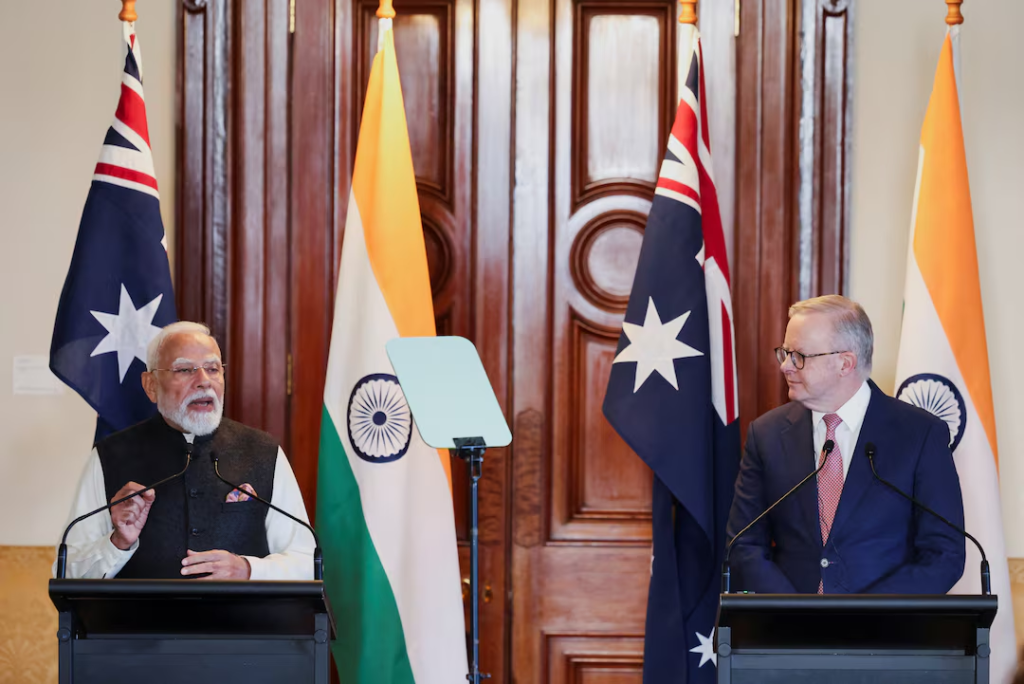
Following the India-US Civil Nuclear Agreement and India’s recognition by the international community as a responsible nuclear power, Australia gradually changed its position. In 2014, both nations signed the Civil Nuclear Cooperation Agreement, allowing Australia to export uranium for India’s civilian nuclear energy program under strict safeguards.
Prime Minister Narendra Modi’s latest visit has further strengthened this partnership by reaffirming Australia’s commitment to reliable uranium exports while opening discussions on expanding cooperation in clean energy technologies and nuclear innovation.
India is currently one of the fastest-growing major economies in the world. Its expanding industrial sector, increasing urbanization, and rising electricity demand require significant investments in diverse energy sources.
Although renewable energy sources like solar and wind are growing rapidly, nuclear energy remains an important component of India’s long-term energy strategy because it provides:
- Reliable base-load electricity
- Low carbon emissions
- Energy security
- Reduced dependence on imported fossil fuels
Australia possesses nearly one-third of the world’s known recoverable uranium resources. Its mining industry has developed world-class safety standards and strict export regulations, making it one of the most trusted uranium suppliers globally.
The agreement ensures that India gains access to a dependable source of uranium fuel while Australia benefits from increased export opportunities and deeper economic engagement with one of the world’s largest markets.
India has announced ambitious climate commitments, including achieving net-zero emissions by 2070 and significantly increasing the share of non-fossil fuel electricity generation.
Nuclear power plays an important role in achieving these goals because it produces electricity without emitting greenhouse gases during operation.
The Indian government plans to expand nuclear power capacity over the coming decades by constructing new reactors across the country. Reliable uranium imports are essential to ensuring uninterrupted fuel supplies for these facilities.
Australia’s commitment to uranium exports directly supports India’s transition toward cleaner and more sustainable energy.
Beyond energy cooperation, the uranium agreement symbolizes increasing strategic trust between India and Australia.
Both countries share common democratic values and have expanded collaboration across multiple sectors, including:

- Maritime security
- Defense cooperation
- Counter-terrorism
- Cybersecurity
- Artificial intelligence
- Critical minerals
- Supply chain resilience
As members of the Quad alongside the United States and Japan, India and Australia continue to promote a free, open, and inclusive Indo-Pacific region.
The uranium partnership reflects growing confidence that both nations can cooperate responsibly in highly sensitive sectors.
For Australia, uranium exports to India represent a significant commercial opportunity.
India’s expanding nuclear energy program could create long-term demand for Australian uranium, generating:
- Increased mining investment
- Employment opportunities
- Export revenue
- Stronger trade ties
Australian mining companies may benefit from long-term supply contracts as India’s nuclear capacity expands over the coming decades.
The agreement also reinforces Australia’s position as one of the world’s leading suppliers of responsibly mined uranium.
Trade between India and Australia has grown substantially in recent years.
The Economic Cooperation and Trade Agreement (ECTA) has already boosted exports across numerous sectors including:

- Agriculture
- Education
- Pharmaceuticals
- Technology
- Minerals
- Manufacturing
The uranium export agreement adds another major pillar to this growing economic relationship.
Officials from both countries have expressed optimism that bilateral trade could continue expanding significantly over the next decade as businesses explore new investment opportunities.
One of the defining features of the agreement is its emphasis on transparency and international safeguards.
Australian uranium supplied to India is intended solely for peaceful civilian nuclear purposes.
Strict monitoring mechanisms ensure compliance with international obligations, including:
- Tracking uranium shipments
- Verification of end-use
- International Atomic Energy Agency safeguards
- Bilateral reporting requirements
These measures help maintain global confidence in the responsible use of nuclear materials.
While uranium exports attracted significant attention, Modi’s visit also focused on broader collaboration.
Leaders discussed cooperation in:
Critical Minerals
Australia possesses abundant reserves of lithium, cobalt, nickel, and rare earth elements needed for electric vehicles and renewable energy technologies.
India is seeking secure supply chains for these strategic minerals as it expands domestic manufacturing.
Green Hydrogen
Both nations aim to become major players in the emerging green hydrogen economy through joint research, investment, and technology sharing.
Education
Australian universities continue attracting thousands of Indian students annually.
Both governments are encouraging greater academic collaboration, research partnerships, and skill development initiatives.
Technology
Cooperation in artificial intelligence, semiconductors, digital innovation, quantum computing, and cybersecurity continues expanding as both countries seek to strengthen technological capabilities.
The strengthened India-Australia partnership carries important implications for the Indo-Pacific region.
Both governments support:
- Freedom of navigation
- Rules-based international order
- Open trade
- Secure maritime routes
- Regional stability
Energy cooperation further enhances mutual trust and demonstrates that democratic partners can collaborate effectively on strategic issues.

Analysts believe closer India-Australia ties contribute to greater economic resilience across the Indo-Pacific by diversifying supply chains and reducing vulnerabilities.
India currently operates numerous nuclear reactors and has several more under construction.
The government aims to significantly increase nuclear power generation over the coming decades as electricity demand continues rising.
Expanding nuclear energy offers several advantages:
- Stable electricity generation
- Reduced dependence on coal
- Lower greenhouse gas emissions
- Improved energy security
- Support for industrial growth
Reliable uranium imports from trusted partners like Australia will play an essential role in achieving these objectives.
Experts widely view the uranium agreement as mutually beneficial.
For India, the deal provides reliable access to high-quality uranium needed to fuel its expanding civilian nuclear energy sector.
For Australia, it opens long-term export opportunities while strengthening relations with one of the world’s fastest-growing economies.
The agreement also reinforces broader cooperation in trade, defense, education, critical minerals, renewable energy, and regional security.
Although the partnership continues to grow, several challenges remain.
Both governments will need to ensure:
- Efficient regulatory approvals
- Stable long-term commercial agreements
- Continued compliance with international safeguards
- Infrastructure development for nuclear fuel logistics
- Investment in advanced nuclear technologies
Continued political commitment from both sides will be essential for maximizing the benefits of the agreement.
Prime Minister Narendra Modi’s visit has reaffirmed that India and Australia are entering a new phase of strategic cooperation. The uranium export agreement demonstrates growing confidence, mutual trust, and shared long-term interests between the two countries.
As India accelerates its clean energy transition and Australia seeks to expand its role as a reliable supplier of strategic resources, the partnership is expected to deepen further.
Future cooperation is likely to include advanced nuclear technologies, renewable energy, critical minerals, green hydrogen, digital innovation, and defense collaboration. Together, the two nations are positioning themselves as key partners in shaping the future of the Indo-Pacific while supporting sustainable economic growth.
Read Also : Why Did El Niño Dump 1 Month’s Rain on Mumbai in Just 7 Days? 7 Shocking Facts Explained