
Why Did El Niño Dump 1 Month’s Rain on Mumbai in Just 7 Days? 7 Shocking Facts Explained
Discover why El Niño brought nearly a month’s worth of rain to Mumbai in just one week
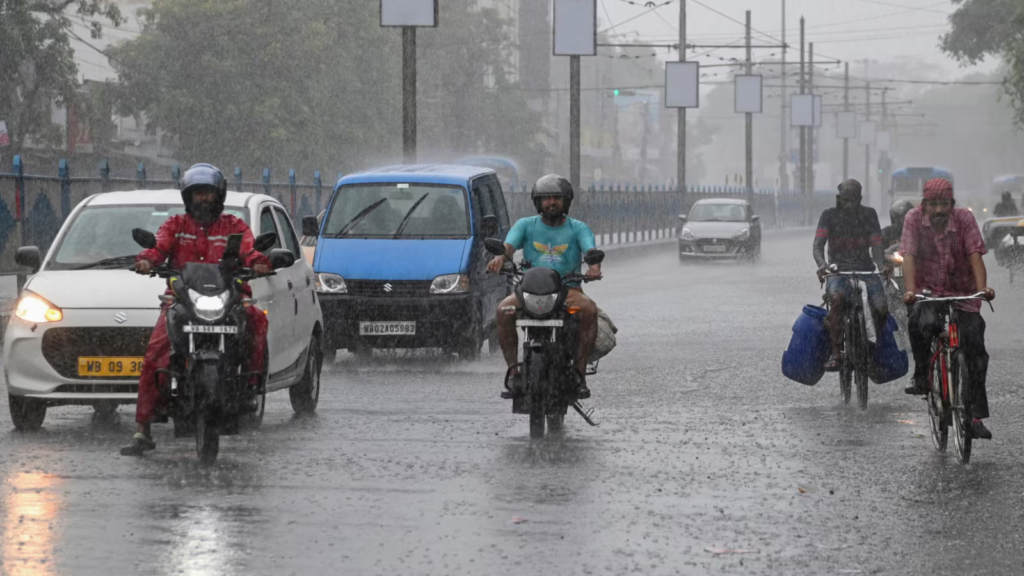
Mumbai witnessed one of its wettest starts to July in recent years as torrential rain lashed the city, flooding roads, disrupting train services, delaying flights, and affecting millions of residents. Within just a few days, parts of the city recorded nearly 80% of the average rainfall for the entire month of July, prompting the India Meteorological Department (IMD) to issue multiple weather alerts.
The extraordinary rainfall sparked a common question: Did El Niño cause Mumbai to receive nearly a month’s worth of rain in just one week?
The answer is more complex than a simple yes or no. While El Niño is an important global climate phenomenon that influences India’s monsoon, meteorologists say Mumbai’s intense rainfall was primarily driven by a combination of active monsoon conditions, atmospheric systems over the Arabian Sea, and favorable weather patterns that concentrated enormous amounts of moisture over the Konkan coast. At the same time, global climate patterns, including the developing El Niño, may have influenced the broader seasonal background.
Here’s a detailed look at what happened.
The first week of July saw relentless rainfall across Mumbai and neighboring districts.
According to the IMD, the Santacruz observatory recorded more than 675 mm of rainfall in just four days, while the Colaba observatory crossed 500 mm during the same period. That amounts to nearly 80% of Mumbai’s average July rainfall arriving within only four days.
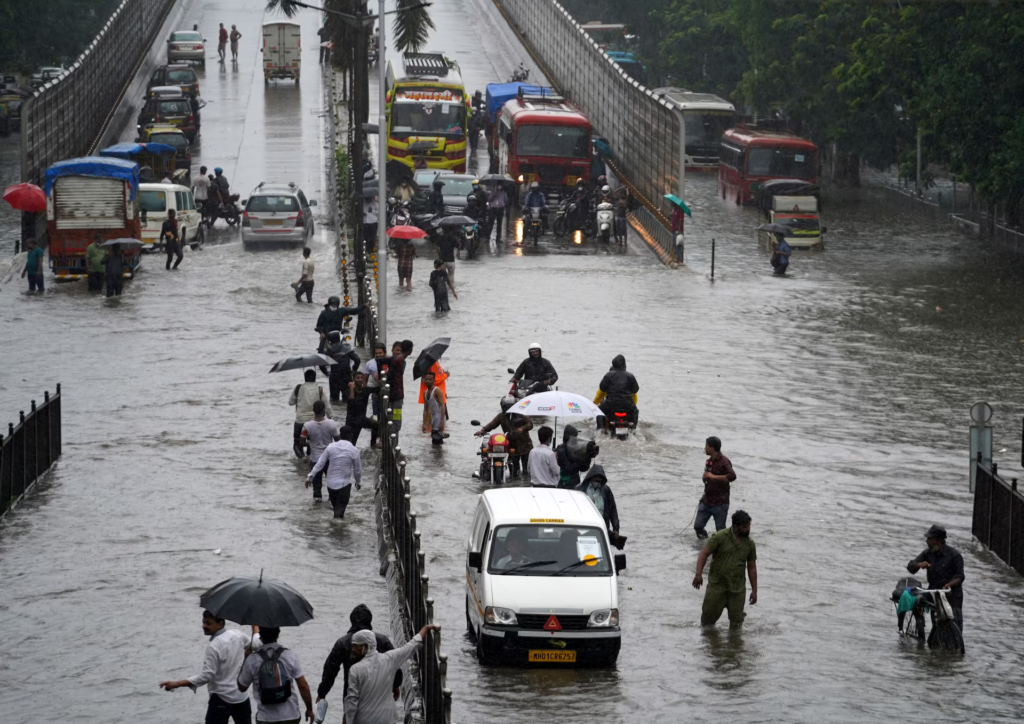
The consequences were immediate:
- Major waterlogging across low-lying areas
- Delays in suburban train services
- Flight disruptions
- Traffic congestion lasting several hours
- Tree falls and road cave-ins
- School closures in some areas
- High tide warnings along the coast
Authorities placed Mumbai under Red and Orange Alerts as the heavy rain persisted.
El Niño is a naturally occurring climate phenomenon that develops when sea surface temperatures in the central and eastern Pacific Ocean become warmer than normal.
These warmer ocean temperatures alter global wind patterns and atmospheric circulation, affecting rainfall across many parts of the world.
For India, El Niño has historically been associated with:
- Below-normal monsoon rainfall
- Higher summer temperatures
- Increased drought risk in several regions
- Changes in rainfall distribution
However, El Niño does not mean every part of India receives less rain every day. Instead, it changes the overall behaviour of the monsoon over weeks and months. Some regions may experience prolonged dry spells, while others can receive extremely heavy rainfall over short periods.
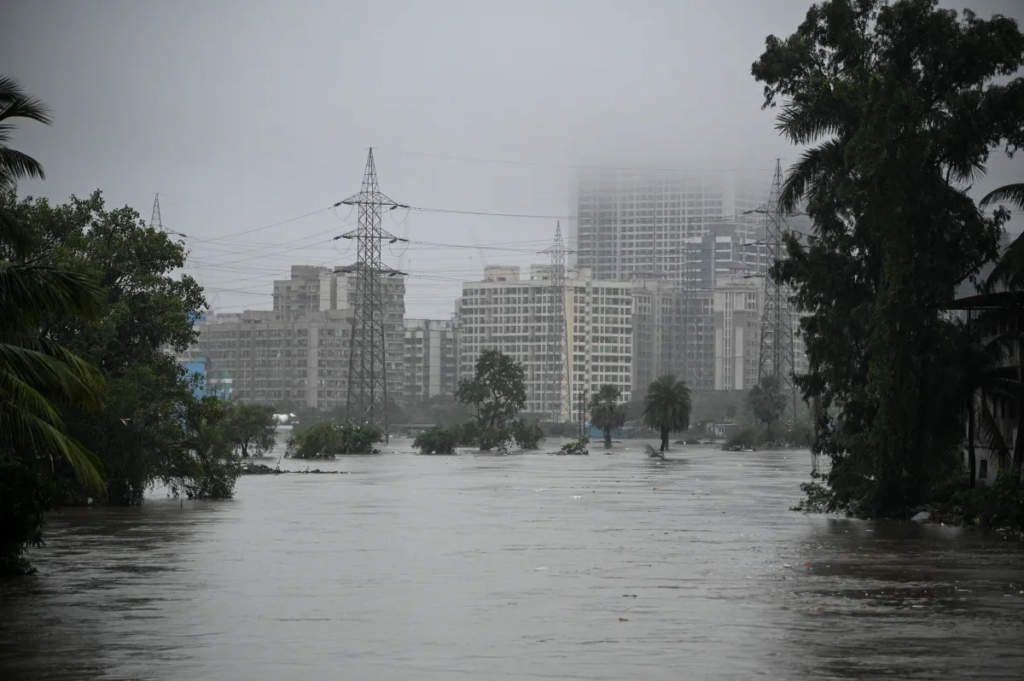
Meteorologists explain that several weather systems combined to produce the exceptional rainfall.
1. Active Southwest Monsoon
The southwest monsoon became highly active over Maharashtra during early July.
Strong moisture-laden winds from the Arabian Sea continuously supplied enormous amounts of water vapour toward the Konkan coast.
When these moisture-rich winds reached Mumbai, they produced repeated spells of heavy rainfall.
2. Monsoon Trough Shift
Weather experts noted that the monsoon trough shifted southward during this period.
This positioning favored widespread rainfall across western India, particularly Maharashtra and the Konkan region, enhancing rainfall intensity over Mumbai.
3. Offshore Weather Systems
An offshore trough and favourable atmospheric circulation over the Arabian Sea helped sustain continuous rain-bearing clouds.
Instead of moving away quickly, these systems remained active for several days, repeatedly dumping rain over the same region.
4. Moisture from the Arabian Sea
Mumbai’s location on India’s west coast naturally exposes it to moisture-laden monsoon winds.
During active monsoon phases, the Arabian Sea acts as an almost unlimited moisture source, allowing clouds to regenerate continuously.
Not entirely.
Climate experts caution against blaming a single weather event solely on El Niño.
Instead, El Niño creates background climatic conditions that may influence the strength and timing of seasonal rainfall patterns.
The exceptional rainfall over Mumbai was mainly caused by regional weather systems interacting with an active monsoon, while the developing El Niño formed part of the broader climate backdrop. The World Meteorological Organization has warned that El Niño conditions are developing during 2026 and may affect weather patterns globally, but individual rainfall events depend on multiple interacting factors.
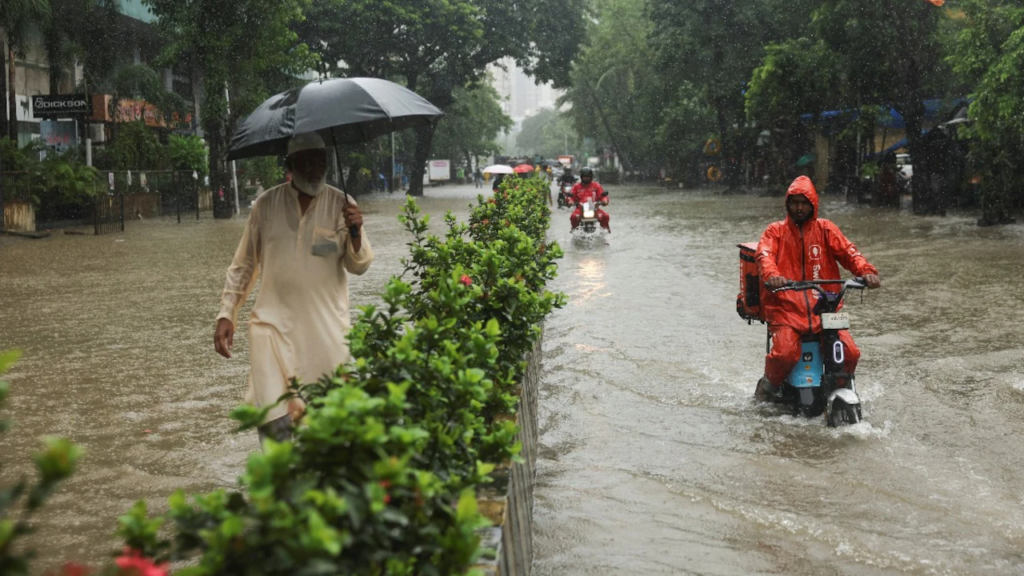
Scientists increasingly point to climate change as a major contributor to intense rainfall events.
Warmer oceans increase evaporation.
A warmer atmosphere can hold more moisture.
When weather systems become favourable, that stored moisture can fall within a very short period as intense rainfall.
Instead of receiving steady rainfall over several weeks, cities increasingly experience cloudburst-like episodes where huge quantities of rain fall within a few days.
Mumbai has witnessed similar trends during recent monsoon seasons.
Several geographical and urban factors make Mumbai highly susceptible to flooding.
Coastal Location
Mumbai lies directly along the Arabian Sea, exposing it to powerful southwest monsoon winds every year.
High Tides
Heavy rainfall becomes far more dangerous when it coincides with high tides.
Stormwater drains struggle to discharge excess water into the sea, causing rapid flooding.
Urbanisation
Rapid urban expansion has reduced natural drainage.
Concrete roads, buildings, and paved surfaces prevent rainwater from soaking into the ground.
Population Density
Millions of commuters rely on suburban railways and roads.
Even moderate flooding quickly disrupts transport across the metropolitan region.
The heavy rainfall affected nearly every aspect of life.
Transport
Several suburban train services experienced delays.
Road traffic slowed considerably due to waterlogging.
Some flights faced delays because of poor visibility and operational challenges.
Infrastructure
Authorities reported:
- Tree falls
- Road cave-ins
- House damage
- Waterlogged underpasses
Emergency crews remained deployed throughout the week.
Schools
Several educational institutions either suspended classes or adjusted schedules as authorities monitored rainfall intensity.
The India Meteorological Department continuously updated forecasts throughout the rainfall event.
Mumbai received Orange and Red Alerts warning residents about:
- Extremely heavy rainfall
- Thunderstorms
- Gusty winds
- Local flooding
- Transport disruptions
Officials advised residents to avoid unnecessary travel during peak rainfall periods.
The recent rainfall episode highlights the importance of:
- Better urban drainage systems
- Improved flood forecasting
- Real-time weather monitoring
- Early warning systems
- Climate-resilient infrastructure
- Public awareness campaigns
As extreme rainfall events become more frequent, cities like Mumbai must continue investing in flood mitigation and emergency preparedness.
Meteorologists stress that one week’s rainfall should not be viewed in isolation.
Extreme weather often results from multiple atmospheric factors acting together. While El Niño influences seasonal climate, regional weather systems determine when and where heavy rain falls. Understanding these interactions is essential for improving forecasts and disaster preparedness.
Read Also : Shocking Update: 1 Key Accused in Baruipur Minor Rape-Murder Case Killed in Police Encounter