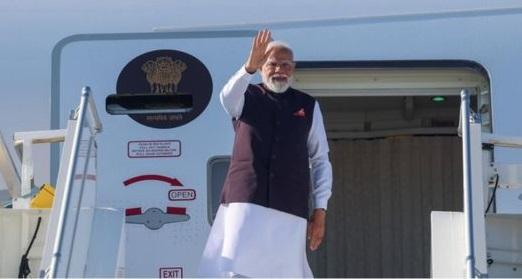
PM Modi Begins Historic New Zealand Visit: 5 Key Highlights After Wrapping Up Australia Tour
PM Modi departs Australia and heads to New Zealand for the first visit by an Indian Prime Minister in 40 years
Prime Minister Narendra Modi has embarked on a historic diplomatic journey as he departed Australia and headed to New Zealand, marking the first visit by an Indian Prime Minister to the island nation in nearly four decades. The landmark trip is being viewed as a significant step toward strengthening bilateral ties, expanding economic cooperation, enhancing regional security, and deepening people-to-people connections between India and New Zealand.
Coming immediately after a series of high-level engagements in Australia, PM Modi’s visit underscores India’s growing focus on the Indo-Pacific region and its commitment to building stronger partnerships with like-minded nations. The visit also reflects New Zealand’s increasing importance in India’s foreign policy, especially as both countries seek to collaborate on trade, education, technology, clean energy, agriculture, and regional stability.
The historic visit has attracted global attention because it represents not only a diplomatic milestone but also an opportunity to redefine India-New Zealand relations for the coming decades.
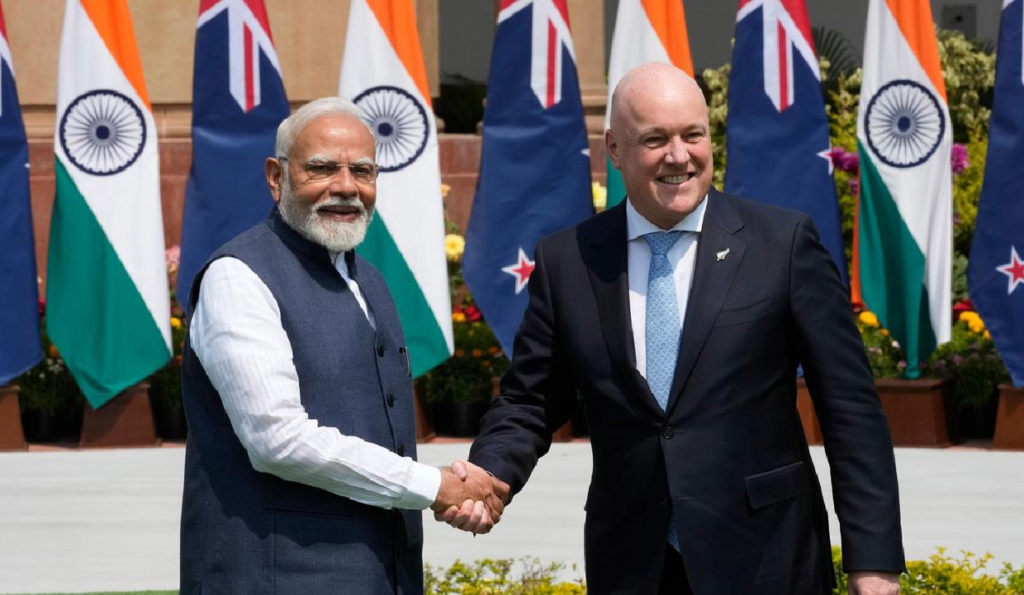
The last official visit by an Indian Prime Minister to New Zealand took place nearly 40 years ago. Since then, bilateral engagement has largely been maintained through ministerial meetings, international summits, and diplomatic channels.
PM Modi’s arrival symbolizes a renewed commitment to elevating the relationship between the two democratic nations.
Over the past decade, India has significantly expanded its diplomatic footprint in the Indo-Pacific. Strategic partnerships with Australia, Japan, the United States, and ASEAN countries have become central to India’s foreign policy. New Zealand now occupies an increasingly important place within that framework.
Foreign policy experts believe this visit could lay the groundwork for long-term cooperation across multiple sectors.
Before departing for New Zealand, PM Modi concluded an important series of meetings in Australia.
His engagements focused on strengthening:
- Economic partnerships
- Trade cooperation
- Defence collaboration
- Maritime security
- Critical minerals
- Renewable energy
- Technology partnerships
- Education exchanges
The Australian leg of the tour reinforced India’s commitment to working closely with trusted partners in the Indo-Pacific region.
Analysts say the transition from Australia to New Zealand demonstrates India’s intention to engage the broader Pacific community through sustained diplomatic outreach.
Several important factors make PM Modi’s New Zealand visit particularly significant.
Strengthening Bilateral Relations
India and New Zealand have enjoyed friendly diplomatic ties for decades, but many observers believe there remains enormous untapped potential.
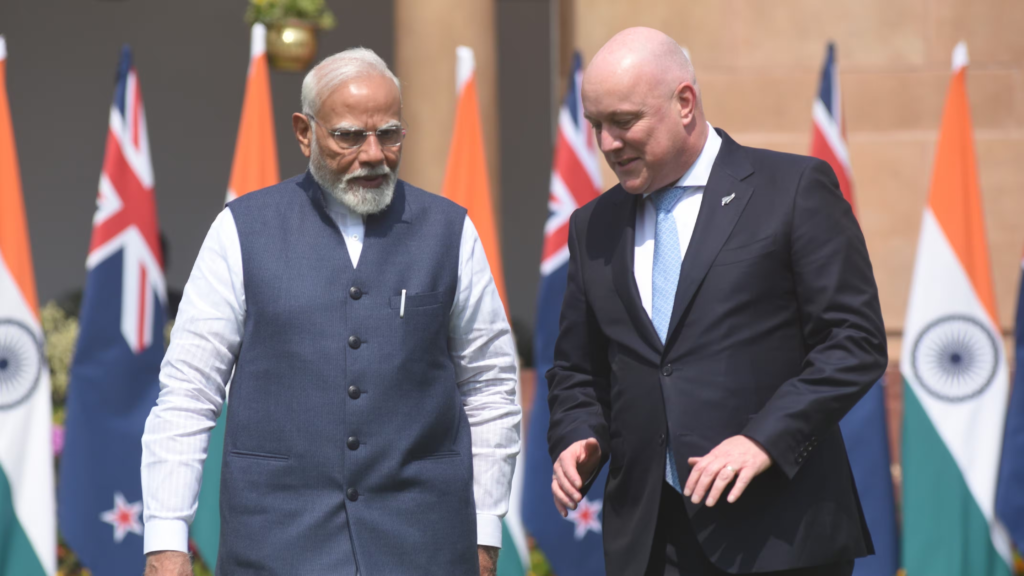
The visit is expected to inject new momentum into discussions surrounding:
- Trade
- Investment
- Tourism
- Innovation
- Agriculture
- Healthcare
- Digital economy
- Climate action
Officials from both countries have repeatedly emphasized the need for stronger institutional cooperation.
Trade remains one of the most promising areas of cooperation.
India represents one of the world’s fastest-growing major economies, while New Zealand possesses considerable expertise in agriculture, food processing, dairy technology, sustainable farming, and clean energy.
Business leaders hope the visit will encourage greater investment flows in both directions.
Potential sectors include:
- Food processing
- Renewable energy
- Artificial Intelligence
- Information Technology
- Biotechnology
- Education technology
- Infrastructure
- Logistics
Increasing bilateral trade could benefit businesses and consumers in both countries.
Education has long served as a bridge between India and New Zealand.
Thousands of Indian students pursue higher education in New Zealand each year, contributing significantly to academic collaboration and cultural exchange.
The visit is expected to encourage:
- Joint research initiatives
- Student mobility
- University partnerships
- Skill development
- Innovation programs
- Faculty exchange
Both governments recognize education as an important pillar of long-term bilateral cooperation.
One of the strongest connections between India and New Zealand is the vibrant Indian diaspora.
The Indian-origin community has become one of New Zealand’s fastest-growing ethnic groups and contributes significantly to:
- Healthcare
- Information technology
- Business
- Education
- Hospitality
- Public service
- Entrepreneurship
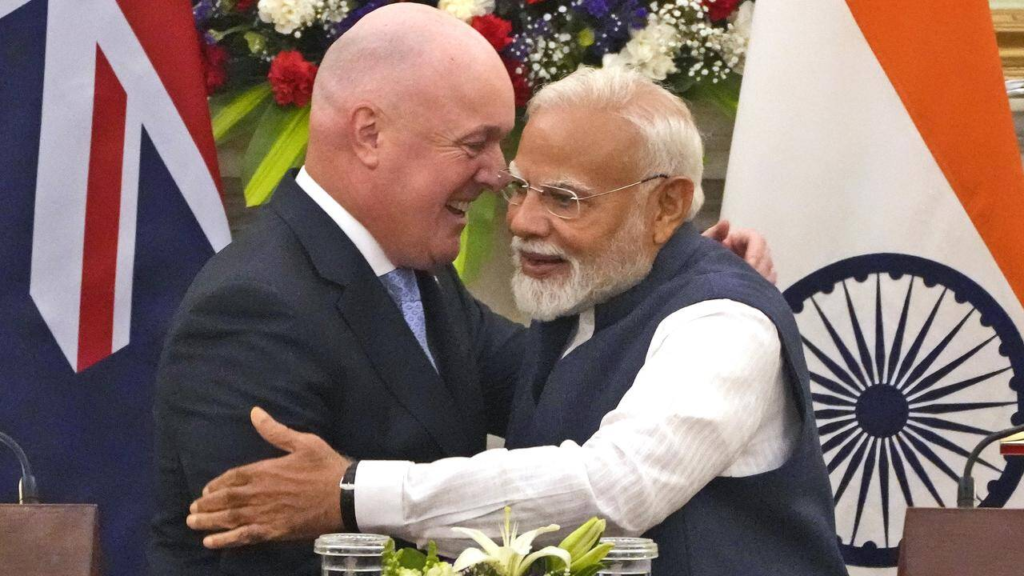
During the visit, PM Modi is expected to interact with members of the Indian community, acknowledging their contributions to New Zealand’s social and economic development.
Such engagements often strengthen cultural ties while encouraging closer people-to-people relations.
Regional security is likely to feature prominently during bilateral discussions.
Both India and New Zealand support a free, open, inclusive, and rules-based Indo-Pacific.
Areas of potential cooperation include:
- Maritime security
- Disaster response
- Humanitarian assistance
- Climate resilience
- Ocean governance
- Supply chain security
- Cybersecurity
Although New Zealand and India maintain distinct strategic priorities, both share an interest in maintaining regional peace and stability.
Climate action has become a major area of international cooperation.
New Zealand has extensive experience in environmental conservation and sustainable agriculture, while India has emerged as a global leader in renewable energy deployment.
Possible areas for collaboration include:
- Green hydrogen
- Solar energy
- Wind energy
- Carbon reduction
- Sustainable farming
- Water conservation
- Electric mobility
- Climate adaptation
Joint initiatives could help both countries achieve their long-term sustainability goals.
Technology cooperation has emerged as another promising area.
India’s thriving startup ecosystem and digital public infrastructure have gained international recognition.
New Zealand, meanwhile, has built a reputation for innovation in agricultural technology, research, healthcare, and environmental solutions.
Potential partnerships may focus on:
- Artificial Intelligence
- Digital governance
- FinTech
- Cybersecurity
- Biotechnology
- Health technology
- AgriTech
- Space technology
Innovation partnerships could generate significant economic opportunities for both nations.
Although defence cooperation between India and New Zealand remains relatively modest compared to India’s partnerships with larger Indo-Pacific nations, security dialogue continues to expand.
Discussions may include:
- Maritime awareness
- Naval cooperation
- Counter-terrorism
- Cyber resilience
- Peacekeeping
- Regional stability
Enhanced strategic dialogue reflects the evolving security environment across the Indo-Pacific region.
Tourism is another sector expected to benefit from stronger bilateral engagement.
India’s rapidly growing middle class has become an increasingly important source of international tourists.
Likewise, New Zealand remains an attractive destination because of its:
- Scenic landscapes
- Adventure tourism
- Wildlife
- Cultural heritage
- Film locations
- Luxury experiences
Greater cooperation could improve tourism infrastructure, air connectivity, and promotional campaigns.
Business delegations from both countries are optimistic about future investments.
Potential areas attracting investor interest include:
- Renewable energy
- Infrastructure
- Healthcare
- Education
- Food exports
- Dairy technology
- Digital services
- Manufacturing
Economic cooperation could create employment opportunities while supporting long-term growth.
PM Modi’s New Zealand visit also carries broader geopolitical importance.
As global supply chains diversify and Indo-Pacific cooperation intensifies, middle powers like New Zealand are playing increasingly influential roles.
India’s proactive diplomacy reflects its intention to strengthen relationships beyond traditional partners while promoting regional stability, economic resilience, and democratic cooperation.
The visit aligns with India’s broader foreign policy objective of engaging trusted partners across the Pacific region.
Observers expect several important announcements during the visit, including possible agreements related to:
- Trade and commerce
- Education partnerships
- Science and technology
- Climate cooperation
- Agriculture
- Innovation
- Investment
- Cultural exchange
Even incremental agreements could pave the way for deeper strategic engagement in future years.
Diplomatic visits often produce benefits that extend far beyond immediate agreements.
By engaging directly with New Zealand’s leadership, business community, and Indian diaspora, PM Modi is expected to reinforce mutual trust and create new opportunities for collaboration.
The visit also sends a strong signal that India values long-term partnerships with countries that share democratic values, economic ambitions, and a commitment to a stable Indo-Pacific.
Read Also : 7 Reasons Cardi B Couldn’t Stop Admiring Isha Ambani at the Fashion Show – And It Wasn’t the Birkin